|
|
MARYLAND SPOTLIGHT
From Site Selection magazine, March 2007
All Together Now
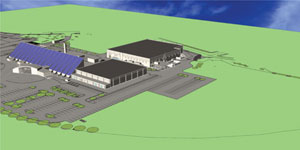
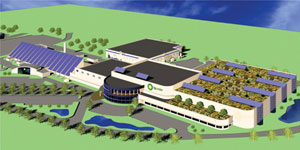
After all, it was on that date in 2005 and again in 2006 that the two biggest corporate expansions in the city of Frederick, Md., were announced. The US$250- million, 331,000- sq.- ft. (30,750- sq.- m.) first phase of MedImmune's biologics manufacturing expansion, announced in 2005, continues apace. The newest project is BP Solar's $70- million, 70- job expansion of its complex, hot on the heels of its first $25- million, 115- job expansion there, announced in 2004. But the projects have more in common than being in the same Centerpark industrial park, says Hank Zuretti, expansion project manager for BP Solar. "We meet with them periodically to discuss where we can work together and make both projects run more smoothly," Zuretti says. One way the two companies are collaborating was in the literal moving of dirt during the parallel construction projects. Instead of sending truck after truck off- site, the companies did a net calculation that allows them to share dirt fill. "We also are upsizing our sewer lines that run through the property, and we are working together so we disrupt the sewers only once as opposed to two occasions," Zuretti says. "The fact that there are multiple expansions in Frederick works to our advantage." Construction at BP Solar's Frederick site is expected to be complete by the end of 2008 pending local permit approval. Zuretti says the site plan was approved in December, and the company is moving forward with its excavation and building permits. The collaboration with local government does not include project incentives. Zuretti says neither the 2004 expansion nor this one have received any incentive funds from the city or the state of Maryland. Nor did the company apply for them. But that doesn't mean other incentives aren't present. "I think our relationship with Frederick now is definitely a positive" versus going to a new greenfield site, says Zuretti. His nine years at the company include three working on projects at its existing plants in Madrid, Spain, and Bengalooru (formerly Bangalore), India, as well as design only for potential future plants in Portugal and Germany. "I've seen in other locations where the permitting activity can really be a long and drawn out process," he says, "to the point where you're really delaying the project." Clean power is also very important for wafer production: "In some locations around the world where power is intermittent, that would be difficult for our process," says Zuretti. "In Maryland, we have fairly clean and consistent power." Frederick's project portfolio has a consistent power of its own. In addition to those from MedImmune and BP Solar, other 2006 projects in the metro came from the Frederick News- Post ($44 million in a printing plant), Windridge Farm ($8 million in a soybean crushing operation for biodiesel production), Frederick Brick Works ($5 million) and Wild Goose Brewery ($2 million). The area also saw a 75- job expansion in Emmitsburg from Emmitsburg Glass and a 100- job expansion by direct mail services firm RMS Direct in Frederick. Integrated Flow Zuretti says the first expansion, which he also managed, focused on de- bottlenecking and expanding polycrystalline wafer production, cell production and module assembly. This time around the total focus of the manufacturing expansion is on wafer production. The company is adding 140,000 sq. ft. (13,006 sq. m.) adjacent to an existing building. "We will relocate our new sizing and wafering into the new building, which opens up space to install casting equipment," says Zuretti. Casting, the first step in the production process, involves melting raw silicon rock into ingots that can weigh up to 600 pounds. The sizing of those ingots into wafers involves using a lot of water for cooling: Between 150,000 and 200,000 gallons a day are used at the facility. Although the city has told the company the extra water is available, one of the expansion project's chief goals is water recycling. Zuretti says a reduction in water consumption of up to 30 percent per wafer would be considered successful, but "we're looking to double capacity and not use any more water than we use today. We don't want to be the highest water user in the city – that's not our objective." Zuretti says the company is working closely with the city to alleviate some traffic impacts of the expansion as well. One key attribute of the project will go a long way toward that goal: Nearly 30 percent of the newly constructed space will be home to a warehousing operation that used to be across town. "We currently have a shuttle truck system that moves materials back and forth between the two sites," says Zuretti. "We'd be able to eliminate that truck traffic through town – about 12 trips a day." The integration will also eliminate some non- value- added tasks and replace them with value- added tasks. Zuretti says the relocated warehousing staff, instead of driving truck and placing materials, will play a more active and direct role in the manufacturing process, all in the name of "leaning out" that process and reducing the overall cost of the product. Global Role
"Many of our wafers we produce here will supply our other facilities," he says. "We are unique in that we have a fully integrated site." Just as integrated are the company's goals with the Frederick area's accumulated solar industry skills and experience. It all started in 1973 with the founding of Solarex Corp. in Montgomery County. Solarex moved northwest and built the original Frederick plant in 1982. As BP Solar built up its network of solar cell facilities internationally, Solarex grew steadily in Frederick, including a consolidation expansion in 1987. When BP and Amoco merged in 1998, half of Solarex came with the deal. The companies merged completely in 1999, when BP Amoco bought the other half of Solarex from Enron. Though recent growth has not involved incentives, Sarah Howell, director of corporate communications for BP America, says, "Throughout our growth in the Frederick area, we have received support and cooperation from state and local authorities. For example, in the late 1990s, we received a Maryland Department of Business and Economic Development matching grant for work force training – that approximate number came to about $150,000 overall. Around the same time frame, we received a low- interest loan from the state for an earlier expansion plan in the amount of $3.7 million – BP Solar [then called Solarex], provided $4 million for the project." But when it comes to facility growth, the real money in the bank comes in the form of human capital. "Through the years we've developed quite a knowledge base in expertise," says Zuretti of the Frederick area. While work force development is an ongoing operational issue there as it would be anywhere, he says it is by no means a roadblock. The company has links with several schools in the area, and is a member of the Maryland World Class Manufacturing Consortium. The presence of so much industry expertise may give rise to another opportunity for community thanksgiving: Zuretti says that, via the current integration project, "We're laying the groundwork for another expansion on this site." 
TOP OF PAGE
|
|
©2007 Conway Data, Inc. All rights reserved. SiteNet data is from many sources and not warranted to be accurate or current.
|
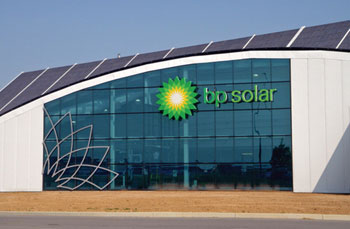
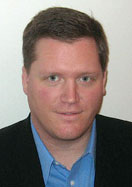 BP Solar's $70- million expansion at its headquarters and manufacturing complex in Frederick will double solar cell wafer production capacity, which will in turn serve the company's global portfolio of solar cell and module plants, says Hank Zuretti (inset), expansion project manager for BP Solar.