

MACHINERY MANUFACTURING
From Site Selection magazine, November 2007

Sany Heavy Industry executives, along with Georgia Gov. Sonny Perdue and other state and local officials, announce Sany's decision to build a plant in Peachtree City.
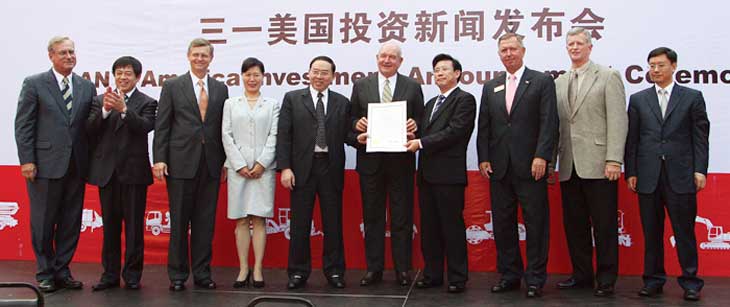
Photo by Kara Williams, Governor's Photographer
Asian Machinery
Firms Build U.S. Bases
Firms Build U.S. Bases
A
sian machinery manufacturers are finding the Peach State to their liking, with a major new industrial complex in the planning stages and a huge expansion of an existing operation.
Sany Heavy Industry Co. Ltd., based in Changsha, China, is that country's largest concrete-pumping equipment company, with 8,000 employees and 2006 sales of about US$594 million. The company plans to invest at least $30 million over five years and create 200 jobs in Peachtree City, located on the southern outskirts of Atlanta near Hartsfield-Jackson International Airport. That investment could grow substantially and the number of jobs could grow to 600 as the company's new campus grows.
"North America has a large market for our products, and Georgia occupies an important geographical location with convenient transportation," said Lincoln Liang, Sany America president. "Most importantly, support for foreign investment from the state and the local governments in metro Atlanta is systematic and well-structured. They understand Chinese businesses."
Sany products include trailer-mounted and truck-mounted concrete pumps, high-grade road construction machinery such as full hydraulic vibratory rollers and asphalt pavers.
Guanming Fang, an Atlanta-based attorney with the firm of Womble Carlisle Sandridge & Rice, represented Sany during its negotiations with the State of Georgia. State incentives, the site's proximity to major highways and the Atlanta airport, and easy access to the Port of Savannah were among the considerations, she says.
"When they made the decision to come to the U.S., they really did their homework and research," Fang says. "They looked at many locations within the U.S. and their search was wide and broad."
Fang says she expects the deal for the 268-acre (109-hectare) site to close in November.
Japanese machinery company Yanmar American Corp. plans to more than double the size of its Adairsville plant, along I-75 in northwest Georgia, adding up to 200 jobs and investing $20 million. The company is building a 240,000-sq.-ft. (22,300-sq.-m.) facility. Yanmar currently manufactures marine diesel engines as well a small industrial engines at its Georgia plant. The new facility will assemble agricultural utility tractors and a variety of Yanmar's compact construction equipment.
"We plan to make Adairsville, Ga., the new base for our North American operations, which will also include a service parts distribution center and office complex," said Akihiko Nakaoka, Yanmar America president.
Textile Sector Looks to China, India
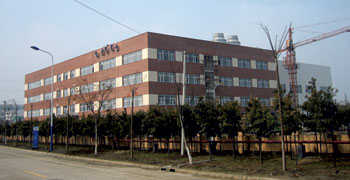
Swiss textile-machinery specialist Rieter opened a new factory in Changzhou, China, in May.
"Generally speaking, more and more companies are considering installing new capacities in Asia, especially in China and India," Schindler says. "This is not to say that they close or reduce the capacities of their European, Japanese and other production sites. Quite to the contrary. The ITMA 2007 proved that the demand for textile machinery is still high, especially in Asia in general and in China and India in particular. But also orders from European countries seemed to be higher than in the past few years.
"The main destination of textile machinery shipments is certainly Asia, and this will be the case in the years to come," he says. "Since the need of most Asian textile manufacturers is somewhat different compared to the demand of their colleagues in industrialized countries, the textile machinery manufacturers need to offer a wide range of machinery. Certainly, it makes sense to produce machinery where it is needed, especially if labor costs are favorable as well. But since these countries are upgrading their product portfolio they will also need more and more highly efficient machines."
A prime example of the eastward movement is Swiss multinational Rieter, which is expanding in both China and India. Rieter, which specializes in yarn spinning and related machinery, opened new production facilities worth nearly $7 million in Changzhou, China, in May. The new 247,710-sq.-ft. (23,000-sq.-m.) facilities consist of a two-story assembly and production building attached to a four-story office building. Rieter also plans to invest $50 million to establish additional machinery manufacturing operations in India over the next five years. This includes expansion of its plant in Pune and development of new sites in other locations.
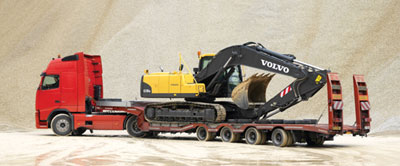
Volvo Construction Equipment is expanding capacity at its Eskilstuna, Sweden, facility. The company manufactures a variety of products, including the machinery pictured.
Equipment Capacity
The current plant of 570,810 sq. ft. (53,000 sq. m.) will be extended by 107,700 sq. ft. (10,000 sq. m.) and the entire layout will be adapted to flow-oriented production methods similar to those in the car industry.
The Component Division develops and manufactures power trains for Volvo construction equipment. The production capacity of Volvo's Component Division has nearly doubled since 2002. The new investment will mean a further doubling of that capacity in stages, without requiring additional employees.
Volvo employs a total of 2,300 in Eskilstuna, of which 1,800 work with Volvo Construction Equipment. In 2006, Volvo Construction Equipment invested a total of $77 million in its plants in Eskilstuna, Braas, Hallsberg and Arvika, Sweden.

Enjoy this original content? Bookmark it to share with your friends!
Site Selection Online – The magazine of Corporate Real Estate Strategy and Area Economic Development.
©2007 Conway Data, Inc. All rights reserved. SiteNet data is from many sources and not warranted to be accurate or current.
©2007 Conway Data, Inc. All rights reserved. SiteNet data is from many sources and not warranted to be accurate or current.