

CENTRAL AMERICA
From Site Selection magazine, March 2009
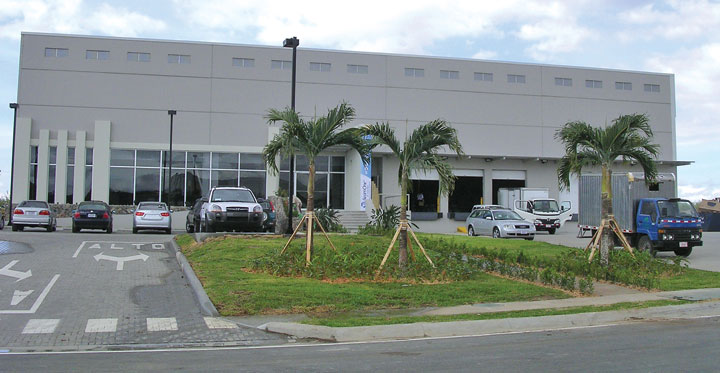
Medical device sterilization firm BeamOne moved into Costa Rica's Coyol Free Trade Zone in January.
Niche Plays
C
osta Rica has cultivated a healthy medical device cluster in recent years, but until recently there was a missing piece. A growing sub-sector is the manufacture of disposable medical devices.
These products require a special sterilization process before being shipped to end users. With no companies in this niche field, manufacturers had to ship their devices to the U.S. or even to Europe. That process, besides costing time, is an added value, and took the products out of the free trade zones where they are manufactured.
BeamOne, a La Jolla, Calif.-based firm that specializes in electron beam sterilization of medical devices, changed that dynamic when it officially opened its new plant in January in the Coyol Free Trade Zone in Alajuela.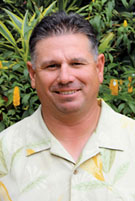
Glenn Thibault, BeamOne's COO and executive vice president, says his company's journey to Costa Rica began in 2005 when Costa Rican investment agency CINDE approached BeamOne at the Medical Design & Manufacturing trade show about considering locating in a business park.
"The first thing we looked at from a customer standpoint is what is supportable down there," Thibault says. "We needed some baseline customers to invest that kind of capital. It took us a little while to get customers lined up and get them qualified, and from there it was negotiations with the business park."
BeamOne currently employs six, but will eventually ramp up to a staff of 25 in its new 25,000-sq.-ft. (2,322-sq.-m.) building. Adjacent space has been reserved for future growth that Thibault predicts will come over the next several years. BeamOne, which invested US$5 million in the facility, has confidentiality agreements with its customers, but Thibault says they include major manufacturers. He says BeamOne will also be seeking medical device customers in Nicaragua and Panama, as well as South America.
At full capacity, which translates to a 24/7 operation, BeamOne will be sterilizing between 3.5 million and 4 million cubic feet of disposable medical devices per year, depending on the product mix.
Costa Rica is BeamOne's fourth site, with others located in San Diego, Denver and Lima, Ohio. A fifth site is planned within the next two years, most likely somewhere along I-95.
"We look forward to growing and putting additional facilities on the East Coast," Thibault says.
Making Contact
Costa Rica became a near-shoring option in 1998 when Western Union and Sykes opened facilities. The sector has subsequently grown to include 20 companies that employ more than 12,000.
Amazon.com is one of the few major retailers still thriving in the global recession. To help handle its increasing business, Amazon opened a new contact center in Costa Rica in November.
Amazon, which declined to make anyone available for an interview, began working with CINDE in January 2008 during its search for a new contact center site. Gabriela Llobet, CINDE executive director, says Amazon cited Costa Rica's communications infrastructure and its skilled work force among deciding factors for the project.
Amazon is creating 300 permanent jobs and will add 400 more as seasonal employees during the fourth quarter of each year, Llobet says. The new facility is located in the Ultralag Free Zone Park in Heredia, about a 15-minute trip from the Juan Santamaria International Airport near San Jose.
Harnessing Honduras
Steve Doman, CEO of Troy, Mich.-based Empire Electronics, traces his interest in Honduras to the mid-1990s. At that time, Empire, a maker of wire harnesses and other automotive electrical assemblies, began losing business to Mexico, the leading exporter of wire harnesses to U.S. automakers.
"Our customers were market testing our parts and said we were no longer competitive," Doman says. "We started to look for low-cost countries. We spent 17 days looking in India. Cost-wise, it was good, but it was a logistics nightmare. So, we decided to set up in Mexico. A few weeks before moving our equipment, the economic development association in Honduras [FIDE] asked us if we would consider Honduras."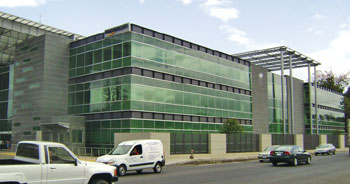
Doman says on paper Honduras looked great, so he and his brother, Ed, Empire's president and COO, came for a visit.
"Within 72 hours, I realized if I was going to risk everything I had, I was going to do it in Honduras. Mexico was too big for me and I didn't have a good feel for it. I felt like I was being pushed into a corner. I felt more comfortable in Honduras. There was a sense of warmth in Honduras toward me and my brother. As a general rule of thumb, Hondurans like Americans."
Empire located in a 240,000-sq.-ft. (22,296-sq.-m.) building in San Pedro Sula in 1996 and has steadily grown its business. Empire ships most of its Honduras-made products to Miami and then up to its distribution center in Troy. That's about 3.5 million parts in an average month.
Doman expects business to grow, but it depends on what shakes out with the large OEMs. He says Honduras makes good business sense for shipping to North America. The country is now the second largest exporter of electronic wire harnesses to the U.S.
"When we first arrived in Honduras, only Lear was there," says Doman. "Since then, another eight suppliers have moved there. I am surprised there aren't more, I really am."
Doman has long-range plans for Empire to develop its own industrial park in Honduras, concentrating on automotives and other light manufacturing. That, too, depends on economic conditions.
"I've learned a lot in the last 12 years, and that would be part of my offering to companies," Doman says. "If and when I do this, it will be in the spirit of giving something back to this country."
These products require a special sterilization process before being shipped to end users. With no companies in this niche field, manufacturers had to ship their devices to the U.S. or even to Europe. That process, besides costing time, is an added value, and took the products out of the free trade zones where they are manufactured.
BeamOne, a La Jolla, Calif.-based firm that specializes in electron beam sterilization of medical devices, changed that dynamic when it officially opened its new plant in January in the Coyol Free Trade Zone in Alajuela.
Glenn Thibault is COO and executive vice president of BeamOne.
Glenn Thibault, BeamOne's COO and executive vice president, says his company's journey to Costa Rica began in 2005 when Costa Rican investment agency CINDE approached BeamOne at the Medical Design & Manufacturing trade show about considering locating in a business park.
"The first thing we looked at from a customer standpoint is what is supportable down there," Thibault says. "We needed some baseline customers to invest that kind of capital. It took us a little while to get customers lined up and get them qualified, and from there it was negotiations with the business park."
BeamOne currently employs six, but will eventually ramp up to a staff of 25 in its new 25,000-sq.-ft. (2,322-sq.-m.) building. Adjacent space has been reserved for future growth that Thibault predicts will come over the next several years. BeamOne, which invested US$5 million in the facility, has confidentiality agreements with its customers, but Thibault says they include major manufacturers. He says BeamOne will also be seeking medical device customers in Nicaragua and Panama, as well as South America.
At full capacity, which translates to a 24/7 operation, BeamOne will be sterilizing between 3.5 million and 4 million cubic feet of disposable medical devices per year, depending on the product mix.
Costa Rica is BeamOne's fourth site, with others located in San Diego, Denver and Lima, Ohio. A fifth site is planned within the next two years, most likely somewhere along I-95.
"We look forward to growing and putting additional facilities on the East Coast," Thibault says.
Making Contact
Amazon.com is one of the few major retailers still thriving in the global recession. To help handle its increasing business, Amazon opened a new contact center in Costa Rica in November.
Amazon, which declined to make anyone available for an interview, began working with CINDE in January 2008 during its search for a new contact center site. Gabriela Llobet, CINDE executive director, says Amazon cited Costa Rica's communications infrastructure and its skilled work force among deciding factors for the project.
Amazon is creating 300 permanent jobs and will add 400 more as seasonal employees during the fourth quarter of each year, Llobet says. The new facility is located in the Ultralag Free Zone Park in Heredia, about a 15-minute trip from the Juan Santamaria International Airport near San Jose.
Harnessing Honduras
"Our customers were market testing our parts and said we were no longer competitive," Doman says. "We started to look for low-cost countries. We spent 17 days looking in India. Cost-wise, it was good, but it was a logistics nightmare. So, we decided to set up in Mexico. A few weeks before moving our equipment, the economic development association in Honduras [FIDE] asked us if we would consider Honduras."
Amazon.com chose Costa Rica for its ninth contact center.
Photo by Edward Willard
Doman says on paper Honduras looked great, so he and his brother, Ed, Empire's president and COO, came for a visit.
"Within 72 hours, I realized if I was going to risk everything I had, I was going to do it in Honduras. Mexico was too big for me and I didn't have a good feel for it. I felt like I was being pushed into a corner. I felt more comfortable in Honduras. There was a sense of warmth in Honduras toward me and my brother. As a general rule of thumb, Hondurans like Americans."
Empire located in a 240,000-sq.-ft. (22,296-sq.-m.) building in San Pedro Sula in 1996 and has steadily grown its business. Empire ships most of its Honduras-made products to Miami and then up to its distribution center in Troy. That's about 3.5 million parts in an average month.
Doman expects business to grow, but it depends on what shakes out with the large OEMs. He says Honduras makes good business sense for shipping to North America. The country is now the second largest exporter of electronic wire harnesses to the U.S.
"When we first arrived in Honduras, only Lear was there," says Doman. "Since then, another eight suppliers have moved there. I am surprised there aren't more, I really am."
Doman has long-range plans for Empire to develop its own industrial park in Honduras, concentrating on automotives and other light manufacturing. That, too, depends on economic conditions.
"I've learned a lot in the last 12 years, and that would be part of my offering to companies," Doman says. "If and when I do this, it will be in the spirit of giving something back to this country."

Site Selection Online – The magazine of Corporate Real Estate Strategy and Area Economic Development.
©2009 Conway Data, Inc. All rights reserved. SiteNet data is from many sources and not warranted to be accurate or current.
©2009 Conway Data, Inc. All rights reserved. SiteNet data is from many sources and not warranted to be accurate or current.