| |
|
From Site Selection magazine, March 2000 M A N A G E M E N T S T R A T E G Y
Linkage With Business Units
Taking the opportunity to institute better communication practices with the business units helps support continuous improvement in CRE's responsiveness both during and after the merger.
Due Diligence and the Database
Moreover, the information contained in these ad hoc systems is frequently inaccurate, because different individuals with unique methodologies may have collected it over time. Jones Lang LaSalle Global Consulting has worked with clients where real estate assets have never been completely accounted for in their existing databases. For one client, the firm identified several hundred specific assets, representing 15 percent of their real estate portfolio, which were never catalogued.
Creating a detailed database using specialized real estate software is the foundation for gaining a thorough understanding of the portfolio and the appropriate strategies to create long- and short-term value. In the short term, it is critical to determine whether underutilized assets exist, because they may be disposed of to reduce liabilities and generate cash. In the longer term, underutilized assets can serve as a reservoir of space for future expansion or reuse. For example, some corporations use the notion of "shadow vacancy," where a business unit occupies space on paper but does not fully utilize the space.
Important Database Issues
System Evaluation. Thoroughly reevaluate the legacy databases currently in use to determine if they offer the appropriate platform for the future based on the business direction of the merged entity, the number and type of properties, the type of information required and the churn rate in the portfolio. Most companies tend to transfer data to one of the legacy systems. In certain cases, this may be the right solution.
Data Integrity. Never assume the data already contained in legacy systems is accurate. Implement a program to verify existing data. Combine a data verification program with an ongoing process to collect the new data required to support portfolio strategy development and tactical implementation.
Human Resources. Corporate real estate departments rarely have excess resources to assign to a database verification/maintenance project. Employees are typically engrossed with managing the transaction process or specific facilities. Without focused resources, database projects tend to languish and do not provide the appropriate information in a timeframe that supports value creation. For the best results, delegate dedicated personnel for database work or for "excess" M&A related activity, as required. Third-party external resources can offer the solution.
Investment. Although cost reduction is generally a key driver when merging corporations, database expenditures should be considered a necessary part of the integration process. Upgrading a real estate database can involve a significant resource expenditure. But without database expenditures, the full value of the transaction will not be realized
| |
|
| |
 | Site Selection Online | SiteNet | Feedback | Search SiteNet | ©2000 Conway Data, Inc. All rights reserved. SiteNet data is from many sources and is not warranted to be accurate or current.
|

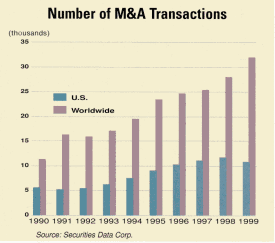 A recurring issue for conducting due diligence and merging corporate real estate portfolios is the quality of the information. Typically, the merging corporations do not use the same database software and do not collect the same information. In some cases, there is no formal database other than spreadsheets maintained by various individuals within the corporation detailing some level of property information.