From Site Selection magazine, March 2001
MANAGEMENT STRATEGY |
|
The 4th Quarter 2000
Johnson Controls
Prepared by Barry Varcoe, Director of Strategic DevelopmentOffice Occupancy Costs Index Johnson Controls, Inc. Integrated Facility Management
The Johnson Controls USA Office Costs Index
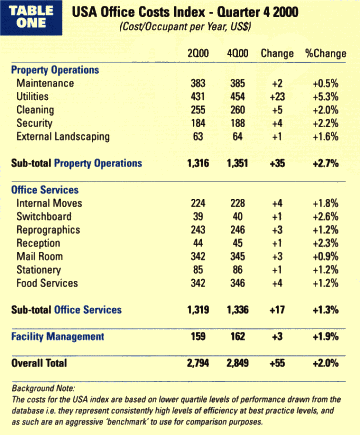
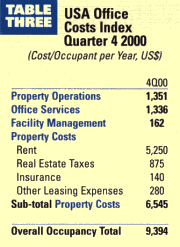
[See Tables One, Two, Three and Chart Four for data]
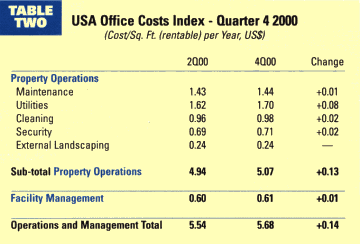 Costs have been measured in terms of the cost per occupant per year for all services (Table One), and in addition in terms of cost per rentable square feet (Table Two) for those services where a buildings area can be a significant cost driver. The cost per occupant measure is considered to be the more meaningful of the two from a business perspective, as for all services it is that which is most closely aligned to the primary purpose of the facility from the users perspective i.e. the productive support of people. Table Three shows, on a cost per occupant basis, a notional calculation of the total occupancy cost.
The Index (Table One) shows that, in overall terms, it now typically costs $2,849 each year to service an office-based employee at a place of work. In terms of the model facility with 600 occupants, this equates to a total annual cost of $1,709,400. Over the 6-month period since the last index this has increased by $33,000. Adding in the property costs gives a total occupancy cost (Table Three) of $9,394 per occupant, which equates to a total annual cost of $5,636,400 for the model facility.
Key Points To Note (Quarter 4 2000)
 • Maintenance: costs for labor have continued to rise, increasing as in the last period by nearly 2%. The cost of materials has abated this to some extent, decreasing over the six-month period by just over 3/4%. • Maintenance: costs for labor have continued to rise, increasing as in the last period by nearly 2%. The cost of materials has abated this to some extent, decreasing over the six-month period by just over 3/4%.
• Energy & Water: Electricity costs have reversed previous reductions, and have increased by 3.3% this period. Gas prices, though, have increased by a third. The far greater significance of electricity costs, however, has meant that the energy and water index overall has increased overall by just over 5%. • Cleaning: both labor and materials costs have increased by just over 2%. • Security: as with cleaning labor costs have risen over the period. • External Landscaping: equipment costs have decreased slightly, but labor cost rises outweigh this, giving an overall increase of approximately 11/2%. • Internal Moves: labor costs both for operatives and the management function continue to rise, both increasing by just over 2% over the period. This rate of increase is less than last period, where increases were over 3%. • Reprographics: equipment costs have once again remained relatively stable, and paper cost increases have decelerated over the period from well over 5% to just over 1%. • Mail Room: labour costs have continued to push up, leading to an increase overall of just 1%. • Stationery: the rate of increase in paper prices has reduced, costs increasing by just over 1% this period compared to 6% last time. • Food Services: labor costs have continued to rise by approximately 2%, but food costs have levelled off, giving an overall increase of just over 1%. • Facility Management: labor costs for management have continued to rise at a rate of over 2%, reflecting shortages in skilled and experienced grades.
Trend
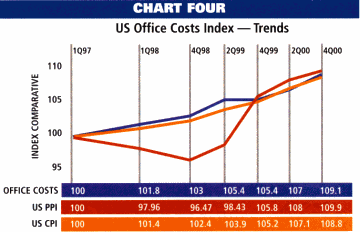
Chart 4 shows how the Johnson Controls Office Costs Index has represented the changing level of underlying facility costs over the last 4 years. It shows how the rate of increase in office costs has fallen into line with those of producer prices and consumer prices. In particular it is interesting to observe how producer prices have jumped over the last year. This could fuel inflation in facilities costs in the future as the effect of these are passed onto corporate buyers when contracts are renewed. Over the last year, however, it would appear that the industry has found ways to improve productivity so that they are, at least for the most part, absorbed.
Continue to: International Office Costs Index
| ||
|
| ||
 ©2001 Conway Data, Inc. All rights reserved. SiteNet data is from many sources and not warranted to be accurate or current. |