
Every year around this time, the world’s birdwatchers get out their specialized binoculars, cameras, phones and notebooks to participate in the Great Backyard Bird Count, a community science project held over three days in February that helps scientists track and analyze bird population health and migrations. Hot spots for sightings include national wildlife refuges and parks, state parks, lakes and rivers.
Every year around this time, Site Selection research and editorial staff perform our own annual ritual: tallying up by state all the corporate end-user/occupier facility investment projects that qualified over the previous calendar year for our proprietary Conway Projects Database, which counts projects involving construction if they involve at least $1 million in investment, creation of 20 new jobs or 20,000 new sq. ft. of space.
Call it the Great American Project Count, a community data exercise that helps employers, area leaders and citizens track economic health and the migration of capital and talent.
Certain bird populations always circle back to their favorite places. Companies and their capital do too. Which is why, with its 14th straight win of Site Selection’s Governor’s Cup for most projects, Texas continues to fly high.
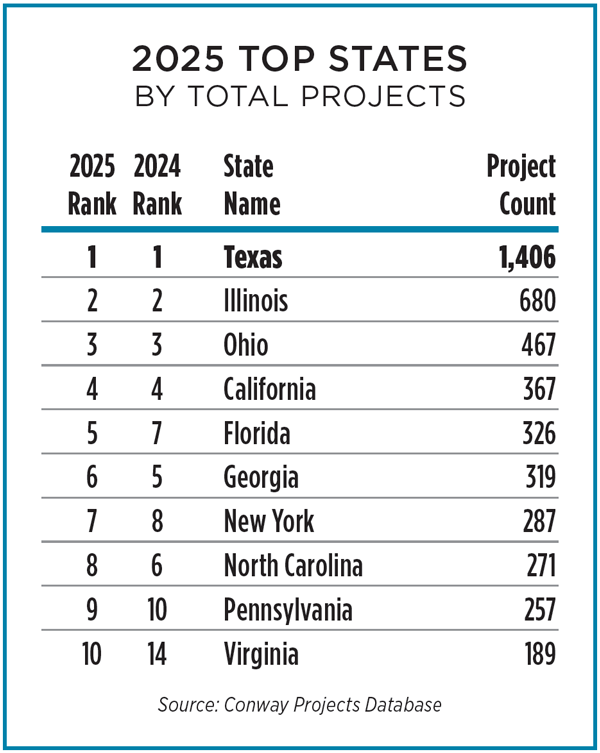
This year’s count tallied more than 1,400 projects in the state, more than double the healthy 680 in second-place Illinois and more than three times the 467 found in third-place Ohio. The number represents 18% of all qualifying U.S. projects in the database in 2025.
At No. 4, California and its 367 projects complete a repeat top four states, while Florida (326 projects) jumps up to No. 5 from No. 7 in 2024. This year Virginia jumps from No. 14 to No. 10 with 189 projects.
Speaking of jumps, this year’s per-capita tallies are topped by upstart North Dakota, unseating its neighbor South Dakota with 145 projects spread across its population of approximately 800,000 — a bit shy of the population of metro El Paso. Illinois, with a population of around 12.7 million, comes in an impressive second in this category, too, led by the so-called Second City of metro Chicago that once again is No. 1 among this year’s Top Metros (see p. 116). Kansas moves from No. 6 to No. 3, followed by Texas in 4th place and Kentucky repeating at No. 5 in the nation. See p. 92 for our interview of North Dakota Governor Kelly Armstrong and further analysis of top per-capita performers.
Texas Governor Greg Abbott is used to hearing from Site Selection, given how well Texas performs across any number of indices we publish all year long. And he knows our corporate audience likes to hear from him. The following conversation with Editor in Chief Adam Bruns has been edited for brevity and clarity.

Composite image by Richard Nenoff
TEXAS
FAMILIAR TERRITORY
Site Selection: Governor, no matter which barometers we blend into an index, Texas keeps coming out on top — the Governor’s Cup, FTZ activity and exports, our Prosperity Index, Business Climate Rankings and Sustainability Rankings. So I ask you the same question I’d ask a perennial championship team in sports: What do you have to do to sustain this level of performance?
Gov. Greg Abbott: In Texas, economic development is truly a team sport. And like any championship team, we must continue to find ways to constantly improve and not become complacent. We must keep enhancing our business climate to protect our competitive edge. Many organizations play a role in maintaining our state’s high level of performance. It takes local and regional economic development organizations, state agencies, industry, higher education and more. It also takes the work of our state leadership and elected officials to ensure regulations continue to support our superior business climate that is the envy of the nation.
Texas has sustained our dominance in economic development for more than a decade. With a $2.7 trillion economy — the eighth-largest economy in the world — we have strategically positioned Texas to capitalize on our successes and advance our state’s global competitiveness for the future. We continue to focus on making investments to ensure that Texas remains the Best State for Business in the nation.
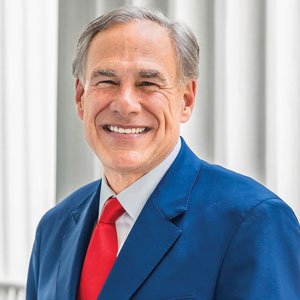
“When you’re in the lead, everyone is watching — and there are many states looking at Texas.”
— Greg Abbott, Governor of Texas
To perform at a high level in that team sport, which systems or tools are the keys to coordinating all that project activity? How much credit goes to regional economic development organizations, county and town leaders?
Abbott: Texas does economic development like no other state because we are so geographically large and diverse. Partnerships with our local and regional economic development organizations are truly the key to our success. The strong collaborations between state and local economic development partners ensure we have access to the most up-to-date local and regional information. We are proud to have won the Governor’s Cup for 14 years in a row. I thank the dedicated economic developers across the state who work each and every day to increase economic prosperity across Texas. Without their efforts, this award would not be possible.
Top performers are always improving and learning. When you look around at other states, other governors and other regions of the country, where do you see ideas Texas could adopt to make the business or daily living environment better? Where do you see examples of others copying Texas?
Abbott: There are always opportunities to learn. However, Texas sets the standard. When you’re in the lead, everyone is watching — and there are many states looking at Texas. Our low taxes, predictable regulatory environment and commitment to economic freedom are widely coveted. Other states can learn from Texas’ proven pro-growth framework with investments in our business climate, workforce, infrastructure and more. We benchmark against other states as well to ensure that we are maintaining our competitive advantages and continuing to enhance our state’s assets across each of our targeted growth industries.
The three metros of Houston, Dallas-Ft. Worth and Austin comprise half of our top 6 metros in the country by number of projects, with No. 2 Houston leaping past No. 3 Dallas-Fort Worth this year and coming close to taking Chicagoland’s crown at No. 1. Describe your first-hand observations of the economic momentum in the Greater Houston region.
Abbott: First, I want to congratulate Houston, Dallas-Fort Worth and Austin for the number of projects they have attracted to their communities. Texas metros and smaller communities from across this great state are certainly experiencing unprecedented economic momentum. Growth in the Greater Houston region is a great benefit to our state’s economy, a major location for foreign direct investment and key industry sectors like energy, aerospace, advanced manufacturing and life sciences. Houston is also home to one of the largest concentrations of U.S. headquarters for companies from around the world.
In November, I was proud to announce the location of Lilly’s new active pharmaceutical ingredient (API) manufacturing facility in Harris County. The more than $6.5 billion investment, expected to create more than 600 new jobs, signifies the largest investment in API manufacturing in Texas to date. The Greater Houston region and the state as a whole continue to attract significant job and capital investment-creating projects like this one.
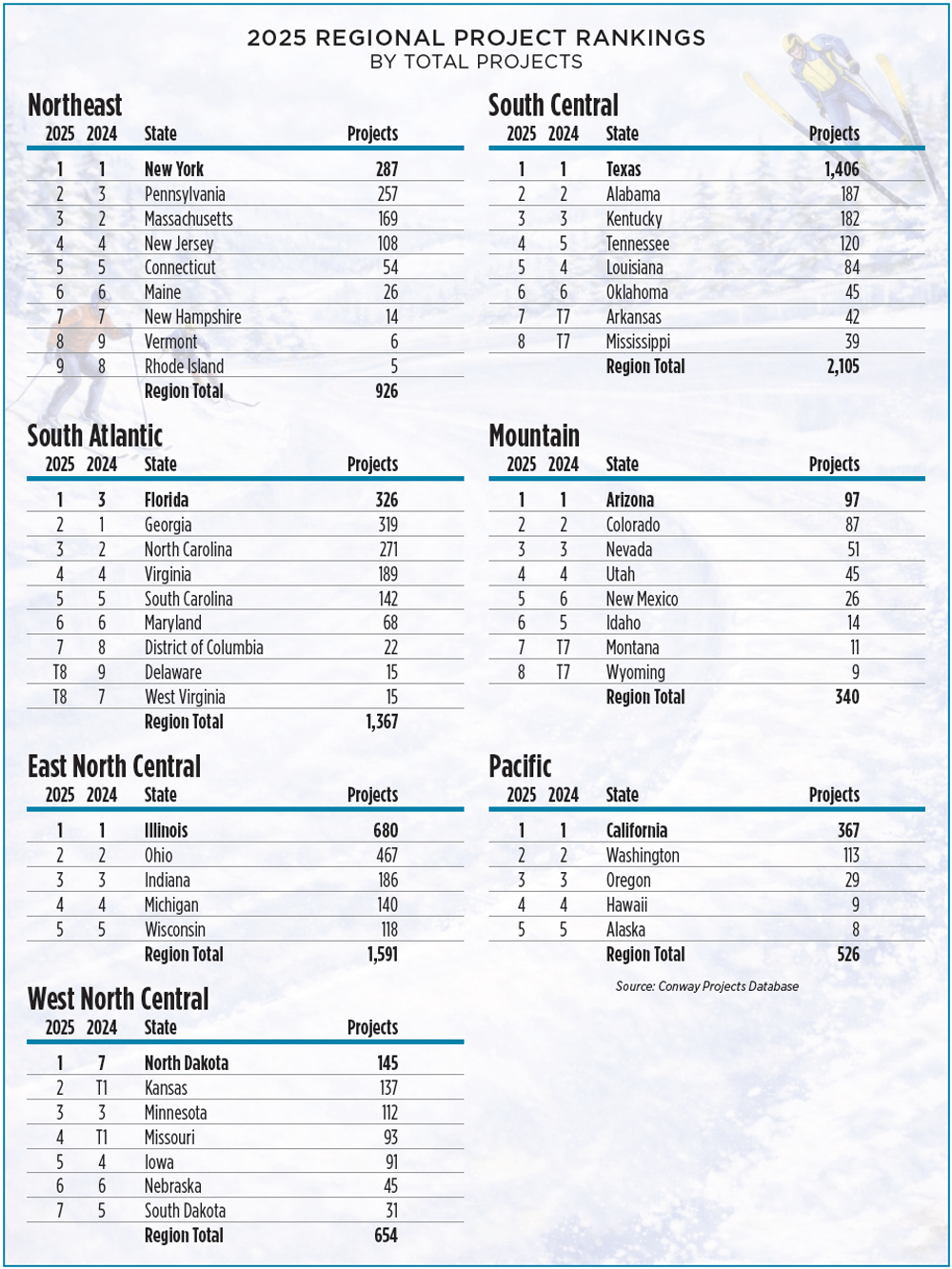
Photo: Getty Images
In the past few months I’ve gotten to witness first-hand some of the impressive industry partnerships taking place on the campuses of Austin Community College and Texas A&M University. Which higher education collaborations with industry have impressed you the most in the past year?
Abbott: We are so proud of the collaborative work that our higher education institutions have undertaken with private industry. Texas A&M Engineering and their newly established Texas A&M Semiconductor Institute have recently launched multiple programs and initiatives to bolster the semiconductor industry. In Fall 2025, Texas A&M University introduced a new Master of Science focused on microelectronics and semiconductors to blend digital and analog integrated circuit design with semiconductor manufacturing, ensuring students are proficient in both areas and can collaborate effectively between design and fabrication processes. This program was made possible by a $1 million gift from Samsung Austin Semiconductor.
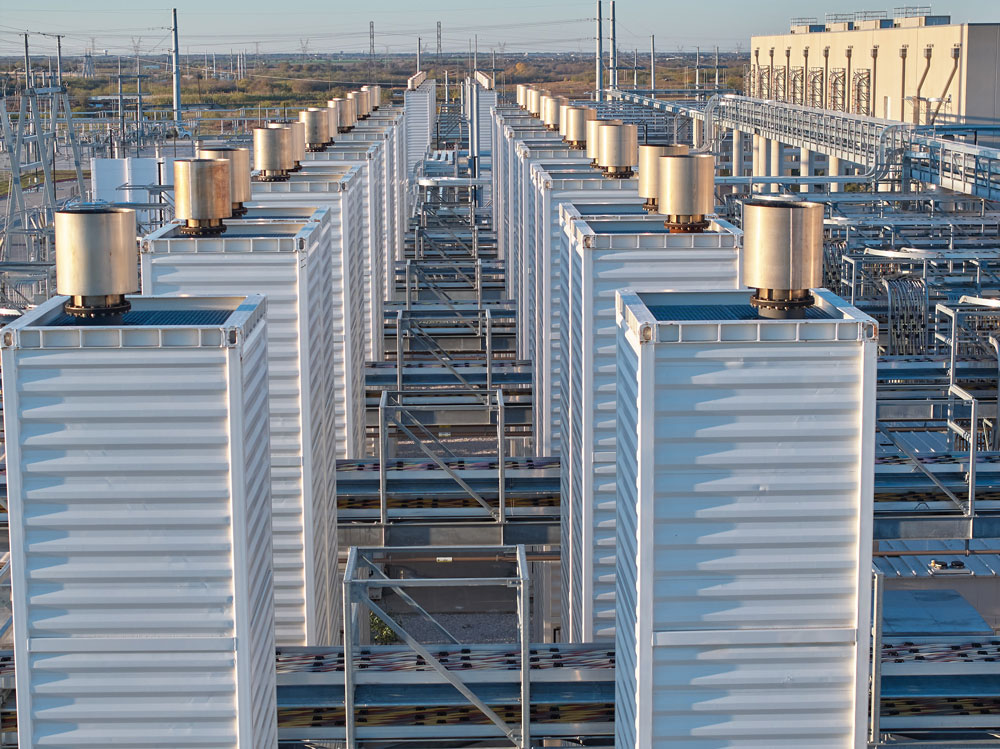
Google is investing $40 billion in data centers located in Midlothian and West Texas.
Photo courtesy of Google
Another example of industry collaboration is the partnership between The University of Texas at Austin, Austin Community College District and Texas Institute for Electronics. Together they have created a joint program to further develop America’s semiconductor workforce. With clear pathways between UT and ACC, the program will address every skillset in the semiconductor workforce, from equipment technicians to semiconductor engineers.
Recognizing the value of Career and Technical Education (CTE) programs, I made career training an emergency item for the 89th Texas Legislative Session. This includes expanding the Jobs & Education for Texans (JET) grant program, enhancing dual credit opportunities, supporting career training in rural areas and strengthening career-aligned curriculum. The State of Texas also offers programs like the Texas Talent Connection Grant and the Skills Development Fund, which support innovation in workforce development through collaboration between industry and higher education.
You and your wife, like my wife and I, have one child named Audrey. Both Audreys are just getting started in the workforce. What are the greatest opportunities and challenges ahead for them?
Abbott: Texas is a talent magnet, attracting the best and the brightest from around the world to our state — and there’s a reason for that. Texas is focused on remaining the best place to live, work and raise a family. Not to mention, Texas is the No. 1 jobs creator in the U.S. now for the fourth year in a row, offering immense potential for job seekers.
With every new generation entering the workforce come opportunities and challenges. Our daughters, along with all young Texans entering the workforce, are learning what it means to work alongside AI in the workplace. Young professionals today experience a pace of change much different than other generations with the revolution of new technology ever increasing.
Texas and North Dakota (on a per-capita basis) have earned the Governor’s Cup awards this year. Both your states have major energy and AI data center momentum. What’s the key to this nexus, and how do you manage such a boom in activity, especially where electrical power is concerned?
Abbott: Texas is quickly becoming a national hub for AI infrastructure and data centers. Emerging technologies like machine learning, robotic process automation and natural language processing are the focus of Texas universities and businesses. We are home to impressive data center investments including Stargate in Abilene, META in El Paso and Google’s $40 billion investment in Midlothian and West Texas.
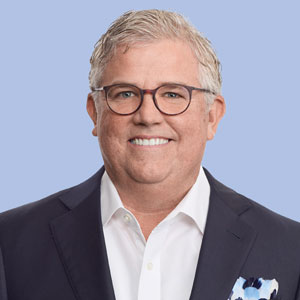
“Moving Texas forward to meet rising energy demand involves public-private partnership, and NRG is grateful the Greens Bayou new build project is part of Governor Abbott’s innovative JETI program.”
— Robert Gaudette, President of NRG, on the company’s newly announced 455-megawatt, $617 million natural gas-fired power plant in Greater Houston, February 17, 2026
Central Texas and the Metroplex, which have earned the monikers Silicon Hills and Silicon Prairie, are global tech hubs thanks to a high concentration of STEM workers and proximity to multiple higher education institutions. The University of Texas at Austin, for example, is launching a Center for Generative AI, continuing to grow both Texas’ technology and attract tech workers from outside the state to support the sector’s growth.
Energy is a critical component for AI and for data center development. Texas is blessed with abundant natural resources. Texas produces more electricity than any other state — more than twice as much as the second- and third-highest producing state — and produces more energy than any other state. As Texas continues to experience unprecedented growth, we have increased dispatchable power generation and continue to make strategic investments in critical infrastructure. Working together with innovators in tech and energy, Texas continues to increase capacity to ensure every Texan and every Texas business has the power needed to thrive.
The new year already has started off with a flurry of continuing semiconductor industry announcements and openings. Do you see the chip activity progressing in lockstep with the data center surge?
Abbott: The explosive demand for AI and machine learning, coupled with massive investments by hyperscalers like Meta, Google and AWS, is impacting the semiconductor industry significantly. This sector is certainly a key driver for the semiconductor market. Texas has benefited from an extensive semiconductor ecosystem, developed over decades. Texas has been the No. 1 exporter of semiconductors and other electronic components for 14 consecutive years, leading the American resurgence in critical semiconductor manufacturing. Texas has the skilled workforce, infrastructure advantages and innovative ecosystem to support domestic semiconductor manufacturing, reducing reliance on foreign production and supply chains and further ensuring our nation’s security.
As the birthplace of the integrated circuit, not only does Texas have the environment to support critical semiconductor manufacturing, Texas is home to some of the largest players in the industry — Samsung, Texas Instruments and GlobalWafers, along with many others like Tokyo Electron and Applied Materials as well as others in the semiconductor supply chain. The state has experienced a 41% increase in semiconductor firms over the last five years.
This is backed up with a strong workforce, with more than 51,000 Texans already working in the semiconductor industry. And Texas continues to heavily invest in the workforce pipeline of tomorrow with innovative programs at UT Austin, Texas A&M and Austin Community College.
Additionally, the Texas CHIPS Act which established the Texas Semiconductor Innovation Consortium (TSIC) and the Texas Semiconductor Innovation Fund (TSIF) — supported by the Texas CHIPS Office — help leverage Texas’ investments in the industry and encourage further expansion. Texas has awarded more than $355 million in TSIF grants since its inception in June 2023. Looking to the future, these programs will further accelerate our position as a frontrunner in semiconductor research, design and manufacturing.
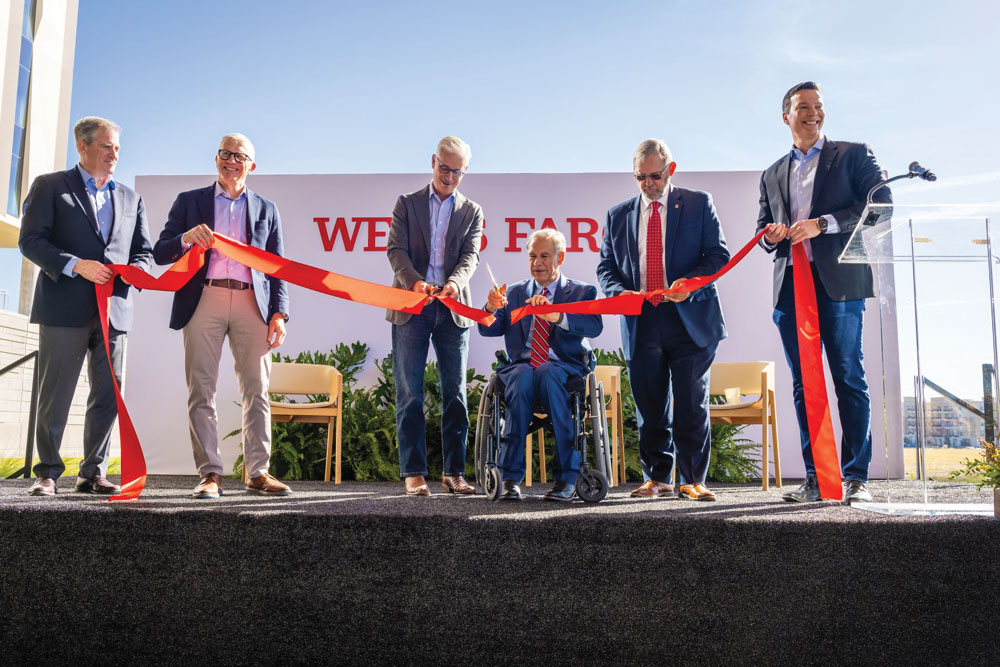
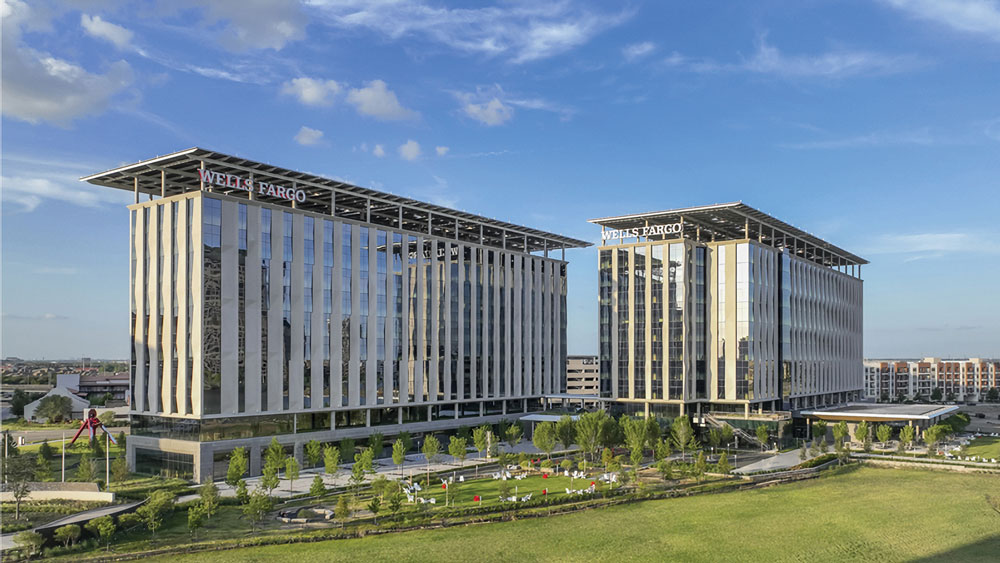
Gov. Abbott in October 2025 helped cut the ribbon at Wells Fargo’s new campus in Irving-Las Colinas, where the company will bring together 4,500 employees. It’s just one part of the financial services surge in Texas.
Photos courtesy of the Office of the Governor and Wells Fargo
Like so many other categories, Texas leads the country in its number of foreign direct investment projects. Describe inroads you’ve personally made this past year in working with foreign companies and delegations, and where your team is focused this year in terms of FDI attraction.
Abbott: Texas is a gateway for global trade and is the leading state for foreign direct investment over the last two decades. During my time as Governor, I have met with numerous world leaders and led many business development missions to Europe, Asia and the Middle East. Just in the past year, Texas has welcomed delegations from the Czech Republic, Canada, Germany, Taiwan, South Korea, Spain, The Netherlands and many others. In addition, my Texas Economic Development & Tourism Office opened the State of Texas Taiwan Office in 2024 and will be opening offices in the UK and Israel in 2026.
Y’all Street is alive and well with the new stock exchange presences in Texas as well as a healthy roster of financial services firm locations and expansions. What does success in this particular sector signal for the state economy as a whole?
Abbott: Texas has long been known for cattle, crude and cotton. Now, Texas is also known for capital and capital markets. The Texas Stock Exchange (TXSE) is expected to begin trading this year, and we have now welcomed NYSE Texas and a regional headquarters for Nasdaq. Not to mention, in November, Nasdaq announced their intent to launch their own Texas financial exchange, Nasdaq Texas. From Wall Street to Y’all Street, Texas is becoming the financial services capital of America.
Texas ranks No. 1 in the U.S. for total financial services employment, even outpacing New York. Outlined in our “Bigger. Better. Texas.” Statewide Economic Development Strategic Plan, which will guide the state’s economic development strategy for the next five years, we anticipate the financial services industry to see a major boom, supported by information technology, cybersecurity and AI.
You made a lot of progress with your legislative agenda last year, including the establishment of the Texas Regulatory Efficiency Office. It’s still early days, but what results are you already seeing?
Abbott: The Texas Regulatory Efficiency Office (TREO), which officially launched last October, is charged with reducing regulatory burdens, eliminating unnecessary rules and promoting economic growth by making Texas even more business friendly. This new office will reinforce what our state’s business owners already know — that the State of Texas is focused on supporting their success. TREO will ensure we make state government more responsive and more efficient to serve the people and job creators of Texas.
Continuing the work started by the Governor’s Small Business Freedom Council that was established in 2024, TREO is working to increase transparency for Texas taxpayers and ensure that Texas remains the best place to start and run a business in the country. The office is reviewing state agency rules and procedures and will coordinate with an advisory panel of experts and stakeholders to solicit input from Texans and members of the regulated community. TREO is directed to help state agencies identify and repeal unnecessary or ineffective rules, determine the regulatory costs placed on the public and issue best-practice guidelines for how agencies adopt new rules and perform required analyses.
You are running for an unprecedented fourth term as Texas governor. What drives you to keep serving in this role?
Abbott: Serving as Governor of the great state of Texas is an honor, and I want to see Texas and Texans remain successful. The reason that we as a state continue to climb the ranks is because hard-working men and women know that with our conservative polices and core principles, this is the best place to live, work and raise a family. I am passionate about defending our state and the freedoms that make us stronger, safer and more prosperous.
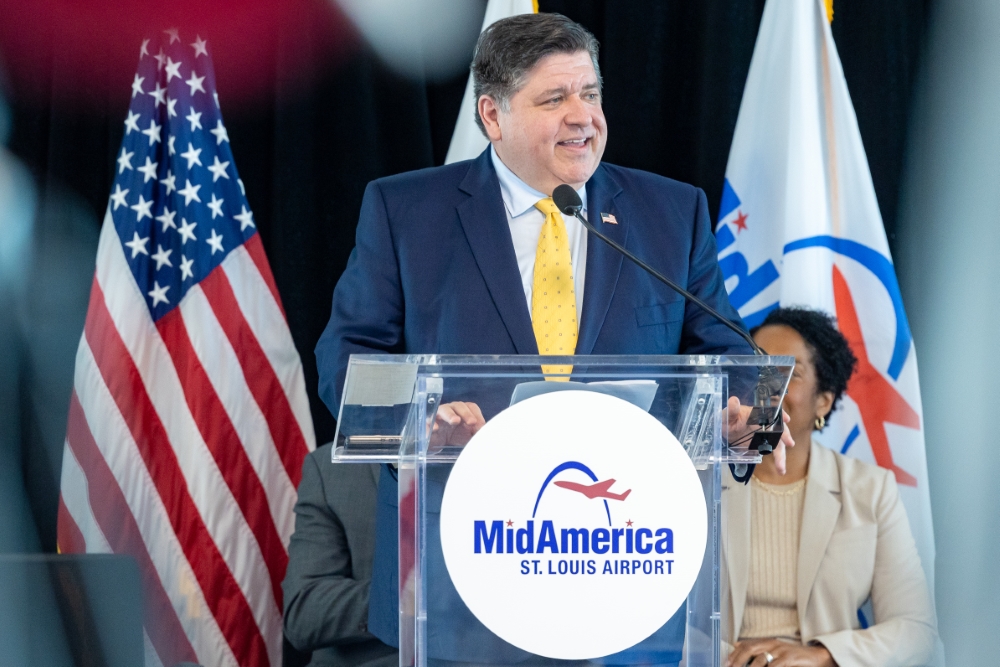
Gov. JB Pritzker speaks at an economic development event recently in Illinois.
Photo courtesy of Illinois Governor’s Office
How Illinois Manufactured an Investment Engine
By RON STARNER
Illinois placing second in the annual Site Selection Governor’s Cup standings in both the cumulative and per-capita categories is no easy feat. It’s also no accident. Perennially, the Prairie State performs at a top two or top three state level when it comes to landing corporate facility investment deals.
How an Upper Midwest state manages to maintain this elite level of accomplishment, in an era when many people and companies are fleeing the region and heading to what they perceive to be greener pastures in the Mountain West and the Sunbelt, is a testament to the steady hand of leadership guiding economic development statewide.
The one constant in this era is Illinois Governor JB Pritzker, who in his seven years in office has led Illinois to multiple record-setting milestones. In less than two terms, he has:
- Enacted balanced budgets every year and received credit upgrades for the first time in two decades, lowering interest rates and improving Illinois’ finances.
- Paid down the state’s bill backlog and eliminated late bill payment, saving taxpayers hundreds of millions of dollars in interest.
- Improved state finances and upgraded the credit ratings of Illinois universities and community colleges.
- Increased state funding for K-12 schools, expanded early childhood education and child care and increased college scholarships for Illinois students.
- Made strategic investments to modernize roads, bridges, schools and broadband connectivity.
- Passed the Climate and Equitable Jobs Act, a bill he signed in January to lower everyone’s electric bills in Illinois while expanding alternative power generation.
- Increased funding for site development, giving Illinois dozens of large shovel-ready tracts that are fully entitled and ready for corporate investment.
In the following question-and-answer exchange via email, the governor explains how Illinois achieved these milestones and how it plans to compete for even more jobs and industry.
— Ron Starner
How have you been able to maintain Illinois as a top two state for corporate facility expansion projects over the course of your tenure as governor?
Gov. JB Pritzker: We’ve been intentional about telling our story and backing it up with results. I’ve said before that I’m the state’s best chief marketing officer, and I take that role seriously. My job is to make sure people understand what Illinois is actually delivering. When I took office, Illinois’ fiscal health was in rough shape. We made tough, responsible decisions: passing seven consecutive balanced budgets, earning 10 credit upgrades since 2021, and helping drive $13 billion in incentivized private investment in 2025. That fiscal stability is the foundation for sustained economic growth, and it’s why companies have confidence investing in Illinois for the long term.
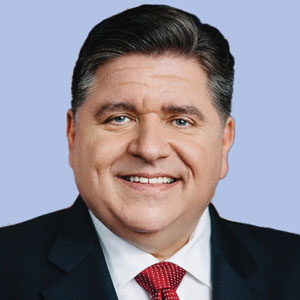
“I’ve said before that I’m the state’s best chief marketing officer, and I take that role seriously. My job is to make sure people understand what Illinois is actually delivering.”
— JB Pritzker, Governor of Illinois
At the same time, we’ve built a coordinated, whole-of-government approach through Team Illinois — bringing together the Governor’s Office, DCEO, the Illinois Economic Development Corporation and regional partners to compete aggressively for jobs and investment. Combined with modernized incentives and major site-readiness investments, Illinois has doubled down on coordination, resulting in a white-glove service approach to business development. Together, these results have made one thing clear to investors and partners alike: Illinois is open for business, committed to stability, and the right place to relocate, expand and succeed.
We hear a lot about companies moving from the Midwest to the Sunbelt. Why do you think so many companies choose Illinois?
Pritzker: Companies choose Illinois because we’re in the middle of everything; and we’ve done the work to make that advantage count. Since I took office, my administration has been focused on one thing: making Illinois the best place in the country to live, work and do business. That’s meant stabilizing our finances, investing in infrastructure and building an economy that creates opportunity in every corner of the state.
Illinois’ location is a real, structural advantage. We sit at the center of the national economy, with unmatched access to markets, supply chains and transportation networks, alongside the world’s largest freshwater system and some of the most productive farmland anywhere. We’ve paired those natural strengths with deliberate investments — in infrastructure, clean energy, world-class universities and research institutions, and a talented, highly educated workforce. Those investments are paying off. Illinois is seeing record private-sector investment and major wins in high-growth industries like quantum, clean energy, life sciences and advanced manufacturing. The momentum is real, the results are measurable, and they show there’s no better place to grow than Illinois.
How have you made Illinois more competitive as a business location during your time in office?
Pritzker: Competitiveness doesn’t happen by accident. It’s the result of clear priorities and a willingness to modernize how government works with business. We’ve updated and strengthened Illinois’ incentive and investment toolbox to meet the needs of businesses looking to expand in key industries, including $500 million in capital investments for site readiness, creating a new Advanced Manufacturing Investment Tax Credit, expanding the flexibility of Enterprise Zones, and extending the Research and Development Tax Credit. We also have incentives focused on EV manufacturing and quantum. But incentives alone aren’t the strategy. They’re a tool. We deploy them carefully to attract investment that creates good-paying jobs and delivers a real return for communities. We’ve also restored stability to our finances and made smart, targeted investments that support long-term growth. That combination is working, and we’re not slowing down. We’re building for the next decade and beyond.
What is your viewpoint on incentives for companies? And how does Illinois approach that issue?
Pritzker: Incentives should be strategic, accountable and focused on outcomes, and that’s what we’re doing in Illinois. Our goal is to attract and retain companies that are committed to Illinois for the long haul and create quality jobs for Illinois families. It’s simple: Companies do their part — create jobs and invest in communities, and then they receive the incentives. It’s a win for communities and the companies. In 2025, Illinois supported a record $13 billion in company investments through key incentive programs. Those investments are translating into jobs, growth and long-term economic strength across the state. When incentives are paired with strong infrastructure, a skilled workforce and sound fiscal management, they become a powerful tool, and that’s how we use them.

Gov. Pritzker in October celebrated with members of Laborers International Union of North America on Chicago’s West Side as he announced the largest multi-year program to build & repair infrastructure in state history: $50.6 billion over six years.
Photo courtesy of Illinois Governor’s Office
Illinois secured
680 corporate
facility deals in
2025, good for
second in the
country and 213
more than third-place Ohio.
Source: Conway Projects Database
Your administration has invested a lot into site development statewide. How is that investment paying off for the state so far?
Pritzker: For too long, Illinois communities were held back by underprepared sites and a lack of state partnership. We changed that. Through Rebuild Illinois and our site readiness initiatives, we’re making the largest investment in site development in state history — $500 million to ensure communities across Illinois are ready to compete for major projects. That means preparing land, upgrading infrastructure and doing the hard work upfront so businesses can move quickly and with confidence. Programs like Site Ready Illinois help unlock opportunity across all regions of the state, while additional investments prepare underutilized state-owned properties for private development. These efforts are positioning Illinois to win large-scale industrial projects; and we’re just getting started.
If you were sitting across the table from the CEO of a company in another state, what would you tell them?
Pritzker: I’d say: Illinois is open for business, and we are serious partners. My team and our economic development partners work with companies to make it easier to get to “yes.” That means cutting through red tape, providing clear information and, when necessary, adapting policy so businesses can invest and hire with confidence. Illinois has surpassed a $1.1 trillion GDP, attracted billions in investment across advanced industries and built an economy that’s competitive nationally and globally. Most importantly, we listen. Businesses succeed because the state shows up as a partner, investing in infrastructure, workforce development and smart incentives that support long-term growth.
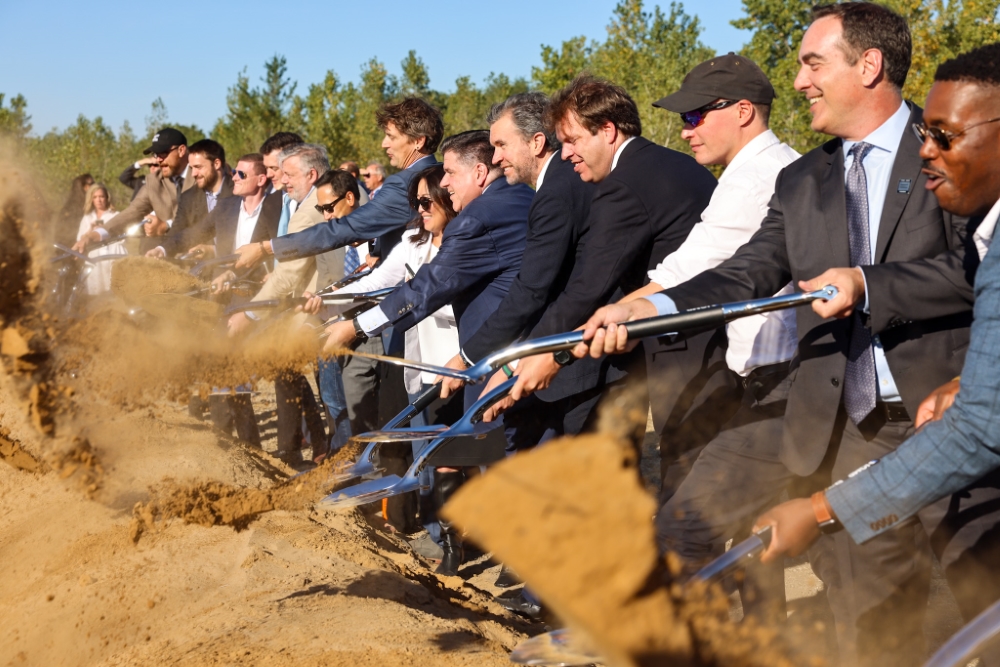
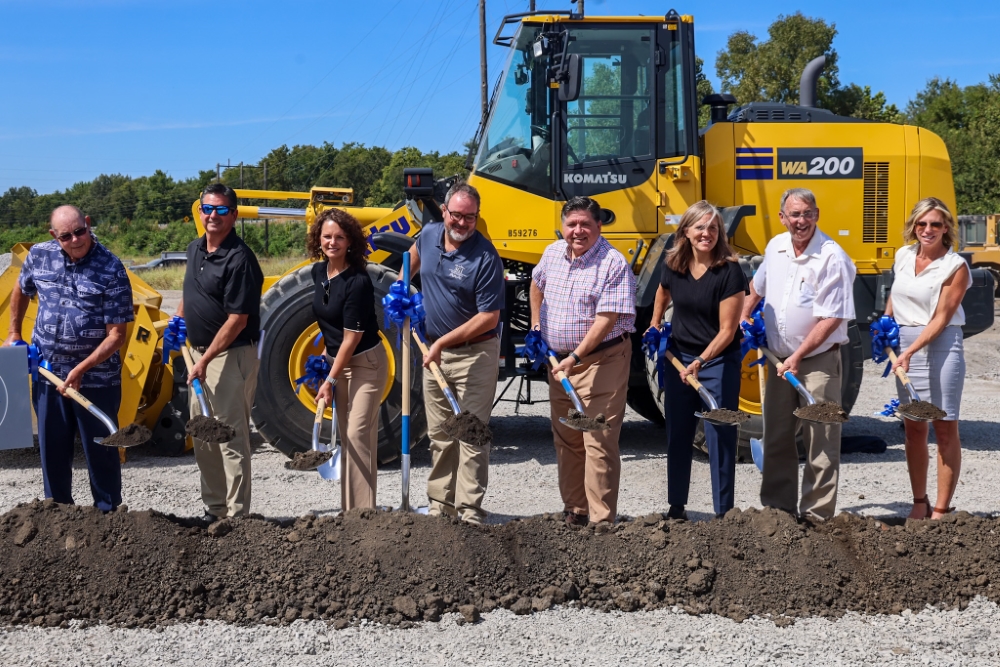
Gov. Pritzker has attended his share of groundbreakings.
Photos courtesy of Illinois Governor’s Office
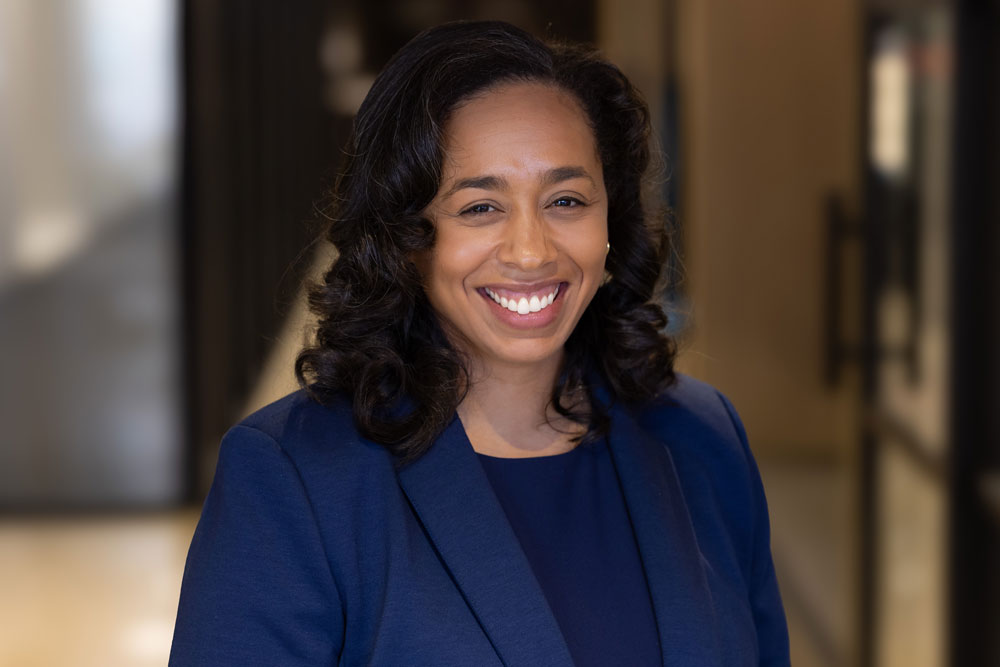
Christy George, President and CEO, Illinois Economic Development Corp.
GOVERNOR’S CUP SIDEBAR: ILLINOIS EDC INTERVIEW
No Hail Mary Here: Illinois Wins With Strategy and Shoe Leather
By RON STARNER
When I reached out to Christy George, president and CEO of the Illinois Economic Development Corp. (IEDC), she was as happy as a child on Christmas morning, and with good reason. Not only had she just presided over a second-place finish in the Site Selection Governor’s Cup ranking for 2025 by leading her state to yet another stellar year of securing a bevy of large-scale corporate facility development projects; but she was also basking in the glory of watching her beloved Chicago Bears record a magical season.
When Bears quarterback Caleb Williams dropped back to near midfield and launched a high-arcing pass to the corner of the end zone on fourth down with only seconds left in the NFC Playoff Divisional Round versus the Los Angeles Rams at Soldier Field, all of Chicago held its collective breath. When the pass came down and nestled into the waiting arms of Bears tight end Cole Kmet to score the game-tying touchdown, all of Illinois erupted into a frenzied celebration.
George says she was one of them. “I couldn’t believe it,” she told me over a Zoom call. “It was the most amazing play I ever saw.”
People are starting to say similar things about Illinois’ performance in economic development. Year in and year out, the Prairie State performs among the top two or three states in the nation in landing corporate facility investment deals, and 2025 was no exception. In the following interview, George recounts that performance and outlines how the state is pushing for more.
“We have the turnaround story of the decade. No other state has come back more than Illinois.”
– Christy George, President & CEO, Illinois Economic Development Corp.
With Chicago once again being ranked as the No. 1 metro in America for corporate facility project investments, and Illinois ranking second in the nation among all 50 states, what do you feel about the current state of economic development in Illinois?
CHRISTY GEORGE: Illinois is competing and winning as a result of intentional strategy and leveraging our advantages like our central location, connectivity and highly skilled workers. The momentum is real. It is incredibly exciting to be in Illinois. This is not the first time we have achieved these rankings. We have ranked in the top two spots in back-to-back years. We have the turnaround story of the decade. No other state has come back more than Illinois. We invest really big in infrastructure, technology and workforce, and those investments are paying off.
What are the factors that are consistently propelling both Chicago and Illinois toward the top of the national rankings in Site Selection magazine?
CHRISTY GEORGE: Success stems from strategy and focused leadership. Plus, we have innovative incentives. I also have to credit the level of regionalism happening in the Chicagoland area and in other parts of the state like Southern Illinois and Central Illinois with groups like SI Now and the Mid-Illinois Collaborative. People are working together to create stronger strategies. They’re putting ego aside and collaborating. These regional efforts prove to be very effective. They allow for a stronger statewide strategy that is better than we have ever seen before. We work closely with the state team at the Illinois Department of Community and Economic Opportunity (DCEO). They have become so nimble in adjusting incentives and other programs.
Illinois succeeds because it has legacy strengths: a global supply chain hub; access to major waterways; a global manufacturing hub; many advanced industries; broadband connectivity statewide; a tech-ready workforce; national labs; incredible research institutions; advanced computing and quantum computing; and many more.
Our economy’s diversity makes us resilient. Quick movement of goods and people define our state. Around 86% of the continental U.S. is reachable within a two-day’s truck drive of Chicago. Within a four-hour flight or less, you can travel to any U.S. market. Illinois has close to 6,800 miles of freight railroad. O’Hare is the No. 1 most connected airport in the U.S. Our ports offer direct links to the Atlantic Ocean and the Gulf of Mexico.
So many different assets allow us to compete at a very high level. Over 6.5 million people are in our labor pool. We have close to 240 post-secondary schools. We train people to work in a wide variety of industries. That enables us to attract advanced companies from all over the world. We are a global business hub. Many Fortune 500 headquarters are here; and over 2,000 international firms call Illinois home. They are here because they know they can do their business here.
Did Illinois pass any new legislation this past year to add to your economic development toolkit? If so, can you please outline those measures?
CHRISTY GEORGE: We regularly solicit feedback from corporate site selectors and other leaders. Our incentives are not static. They evolve. The AIM (Advancing Innovative Manufacturing) Tax Credit for existing companies was passed this past year. This is for firms that invest at least $10 million into facilities. The Sales Tax and Revenue (STAR) Bond District Program was expanded to allow more STAR Bond projects. We enhanced the EDGE (Economic Development for a Growing Economy) program and the REV (Reimagining Electric Vehicles) program. REV expanded to respond to growth and to fund production of hybrid vehicles.
Investing into quality, available sites for development has been a top priority of this administration for a number of years. How has this worked, and do you anticipate getting any additional funding for this program this year?
CHRISTY GEORGE: There are two components to what the state did. The first is that the state approved $200 million more to expand existing site programs. It is open now for applications for capital grants and for planning grants. Rural communities may be interested but need planning assistance. The rest is devoted to investing into development-ready sites. In addition to that, the state took $300 million and devoted it to the Department of Central Management Services to take surplus state sites and fund them to prepare those idle sites for private development. That program is underway on five state-owned sites. Both programs show that this is not just about repurposing land. It is about setting up communities for long-term success.
Illinois passed the
Advancing Innovative Manufacturing (AIM)
for Illinois Tax Credit, effective for tax
years beginning January 1, 2026.
The performance-based incentive offers
manufacturers 3% to 7% in tax credits
for investments of at least
$10 million in upgrading their facilities.
Source: Ryan LLC
How are you navigating the recruitment and securement of foreign direct investment right now during these challenging times on the international front?
CHRISTY GEORGE: There is a ton of uncertainty out there. Our companies are feeling it. The site selectors are seeing it in deal flow. We are telling our international partners that we are here for you. We traveled to Japan, Mexico and South Korea last year. We are going to the UK next week. We have hosted people from Australia and the UK. We are not slowing down on FDI. If you look at the data from our team, we have won many foreign companies over the past year. A Canadian EV bus maker opened its first U.S. plant in Peoria last year. Epic Medical of Singapore came here with $25 million investment. Yet another quantum computing startup came here. Other companies are coming here and investing here as well. We have been highly successful in securing FDI because our message is one of stability. You will get what we tell you. We will not falter in our promises. We are also holding more international convenings. We held the Global Quantum Forum here last year. Over 20 countries came here last summer to attend that forum. We work to break down barriers and for Illinois to be the center of gravity for FDI.