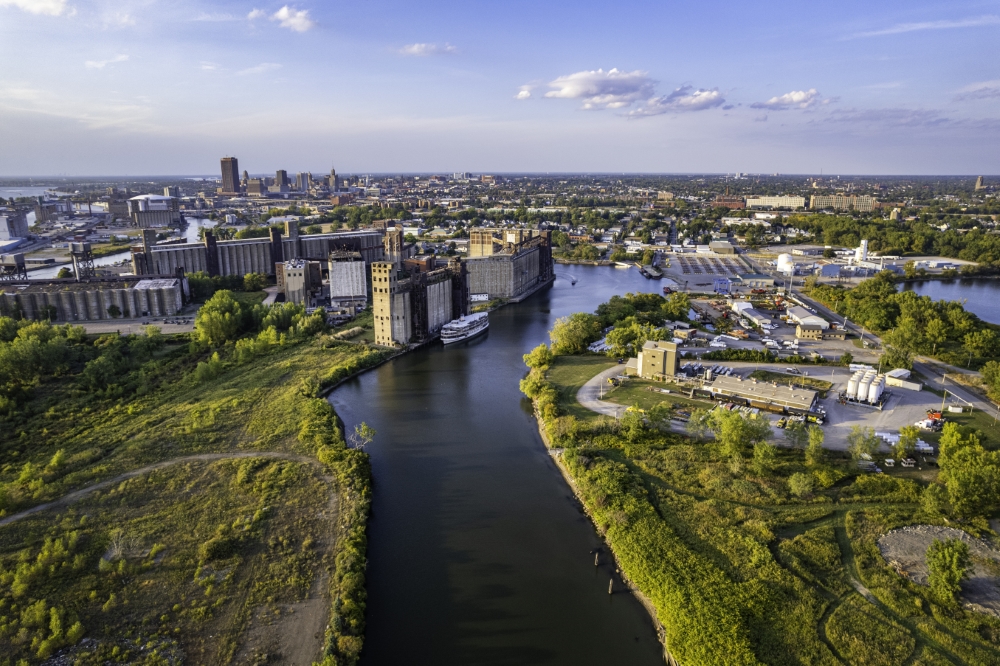
These factors are critical, attractive and strengths the Buffalo Niagara region knows well.
On a windy morning in March cold enough to make this native Georgian squirm, I headed to the New York Power Authority’s (NYPA) Power Vista with the Invest Buffalo Niagara team.
Positioned about 400 feet above the Niagara River, where Niagara Falls once flowed before shifting about 7 miles downstream due to thousands of years of natural erosion, we explored the facility’s interactive exhibits to gain an understanding of electricity and hydropower.
Aside from some fun, and a spraydown from the Power Vista’s 4-D movie theater, I learned I was sitting within what is now referred to as the region’s 30-mile Hydro Zone. NYPA Director of Key Accounts for Municipal Electric Utilities Joseph Crimi shared that for businesses, power is a major requirement and a restriction for everything in this Western New York region and the state as a whole. At this site, the NYPA produces 2,600 megawatts (MW) of hydroelectric generation. Combined with another generation site in Massena, about half of this power is specifically set aside for economic development.
“There is about 700 MW that is set aside for economic development only within a 30-mile radius of this site,” says Crimi. “The benefit is that they can get about 70% of their power that is not only low cost, but green hydro.”
He says this region has been a hotbed for economic development because of this asset. Even if a company chooses to locate outside of the 30-mile radius they can still get 50% of their power covered through NYPA’s ReCharge New York program, which sets aside about 900 MW available to the entire state.
Access to this reliable and cost-effective hydropower is precisely what led plastic fabrication company Confer Plastics to set up shop within the region’s Hydro Zone.
“It was a big selling point for this region,” says Confer Plastics President Bob Confer. “I had a lot of people say, ‘Why don’t you move to a free state like Texas?’ I always tell them that freedom doesn’t mean a thing if basic human needs and economic needs can’t be met. That starts with power.”
Confer harkens back to the Texas Deep Freeze in 2021, resulting in a crippled grid due to lack of maintenance. Reliability is not something Confer was willing to give up, as it would not only negatively affect his manufacturing equipment but leave his customers unsatisfied. His company caters to the pool and spa industry, often resulting in projects that take months to complete. When quoting projects the price of these materials has to remain stable over the course of a year and power price stability is a key way Confer Plastics can maintain market competitiveness.
“When I look at the cost of electricity it gives me predictability. My clients are buying products from us that they could theoretically buy overseas,” he says. “The power from NYPA comes in below market value, which gives me the pleasure of being able to come in with a set product price that allows me to get into long-term contracts that can ride out a year plus.”
Finding Canadian Favor
As the Trump Administration considers scrapping the U.S.-Mexico-Canada Agreement — which replaced the North American Free Trade Agreement in 2020 — leaders in Canada and Mexico are grappling with the uncertainty of tariffs and future economic impacts if the agreement is not renewed later this year.
While President Donald Trump may have claimed, “We don’t need anything Canada has,” in June 2026, that sentiment couldn’t be further from the truth in the Buffalo Niagara region. More than 120 Canadian companies have now established themselves just over the Ontario border, taking advantage of a strategic U.S. location that features a skilled workforce, robust infrastructure and of course, power.
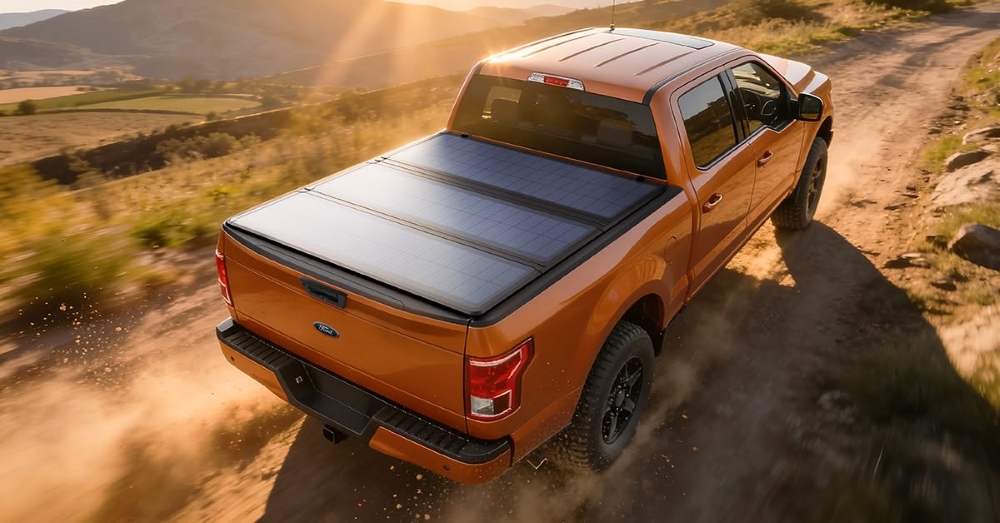
Worksport’s products such as soft and hard tonneau covers are components used by leading automotive brands such as Ford, RAM and Chevrolet.
Photo courtesy of Worksport
Having previously operated out of Canada, automotive manufacturing company Worksport relocated its Ontario-based corporate headquarters and onshored production after discovering a former brewery site in West Seneca. The facility’s infrastructure alone afforded the company a turnkey plant to begin manufacturing premium soft and hard tonneau covers, SOLIS solar truck bed covers and portable power generation systems.
“The beauty of Buffalo Niagara is that everything is built for industry,” says Worksport CEO Steven Rossi. “Power is readily available so we can ramp up. We have the land, space, people and the energy, which is very difficult to find in Canada. Most of the properties we looked at in Toronto had 400 to 600 amps and that’s just not enough. We have 1.3 million volts of power here — it’s perfect.”
Worksport primarily supplies its products to leading automotive brands, including Jeep, Ford, Dodge, Chevrolet and Toyota. As I walked through the 40,000 sq. ft. of bay one, I watched state-of-the-art equipment seamlessly shape a flat roll of aluminum to the exact specifications of a tonneau cover. The machine does in minutes what would take a team of 20 employees hours to accomplish.
I asked Rossi why this region over top U.S. automotive hubs. “Buffalo has got this beautiful intersection of brain and brawn, which is strange and hard to find,” he said. “I’ve never built a factory before. Man, was it easy when we found the right people.”
In the assembly bay, a team of Worksport employees were situated along a production line swiftly snapping panels onto the tri-fold hard tonneau covers, forming a waterproof cover without any glue or screws. Dubbed the “AL4,” the product is Worksport’s most popular seller and the facility can produce about 100 units a day. That said, having just landed national distribution, Rossi says this capacity is ramping up as the current bay could support up to 1,000 units a day, which he expects to reach in a year’s time.
A finished cover then slides into its protective 100% recycled packaging, specially engineered by local packaging company Jamestown located an hour away in the city of Jamestown. Rossi says the opportunity to form regional industry connections like this has been invaluable for Worksport’s growing operations.
“Every product in this building, down to the paint that we coat our material with, is sourced from American soil. Our mandate is to have the material source as close to 716 as possible,” says Rossi, referencing Buffalo’s area code brand. “When we can find material close to New York or Pennsylvania, we do so. We’re 93% domestically sourced and over 50% sourced within the U.S. northeast.”
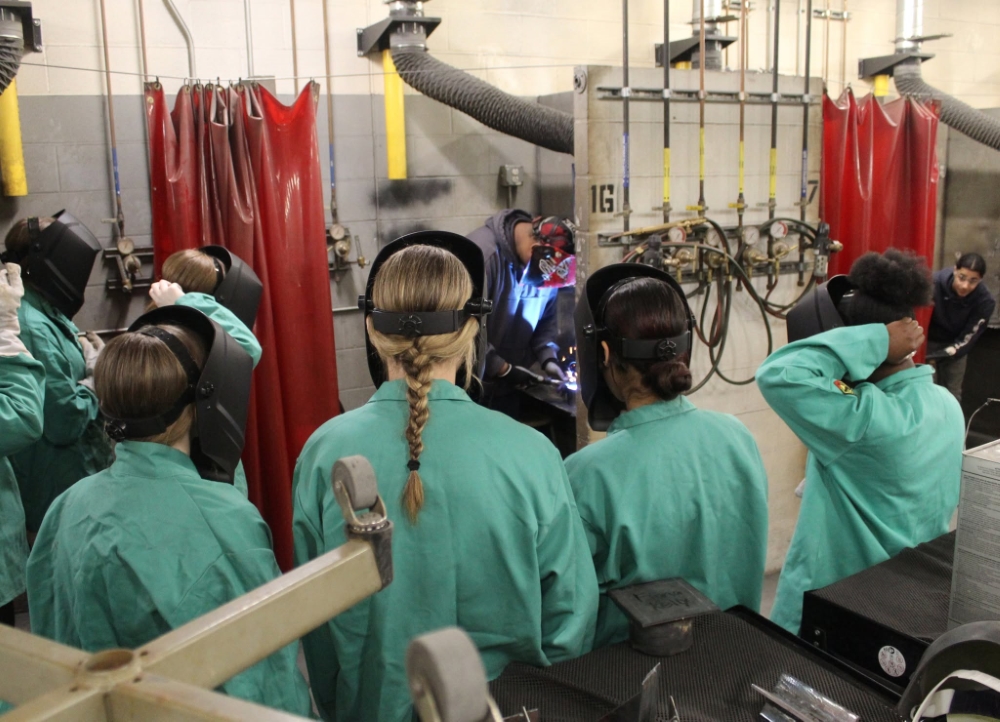
To date, the NWTC has provided training to more than 700 students in Western New York.
Photo courtesy of the Northland Workforce Training Center
A Made in USA label serves as a significant draw for other Canadian manufacturers like Avanti Advanced Manufacturing. A make-or-break U.S. customer for the plastic injection molding company led President Jim Wei to shift production to the Buffalo Niagara region 16 years ago. The major client remained firm on wanting a Made in USA product, or no dice, which Wei says made the move from Waterloo, Canada an easy decision. Buffalo was the closest city to the Canadian border, keeping manufacturing close to its customers while offering a site at a fraction of the cost in Canada, a great labor force and low cost of living.
“All this added up to ‘Why didn’t I do this earlier?’ ” says Wei. “If it wasn’t for my customer saying, ‘You should do this in the U.S., in Buffalo,’ I would have never discovered this whole new array of opportunities. I was able to own my building, acquire other businesses and keep on expanding.”
Operating here has given the company a competitive advantage Wei doesn’t believe he’d have anywhere else. In Buffalo, Wei was able to consolidate Canadian suppliers and buy directly from local Erie County suppliers in Depew and Tonawanda within 30 minutes of the facility. He says that proximity has been a shock and a cost savings benefit, as his Toronto suppliers were located more than an hour and a half away in Waterloo.
“In a way, I tell the story that I’ve been forced to come to the U.S., but if it wasn’t for that opportunity, I would have never had a second look at Buffalo,” says Wei. “Since I’ve been here, I’ve never looked back. Investing my time, energy and creating jobs here have become part of my life.”
A Workforce Prepared for the Future
Under former New York Governor Andrew Cuomo, the Buffalo Billion economic development initiative introduced $64 million in funding to revitalize an aging manufacturing facility, known today as the Northland Workforce Training Center (NWTC). The workforce center was to be an anchor institution of the Northland Beltline Corridor Redevelopment Project and play a key role in transforming Buffalo’s economy. Its purpose and intent was to fill a projected 20,000 advanced manufacturing and clean energy sector roles, an opening caused by an exodus of retirement-age employees in the region.
“Both sectors had an amazing workforce and a non-existent pipeline. Then people were not interested, aware of or had the technical skills to fill these positions,” says NWTC CEO Stephen Tucker. “The thought was to create a training center in the community that is accessible so we can start training residents to fill these employment opportunities.”
Erie Community College and Alfred State College are two local higher education institutions that have partnered with the NWTC to deliver training to a current roster of 378 students. Technical training programs offered include Welding Technology, Electrical Construction and Maintenance Electrician, CNC Manufacturing and Machining, Mechatronics, Automotive Technician and HVAC. Each program has its own advisory committee, in addition to the NWTC’s own board, made up of industry representatives to support evolving curriculum demands.
To mitigate any challenges that would deter students pursuing training, they are provided their own career coaches to address obstacles such as affordability, housing and transportation.
“We’re try to make sure we’re creating opportunities for everyone. We currently have about 60% diversity, 21% of the students are from Buffalo and we have about 9% female participation,” says Tucker. “Our program completion rate is 64%, double the national average and three times the local community college average. Now, Governor Hochul plans to replicate this model across the state in locations like Syracuse, Utica, Albany and Rochester.”
Moving through the NWTC, it’s clear this facility was designed for hands-on experience. To replicate what students would encounter on the job, NWTC’s Auto Tech Lab was crafted by Western Automotive Group, which provided equipment, cars and engine. A new section of the facility now under construction will soon become a Clean Technology Lab, teaching construction maintenance while bringing in solar shingles, a wind turbine, a battery storage system and an electric vehicle to train students in specific renewable energy technologies.
Through its educational partners, the NWTC is able to offer students programs that provide for-credit, certificate and associate degree opportunities. As every student’s needs are different, the center additionally offers one- and two-semester certificate programs. In the NWTC’s first two years, it’s raised about $18 million in funding to support its programs, while training over 700 students with an 89% job placement rate. As workforce development training pushes on, the center is becoming a key asset in supplying skilled talent to businesses operating or locating in the region.
“We understand talent retention starts from the very beginning. You have to make sure you’re aligning students with the right program based on their own interests, skills, personalities and work values,” says Tucker. “We never try to talk a student out of a program. We make sure it’s a good fit and they fully understand the career they’re getting into.”
A Look Back at 25 Years of Regional Leadership
Amonth after returning from my trip, it was announced that Invest Buffalo Niagara President and CEO Tom Kucharski would be retiring from his role. In June 2026, I was able to connect with Kucharski for an exit interview.
In addition to spearheading over 25 years of economic development growth in the region, Kucharski was able to beat his years-long battle with leukemia during his tenure. He says it will be difficult to live life in Buffalo without looking through an economic development lens. After this month he will enter a three-month consultative contract to aid in Invest Buffalo Niagara’s leadership transition and will remain on a couple of boards to continue sharing his expertise. But with so many interests to dive into, and his health in order as he approaches one year without chemo, Kucharski looks forward to being active again in his favorite place.
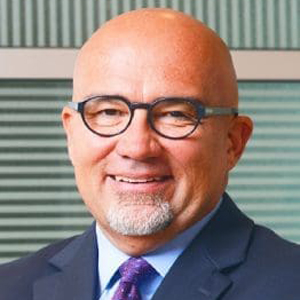
Tom Kucharski
Site Selection: In your time at Invest Buffalo Niagara you saw 462 projects, nearly 50,000 jobs and $8.1 billion in capital investment flow into the region. What do these stats mean to you now as you enter your next chapter?
Tom Kucharski: Having worked in other places and then coming back home, it’s really important to me. When I first got here the knock on our region, which was a knock in a lot of regions, was that they don’t work well together. We’ve overcome a lot of things and we’ve got a lot to be proud of. The urgency that we try to keep the region’s businesses and elected folks focused on is that we’ve gotten back to being relevant and competitive. But it’s just like sports — if you overcome a big deficit, get back tied and then lose going forward then it didn’t matter. I think a big part of putting a bow on everything is the success of the “Be in Buffalo” campaign. We are able to show the metrics on how we are addressing some of the chronic skill gaps, while showing who is moving back here from the places we lament that we’re not like. It’s an incredible amount of progress in 25 years.
Out of that healthy roster, were there any particular projects you found to be transformative to the region’s story?
Kucharski: There are several that are stories unto themselves. I’m thinking about the first major brownfield reclamation at the Buffalo Lakeside Commerce Park, which at the time was called Union Ship Canal. We had an opportunity with Saint-Gobain — they wanted a site at the brownfield that wasn’t quite ready, so it was a real test of everybody working together to pull this off. The long and short is we were able to put in all the things they needed in concert with all the stuff we were going to do anyway and now the park is a great success. Another opportunity we had was working with the local Blue Cross Blue Shield to bring 1,500 jobs and a brand new facility downtown. It was a former brownfield site so we had to get all entities to work together and figure out how to build a new twin tower complex. We were able to pull that off too. It showed that if the public sector can come up with innovative solutions together then the private sector can too.
The Tesla facility was a brownfield reclamation of the old Republic Steel site in Buffalo that we spent eight years on with plans to have a mixed-used tech park. Elon Musk and company thought it was an attractive place to locate and it’s still here employing 1,400 people. The last one would be the Amazon facility being built up in Niagara Falls. I think we are all proud of that one because it is the third attempt they made to put a last-mile facility here. They went to Rochester and Syracuse, but now Buffalo will be one of their largest facilities. Niagara Falls has suffered from industry exodus and it’s an incredible testament.
What has been your favorite experience as President and CEO? Conversely, what has been your biggest lesson as President and CEO?
Kucharski: Some of the best moments are when someone writes me a handwritten letter or sends an email says that “I was on public subsidy,” or other challenges, “and now I have a good job at the company you helped bring here and I just wanted to thank you.” I make sure to share those will all of our partners because this is a team sport. As for challenges, sometimes you think you’ve done everything right and you don’t win the deal. As you get older, you understand that while it’s a gut punch to spend two or three years on a project sometimes it still doesn’t pan out and life isn’t fair. If you’ve been ghosted or there is inactivity, you’ve got to stay in touch with these people and put effort into it because there might be some way to pick it up in the future and stay top of mind.
What do you want corporate leaders to know about Invest Buffalo Niagara’s evolving economic development strategy?
Kucharski: We’re a place that by all metrics is coming back. For two years in a row Buffalo has been named the hottest housing market by Zillow. Whether or not that ranking means anything, you certainly wouldn’t be in that strata if something wasn’t going on here. Unlike a lot of other places, the people that work and live here do that because they want to be here. If you’re entertaining joining our community, we’re going to accept you, be happy you’re here and you’ll be a part of our family. We’re on the international border between the breadbasket in the Midwest and the East Coast with access to ports. With Micron and Intel opening, we’re halfway between those two as a semiconductor cluster. There’s a lot of momentum and you need to get in at the ground floor right now so you can make good use of that as a company in the future.
One of your most vital focuses was removing the region’s competitive nature and enhancing collaboration to attract economic development growth — does anything surprise you now looking back on where your work started?
Kucharski: What still remains surprising to me was how fast this happened. Unlike other regions in the Northeast or Midwest with big, established economies, we started our work with a lot of sites and a lot of unemployed people. We had to change the ways that we promote ourselves and the way we bring businesses here. It’s good to know who you’re competing against, and in the global economy today, you could be competing against anyone. I was surprised at how fast our region caught on to working together and how much progress we did make. It was evidenced by the federal government giving us a Build Back Better Regional Challenge grant and the only semiconductor Tech Hub designation in the country. You can argue the politics of it, but we wouldn’t have gotten those designations without being the real deal.
We reach a corporate audience that ranges from multinationals to startups. Name a few individuals you’ve encountered over the years who to you represent the best in responsible, community-minded, globally aware corporate leadership.
Kucharski: I would say our unicorns. I think our only unicorn to come out of the 43North competition is ACV Auctions. CEO George Chamoun went through the competition and demonstrated what it means to be an entrepreneur in Buffalo. They’ve grown exponentially and he’s still here and hiring in the region, making sure everyone knows this happened in Buffalo. Some of our past chairs who headed up the private sector organizations and made a commitment to growing the economy and doing it the right way. Randy Clark was one of our first chairmen — he was a bridge from the old guard captains of industry to bring new energy and new companies here. Douglas Dimitroff, managing partner at Phillips Lytle, also served as our chairman and when things got a little tense among jurisdictions or different initiatives, he was a very calming, kind individual. On all the projects I’ve worked on, Brad Griggs at Amazon has been a pleasure to work with. He came from economic development and is a straight shooter and was not only interested in their facility development, but the impact it would have on Western New York.
In as many or as few words as you’d like, what comes to mind when you consider this region’s road forward?
Kucharski: This place is very different, you can feel the vibe and people believe in this place. People are nice and move at the speed of business, and once you’re here you’re a part of the family. Companies are looking for places like that — it helps them attain their corporate goals while being in a place that cares about the environment, cares about their children and is kind of reinventing itself. Buffalo is an exciting place to join and I hope that message gets out there. We’re going through a big churn in economic development leadership and people are rightfully concerned. Much like other industries, to get a deal done and get initiatives going, you have to have everyone on board as much as you can. It’s going to have to be that way in the future. Hopefully everyone can put their stamp on what they’re doing while remembering there is strength in numbers. I hope that they adopt the playbook, make it their own and take it forward.