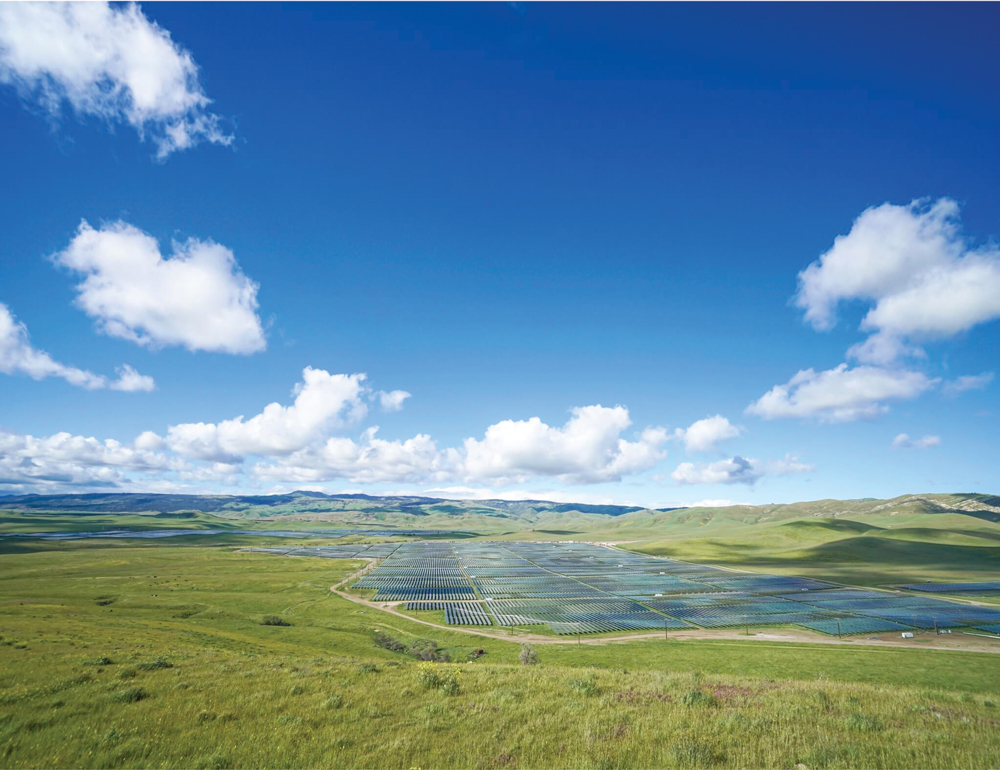
Biggest upward movers include the UAE, Ohio and the Washington, D.C., region.
Even as some political factions attempt to declare sustainability, ESG and CSR to be “woke” priorities worthy of tossing in the landfill, companies persist in quietly and not so quietly implementing sustainability measures in their everyday operations and policies.
Experts at Tractus said as much in their contribution to our May 2026 issue. “Across capital-intensive sectors, sustainability is no longer adjacent to competitiveness — it is embedded within it,” wrote Arunrat Chumroentaweesup and Kay Khaing Htun. “For manufacturers making long-term location decisions, geography has always shaped risk. What’s changed is that carbon pricing, disclosure expectations and climate volatility are making location-based exposures more visible and costly over the life of an investment. As a result, ESG does not merely influence site selection; it increasingly determines the order of site elimination.”
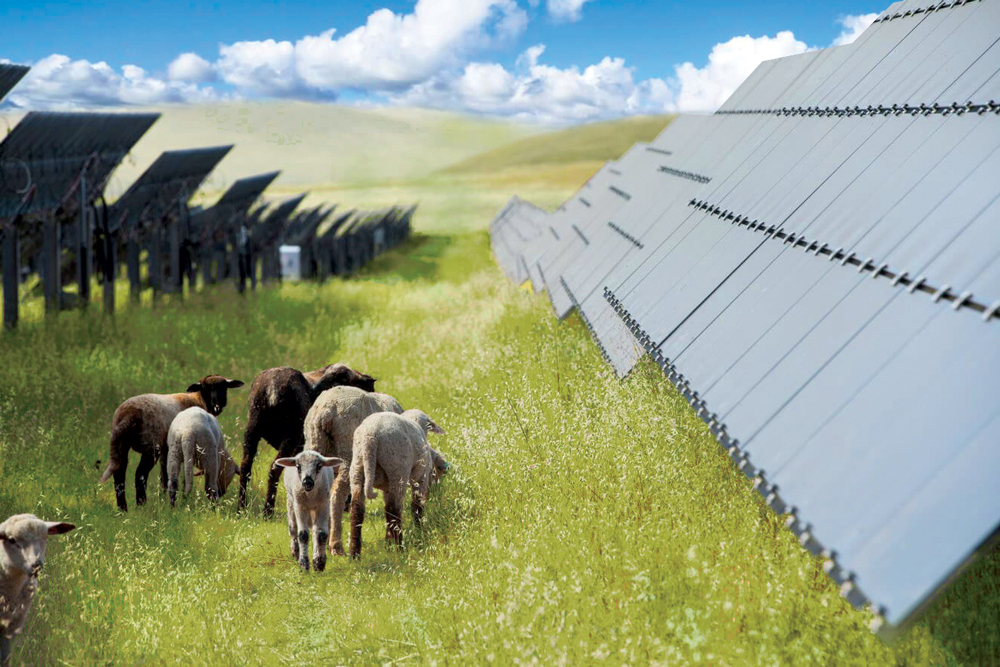
Photo courtesy of Hearst Ranch
In putting together their Asia Pacific Fit Out Cost Guide, real estate experts Tom Gibson and Andrew Carmichael at Cushman & Wakefield noted much the same thing, while detailing some specific strategies to take green thinking from certificates to more concrete results and healthier workspaces: “Sustainability is still a priority for occupiers in mature markets, but the conversation is shifting from ratings and certifications alone toward more practical ways to improve energy performance,” said the firm’s report, listing three themes:
- “Occupiers are thinking about sustainability before the lease is signed, spending more time selecting sites with the right sustainability features, lower climate risks and better energy performance to save on long-term costs.”
- “There is a growing trend toward well-designed spaces, without necessarily having them accredited. The goal is spaces that make better use of natural light and materials to use less energy and better support how people work.”
- “Multinational companies are building out their sustainability plans programmatically at a regional or global level, then cascading this consistent, repeatable approach to all offices for economies in time, cost and effort.”
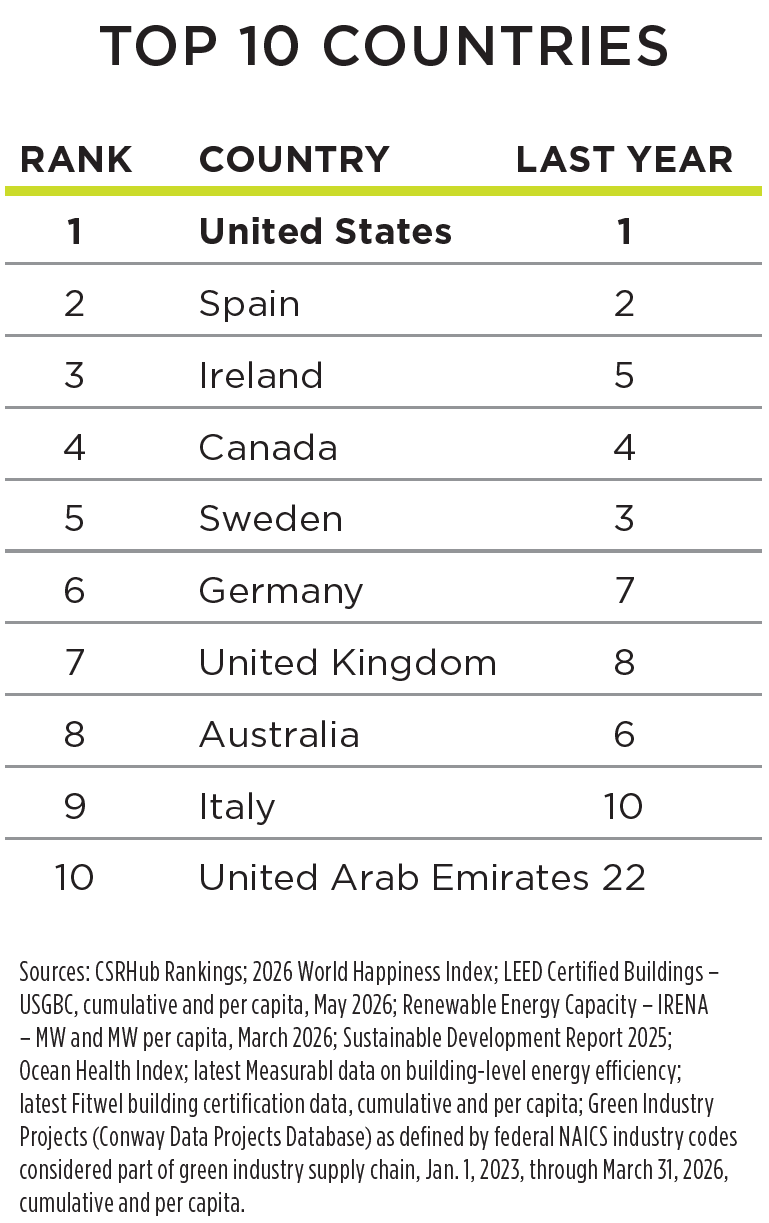
All of the above is why Site Selection for the 17th consecutive year presents our annual Sustainability Rankings, based on a methodology designed to showcase the territories cultivating the most fertile environment for a sustainability-oriented economy. These unique indices used to track countries, U.S. states and U.S. metro areas incorporate such factors as green building square footage per capita, happiness, federal Energy Star certifications, healthy workplaces, manufacturing of renewable energy products, the degree of corporate social responsibility among area employers and the number of sustainability-oriented incentives and policies in place.
Among partners contributing data to the indices is the Center for Active Design, which oversees the Fitwel rating system for healthy buildings and workplaces.
“The findings show that Fitwel is positioned alongside other credible data partners, reinforcing its role as a contributor to the evolving sustainability and real estate landscape,” says Janelle Schultz Decarreau, Fitwel ambassador and marketing manager for Active Design Advisors, Inc. (Adai). “The rankings reflect Fitwel’s strong national presence and its continued global growth. More broadly, the accompanying narrative aligns with the Center for Active Design’s evidence-based approach and long-standing position that health, sustainability, resilience and longer-term value creation are interconnected. As investor, tenant and community expectations continue to evolve, leading markets are increasingly distinguished by their ability to support not only sustainable performance, but also healthier and more resilient places for people.”
A curious source of corroboration for the rankings is the latest China Global Clean Tech Investment Dashboard released in June by Rhodium Group, which has tracked all deals over $100 million in value from Chinese clean-tech companies between 2014 and 2025. Over that span, our No. 1 country the United States welcomed $18.4 billion in Chinese clean-tech projects across all sectors. In Europe, where most of our highest-ranking countries are located, the leading recipient of Chinese clean-tech investment has been Hungary ($18.9 billion), which ranks No. 27 in our list. But after Hungary come Germany, Spain, Sweden and the United Kingdom, which rank Nos. 6, 2, 5 and 7, respectively, in our index.
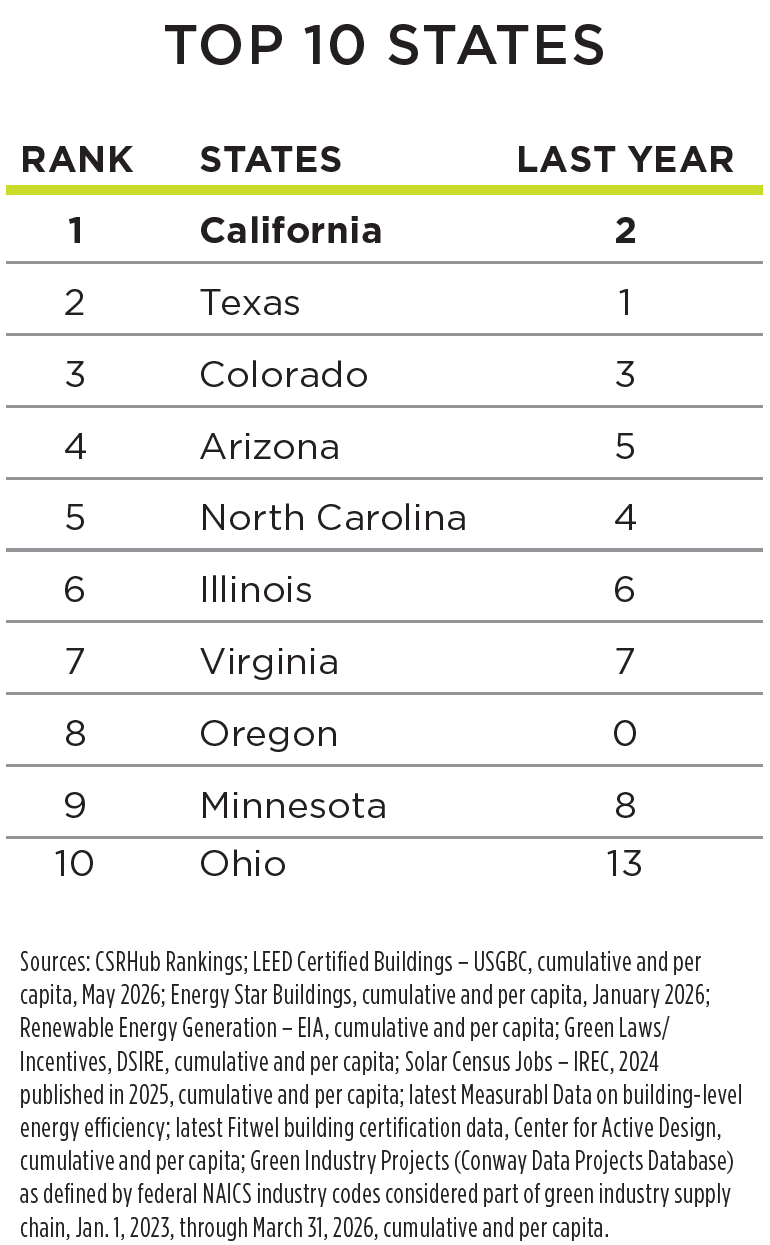
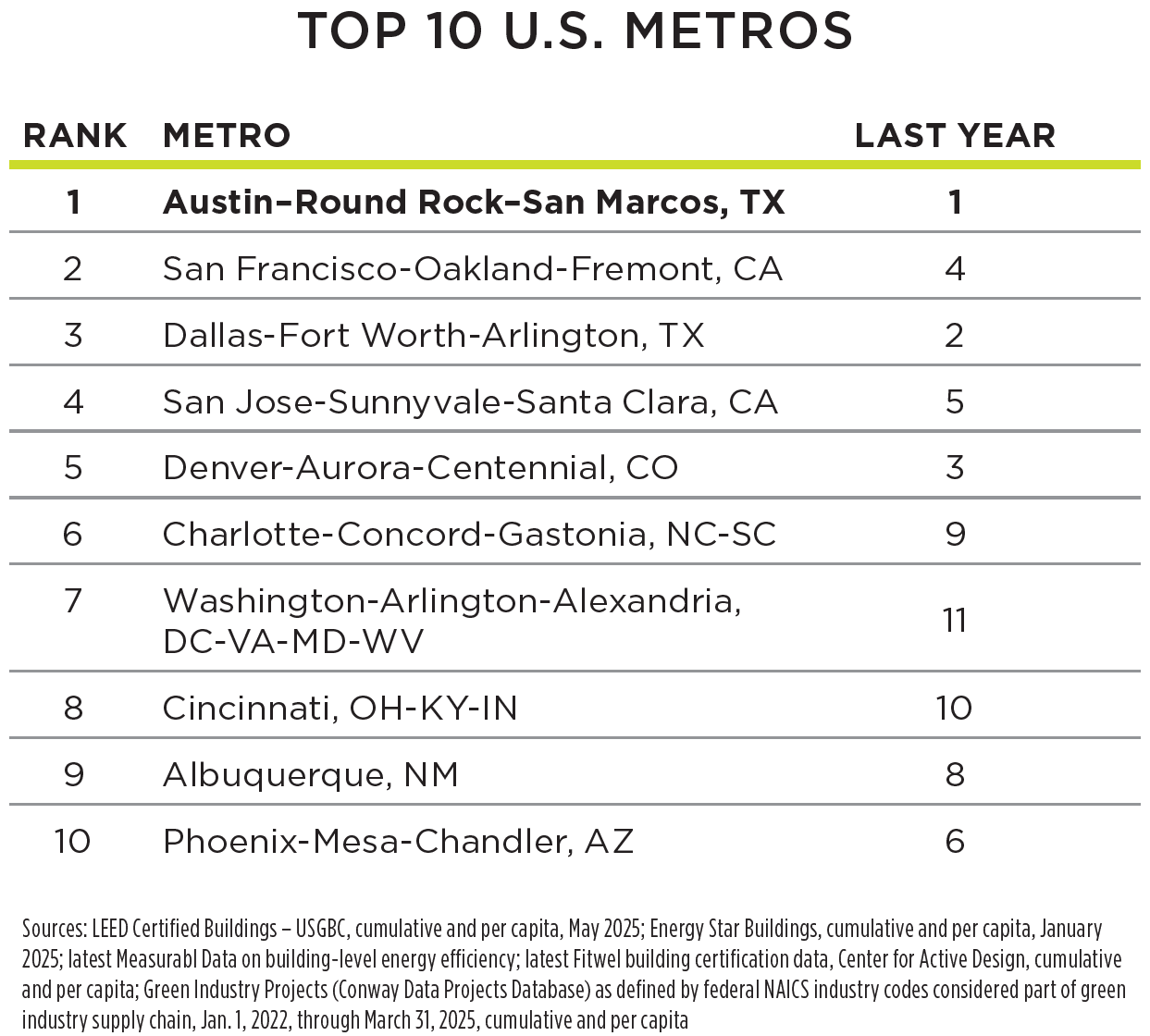
What’s the picture for clean tech in the United States? The State of Clean Energy Manufacturing report from the American Clean Power Association, released in May, finds momentum continues despite policy obstacles. Among other findings, the report states that over 235 new clean energy manufacturing facilities have opened in the United States in the last five years, and more than 300 U.S. factories are producing the core components of clean energy projects, including wind blades, towers, nacelles, solar modules, and batteries. The report stated that 70 new clean energy manufacturing facilities came online in 2025, bringing the total to “over 825 facilities across all 50 states with large clusters in Texas, Tennessee, Georgia, Ohio and North Carolina.” Three of those states — No. 2 Texas, No. 5 North Carolina and No. 10 Ohio — make Site Selection’s Top 10 states.
Meanwhile, the Clean Investment Monitor (CIM) from Rhodium Group and MIT found that while the first quarter of 2026 saw a 3% decline in clean energy and transportation investment from Q4 2025 and a 9% decline from Q1 2025, that investment nevertheless still came to $61 billion. One of the brightest spots? Clean power.
“Investment in clean electricity production was down 6% from the previous quarter but up 15% year-over-year, at $24 billion,” Rhodium Group reported. “Cumulative investment in utility-scale solar, wind, storage, and nuclear grew 29% over the past four quarters to $105 billion — the largest sustained four-quarter investment period since CIM tracking began in 2018. Among the top 20 states by cumulative clean electricity investment since 2018, Virginia, Colorado, New Mexico, Oklahoma, Michigan and New York recorded the largest year-over-year increases over the past four quarters, with clean electricity investment at least doubling in each state.”
More Sustainability Reports Than Ever
Another longtime partner in Site Selection’s rankings is CSRHub, a New York-based organization that tracks actions and policies of companies around the world. Every year, CSRHub examines how corporate facility investment activity tracked by geography by Site Selection’s Conway Projects Database aligns with the sustainability profiles of the companies doing the investing.
CSRHub Co-founder and Chief Technical Officer Bahar Gidwani notes several instances where his team’s methodologies and Site Selection’s don’t align, including our equal weighting of factors. Among other observations, he says the U.S. — No. 1 in our rankings — is is “far below Sweden (for instance) on all of our 12 measures of sustainability performance. Your picks would not be our picks.”
That said, he offers some more general observations about sustainability’s profile in today’s global business landscape.
“Shifts in the political tenor of various countries and in trade policies have driven site decisions for CSRHub’s clients more than sustainability considerations this past year,” Gidwani writes in an email. “Companies have postponed choosing sites until things ‘calm down.’ They have also sought to avoid getting caught up in controversies or challenges relating to their internal policies and practices.
“Despite these issues, most companies continue to think about sustainability-related topics,” he says. “They understand that being more sustainable can make their firms easier to manage and more profitable in the long term. We noted that more companies issued sustainability reports in 2025 than ever before. We expect to see this pattern continue in 2026. A company communicates its values in many ways. Reporting, conforming to standards, joining groups and engaging with its stakeholders provide opportunities to reinforce these messages. Picking a site for a new operation is one more way to share a company’s long-term vision. We hope that our work will help improve this process.”