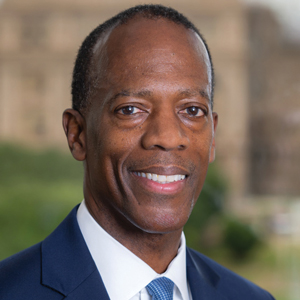
Aaron Demerson outlines the strategies and tactics employed by TxEDC.
When Site Selection magazine presented Texas Gov. Greg Abbott with the state’s 14th consecutive Governor’s Cup on March 2 for tallying the most corporate facility investment projects in the U.S. in 2025, there was one person clapping louder than any other in the crowd at the Governor’s Mansion in Austin.
His name is Aaron Demerson, and he is the President and CEO of the Texas Economic Development Corporation (TxEDC). He was leading the rousing ovation celebrating the record-setting triumph for a variety of reasons — not the least of which is that he is one of the people most responsible for it.
As chief executive of the TxEDC, Demerson leads an organization that has spent over a decade helping to position Texas as the No. 1 state for business. An independently funded and operated 501(c)(3) nonprofit organization responsible for marketing and promoting Texas as the premier business location, TxEDC works closely with the Governor’s Texas Economic Development & Tourism Office (EDT) to implement Gov. Abbott’s strategic economic development agenda.
That agenda can be summed up as follows: Build a bigger, better and stronger Texas. In the following interview, we asked Demerson how Texas achieved its nation-leading performance and how it plans to stay No. 1 in the years to come.
What were the major accomplishments of the Texas Economic Development Corporation over the past year?
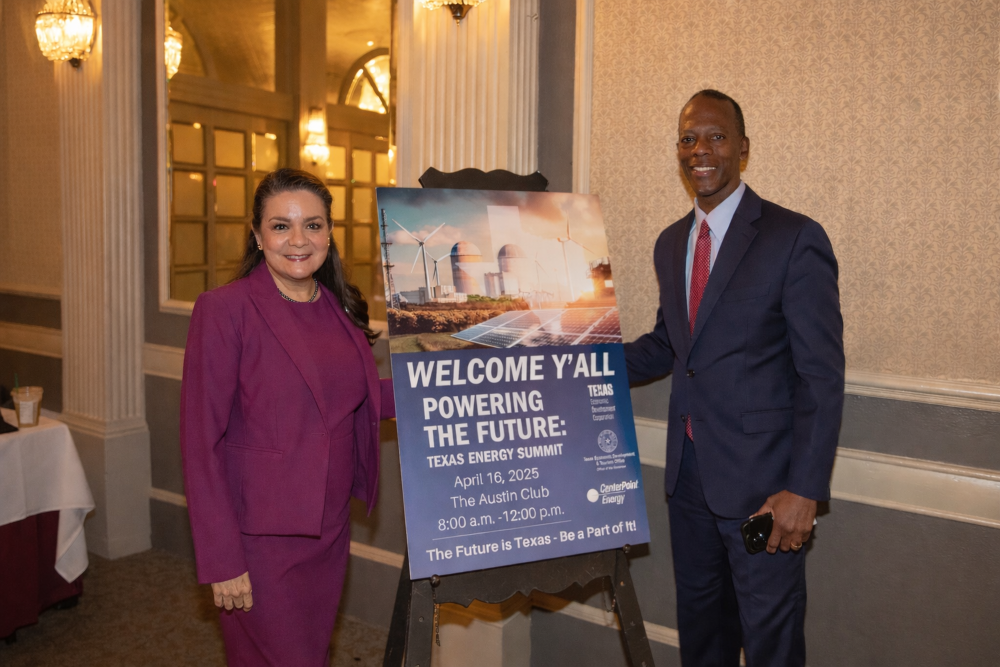
DEMERSON: Over the past year, TxEDC has built significant momentum in advancing Texas’ position as the No. 1 state for business on both a national and global scale. We successfully hosted two major investor summits: “Powering the Future: Texas Energy Summit” and “The Texas Takeover: America’s New Financial Hub.” These two summits brought together industry leaders, investors and decision-makers to highlight Texas’ leadership in energy, finance and innovation. These events continue to position Texas as the energy capital of the world and a premier destination for capital investment and business expansion.
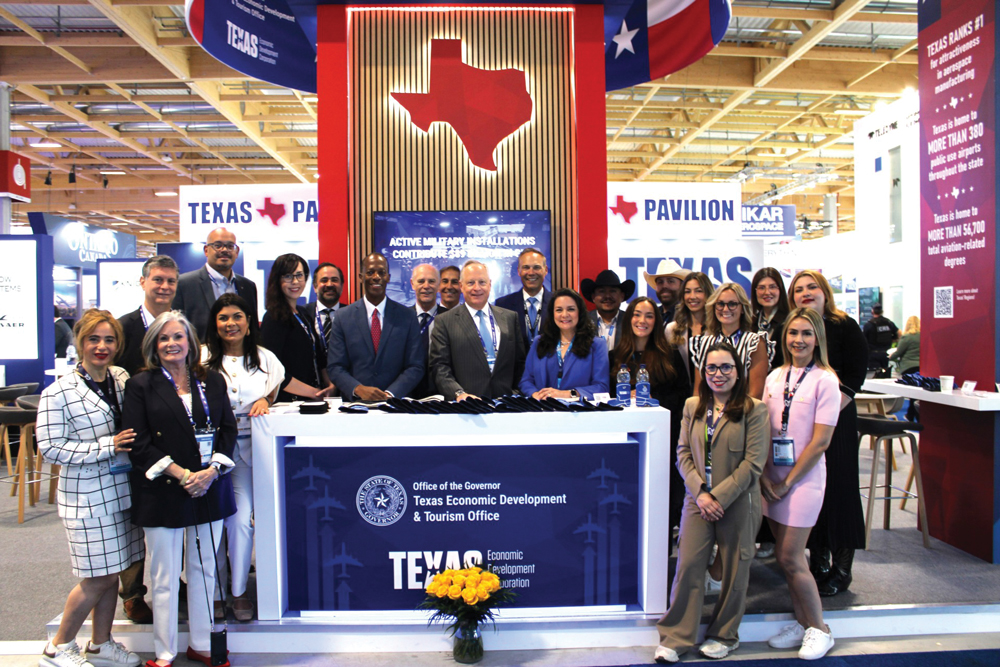
On the global front, we expanded our international footprint through participation in the Paris International Air Show, followed by a targeted mission to Lyon, France, strengthening key relationships and showcasing Texas as a global leader in aerospace, energy and advanced manufacturing. We also leveraged major events like Formula One at Circuit of the Americas, where we hosted five site consultants from across the country who had the unique opportunity to meet directly with Gov. Abbott.
Additionally, we convened venture capital leaders to highlight the diversity and strength of Texas’ economy, and we were honored to host King Abdullah II of Jordan for a roundtable discussion which further reinforced Texas’ growing global influence.
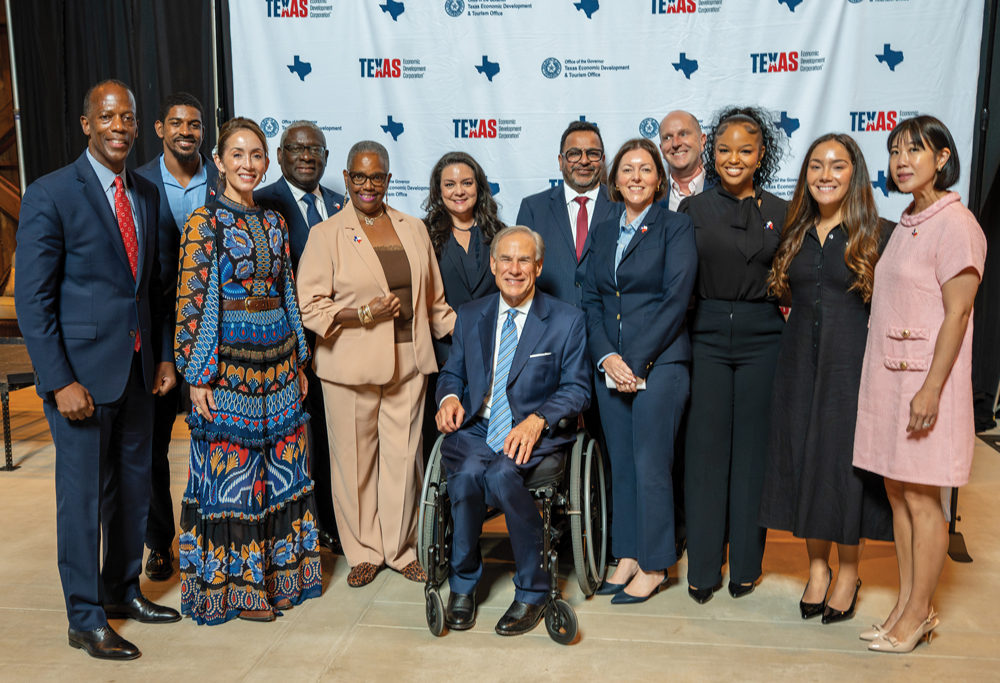
One of the proudest achievements is the continued recognition of the work of our state and local economic development professionals as evidenced by the awarding of Site Selection’s Governor’s Cup for the 14th consecutive year, demonstrating sustained excellence in job creation and capital investment.
Finally, we significantly expanded our investor members, which allows us to amplify our marketing efforts and tell the Texas story in an even bigger way across the world. These accomplishments reflect a clear focus: building relationships, creating opportunities and ensuring Texas remains the No. 1 state for business.
How do you measure the success of TxEDC?
DEMERSON: At TxEDC, we measure success by the progress we make against the goals established through ongoing collaboration with the Governor, the TxEDC Board, EDT and our investors. Success is reflected in the performance of our marketing efforts, when key metrics continue to rise, and when we are able to make strategic adjustments or introduce new initiatives that drive even greater impact. Ultimately, we measure success by the increased attention and awareness we generate for Texas, and in many cases, by the opportunity to introduce audiences to the real Texas.

Does Texas benchmark itself against competing states? If so, what does that look like?
DEMERSON: Texas is always aware of what other states are doing, both in their economic development efforts and how they position themselves in the marketplace. While we proudly hold the No. 1 spot in many areas, we never rest on our laurels or take that for granted. The facts speak for themselves when Texas is compared to other states, but we know continued success requires constant focus and collaboration. That means maintaining a strong business climate and investing in the fundamentals that matter most: workforce, economic development, education, energy, water and infrastructure.
The Governor’s Texas Economic Development & Tourism Office is engaged with local economic development partners across the state to identify strategic advantages to ensure Texas remains even more competitive and attractive for business investment. We aim to stay No. 1 and we work every day to stay there.
What is the most common misperception about Texas that you hear when you meet with people from other states and countries? How do you respond?
DEMERSON: A common misperception is that Texas is still primarily an oil and gas state. While energy remains a critical strength, Texas has built one of the most diverse and dynamic economies in the world. We are leading in semiconductors, driving innovation in AI, and serving as a major hub for importing and exporting. Our financial sector is rapidly expanding, with Dallas emerging as a global financial powerhouse and increasingly competing with and surpassing traditional centers like New York. What sets Texas apart is that we’re not afraid of change. We embrace it. We’re constantly evolving, operating at the speed of business, and positioning ourselves at the forefront of the global economy.
How does Texas market itself to the rest of the world?
DEMERSON: Texas markets itself to the world through a comprehensive and strategic approach, both domestically and internationally. We leverage digital platforms, targeted publications, global media, international business missions and high-impact events to elevate the Texas brand and tell our story. A key part of that strategy is meeting businesses where they are. Our international missions allow us to build direct relationships with global leaders and decision-makers. For example, this spring we co-led a mission to the United Kingdom, the Netherlands and Germany, where we strengthened partnerships and showcased the many advantages of doing business in Texas.
A major highlight of that trip was the official opening of the State of Texas United Kingdom Office, which represents a significant milestone in expanding our global presence. We also promoted major global events like the FIFA World Cup, reinforcing Texas as a premier destination for business, investment and international engagement.
The semiconductor industry began in Texas and continues to grow exponentially. What gives Texas the competitive edge in this globally competitive sector?
DEMERSON: Texas has been at the forefront of the semiconductor industry since its earliest days, and today, we continue to build on that legacy in a major way. What gives Texas a competitive edge is our combination of scale, infrastructure and a pro-business environment that allows companies to grow and innovate without barriers. The Texas CHIPS Act has set us apart from any other state. With potential federal investment flowing into semiconductor manufacturing and research, Texas is uniquely positioned to capture that momentum. Companies like Texas Instruments, Samsung, Global Wafers, NXP and many others choose Texas because we offer certainty, speed and opportunity. We don’t just participate in the semiconductor industry; we lead it.
How do you promote FDI and global trade in Texas?
DEMERSON: Texas promotes foreign direct investment (FDI) by doing what we do best, building strong, strategic partnerships around the world and backing that up with unmatched infrastructure and market access. One of the ways we’re actively doing that is through international missions, like our recent visit to the Port of Rotterdam, where we’re highlighting the long-standing and growing relationship between the Netherlands and Texas — particularly with the Port of Corpus Christi. In fact, the Netherlands is one of the top destinations for Texas exports, receiving billions in goods annually, including over $13 billion in exports from Corpus Christi alone.
Texas is the top exporting state in the nation, with $455 billion in exports in 2024, supporting more than 1.2 million jobs. That level of global connectivity is a major driver of FDI, because companies want to be where they can easily access international markets.
Our ports are a huge part of that story. The Port of Corpus Christi is one of the largest energy export gateways in the world, the Port of Houston ranks No. 1 in the U.S. for exports with nearly $130 billion in commodities, and the Port of Brownsville plays a critical role in trade with Mexico and global manufacturing supply chains. In addition, the Port of Laredo serves as the largest inland port in the U.S. and is a vital gateway for U.S.-Mexico trade, strengthening Texas’ position as a global trade leader. Altogether, Texas ports generate more than $700 billion in economic activity and support millions of jobs, making them a powerful engine for attracting global investment.
Given your deep background in workforce development in Texas, how is TxEDC able to use the state’s workforce development programs and advantages to appeal to expanding businesses?
DEMERSON: Texas understands that when it comes to workforce development, one size does not fit all, and that’s one of our greatest strengths. While traditional four-year degrees are supported, Texas has also built a robust system that offers multiple pathways for students and workers to succeed. That includes career and technical education, internships, apprenticeships, community college partnerships, and industry-aligned training programs that are designed in collaboration with employers. The result is a talent pipeline that is diverse, scalable and responsive, which gives companies the confidence that when they invest in Texas, they’ll have the workforce they need to grow and succeed.
Texas hosted the World Baseball Classic in March and will soon host multiple 2026 FIFA World Cup soccer matches in Dallas and Houston. What do you hope to accomplish for Texas as a result of hosting these global sporting events?
DEMERSON: Texas is always ready for the world stage, and events like the World Baseball Classic and the upcoming 2026 FIFA World Cup are incredible opportunities to showcase everything our state has to offer. We’ve also hosted global events like Formula One at Circuit of the Americas, which continues to grow each year, the Final Four in San Antonio, and most recently MotoGP, which further solidifies Texas as a premier destination for international sporting events. We’re proud to have strong leadership helping drive these efforts, including Governor-appointed TxEDC Board Member and Secretary Eddie Margain, who is leading initiatives surrounding the World Cup coming to Texas. He is also a key leader behind Austin FC, helping elevate Texas’ presence in global soccer. These events not only bring global attention to our state but also create lasting economic impact and reinforce Texas as a place where world-class events and opportunities come together.