
Head of EDT outlines the many new programs available to help firms grow.
As executive director of the Texas Economic Development & Tourism Office (EDT), Adriana Cruz leads a team of economic developers who work every day to make Texas the best place in America for corporate investment.
How effective are they? Consider that over the last 14 years, no state has done it any better. Site Selection magazine just awarded Texas the prestigious Governor’s Cup award for registering the most corporate facility investment projects in the nation for a record 14th year in a row.
In this interview, Cruz explains how Texas pulled off this unprecedented feat and describes how the Lone Star State is gunning for more.
Congratulations on leading Texas to win No. 14 in a row in the Site Selection Governor’s Cup rankings. How were you able to accomplish this feat, and what factors set Texas apart as the destination of choice for corporate site selectors?
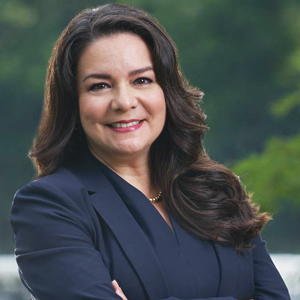
CRUZ: Thank you! Taking home the 14th Governor’s Cup is such an honor and no small feat. It’s thanks to our strong collaboration between state, local and regional economic development organizations across the state. In Texas, economic development is a team sport. Each community across our state — more than 1,200 municipalities — is unique and diverse and know their economic opportunities the best.
Businesses choose Texas for a number of reasons. Texas has the best business climate in the nation, pro-growth policies — with no corporate income tax and no personal income tax — and a predictable regulatory environment. Coupled with lower operating costs and an exceptional quality of life for employees, Texas is the obvious choice.
As the No. 1 growth state in America — literally, Texas has taken the top spot as the most popular destination in the U.S. for self-moves for seven of the last 10 years (per U-Haul) — Texas offers companies of all sizes and diverse industries the opportunity to flourish, whether that’s advanced manufacturing, energy, biotech, AI, petroleum, financial services, transportation, hospitality, food and livestock products, rare earth mining and more.
While major markets like DFW, Houston and Austin tend to get the lion’s share of national media coverage when it comes to the economy, what would you like the readers of this magazine to know about the rest of the vast state of Texas in terms of economic performance?
CRUZ: Each region in Texas offers unique strengths and opportunities. To approach economic development in Texas with a one-size-fits-all strategy would overlook what makes the Lone Star State special: the diversity of our land, people, natural resources and businesses. Historically, the Texas economy was known for cattle, cotton and crude; and for some regions of the state, those industries are still important. Today, Texas is known for many more diverse industries like advanced manufacturing, aerospace and capital.
The Gulf Coast, for example, accounts for 31% of Texas’ total foreign exports, 28% of the state’s total GDP and is home to the world’s largest medical center. West Texas is known for energy production — both oil and gas as well as renewables — but also has strengths in AI infrastructure and rare earth mining. The High Plains has strengths in industries that draw on natural resources, including livestock processing, agriculture and mining. The Metroplex is quickly becoming a financial services hub and Northwest Texas is a strong location for aviation and aerospace manufacturing. Central Texas is not only the seat of state government but is also home to the largest military base and a growing hub for the defense industry. South Texas’ strategic geographic proximity to the U.S.-Mexico border makes it a major hub for international trade and a gateway to North America as well as being strong in the defense industry. East Texas has a strong history in the oil and chemical industry but also has a growing forest products industry.
In 2025, there were 1,400 projects announced across the state in urban and rural areas alike. These projects represent $75 billion in capital investment and more than 42,300 new jobs for Texans across our diverse regions.
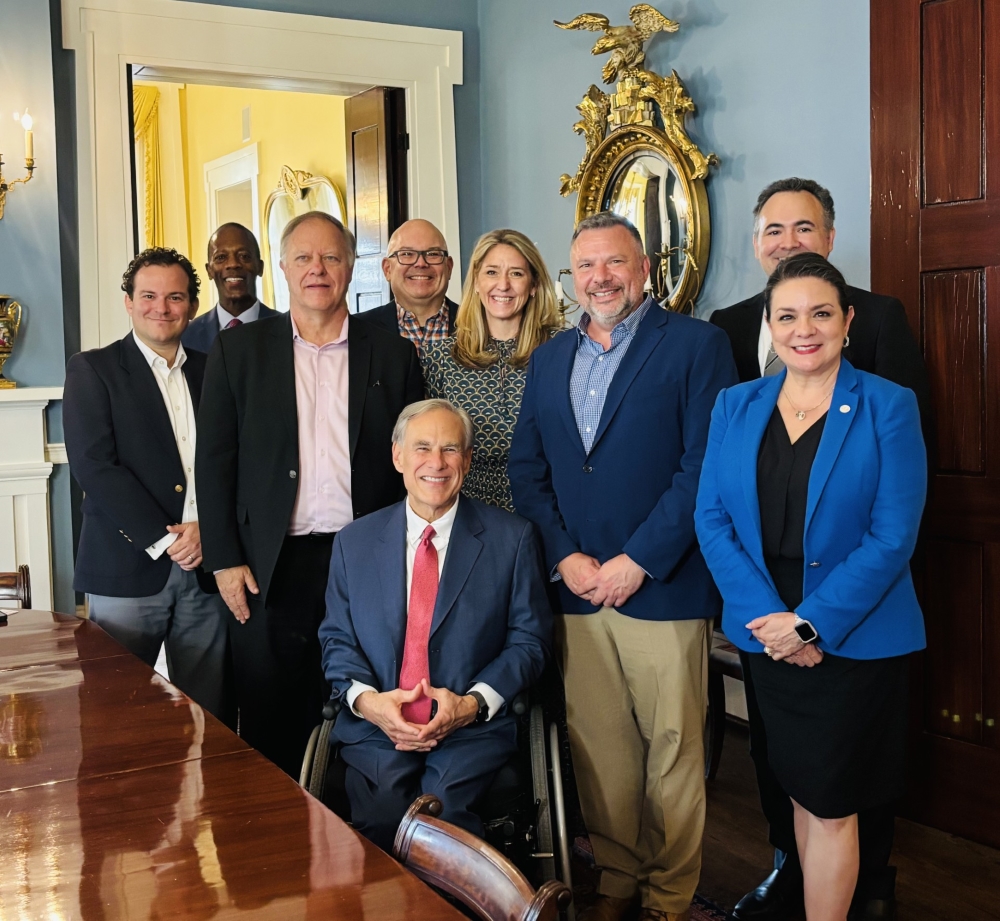
Photo courtesy of EDT
What tools and incentives does Texas have to offer when recruiting businesses for expansion investment projects?
CRUZ: Texas has a robust incentive program portfolio to help recruit and retain businesses. That being said, businesses come to Texas to take advantage of our superior competitive business advantages — the incentives help us to close the deal.
The Texas Jobs, Energy, Technology and Innovation (JETI) Act, established during the 88th Legislative Session, has proven to be highly successful in attracting significant capital investment and high-paying jobs by offering a value limitation on the school district property tax. The JETI Act utilizes a tiered structure based on the located-county’s population size to determine the level of required jobs and capital investment to qualify for the tax incentive.
The Texas Semiconductor Innovation Fund (TSIF), also established during the 88th Legislative Session through the Texas CHIPS Act, encourages Texas’ continued leadership in the semiconductor industry by providing grants and matching funds to eligible state entities, including institutions of higher education, and private business entities planning new or expanded semiconductor research, manufacturing and design projects in the state.
The Texas Enterprise Fund (TEF) has been extremely valuable in our toolbox as it awards deal-closing grants to companies considering a new project for which one Texas site is competing with other out-of-state sites. The fund serves as a performance-based financial incentive for those companies whose projects would contribute significant job-creation and capital investment to the state’s economy regardless of industry.
Texas has two of the country’s largest data center projects being developed right now — Fermi in the Texas Panhandle right outside of Amarillo and Stargate in Abilene. What attracted those record-setting projects to Texas, and do you think that Texas will land more such projects of that scope and size?
CRUZ: The state’s high-tech sector has long been a major player in the U.S. economy and is now poised to lead in new advanced technologies, notably AI and AI data centers. Texas has the innovation, infrastructure, regulatory environment and talent to lead in developing the technologies of tomorrow. Thanks to abundant and available space, abundant power, a pro-growth regulatory environment, established leadership in data center operations and new demand from emerging and rapidly expanding AI technologies, Texas is positioned for significant growth in this industry and is rapidly becoming the world’s leading hub for AI data centers.
As you mentioned, Texas is already home to some of the country’s largest data centers and accelerating demand for AI solutions is driving significant investments in data center growth across the state. These investments are spurring AI jobs in Texas, which are projected to grow by 27% over the next decade. The growth of AI is a national security imperative, and Texas has the assets, the talent and the infrastructure to lead the nation in this critical sector.

“Business and people come to Texas for a reason: They recognize the competitive advantages found only in the Lone Star State.”
— Adriana Cruz, Executive Director,
Texas Economic Development & Tourism Office
Last year was a challenging one for international trade, and yet Texas continued to lead the nation in exports. How was Texas able to overcome the tariffs landscape to achieve this?
CRUZ: In Texas, we are known for innovating and remaining resilient. We have fostered robust and reliable supply chains across Texas to ensure “Made in Texas” is a powerful global brand. As the No. 1 exporter in the nation for the last 24 years in a row, Texas is strategically positioned to lead during this time of global transformation. Thanks to our central geographic location and state-of-the-art infrastructure, we are the gateway to global trade for the entire nation. Texas is also home to 35 Foreign Trade Zones (FTZs) across the state, more than any other state in the U.S., offering companies the opportunity to take advantage of reduced or deferred duty payments.
My office stands ready to help companies navigate the global trade transition. We understand that the evolving tariff situation may present some challenges and we are focused on helping identify opportunities to ensure that companies doing business here succeed globally.
By most third-party measurements, the most competitive states for business are now located in the Sunbelt — and many of those states, such as Florida, Georgia and the Carolinas, are taking steps to become even more competitive for business each year. How is Texas responding?
CRUZ: Economic development is extremely competitive, and we know our neighboring states are working to compete. Texas is not just in the race of economic development; we are setting the pace. As the top-ranked state for economic development, we know we have a target on our back. We are continuously looking at other states — and even other countries — to ensure we are remaining competitive as a global business destination.
Businesses and people come to Texas for a reason: They recognize the competitive advantages found only in the Lone Star State. Texas has not only enjoyed extraordinary economic success in the past decade, bringing the world’s most innovative companies to our state, but we have also seen tremendous success in attracting top talent. In fact, we are the top state for population growth over the last two decades.
Last year our office released the “Bigger. Better. Texas.” Statewide Economic Development Strategic Plan to maintain our competitive edge in the years ahead. It’s a five-year economic development strategy for the state of Texas and our blueprint for continued economic prosperity. The plan came together in collaboration with state agency partners, business and community leaders, economic development organizations and industry associations to accomplish a number of objectives: Establish a unifying vision for the future of the Texas economy; identify target industry sectors and clusters expected to drive strategic economic growth and job creation; outline objectives and initiatives to advance the state’s global competitiveness; and provide data and recommendations to inform economic development decisions across the state. By working together with a shared vision and strategy on the local, regional and statewide level, Texas will continue to be the economic beacon of America.
Energy development and diversification have taken on added importance in America. What would you like readers to know about how Texas is positioning itself to be a global leader in this regard?
CRUZ: Texas powers America’s economy. Texas is the energy capital of the world thanks to an all-of-the-above and all-of-the-below energy strategy, leading the nation in oil and gas production, wind-powered generation and utility-scale installed solar capacity. In fact, Texas produces more energy than the next three states combined, providing nearly one-fourth of all domestically produced energy in the U.S. and is also leading the future of energy innovation in hydrogen, carbon capture, battery storage and small modular nuclear.
As Texas continues to experience growth, we have increased dispatchable power capabilities and continue to make strategic investments in critical infrastructure. Texas voters approved $5 billion for the Texas Energy Fund for low-interest loans to support the construction of new dispatchable generation. Additionally, the Public Utility Commission of Texas recently approved the state’s first 765-kilovolt transmission lines in West Texas, supporting the growing electricity needs of the region and the state.
The newly established Texas Advanced Nuclear Energy Office will revolution Texas’ growing nuclear industry and invests $350 million into next-generation nuclear development and deployment — the largest commitment in the U.S. Lastly and importantly, the weatherization requirements for critical grid and natural gas infrastructure signed by Governor Abbott have proven effective. By working together with innovators in tech and energy, we continue to increase capacity to ensure every Texan and every Texas business has the power needed to thrive.