
by Savannah Yawn
Texas is doubling down on the industries that will define the next generation of global commerce, from semiconductors powering artificial intelligence to aerospace systems shaping the future of defense and space. Across both sectors, a combination of large-scale investment and targeted state support is reinforcing the Lone Star State’s position as one of the country’s most consequential hubs for advanced manufacturing.
Programs such as the Texas Semiconductor Innovation Fund, the Texas Enterprise Fund and the Texas Space Commission are designed to accelerate that momentum, helping companies scale while anchoring long-term ecosystems across the state.
Building the Backbone of Semiconductor Manufacturing
Few sectors illustrate Texas’ industrial scale more clearly than semiconductors. With more than a dozen fabrication facilities and a rapidly expanding supplier base, according to the Texas Economic Development & Tourism Office, Texas has seen a 44% increase in semiconductor firms over the past six years. Texas has also led the nation in semiconductor exports for 15 consecutive years, underscoring both its production capacity and global reach.
That momentum is anchored by major capital investments. Texas Instruments’ multi-decade, $40 billion expansion in Sherman stands as one of the most significant semiconductor manufacturing projects in the United States. The site is designed to support up to four wafer fabrication plants and thousands of direct and indirect jobs, reinforcing TI’s position as a leading domestic producer of analog and embedded processing chips essential to everything from industrial systems to consumer electronics.
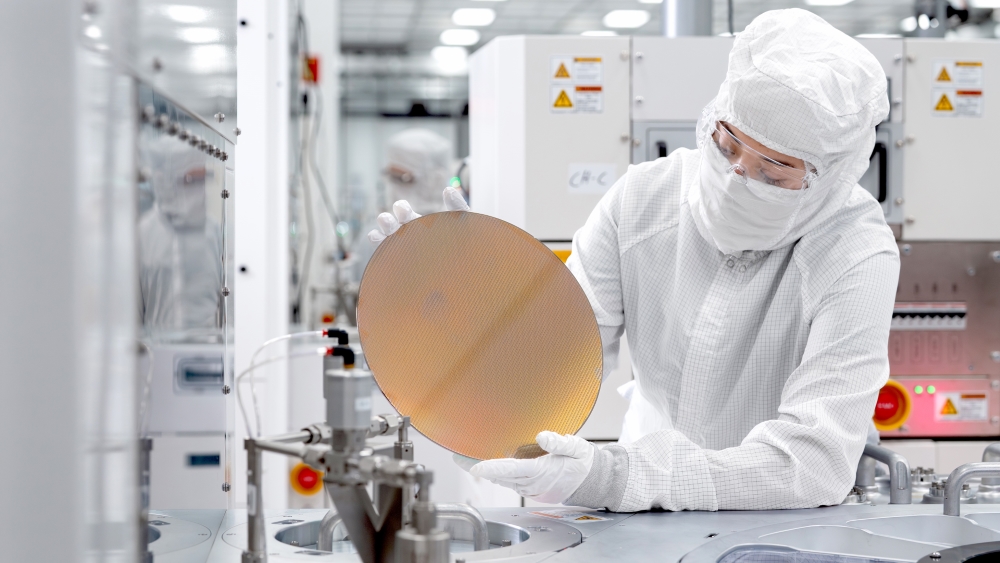
Texas Instruments’ Sherman campus will support up to four 300-mm. wafer fabs as part of a multi-decade, $40 billion investment in the United States.
Photo courtesy of Texas Instruments
At the same time, Samsung’s continued investment in Taylor reflects a shift toward leading-edge manufacturing. Supported in part by a $250 million grant from the Texas Semiconductor Innovation Fund (TSIF), the company is advancing production of next-generation 2-nanometer chips used in applications such as artificial intelligence and high-performance computing. The project represents more than $4.7 billion in capital investment and further strengthens domestic chip supply chains.
State-backed programs are playing a central role in shaping this growth. Established through the Texas CHIPS Act in 2023, TSIF has received nearly $1 billion in appropriations to support semiconductor research, design and manufacturing. The fund is not limited to large-scale fabs. Grants are also supporting workforce development and innovation, including a nanofabrication cleanroom at Texas Tech University and expanded semiconductor lab capabilities at Arm’s Austin campus.
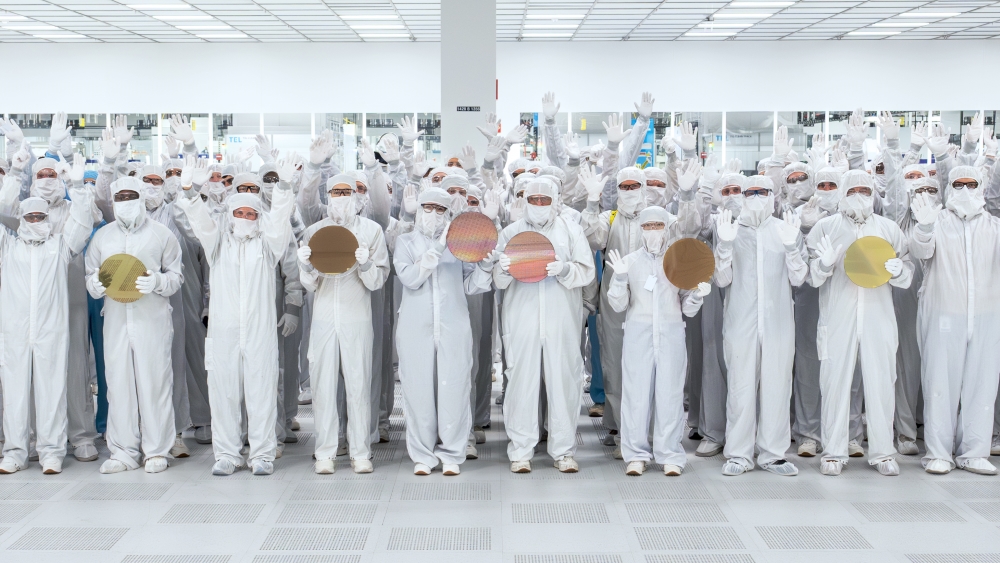
Inside Texas Instruments’ Sherman facility, where chips essential to modern electronics are manufactured at scale.
Photo courtesy of Texas Instruments
This layered approach of combining flagship manufacturing investments with research infrastructure and supplier development is helping Texas build a resilient semiconductor ecosystem. Companies such as Applied Materials and Tokyo Electron contribute critical equipment manufacturing within the state, while specialty materials firms continue to expand to meet rising demand. The result is not just capacity, but a vertically integrated supply chain positioned to support long-term growth.
Texas has seen a 44% increase in semiconductor firms over the last six years and has led the U.S. in semiconductor exports for 15 straight years.
Source: EDT
Aerospace, Defense and the Expanding Space Economy
A similar pattern is taking shape across aerospace and aviation, where Texas continues to attract projects spanning defense manufacturing, commercial aviation and next-generation space technologies.
In North Texas, Bell Textron is expanding its footprint with a new 447,000-sq.-ft. facility in the Fort Worth region to support production of the U.S. Army’s Future Long Range Assault Aircraft (FLRAA). Backed by a Texas Enterprise Fund grant, the project will create more than 400 jobs and represents over $429 million in capital investment. The facility is expected to play a key role in next-generation military aviation, with production timelines extending into the next decade.
Further strengthening the state’s aerospace manufacturing base, Collins Aerospace is expanding operations in Richardson, while MTU Maintenance is investing $120 million to modernize its Fort Worth facility. Together, these projects reflect sustained demand for high-precision manufacturing and maintenance capabilities, as well as Texas’ ability to support both original equipment production and long-term service operations.
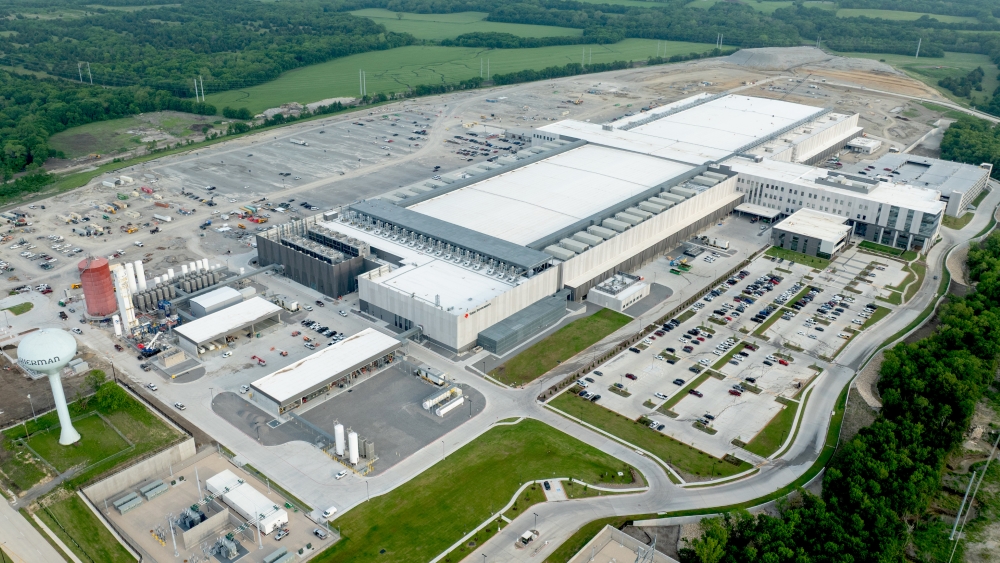
Wafer Fab 8 of Texas Instruments in Sherman, Texas
Photo courtesy of Texas Instruments
At the same time, the state is emerging as a center for space and satellite innovation. CesiumAstro’s new global headquarters and advanced manufacturing facility in Bee Cave represents more than $500 million in investment and is expected to create over 500 jobs. The company’s work, which spans satellite communications, advanced computing and defense systems, highlights the convergence of aerospace, electronics and software engineering.
Public investment is helping to accelerate this trajectory. The Texas Space Commission, established in 2023, is tasked with advancing commercial aerospace and space operations across the state. Through its Space Exploration and Aeronautics Research Fund, the commission has already approved millions in grants supporting projects ranging from infrastructure development to advanced space technologies.
Commercial aviation is also expanding in parallel. Southwest Airlines’ decision to establish a new pilot and flight attendant crew base in Austin is expected to create approximately 2,000 jobs by 2027, supported by state incentives. While distinct from manufacturing, such investments reinforce Texas’ broader aviation ecosystem and its role as a national transportation hub.
A Converging Industrial Strategy
Semiconductors and aerospace may appear as distinct sectors, but their growth in Texas is increasingly interconnected. Advanced chips are essential to modern aircraft, defense systems and satellite technologies, while aerospace manufacturing relies on precision engineering, materials science and supply chains that overlap with semiconductor production.
What sets Texas apart is the scale at which it is building across these industries simultaneously. Rather than pursuing isolated wins, the state is aligning policy, capital and talent to support long-term industrial capacity. Incentive programs are structured not only to attract projects, but to deepen ecosystems, from research institutions and workforce pipelines to suppliers and logistics networks.
That approach is positioning Texas as more than a destination for investment. It is becoming a foundational platform for industries that will shape the future of technology.
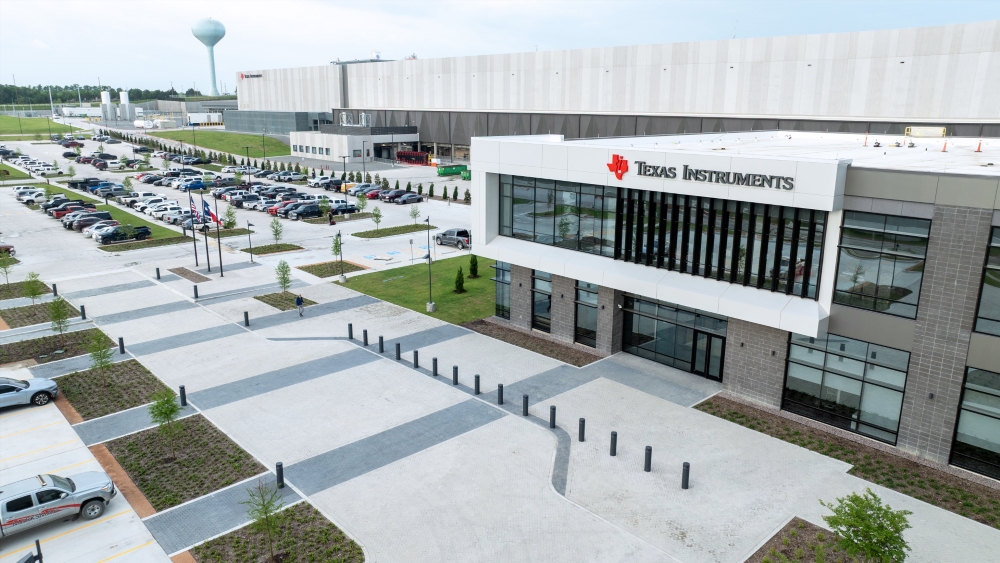
Wafer Fab 9 of Texas Instruments in Sherman, Texas
Photo courtesy of Texas Instruments