
by Carol Brzozowski
Site Selection Magazine recently named Illinois No. 2 for corporate expansion and relocations for the fourth consecutive year, with Chicago named the No. 1 metropolitan area for the 13th consecutive year.
There are many reasons for this dominance, but corporate site selectors typically focus on these location factors, per the Illinois Economic Development Corporation:
- Unmatched talent pool: Illinois boasts a highly–skilled labor pool, with 39% of Illinoisans holding a bachelor’s degree or higher. The state boasts a total manufacturing workforce of just over 578,000, ranking third in the Midwest and fifth nationally.
- Competitive infrastructure: Illinois’ central location and world-class infrastructure
For example, Hyundai Translead will invest $450 million to establish two new trailer manufacturing facilities in Illinois, creating nearly 2,500 new full-time jobs.
The facilities will be on the former sites of Caterpillar’s heavy equipment operations and the previous Lion Electric operation site in Will County.
“Our expansion to Illinois represents years of planning and a shared vision for long-term growth,” says Sean Kenney, Hyundai Translead chief executive officer, of the investment guided by Illinois’ Economic Growth Plan.
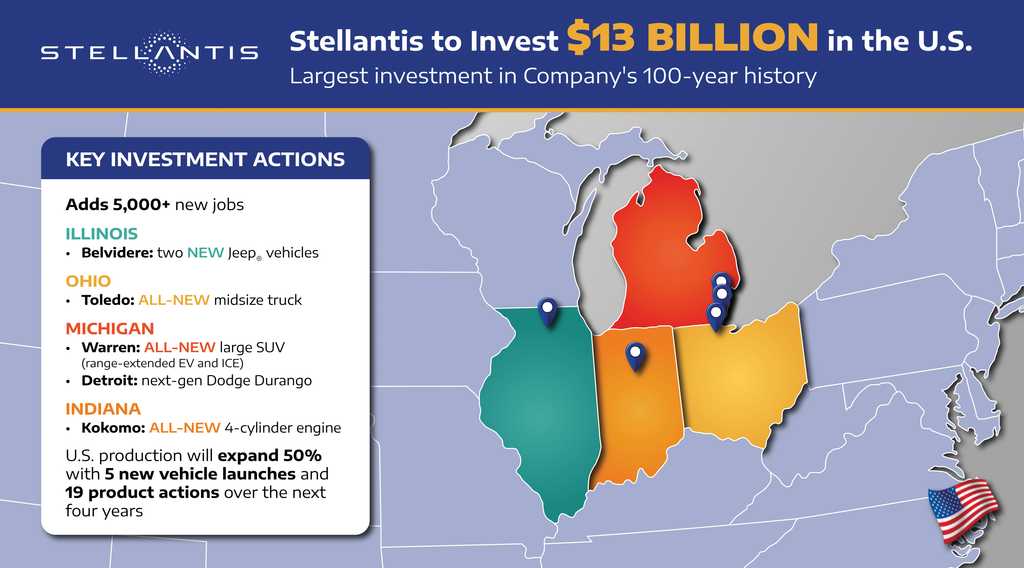
Stellantis idled its Belvidere Assembly Plant in February 2023 and agreed to reopen the plant following negotiations with the United Auto Workers, notes Stellantis spokesperson Jodi Tinson.
The reopening includes an $800 million investment to expand Jeep Cherokee U.S. market production, which will be the first U.S. vehicle assembled on the STLA One platform. An initial launch is expected in 2029 and will create around 3,300 new jobs. Antonio Filosa, Stellantis CEO and North America COO, noted that “launching the next-generation Cherokee on STLA One allows us to deliver a more competitive product while leveraging the strength of our U.S. manufacturing operations.”
DMG MORI announced a $40.5 million expansion establishing a new advanced manufacturing and R&D facility in Chicago, creating 74 new jobs and launching a workforce development program with City Colleges of Chicago.
The facility will house a new Government Solutions Center that will support projects. The investment will also support the production of high-speed, high-accuracy optomechanical scanners and metal additive-manufactured components. James Nudo, DMG MORI Federal Services chairman, notes the facility will expand the company’s North American R&D capacity, advance additive manufacturing and automation technologies, and power production of dual-use and defense applications.
Manner Polymers is establishing a new 108,000-sq.-ft., 100% solar-powered facility in Mount Vernon to manufacture electric vehicle (EV) PVC compounds and solar panel components, creating more than 60 jobs.
The facility serves as a first-of-its kind solar-powered PVC compounding plant using clean energy generated onsite.
Bolstered by a Reimagining Energy and Vehicles in Illinois incentive package, Manner Polymers invested $54 million to support the facility’s construction.
That incentive — combined with the state’s workforce and commitment to expanding the clean energy economy — led the company to choose Illinois, which also provided $2.5 million for a new rail spur for direct access to southern Illinois’ rail network to move goods nationwide.
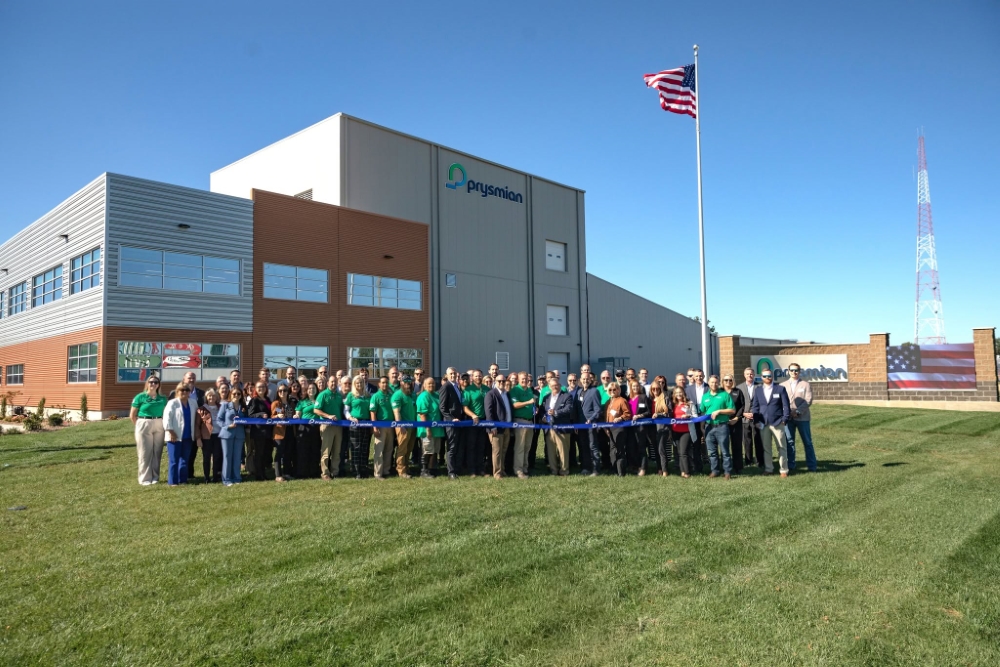
Prysmian established a $101.7 million expansion project, adding 100,000 sq. ft. and 80 new jobs to its existing Du Quoin plant for increased cable production in Illinois to meet growing demand for high-performance cables for renewable energy projects and EV infrastructure.
The expansion implements an energy management system within the facility. The project includes a new solar farm, generating approximately 50% of the power needed to produce product.
Andrea Pirondini, Prysmian North America CEO, notes, “These new lines position us to meet the urgent needs of utilities, grid-hardening initiatives and the rapidly growing AI and data center economy.”
Prysmian’s Du Quoin facility produces custom CL Advantage medium voltage collection cables used to conserve energy by reducing line loss during transmission. The cables are used for wind and solar energy applications and are a key component of underground substation and distribution systems.
Prysmian’s Illinois plant also manufactures key components for various solar energy systems and specialized cables delivering electricity to EV charging stations and energy- and grid-efficient modernized homes.
Rockford Brake Manufacturing invested $6.6 million to reopen a historic Rockford factory, bringing in 150 jobs. Four former Gunite Corporation employees created a new business to save Rockford’s longest-standing factory since parent company Accuride closed Gunite’s doors in February 2025 following Chapter 11 bankruptcy.
The 619,000-sq.-ft. factory on 41 acres includes a grey iron foundry and machine shop specializing in manufacturing brake drums for commercial vehicles.
The company supports the state’s clean energy goals, with 85% of its products made from recycled materials and 100% of finished products being recyclable. Foundry byproducts are sustainably recycled by local municipalities as road de-icers, fill dirt and concrete.
The tax credit from Illinois through its Economic Development for a Growing Economy (EDGE) for Startups is critical to the company’s launch and future success, says CEO Paul Wright.
Tangent Technologies — recently acquired by Platinum Equity — is expanding and con-solidating U.S. manufacturing operations in Illinois, relocating its Canadian and Aurora, Illinois, operations to Montgomery, Illinois With EDGE assistance, Tangent Technologies has committed to making a $50 million investment, creating 110 new full-time jobs and retaining 485 jobs. Tangent Technologies develops new ways to transform recycled material into durable, weather-resistant, environmentally conscious products. The 1.5 million-sq.-ft. facility will advance waterfront decking and fencing products with high potential for national retail distribution and install 50 new extrusion lines at its new central manufacturing hub.