
by ADAM BRUNS & KEL LY BARRAZA
There can be no advanced manufacturing unless companies and their partners do the hard work of advancing manufacturing with a blend of industrial brawn and industrious brainpower. In a state with fewer than 1 million people, North Dakota employers and institutions do more than their share.
When Site Selection magazine examined the top 25 corporate facility investments in North Dakota in 2025 that helped the state earn the publication’s prized Per-Capita Governor’s Cup for the first time, 17 of those projects involved manufacturing.
While energy and agriculture are the state’s established heritage, North Dakota’s advanced manufacturing profile traverses industries from biotech to machinery to aerospace. Case in point: Killdeer Mountain Manufacturing, a supplier of electronic circuit board assemblies cables and harnesses to such customers as Boeing, was founded in the late 1980s and operates facilities in four locations in southwest North Dakota. A check of its job listings in March 2026 showed 19 openings between North Dakota and the company’s site in Texas, with 12 of those opportunities in Dickinson.
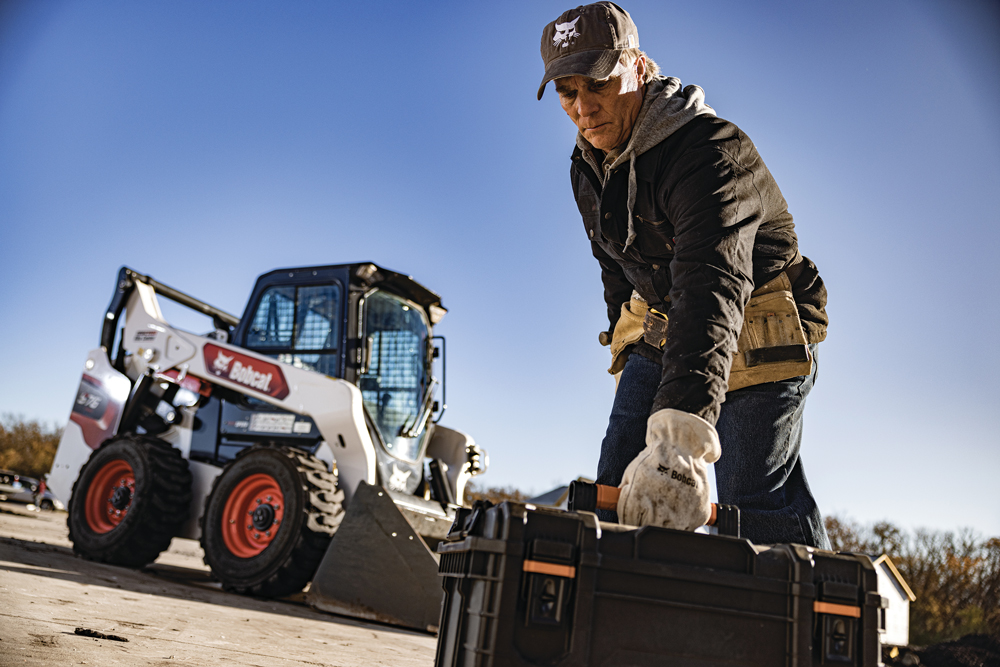
They’re not the only ones growing jobs, footprints and reputations. Doosan Bobcat North America, widely recognized as the creator of the compact equipment sector, has its headquarters in West Fargo on the other side of the state. In 2025 the company was recognized as one of Newsweek America’s Greatest Workplaces. Last year also saw the company complete a $4.8 million renovation of 22,560 sq. ft. at its site in the state capital of Bismarck, part of more than $82 million invested in North Dakota facilities and nearly $260 million invested across the United States over the past decade.
The Bismarck manufacturing facility employs more than 700 people and is also the home of the Bobcat Acceleration Center, which the company calls “a key engineering facility and innovation hub for all Bobcat equipment distributed globally.”
The growth followed activity in 2024 that included Bobcat being named to Fast Company’s 2024 Most Innovative Companies list for its manufacturing, equipment design and automation initiatives. The company that year also donated $250,000 to the University of Mary in Bismarck in support of the Hamm School of Engineering.
“Our students are highly sought after, recruited by firms well before they graduate, and not only are they trained in technical skills, but also well-formed servant leaders who are culturally prepared for the workplace,” said Jerome Richter, executive vice president at the University of Mary, in early 2024 when the gift was made. Data showed 70% of the students in the Hamm School of Engineering were from out of state, but as recently as 2023, 67% of its graduates stayed in North Dakota to work for engineering firms.
Engineering education is intrinsic to the state’s higher education community, including the UND Center for Innovation at the University of North Dakota’s College of Engineering & Mines in Grand Forks, North Dakota State University’s Industrial and Manufacturing Systems Engineering program in Fargo and the Bismarck State College Manufacturing & Automation program.
Sparking innovation is central to state strategy. “The Department of Commerce has concluded, through its work with manufacturing leaders and associations across the state, that future expansion of our manufacturing sector will come not from substantial labor growth, but rather from innovation and productivity gains, as well as a strong focus on developing foreign markets,” the Department states. “State policy has been put into place to help stimulate and incentivize growth in this area.”

“North Dakota is not only our home — it’s the foundation of our growth and innovation.”
— Mike Ballweber, President, Doosan Bobcat North America, Inc., October 2025
“At Bobcat, we believe investing in our facilities is an investment in our people and our future,” said Mike Ballweber, president, Doosan Bobcat North America, Inc., last October. “These renovations benefit everyone who works here. By creating modern, collaborative and welcoming spaces, we empower employees to push boundaries, spark new ideas and shape the future of our industry. North Dakota is not only our home — it’s the foundation of our growth and innovation.”
Why Minot Makes Sense for a $2 Billion Project
You might find similar testimonials from other manufacturing leaders in the state, including John Deere, CNH Industrial, Air Liquide, Aldevron and Caterpillar. And you’ll find a unique convergence of advanced manufacturing with the state’s energy and mineral exploration sectors in such areas as hydrogen and critical materials processing. Just ask Jim Bougalis, CEO and founder of North American Iron, which has proposed a new pig iron plant on approximately 700 acres in Minot to supply the U.S. steel industry. The location, selected in part because of a BNSF main line and plentiful natural gas, is around 500 miles from the company’s primary ore source in Minnesota, from which the ore would be shipped by rail to Minot.
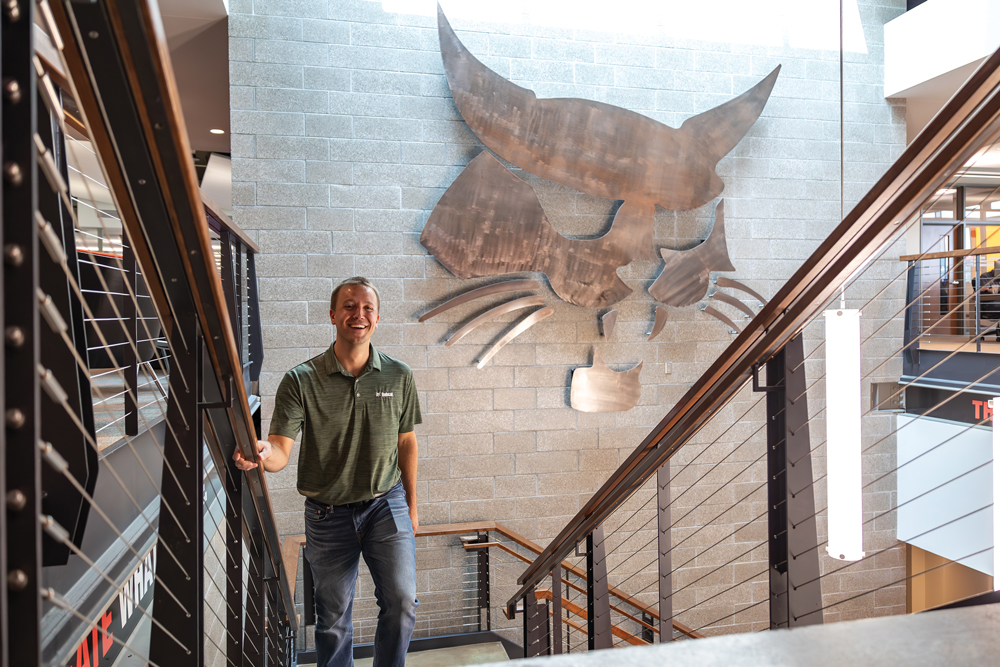
Doosan Bobcat North America in 2025 was recognized as one of Newsweek America’s Greatest Workplaces.
Photo courtesy of Bobcat
The plant would employ techniques in line with the shift toward cleaner, more efficient ironmaking. “Integrating iron ore concentration and pelletization with modern iron making technology is a big part of where the industry is heading,” Bougalis says. “Higher efficiency, lower emissions and the ability to use recycled or previously stranded iron ore.”
There is also the possibility of carbon capture and sequestration, one of the clean tech sectors growing in the state alongside operations such as GE Vernova’s 1,000-employee wind turbine blade plant in Grand Forks, which is receiving its own $15 million expansion investment. According to Clean Economy Tracker, carbon capture and storage (CCS) is a growing industry in North Dakota, supported by the Carbon Sequestration Tax Credit (45Q). “North Dakota is well-suited for CCS due to its unique geology and existing gas pipeline infrastructure,” Clean Economy Tracker stated, citing the $1.3 billion Summit Carbon Solutions project that would gather carbon dioxide emissions from ethanol plants in five states.
“One of the biggest positives has been seeing real mining projects finally move forward in the Upper Midwest after years of discussion,” Bougalis says, thanks to federal fast-tracking as part of the U.S. government’s critical minerals strategy. “That’s a major signal that Washington considers the region essential to the country’s supply chain.”
In 2024, North Dakota
manufacturing represented
$5.8 billion of industry
output, 6.5% of the
workforce and 7.7%
of state GDP, which
grew by 70% between
2013 and 2024.
Source: North Dakota Department of Commerce
With permitting moving toward completion, he recently told a meeting of the Minot Area Chamber, the Minot project is moving forward with engineering and design, with construction anticipated to begin in 2027. The project would create 650 new jobs and bring over $1 billion in revenue to the state, Bougalis said, while paying an average salary of $90,000. Originally slated for a site at Coal Creek Energy Park near Underwood (south of Minot, where carbon capture and sequestration could still take place), the $2 billion project in 2024 received support from the state in the form of a $7 million grant approved by the North Dakota Industrial Commission and a $3 million grant from the ND Development Fund, part of the North Dakota Department of Commerce.
Citing other projects moving forward across the country, Bougalis observes, “When federal permitting support and investment move in this direction, it strengthens the entire ecosystem in states like Minnesota and North Dakota. Another important shift is the way policymakers now talk about core industrial materials. As industry leaders have noted, steel has been elevated into the top tier of strategic U.S. materials, alongside energy and defense metals, which puts iron units and domestic feedstock squarely in the national security conversation. For us that creates momentum. It brings focus, federal attention, and more predictable pathways for projects that support domestic iron and steelmaking.”
Challenges remain, he says, but momentum is building thanks to business-friendly policies like those found in North Dakota.
“Permitting timelines, workforce availability and infrastructure demands all take coordination, but the overall direction is clear,” Bougalis says. “The Upper Midwest is moving from being a legacy mining region to being a strategic hub for the next generation of American mineral production.”
Closing the Deal
Among the incentives available to advanced manufacturing firms seeking to grow in North Dakota is a low-interest loan program from the North Dakota Department of Commerce seeking to advance the state’s economy.
The North Dakota Development Fund’s Advance ND awards “deal-closing” low-interest loans to companies considering a new industrial project involving at least a $5 million investment in North Dakota, including value-added energy, value added agriculture and manufacturing projects. Companies are eligible for up to $20 million through the program, with award amounts based on projects’ total expected cost. Among the conditions:
- The interest rate on the loan is 2%. Advance ND funding must be the last money into a project.
- Advance ND funds can be used for working capital, real estate and equipment. Funding is limited to up to 20% of the total project cost.
- Payment is interest only monthly for two years followed by three years of principal and interest.