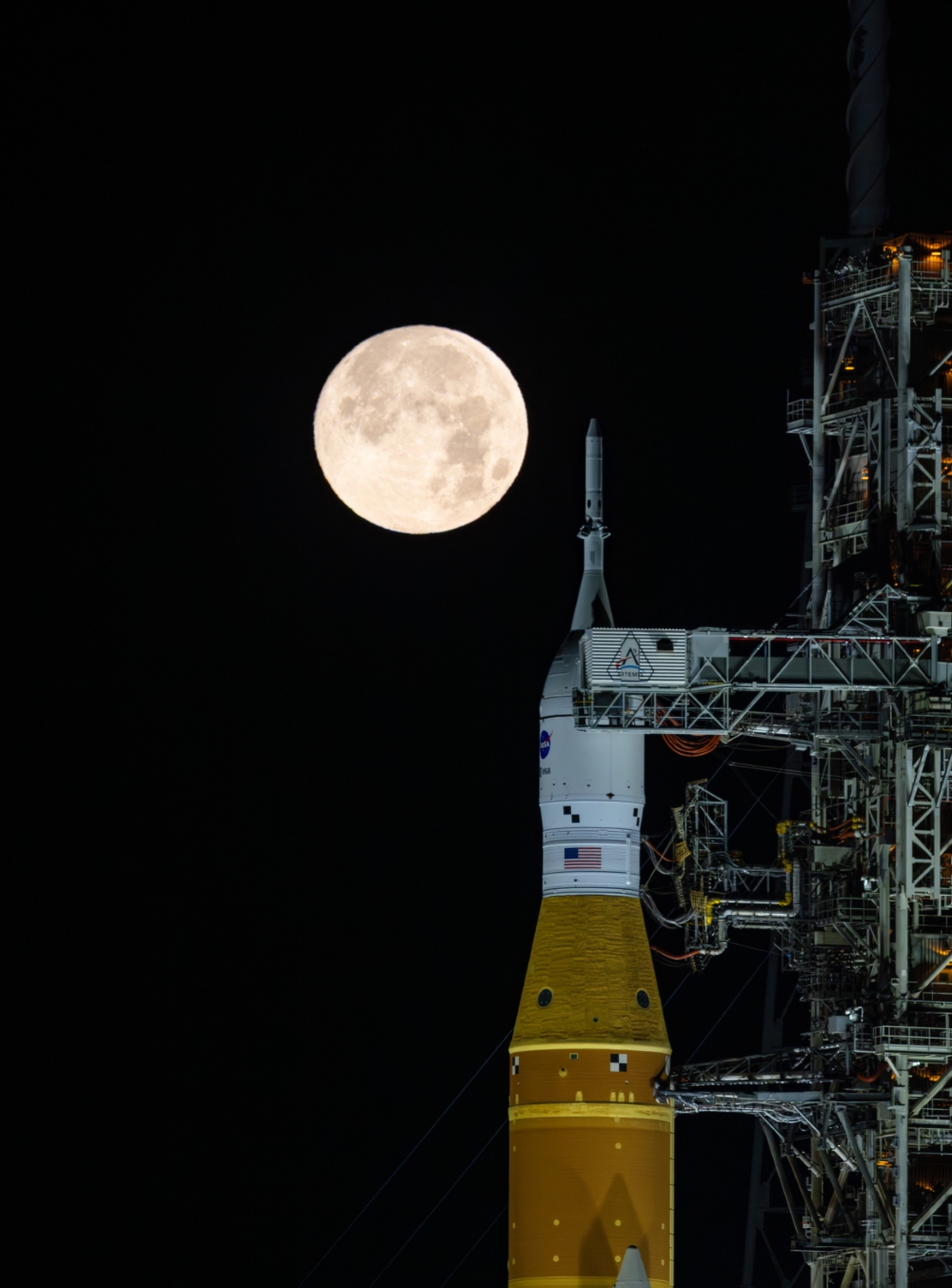
If there’s any workforce you want behind the production of essential aerospace components, it’s Kentucky’s.
Corporate leadership within the industry agree, which has led to highly anticipated investment activity coming to life throughout the state. Leading aerospace and defense manufacturers are churning out everything from aircraft brakes, engines and control systems to turbines, naval defense weapons and nuclear material scanning units. These operations are but a few within the state’s growing industry ecosystem.
Nearly $19 billion in aerospace products and parts were exported from Kentucky in 2024, remaining the state’s leading export during that time and representing a 41.8% export increase over the year prior. This boost comes as a direct result of over 100 aerospace-related companies operating here, including upwards of 50 companies that have announced $1.7 billion in new investment and more than 4,200 new jobs since 2017.
Major players — such as Boeing, GE Aviation, Lockheed Martin, Mazak, Raytheon and Safran — have played a foundational role in growing the state’s robust industry ecosystem, aside from Kentucky’s abundant access to essential materials like aluminum, steel and rubber or plastics. The latest data shows the industry and relevant sectors support over 20,000 direct jobs, a number that is growing by the hundreds each year.
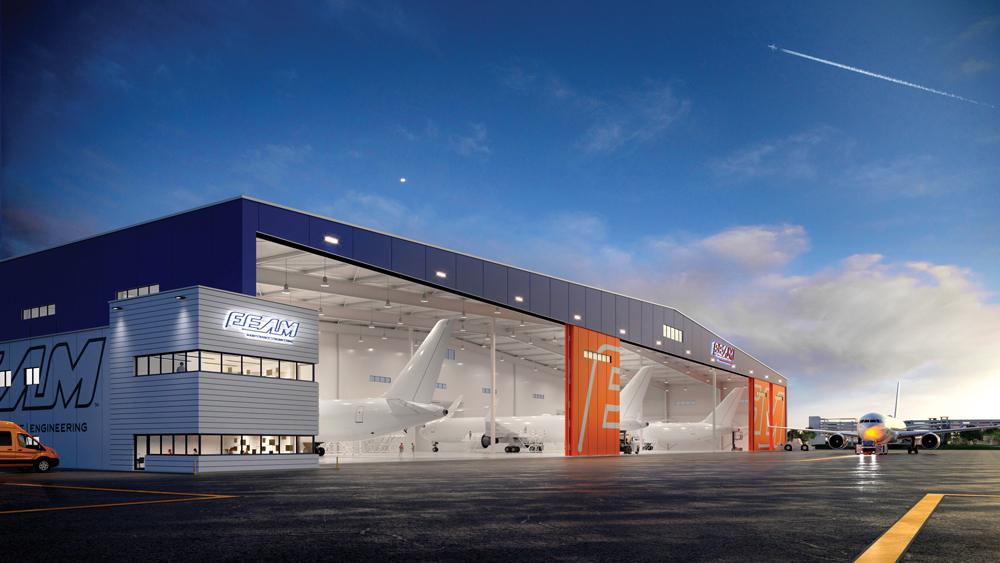
In 2024, FEAM Aero cut the ribbon on a new $45 million, three-bay hangar creating 250 full-time jobs at CVG Airport in Hebron, Kentucky.
Rendering courtesy of FEAM Aero
Who’s Opened Up Shop?
In the past two years, three projects — from F&E Aircraft Maintenance (FEAM Aero), L2 Aviation and Aerospace Composites — totaling over $74 million in capital investment have launched fresh operations.
Boone County secured two of those investments, creating 500 new jobs in the region. FEAM Aero was the first to celebrate a grand opening at the Cincinnati & Northern Kentucky International Airport (CVG), welcoming a $45 million three-bay hangar facility. The site features 150,000 square feet of back shop space, 175,000 square feet of ramp access and 5,000 square feet of office space. Expanded maintenance capacity at the airport helps FEAM Aero support cargo movers like Amazon and DHL, housing Boeing 767 aircrafts.
Texas-based L2 Aviation additionally delivered new operations at CVG in late 2025, having invested $12.2 million into an existing production site and hangar facility. The move marked the company’s first Kentucky-based operation, an effort to promote operational growth while hitting on rising industry demands.
Moving to the south-central part of the state in Butler County, Aerospace Composites saw the completion of its Morgantown production hub in May 2025. The need for a larger site led the comprehensive composite design and manufacturing company to Morgantown Industrial Park to secure the city’s first Build Ready-certified site. The facility now houses manufacturing, innovation and workforce development activity, serving as the company’s primary hub and creating 72 new jobs. Aerospace Composites’ operations will focus on design support, prototyping, manufacturing and certification of composite components used throughout the aerospace industry, an added boost to the statewide supplier network.
“This grand opening is more than a ribbon-cutting — it’s a recommitment to American aerospace manufacturing excellence and to Morgantown’s role in that future,” said Aerospace Composites President Matt Shieman. “This facility embodies our vision for scalable, next-generation composites manufacturing that meets the evolving needs of defense, aviation and global aerial firefighting.”
Kentucky-Made Products Reach the Moon
A testament to the capabilities of Kentucky’s aerospace & aviation companies was solidified by NASA in September 2025, as Lexington-based Space Tango announced it would play a key role in the upcoming Artemis II mission.
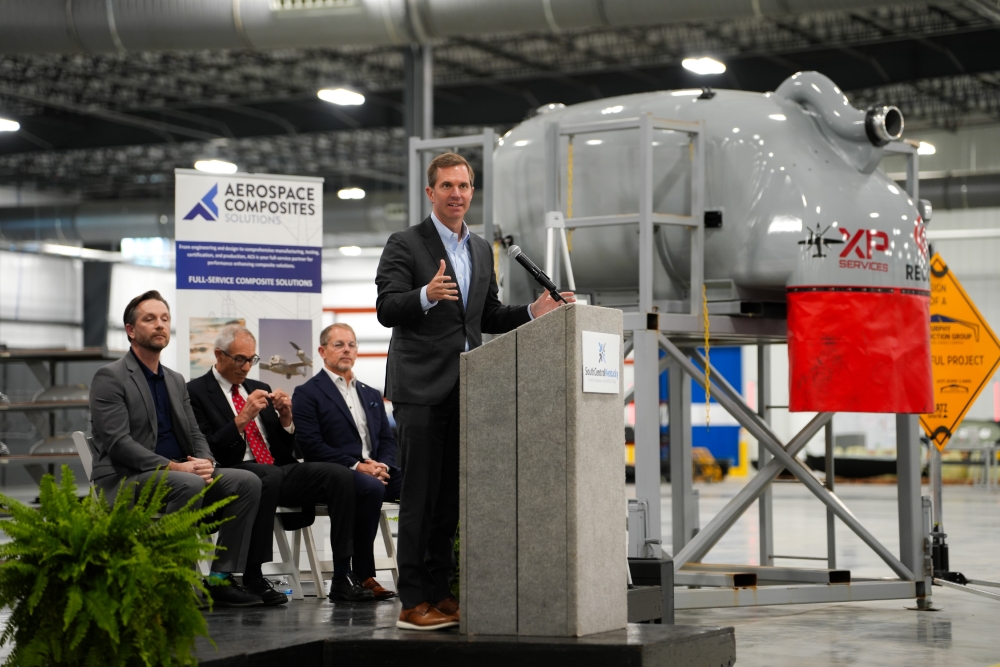
Gov. Andy Beshear joins Aerospace Composites Solutions for the grand opening of the firm’s new $16.8 million facility in Morgantown in Butler County, Kentucky, creating 72 new jobs.
Photo courtesy of Kentucky Cabinet for Economic Development
The mission will take four astronauts on a 10-day journey to explore the moon, aiming to advance the nation’s deep space knowledge. This will be the first Artemis flight to carry a crew on the mission, as this research builds upon the goal to accomplish the first human venture to Mars.
Space Tango was enlisted to support NASA’s new scientific investigation, dubbed A Virtual Astronaut Tissue Analog Response or AVATAR, that will leverage the company’s automated systems and hardware onboard Artemis II. Taking cells from each of the mission’s crew members, organ-chips will be created to collect fresh data on the effects of increased radiation and microgravity on human health. Space Tango has developed and received Phase II NASA Safety approval for its custom AVATAR payload, which will be mounted on the inside of the Orion Crew Module.
“The Artemis II mission is a watershed moment for human space exploration,” says Space Tango President Twyman Clements. “With our automation and flight heritage, Space Tango can now extend biological data collection from low-Earth orbit to lunar orbit, helping answer the critical questions needed for crew health and mission success.”
A specialized science bay with the AVATAR payload was created based on Space Tango’s heritage space systems, featuring components designed with biological and chemical compatibility to avoid damaging the organ-chips. It will go largely unbothered throughout the flight — aside from a daily button push to confirm the system’s health and status — as its pressure-drive microfluids system keeps the chips close to natural human body conditions. This initiative will mark the first time organ-chips have been studied beyond low-Earth orbit.
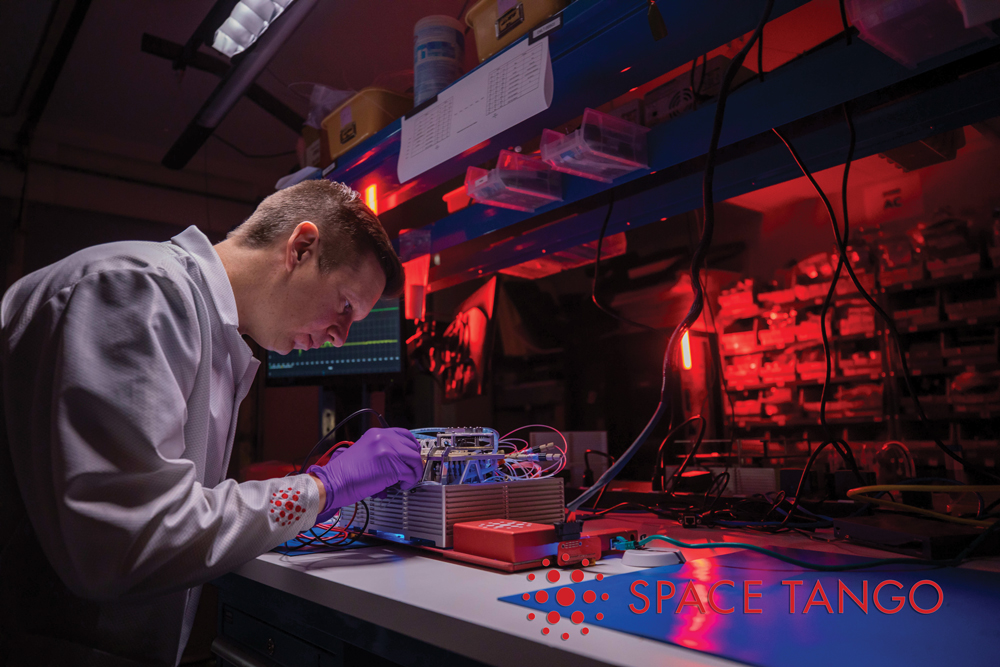
Space Tango’s automated systems and proven hardware will expand biological sample maintenance and data collection to lunar orbit for the first time with the Artemis II mission.
Photo courtesy of Space Tango
AVATAR is another stepping stone within the company’s tissue-chip investigations, having conducted three prior investigations on the International Space Station (ISS) as part of the ISS National Laboratory and National Center for Advancing Translational Sciences’ Tissue Chips in Space Initiative between 2018 and 2023. This data will bring a new layer of understanding to the effects of microgravity and radiation on human immunity, bone loss and tissue degeneration, as Artemis II brings this research to a new orbital domain.
“Artemis is about going farther than we’ve gone before,” said Clements. “Space Tango’s role is to ensure the science reaches that distance in an automated and reliable design so we can unearth answers for deep space exploration and enhance life on Earth.”
On land or up in space, Kentucky’s aerospace industry expertise remains at the forefront of innovation and the vital manufacturing of products that will keep us airborne for generations.