Louisiana Economic Development Chief Business Development Officer Paige Carter received a call from SpaceX governmental affairs personnel on February 5, 2026, requesting a meeting with LED Secretary Susan Bourgeois the following day.
A mystery conclave on the Friday before Mardi Gras in New Orleans seemed blasphemous, but it happened anyway.
Bourgeois was aware of few details heading into and leaving the call. She went in knowing she’d speak with the aerospace company’s representatives and left informed that they were on the hunt for a launch facility. There were a few basic questions: What does your regulatory environment look like? How would you treat a project like this?
Six months later, SpaceX announced a vast $100 billion investment in coastal Vermilion Parish with plans to construct its largest launch facility to date.
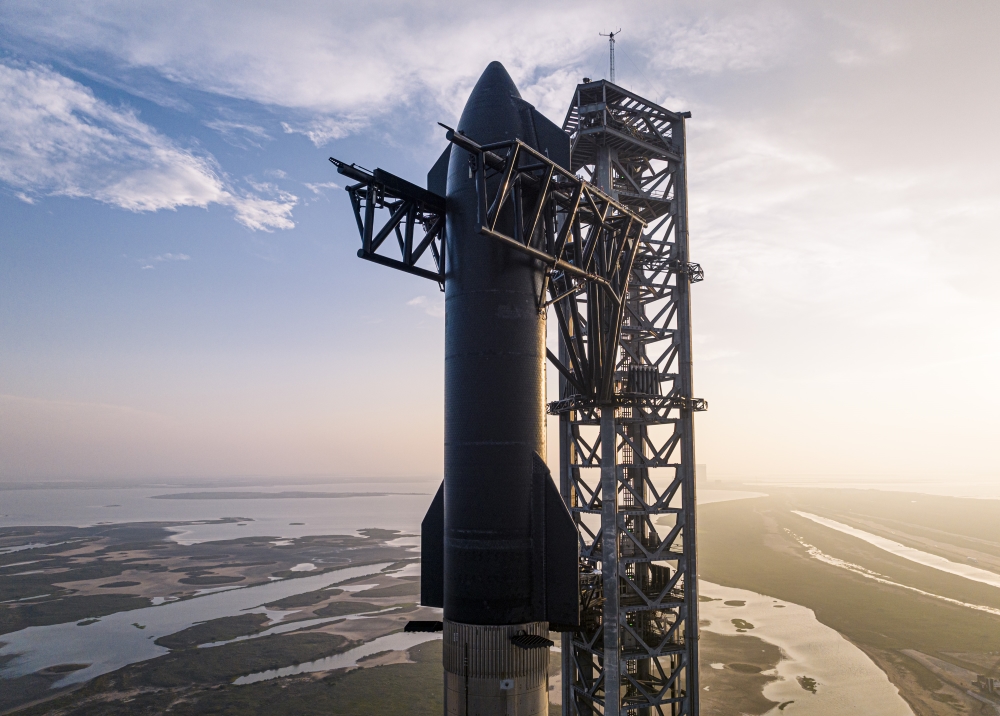
SpaceX snagged a former Exxon site on Pecan Island to establish its fourth launch site and second dedicated Starbase location, joining operations in Texas, Florida and California. Starbase Louisiana will be designed to accelerate Starship missions pursued by SpaceX, housing five launch complexes, each fitted with two launch pads and a propellant farm. Thousands of Starship flights will soar from southern Louisiana each year, equating to about a dozen a day once operational, the first of which is slated for 2029.
“It’s a really natural evolution between our legacy industries and the skill sets that our workers have because of that moving into this aerospace play,” Bourgeois says in reference to Louisiana’s shipbuilding and extensive advanced manufacturing industry ecosystems. “Then you look at abundant energy, a coastline and the other pieces that geographically benefit us. I think that is what is making us very attractive right now.”
There are two reasons Vermilion Parish, and Louisiana at large, found favor with SpaceX, according to Bourgeois. For starters, the state’s geography, physical and natural assets supply the inherent fundamentals. Rocket launch trajectory needs to take place over water, so an accessible coastline was an obvious factor. Louisiana’s proximity to 32,000 miles of natural gas pipelines and feedstocks required for rocket fuel removes a potential barrier to SpaceX’s anticipated pace.
“The second, just as important, piece they shared with us was the philosophical regulatory environment,” she continued. “Our regulation follows federal standards from a timing perspective, so could we hasten that? Maybe a little. But capital flows where it is treated best. Our administration is addressing that mantra, treating investments like this with speed, certainty and with prioritization so that we’re delivering quicker and more effectively than other states.”
SpaceX spent years mapping viable trajectory launch points, leading to consideration of sites in Alaska, Texas, Florida and Louisiana. The company had knowledge of the former Exxon site’s advantages before initial discussions with the state, keenly aware it could tap into the site’s natural gas pipelines for propellant production and power generation. The state and SpaceX spent the early months looking at the site and talking through technicalities with engineers. This intentional homework has given the state confidence in the company’s commitment to bring a project of this scale to fruition.
“The ink was already dry the day we announced,” says Bourgeois. “It wasn’t feasibility, it wasn’t that it might happen. We went from a conversation to a dry deal — Elon himself negotiating part of the deal — and contracts done in six months.”
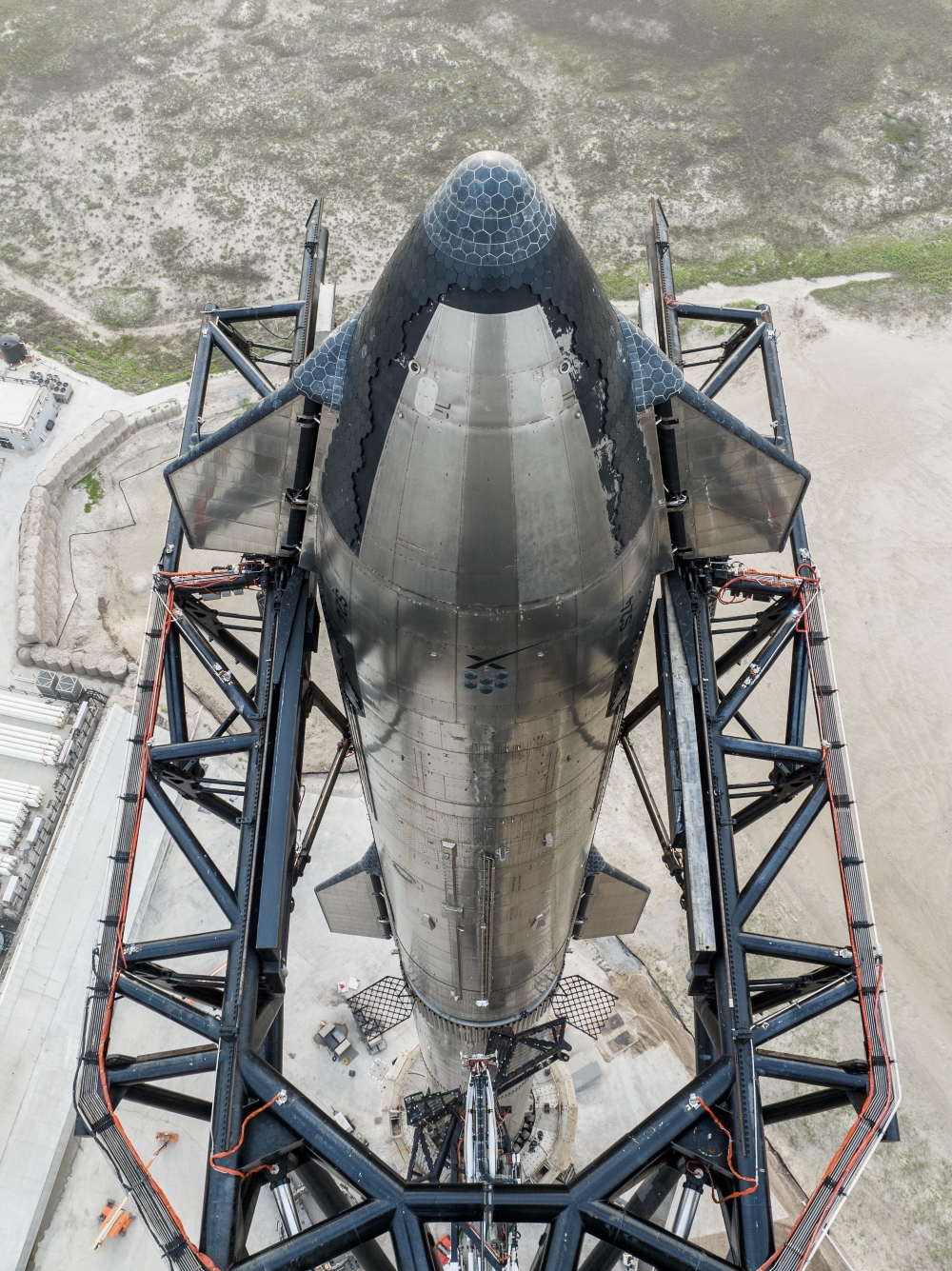
SpaceX’s plans for Pecan Island call for five launch complexes, each fitted with two launch pads and a propellant farm.
Photo courtesy of SpaceX
The entire process also leveraged Project Lightning Speed, a whole-of-government strategic framework formed through an executive order signed by Governor Jeff Landry in September 2025. If a project with significant economic impact is identified by Louisiana Economic Development, the team pulls together a series of cabinet-level agencies and partners earlier on to help streamline project delivery.
“It speaks to the transformation that’s happening in Louisiana right now,” states Bourgeois. “Two and a half years ago companies like SpaceX or other major projects we’ve announced weren’t looking at this state. Fast forward, not only are they looking, they’re making their biggest bets in Louisiana.”
Construction of the new Starbase starts in 2027. It will take an anticipated two years to complete. In addition to multiple launch complexes, the site will feature an airport, a propellant production facility, power generation, deepwater shipping capabilities, vehicle processing facilities and residential housing for employees and their families. SpaceX has said it will create 3,000 new direct jobs over the next decade. Louisiana Economic Development estimates over 8,100 indirect jobs will be created, for a total of more than 11,100 new job opportunities in the Acadiana region.
A Buzzing Aerospace Ecosystem
From Firefly Aerospace’s Cedar Park headquarters, located about 25 minutes outside of Austin, Texas, Director of Electrical Component Manufacturing Jeffery Kaplan says the space and defense technology company is trying to navigate the sweet spot between the slow-moving, intense rigor of old space and the maverick speed of new space — safe and reliable, yet capable of delivering quick response to demand.
It’s a formula that is working for the nearly 10-year-old company, which this year alone has announced a multitude of awarded multimillion-dollar contracts from the likes of NASA, the U.S. Department of War (DOW), the U.S. Space Force and U.S. Air Force. Whether pursuing a rapid moon mission with the company’s Blue Ghost lunar lander, constructing an aeroshell for NASA’s SkyFall mission to Mars or preparing the company’s Elytra spacecraft for launch, Firefly’s campus is buzzing.
“We’ve had a really special environment here where we’re both close to a major city with big universities doing technical research and training world-class engineers and scientists,” says Kaplan, and “we’re also close to a lot of relatively open land with a very generous regulatory environment where you can build rocket engine test stands and structural test stands and run them without interference.”
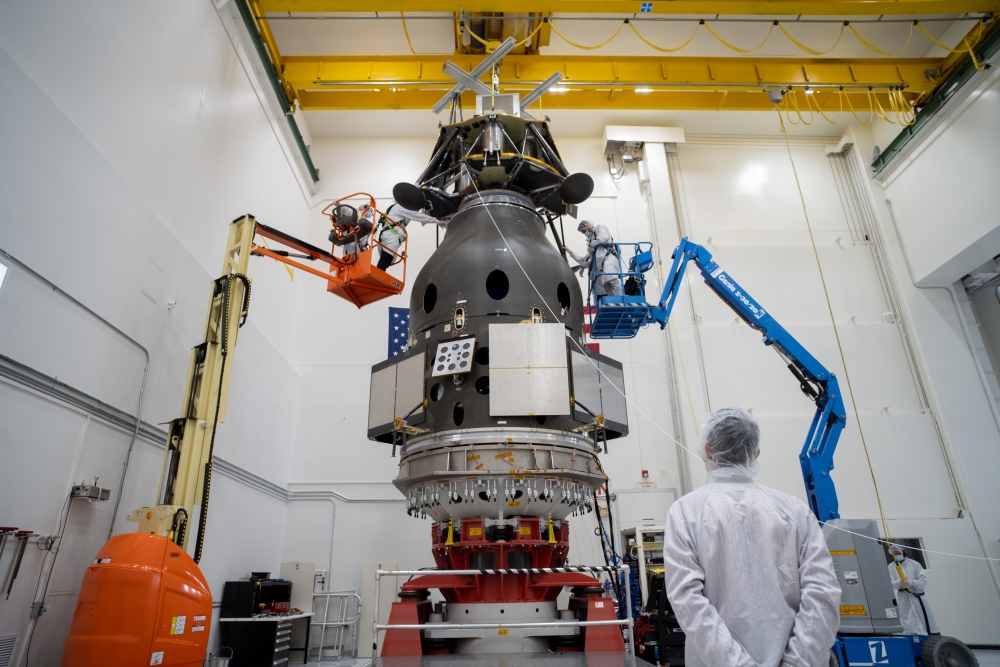
Firefly Aerospace is preparing for Blue Ghost Mission Two, which will send the company’s lunar lander on America’s first commercial mission to the far side of the moon.
Photo courtesy of NASA/JPL-Caltech
The company has steadily grown its operations in the region. Two years ago, Firefly doubled the size of its 200-acre Rocket Ranch manufacturing campus in the nearby city of Briggs. The initiative added two new test stands and two new large-scale buildings and integrated new machinery across its combined 207,000 sq. ft. of manufacturing space. In 2026, Firefly introduced two mezzanines for an additional 30,000 sq. ft. of engineering and production workspace. The Briggs site is located about 30 miles away from the company’s Cedar Park HQ, which doubled its own footprint this year.
Weeks before my visit to the region, Firefly expanded its operations across two facilities just steps away from each other. The campus now houses 144,000 sq. ft. of spacecraft assembly and testing, avionics and component production, engineering, mission control and business operations activity. A new 45,000-sq.-ft. innovation and prototyping lab, Gloworks, has its own building. Inside, I passed the test version of a massive Blue Ghost lunar lander before moving on to see areas dedicated to R&D, electronics testing and evaluation and metal fabrication. For a space with such material and machinery at play, it was pristine, organized and strategically functional for large-scale projects.
That sense of cleanliness and efficiency extended into the main facility. I watched employees analyze a massive wall of monitors within the company’s 24-hour mission control room, which that day was being used for fluids training. Down the hall, I caught a glimpse of a cleanroom where hardware was coming together for Blue Ghost Mission Two, which will be heading to the far side of the moon.
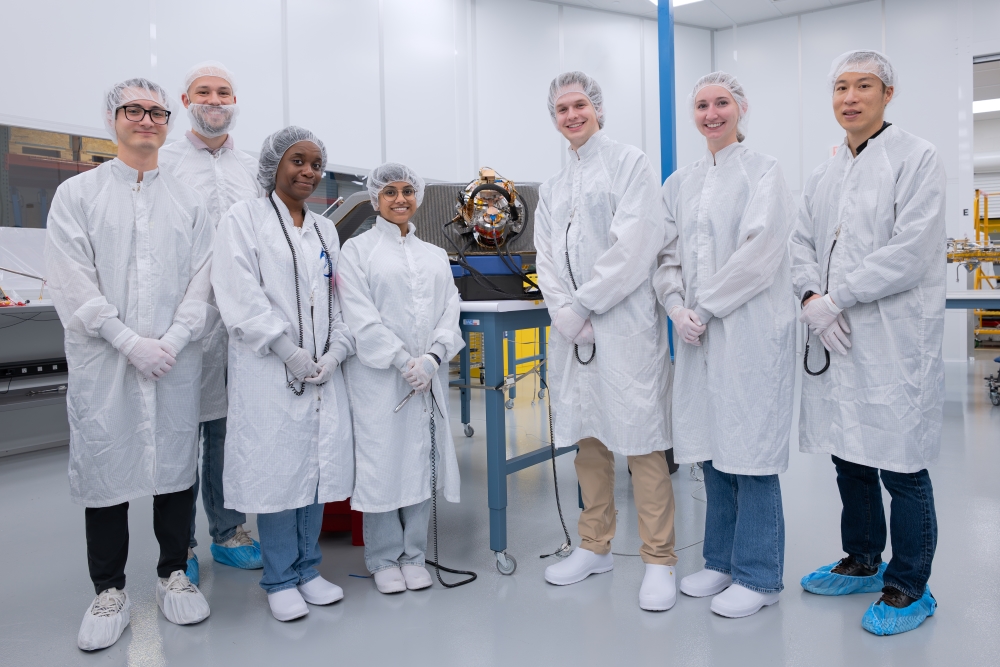
Firefly Aerospace now supports over 1,000 employees across its Cedar Park HQ and Rocket Ranch operations.
Photo courtesy of Firefly Aerospace
Steps away, construction was taking place on a new 8,000-sq.-ft. cleanroom, funded by the Texas Space Commission. At the time I visited in July, the company had just been awarded its fifth contracted mission to the moon and needed to build an assembly line of Blue Ghost lunar landers and Elytra orbital vehicles, hence demand for a larger space. Two months later, a space four times larger than the cleanroom I observed was unveiled.
According to City of Cedar Park Chief Economic Development Officer Arthur Jackson, Texas is rapidly emerging as a national leader in aerospace and defense and the Austin-Williamson County region is playing a significant role in that growth. Continued expansions from Firefly, paired with new companies and targeted investment moving in to Cedar Park, demonstrate the depth and momentum of a growing ecosystem.
On the same day in September, two suppliers announced investments at the city’s Cedar Tech I industrial park. Oregon-based precision CNC manufacturer Machine Sciences Corporation is establishing its first Texas operations here with a $31.9 million investment, creating 70 new jobs. The company secured a 48,000-sq.-ft. facility to produce high-precision components designed for satellites, unmanned aerial vehicles and advanced defense systems used in space, aerospace and defense applications. Elite Metal Finishing also joined Cedar Tech I, investing $10 million in a 50,000-sq.-ft. facility to begin specialized plating, coating, thermal treatment and testing services for commercial, military and aerospace customers. The company will create 170 jobs that directly support the region’s post-production capabilities.
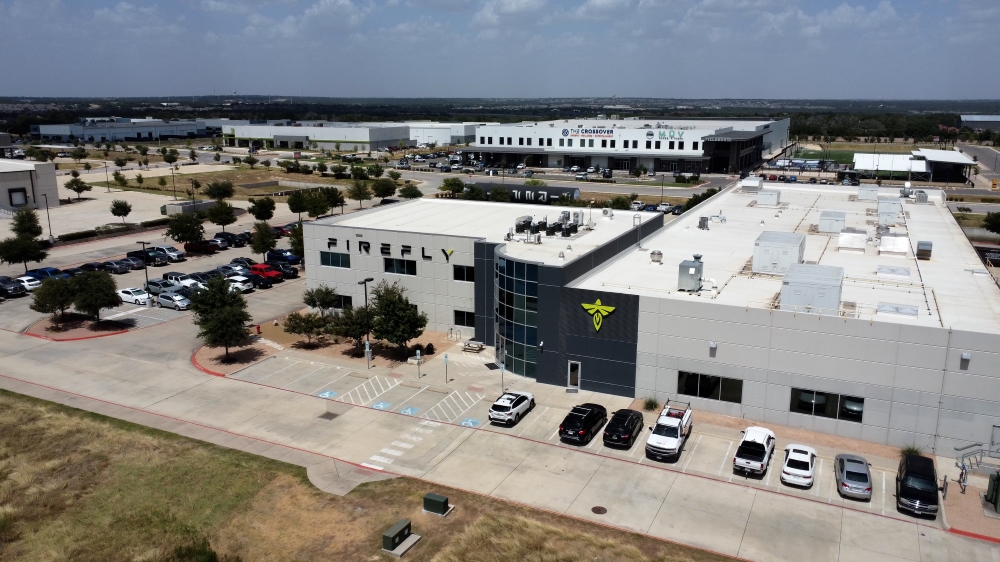
Firefly Aerospace is just one player in a growing aerospace ecosystem in Cedar Park and Greater Austin.
Photo courtesy of Firefly Aerospace
“Combined with Blue Origin’s announcement in Hutto, these investments reinforce the region’s competitive advantages in engineering talent, advanced manufacturing, innovation and defense technologies,” says Jackson.
These operations add a fresh layer to Cedar Park’s aerospace and defense ecosystem, pulling mission-critical resources closer to existing companies in the region. It’s the precise level of aerospace industry concentration Kaplan, an Austin native, wishes he encountered here when entering the workforce after grad school.
“I never thought I could come back here because there was no aerospace economy. There was a lot of lucrative tech and hardware but nothing in my career line,” says Kaplan, speaking to his own experience moving to the West Coast for job opportunity before a rocket company came to Cedar Park. “It brought me back. There’s a lot of people like me that moved away because of where aerospace work was and now they’re all coming home.”
Opportunity acts as a powerful talent retention tool as well. A strong number of University of Texas, Texas A&M and Texas Tech graduates are hired by Firefly Aerospace, in addition to military veterans coming from Fort Hood. Skill sets of the young workforce are applied immediately, as seen with Blue Ghost Mission One last year, where the average age of an employee working on the project was 28.
Advancing Cedar Park’s space sector remains top of mind for Firefly Aerospace Co-founder Tom Markusic. In October 2026, a new spaceplane manufacturing company was established at Firefly’s former offices in the city. Markusic launched Frontera Space Inc., becoming the founder and CEO of an innovative company aiming to lower the cost of space travel and increase travel frequency. Technology to support this goal does not exist at this point. Frontera will be counting on the region’s industry strengths to change that.
“What is particularly exciting is that we are not just attracting established industry leaders, we are seeing entrepreneurs build their next generation of companies right here,” says Jackson. “Through regional collaboration, and strategic initiatives like the Central Texas Spaceport Development Corporation, we are positioning Cedar Park and Williamson County to become a nationally significant center for aerospace and defense innovation.”
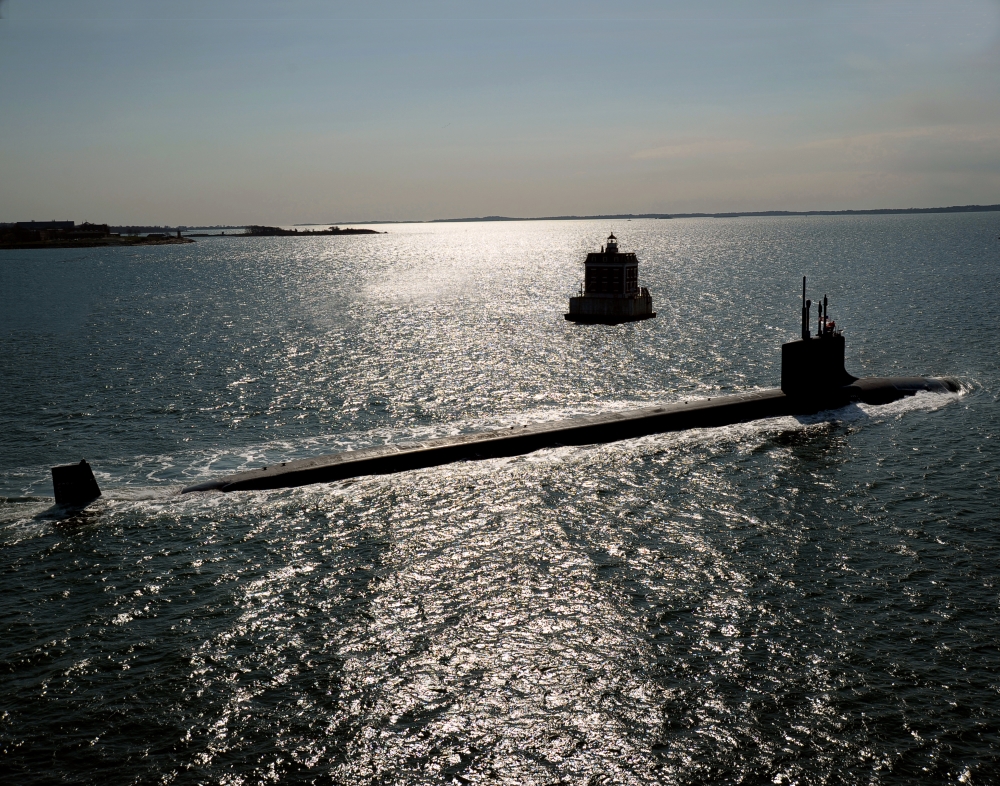
Submarine components and large-scale assemblies produced at Arsenal-2 will be sent to General Dynamics Electric Boat and Newport News Shipbuilding for final assembly.
Photo courtesy of General Dynamics Electric Boat
Arsenal-2 Emerges in Maryland
Tradepoint Atlantic, a 3,300-acre global logistics center positioned in the Port of Baltimore, has just secured Maryland’s largest single private investment in over a decade.
After a multi-year national site selection search, Anduril Industries has selected the 187-acre former Bethlehem Steel mill site within the Sparrows Point complex to construct a $3.7 billion software-defined shipyard. Arsenal-2, the incoming 2-million-sq.-ft. manufacturing facility, will produce critical components and large-scale assemblies for the nuclear-powered fast attack Virginia-class submarines utilized by the U.S. Navy. This project will aim to strengthen the nation’s industrial submarine base.
The site’s strong steel legacy afforded Anduril Industries existing road, rail and maritime infrastructure, enabling the company to connect directly to suppliers and the nation’s primary submarine builders, General Dynamics Electric Boat in Connecticut and Huntington Ingalls Industries’ Newport News Shipbuilding operation in the nearby region of Hampton Roads, Virginia. Components and large-scale assemblies produced at Arsenal-2 will be delivered directly to those two submarine builders for final assembly.
“Sparrows Point has been positioned for this moment through more than a decade of private investment and public support. The Greater Baltimore Committee was a founding member of the Sparrows Point Alliance and has consistently supported the infrastructure and economic development policies needed to advance the site,” says Greater Baltimore Committee (GBC) President & CEO Mark Anthony Thomas.
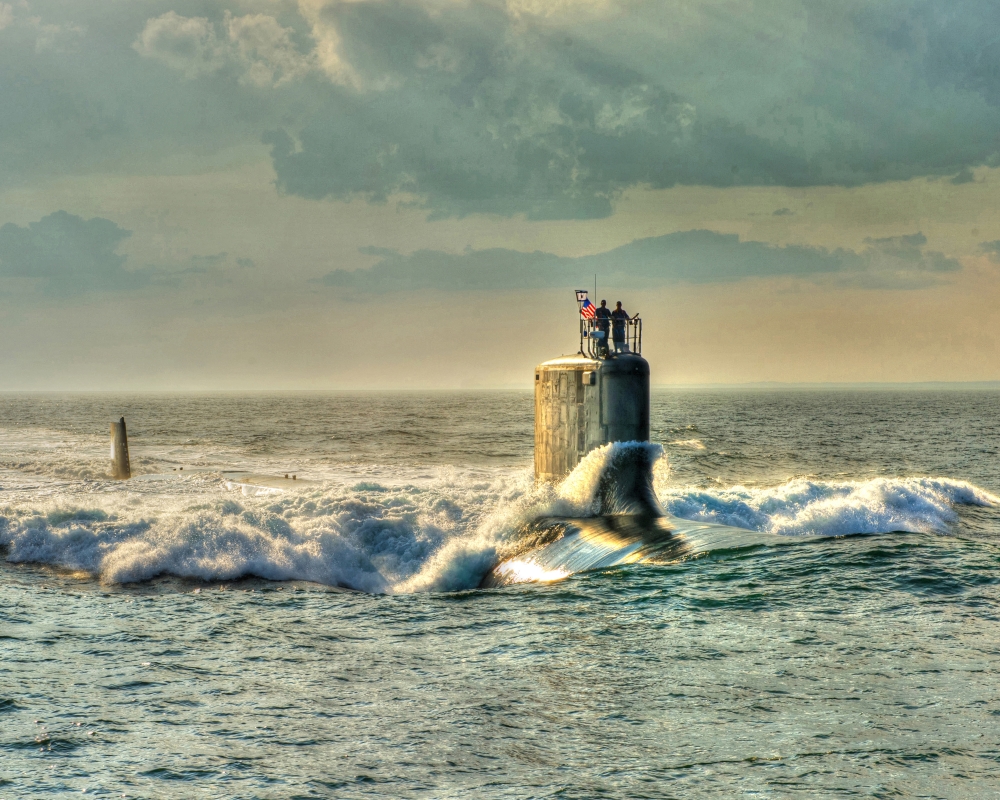
Anduril Industries aims to support the U.S. Navy’s efforts to increase attack submarine production, returning shipbuilding capabilities to a historic Maryland site.
Photo courtesy of General Dynamics Electric Boat
To put the scale of this project in perspective, Thomas says that Anduril’s investment stands well above a combined $2.9 billion across 156 investment deals tracked by GBC last year. He says that after years of repurposing the site, momentum at Sparrows Point is promising and serves as an important case study to site selection consultants evaluating how former industrial properties can be repositioned for major investment.
“Governor Wes Moore has made manufacturing a major economic priority. The collaboration among the state, Baltimore County, Tradepoint Atlantic and regional partners helped make this investment possible,” he continues. “For companies evaluating major investments, this demonstrates the importance of having sites, infrastructure and public and private partners prepared to deliver.”
The company’s October 2026 press release stated that permitting and site preparation were set to begin immediately. A strategic production layout planned for the shipyard is designed to reduce distances between fabrication, assembly, testing and integration areas to prevent staging bottlenecks that affect traditional yards. The site will feature a 1,200-foot graving dock in addition to multimodal road and rail access to support component movement. High-bay assembly halls, adjacent fabrication areas and reconfigurable production lines included in Anduril’s strategy will allow the yard to shift rapidly as Navy requirements evolve.
“Our colleges, universities, workforce organizations, labor partners and training institutions will all play a role in helping Anduril recruit and prepare the talent it needs.”
— Mark Anthony Thomas, President & CEO, Greater Baltimore Committee
Operations will leverage the company’s industrial software platform, ArsenalOS, to guide production. It connects fabrication workflows, outfitting sequences, material movement, inspection protocols and documentation requirements into a single system for employees to monitor in real time. ArsenalOS will also be a key training tool, as Anduril Industries anticipates creating 3,100 direct jobs at the site.
The Baltimore region has a strong foundation to support incoming roles spanning engineering, technology, advanced manufacturing and specialized production. An investment of this size also creates a new opportunity to expand the regional talent base further, especially as an estimated 11,000 indirect jobs are expected to support this project.
“Our colleges, universities, workforce organizations, labor partners and training institutions will all play a role in helping Anduril recruit and prepare the talent it needs,” says Thomas. “With initial operations expected in 2030, we have time to align our regional capabilities with the company’s hiring plans. That preparation will also benefit the manufacturers, suppliers and technology companies that may follow Anduril to the Baltimore region.”
As construction ramps up in Maryland, the company will start developing and validating its manufacturing methods, production workflows and quality systems in Orange County, California. This foresight ahead of Arsenal-2 coming online will support prototyping and production of Virginia-class test assets and critical maritime components. It also enables Anduril to begin recruiting and training talent on the systems and standards they will encounter at the new shipyard.
Meanwhile, a priority for leaders in the Baltimore region is to begin building upon this investment. Thomas says this means pursuing stronger coordination in order to attract additional manufacturers, suppliers and companies that want to take advantage of opportunities emerging around Anduril. A focus on advancing state and federal policies, infrastructure investment and incentives to support the next wave of industrial growth will be vital, and GBC is pulling together its partners to better position the region for more projects of this scale.
“Anduril demonstrates what’s possible,” says Thomas. “Our goal is to make sure it’s not an isolated success, but the beginning of a much larger period of manufacturing investment across the Baltimore region.”
Solidifying an X-BAT Network
Shield AI has spent years developing its long-range, AI-piloted fighter jet, X-BAT. Now, the California-based defense technology company is ready to expand its capabilities to build and test them.
X-BAT is designed to take off and land vertically, allowing the strike fighter to navigate ships, islands or remote areas without a runway. The jet carries an objective combat radius of 1,000 nautical miles to support power-intensive electronic warfare and intelligence, surveillance and reconnaissance payloads. No GPS or communications systems are required on X-BAT, as it features the company’s Hivemind autonomy software. Meanwhile, weapons up to the 2,000-pound class can be stored in its internal bays.
“Wichita’s track record speaks for itself, with more than a hundred years of aircraft manufacturing and more than a third of all American general aviation airplanes built there.”
— Armor Harris, Senior Vice President of Aircraft, Shield AI
Sites in Kansas and Washington were identified by Shield AI for the future locations of X-Forge 2 and X-Forge 3. The Newton City-County Airport in Kansas will gain X-Forge 2, becoming a site for production acceptance testing and development flight testing for every X-BAT. Shield AI already leases a 10-acre site at the airport, in addition to a hangar and office space, although the company plans to develop a larger hangar down the line. This site will also serve as a center for maintenance, repair and overhaul for the fleet.
In Des Moines, Washington, the company’s decision to locate in the Puget Sound region was driven by King County’s base of over 45,000 aerospace workers, more than 400 aerospace-related companies and a growing supplier base of 1,500 firms. Construction is underway at Shield AI’s new site, which will begin production of X-BAT in 2029.
“Both these regions were building airplanes before Shield AI existed, and we went to them for that reason,” said Shield AI Senior Vice President of Aircraft Armor Harris. “Wichita’s track record speaks for itself, with more than a hundred years of aircraft manufacturing and more than a third of all American general aviation airplanes built there.
“Flight test is where an airplane earns its way, and Kansas has the airspace, the hangars and the people who have spent their careers around airplanes,” Harris continued. “Puget Sound has been producing aircraft at rate for 70 years and has the engineers, technicians and suppliers that takes. X-BAT will be built in Washington and fly in Kansas before it goes to a customer, and Kansas will keep this fleet in the air for decades.”
A week after announcing these critical U.S. X-Forge operations, Shield AI signed a strategic memorandum of understanding with Greece-based infrastructure investor GEK TERNA. The move aims to bring X-BAT production and aircraft integration to the country, a U.S. ally and NATO member. The agreement enables the company to lead the X-BAT program in Greece, supplying its autonomy software and missions systems while GEK TERNA connects to and manages domestic suppliers to support operations.
“Greece already flies our aircraft over the Aegean and Greek engineers are already building on our software, so X-BAT is the next step in that relationship,” said Shield AI Eastern & Southeast Europe Regional Director James Lythgoe. “An aircraft that doesn’t need a runway fits a country that defends hundreds of inhabited islands.”