
A Peace Corps volunteer offers her unique perspective on African economic development.
by Bre Rogers
When Atlanta native Bre Rogers moved on from a stint with Site Selection’s sales team last year to join the Peace Corps, she was putting into practice her B.A. in Public Health from Agnes Scott College, which she’d already put to use stateside in work with under-resourced clinics, housing-insecure populations, youth health and digital literacy programs. Today she is a community health volunteer in Senegal with a focus on maternal and child health. “My role blends health education, capacity building and cross-cultural partnership — grounded in respect, humility and collaboration,” she writes. Here Bre returns to us with her unique perspective on what economic development means through the prism of her Peace Corps work in Senegal. — Ed.
The first sound I hear in the morning is the call to prayer echoing across the village before dawn. By half past six, the village is active. Women sweep their compounds with handmade brooms, groups of children make their way to school and men on motorcycles and horse carts pass by on their way to neighboring towns to finish deliveries, find work or continue contracted labor. As the hot season settles, like myself and my village, the heat rises early and hangs over everything until the late evening hours, reaching highs of 112 degrees.
I start every day with a bike ride, but besides this routine, no two days ever feel exactly the same. Some mornings I ride to a neighboring village to support vaccination days for infants and young children in more rural villages. Occasionally, I pass herds of goats and wandering cattle grazing along the roadside, and I see the occasional stray dogs sleeping in the shade. It always reminds me of my former Site Selection co-worker and close personal friend who, when I told her I had been accepted into the Peace Corps, immediately cautioned me to be careful of “being eaten by a lion or attacked by wild cats!” In reality, my most common companions are far more mundane: roaming chickens, donkeys dodging cars, cattle moving slowly through the heat and on really special days, maybe a baboon or two!
Although my village is rural, there are modern innovations everywhere if you know where to look. Small solar-powered streetlights flicker to life at night, large solar panels beside water towers power pumps for community gardens, and mobile money services like Wave and Orange Money are commonplace even in villages without reliable electricity. Efforts by our local regional government office, or Sous-Prefet, to pave a road through our village to replace the existing dirt road further show that development here typically isn’t dramatic or flashy — rather, change happens as necessary, and incrementally.
What Development Looks Like
As a Peace Corps volunteer working in community health and maternal care, I service 22 villages through health consultations, education sessions and home visits focused on reproductive and child health. Much of my work involves speaking with mothers about prenatal and postnatal care options, nutrition, vaccinations, malaria prevention and hygiene practices. Sometimes the work is formal, inside a health hut with the midwife and head nurse. Other times it happens organically, as a conversation under a tree while women shell peanuts and prepare lunch together.
Living and working in rural Senegal has changed the way I think about economic development. Here, development is intimate. Development can look like a woman being able to afford transportation to a health post during labor. Development can look like a village gaining a functioning water pump so women spend less time carrying water to far destinations. Development can look like a reliable phone service allowing someone to send money to family members instead of traveling hours by moto or minibus.
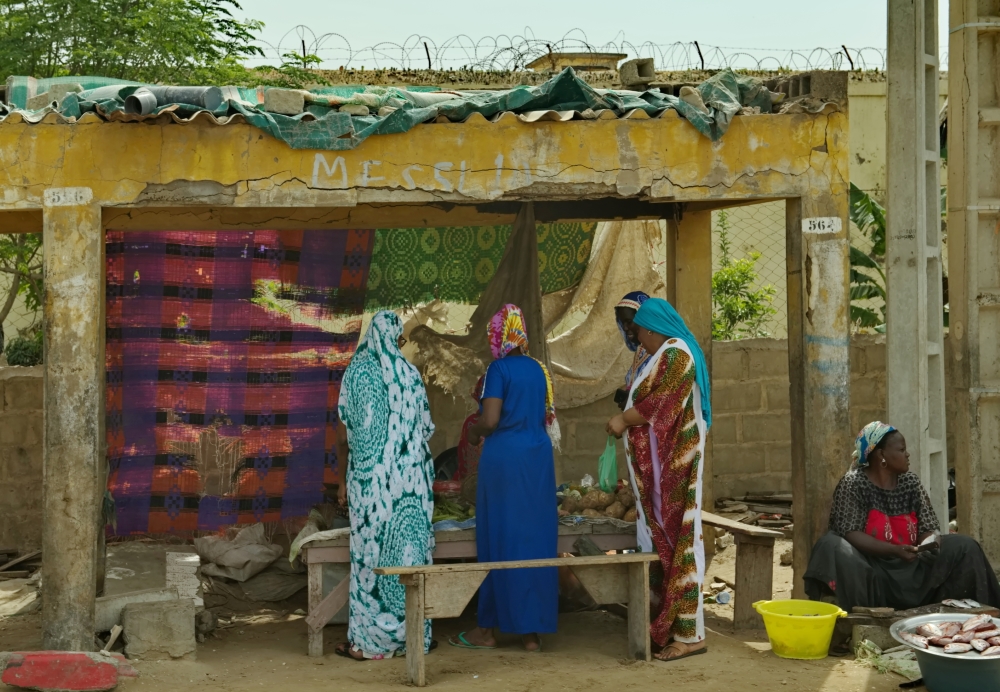
Within this everyday landscape, entrepreneurship is not separate from development; instead, it is one of its driving forces. The strongest examples of entrepreneurship I have witnessed come from the women in my village. In nearly every village, women sell products they make at home — cooked food, juice, lotions, soaps, etc. — from small tables set up outside their houses. Some women grow onions, tomatoes, bissap (an herbal beverage) and peanuts in massive community gardens they built themselves and sell the produce in local markets. Others wake before dawn to prepare coffee, beignets and pea-or-spaghetti sandwiches to sell to students and workers. Many of these businesses operate informally but nevertheless are the backbone of the village’s economy.
In many villages, women’s economic participation is directly connected to health outcomes. As Pierre Pratley and others have documented in professional journals, when women earn income, they are often better able to pay for medicine, school supplies and transportation, and allocate more resources toward their children’s health. Every dollar counts for something. Economic development and public health are fundamentally intertwined in this way.
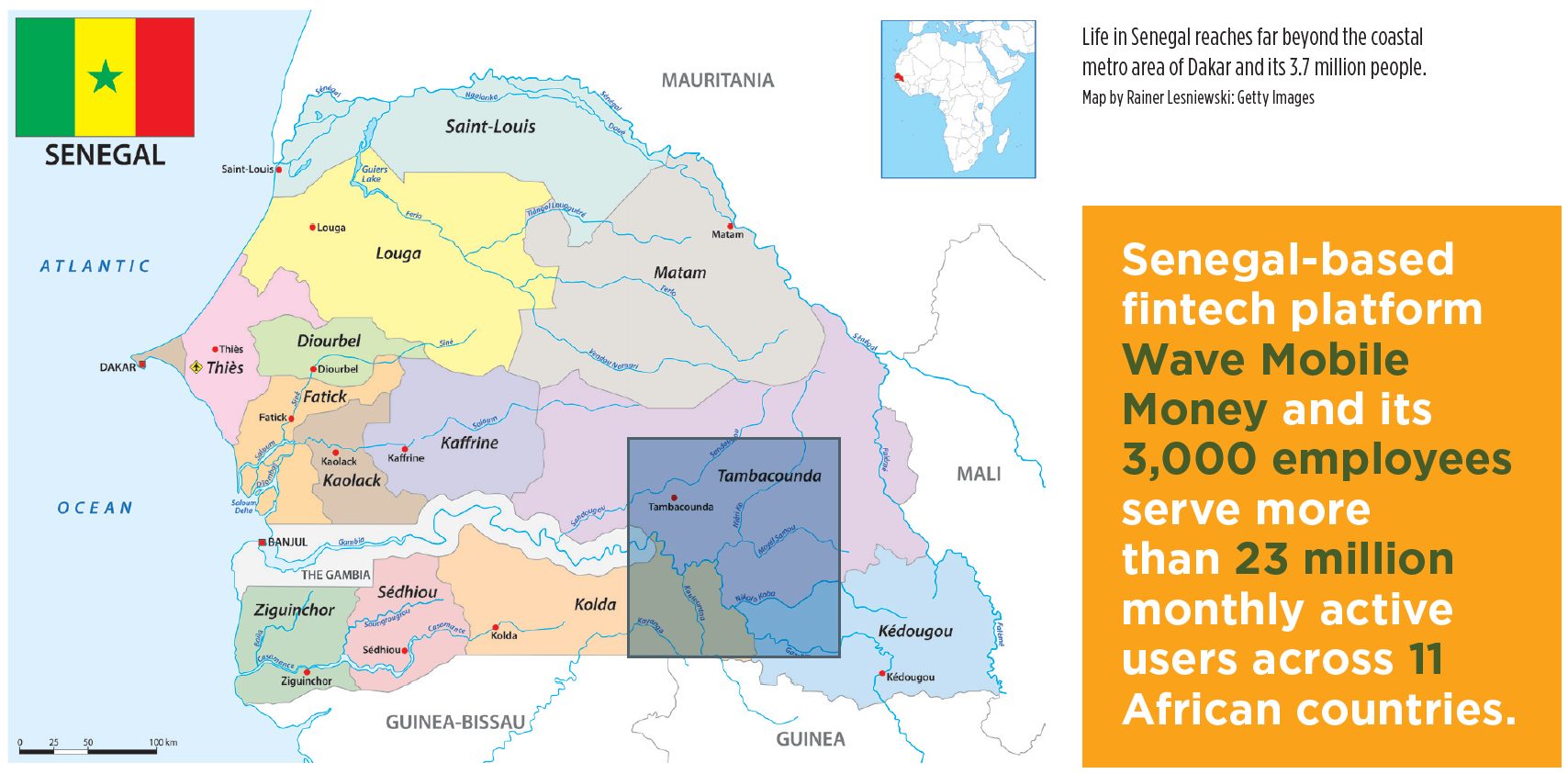
One of the most interesting forms of entrepreneurship I have encountered in rural Senegal revolves around mobile money services. In my village, a woman sits outside her house each day with her phone and a small notebook. There, she helps community members to deposit, withdraw and transfer money through Wave, a mobile banking platform similar to Venmo or Zelle that is widely used across Senegal. Men stop by frequently throughout the day to send and receive payments or manage money connected to their work. In communities where formal banks may be hours away, she acts as a local financial hub.
I was struck by the informality and apparent simplicity of her business. I saw a woman seated outside her compound conversing and joking with neighbors and caring for her small children; in reality, she is providing a critical financial service that many people depend on daily. Her work is essential infrastructure for the village economy. Development here does not always arrive in the form of massive projects. The woman sitting under the shade of a tree helping her neighbors move money with a smartphone has provided essential development for her community.
Global Ties, Community Trust
I have been surprised by how internationally connected Senegal can feel. Through my Peace Corps travels, I have been able to meet people from across West Africa and Europe, particularly French natives (echoing Senegal’s colonial past). China especially has created strong ties in West Africa, implementing several development projects. One of them is Access to Satellite TV for 10,000 African Villages, through which they have successfully integrated TV in rural villages in 16 West African countries including Senegal. In both rural villages and large cities, the influence of global investment projects, foreign businesses and international NGOs is significant.
Living in Senegal, I’ve learned to move away from language often used around “underdeveloped” or “developing” countries. My town in Senegal doesn’t necessarily feel “behind” other cities or countries to me — instead, my community has a unique set of strengths, grounded in strong community networks and collective action rather than convenience, with which to address their challenges.
There are also ways companies could both do business and create positive impact in the regions where I serve. Limited access to transportation and healthcare remains a primary barrier for rural communities. During the rainy season, roads become difficult or even impossible to travel. In villages where distance and transportation delays can become life-threatening during emergencies, medical drones, solar-powered cold storage for vaccines or improved telecommunication infrastructure could make a huge difference.
At the same time, development work in Senegal has taught me that solutions cannot simply be imported. Community trust matters deeply. The most effective programs are usually ones that involve community actors and existing village structures rather than circumventing or replacing them.
Before arriving in Senegal, I thought development was mainly about systems and institutions. Now I think more about proximity — namely, about the impacts of development on the people involved. Development can help a mother to reach urgent healthcare in time, to access clean water and electricity year round, and to earn and save money independently. These examples of development may be quiet in their progress, but they are the ones I witness every day on my bike ride between villages in the early morning heat.