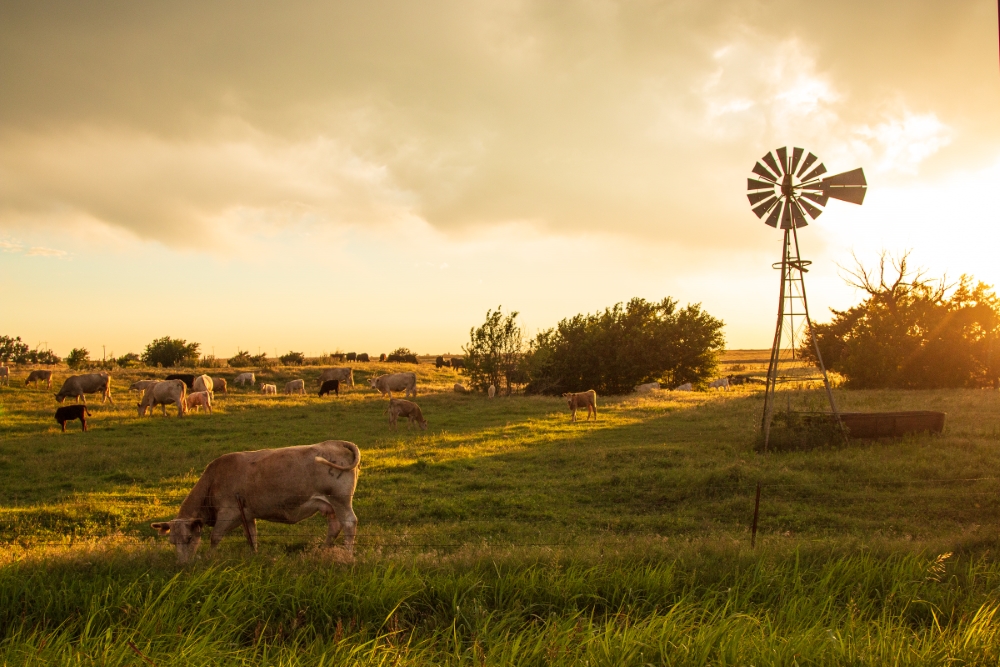
Led by the beef industry, Oklahoma’s ag sector plays a prominent role in feeding the nation.
One hundred years ago, in El Reno in the state’s central region, the first onion burger was cooked up at Robert’s Grill, a no-frills lunch counter where thinly sliced onions are smashed into the beef before the patty gets smashed into the grill. Also once known as the “Depression Burger,” the onion burger is an Oklahoma staple that most diners find anything but depressing.
It’s only natural, then, that the full circle between cow and burger is reflected in the latest agritourism trail to join trails for wineries, farm-to-table, jelly-making, mazes and craft beer. In May 2026, The Oklahoma Department of Agriculture, Food and Forestry launched the 2026 Oklahoma Onion Burger Trail, featuring a menu of 34 restaurants dripping with deliciousness from Broken Arrow to Chickasha.
“Oklahoma is known for a lot of things but one of the tastiest is the onion burger, created right here in El Reno,” said Oklahoma Lieutenant Governor Matt Pinnell. “May is Beef Month in Oklahoma and we are so excited to highlight Oklahoma’s beef industry with the Oklahoma Onion Burger Trail,” said Oklahoma Secretary of Agriculture Blayne Arthur. “Beef is a cornerstone of Oklahoma’s agriculture industry and a leader locally, nationally and internationally thanks to the hard work of Oklahoma’s beef producers.”
As of January 2026, Oklahoma was home to more than 4.6 million cattle (including calves), making beef a prominent feature across the state’s 34.2 million agricultural acres, 129,619 ag producers and 77,200 farms.
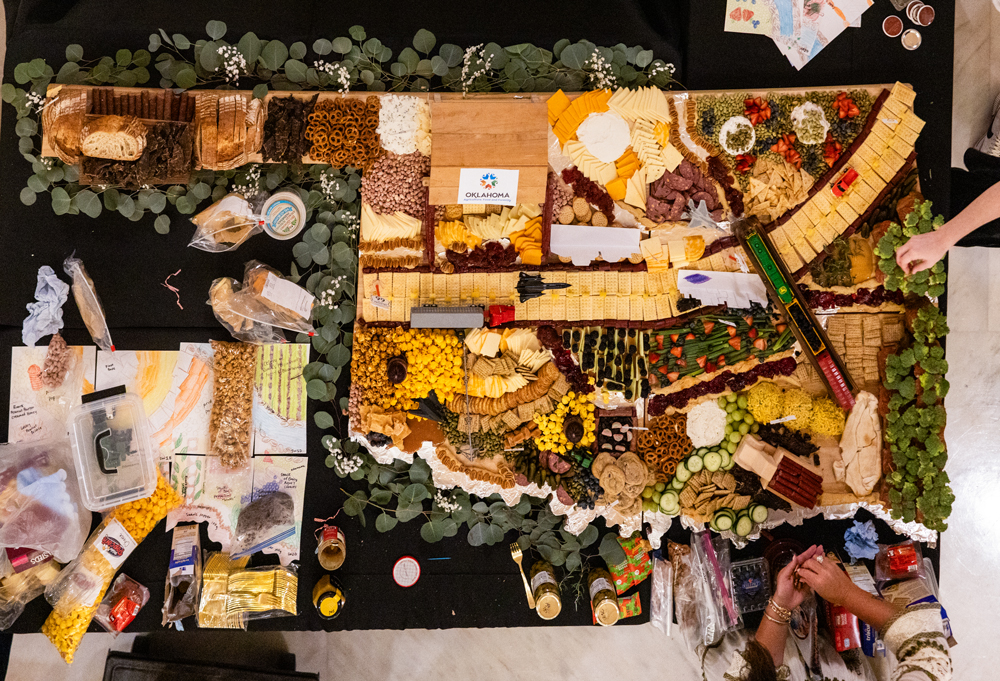
The Oklahoma Department of Agriculture, Food and Forestry (ODAFF) recently convened Ag Day at the State Capitol in Oklahoma City, where a Made in Oklahoma display celebrated the state’s bounty.
Photo courtesy of ODAFF
The 2022 Census of Agriculture saluted cattle and calves as the state’s No. 1 ag product by market value sold, raised at more than half of the state’s farms and valued at nearly $4 billion, almost half of the state’s overall $8.5 billion in ag product sales. The No. 1 county for cattle in the state is Texas County in the Oklahoma Panhandle, the second-largest county in the state at more than 2,000 square miles and home to some 21,000 residents. The county also leads the state in hog and pig product value as well as in grains, oilseeds, dry beans and dry peas.
Some 37% of employed Texas County residents work in agriculture-related manufacturing. The county is also part of the Third Congressional District, represented since 1993 by Congressman Frank D. Lucas, a longtime champion of farmers. The district takes up almost half the state’s land mass and is one of the largest agricultural regions in the nation.
After a $12 billion economic assistance package for American farmers was announced by President Trump in December 2025, Lucas said, “This much-needed relief will go a long way for the men and women who keep our country fed, and I know my fellow Oklahomans welcome this effort with open arms.”
In May 2026, Lucas demonstrated his support of ag against a national backdrop with a statement applauding House passage of the Farm, Food, and National Security Act of 2026.
“This bill reauthorizes a suite of critical research, rural development and credit programs that will invest into our communities and create rural resiliency for decades to come,” he said. “It also focuses on expanding and investing into market access programs abroad, and it ensures that voluntary conservation programs continue to reflect the needs of producers.”
In separate comments to his colleagues about the pending farm bill, he could have as easily been talking about Oklahoma’s important ag economy when he said the positive rewards from the bill’s passage can be seen “not just on the farm, but in the grocery stores, universities, fire stations, community facilities and rural hospitals across our country.”
Noting that the measure would impact ag districts, small towns and big cities alike, he said, “This bill will ensure that American farmers can continue to raise the food and fiber that ultimately finds its way into your home, and it will ensure that the next generation can continue that legacy.”