
By John Evans
Co-Founder & Managing Director, Tractus Asia Ltd.
The past year has proved that making accurate predictions about Asia-Pacific FDI trends is harder than ever. The U.S. elections were forecast to result in an increase of greenfield investments into Asia. But this was not the case. Geopolitical tensions that were supposed to ease have intensified. U.S. economic and tariff policies interrupted companies both operationally and strategically, halting almost all export-focused greenfield investments. This has spurred an accelerated supply chain diversification. As we look toward 2026, here are five predictions that will define site selection in the region.
1. India will become the No. 1 Asian destination for manufacturing investment.
In India, global MNCs see a massive potential market fueled by rapidly expanding domestic consumption coupled with the benefits of cost-competitive exports into many global markets. Add in low-cost, abundant engineering and technically skilled labor and India is ripe for the picking. Global companies are increasingly choosing it as a production base.
The numbers tell a clear story. India attracted US$76 billion in greenfield foreign direct investment (FDI) in 2024, making it the top destination in Asia-Pacific and the third largest globally, surpassing Germany and the UK. India’s FDI grew by 13% in 2024 while China’s fell by 29% for the second consecutive year, putting Chinese inflows 40% below their 2022 peak.
What’s driving this isn’t just cost. Hard and soft infrastructure investments by the Indian government during the past decade have improved its competitiveness as a manufacturing destination. India’s share of total FDI in renewables jumped from roughly 1% in fiscal year 2021 to 8% by fiscal year 2025. Companies evaluating semiconductor operations now see India as a serious contender, with major investments from Micron Technology and Applied Materials establishing credentials in advanced manufacturing. In 2026, we expect India to be the first market companies evaluate for manufacturing expansion, not the third or fourth.
2. ‘China+1’ evolves to ‘China for China’ and ‘China Exits.’
The language companies use matters. For years, executives have talked about “China+1,” maintaining China operations while adding capacity elsewhere. This made sense as China is the world’s second largest economy and continues to have strong demand for all types of goods. Despite rising labor and manufacturing costs, China’s economy of scale and its development and adoption of advanced manufacturing technologies in electronics have allowed it to remain competitive as a global export base.
But this is changing, and the data suggest something different is happening. Total inbound FDI was down by 10.3% YoY in first 10 months of 2025. Strategic manufacturing FDI declined by 70% in 2022-23 vs. the 2015-19 average.
The geopolitical pressure isn’t easing. U.S.-China trade relations have never been worse. The tariff tit-for-tat actions continue through multiple scenarios on the table for 2026, from the U.S. maintaining current tariffs around 30% to a full escalation with 60% duties on Chinese goods.
Tractus clients mirror what we see overall in China. Large MNCs are not exiting but looking at how to focus and grow China for China and take market share against increasingly tough local competition, while making new investments outside of China. Mid-cap companies are becoming more risk-averse and realizing there may be too many eggs in their China baskets. Companies in the technology space with products deemed sensitive (semiconductors, advanced manufacturing equipment, AI infrastructure) are exiting and we expect 2026 to mark the year these companies stop planning around China entirely.
3. Talent availability will trump tax incentives in site selection decisions.
When 2.1 million manufacturing jobs in the U.S. alone are projected to remain unfilled by 2030, and when 77% of manufacturers report ongoing difficulties attracting workers, talent availability becomes the constraint that determines whether a project happens at all. States and regions that were once selling available workers are now selling their ability to train the next generation.
Asia also has labor availability constraints. The developed historic Asian Tiger economies of Japan, Korea, Taiwan and Hong Kong are all super-aged societies with 21% of the population over 65 years old. Thailand, Singapore and China are all in the aged category with more than 14% of population over 65. Asian Gen-Zs are rapidly rejecting normal manufacturing jobs with a preference for flexible freelance technology gigs. The technical skilled and engineering labor pools in many of the ASEAN countries are just not that large. Overall, many of the Asian nations will be challenged to meet the labor needs for manufacturing from less-skilled to advanced manufacturing. Tractus clients have increasingly prioritized skilled and technologically skilled labor needs in their site selections. In 2026, successful site selection projects will start with workforce analysis, not end with it.
4. ESG requirements will move from procurement checklist to location disqualifier if missing.
Sustainability has been part of site selection conversations for years, but usually as a secondary consideration. That’s changing fast. Twenty-five U.S. states plus D.C. have renewable electricity portfolio standards. China is now requiring 80% renewable energy for new data centers in national hub regions by 2030. The EU is targeting a minimum of 42.5% renewable energy by 2030. The EU’s Corporate Sustainability Reporting Directive expands to non-EU companies by 2028, meaning multinational corporations will face mandatory climate disclosures regardless of where they’re headquartered. Companies that can’t demonstrate compliance risk being shut out of major markets.
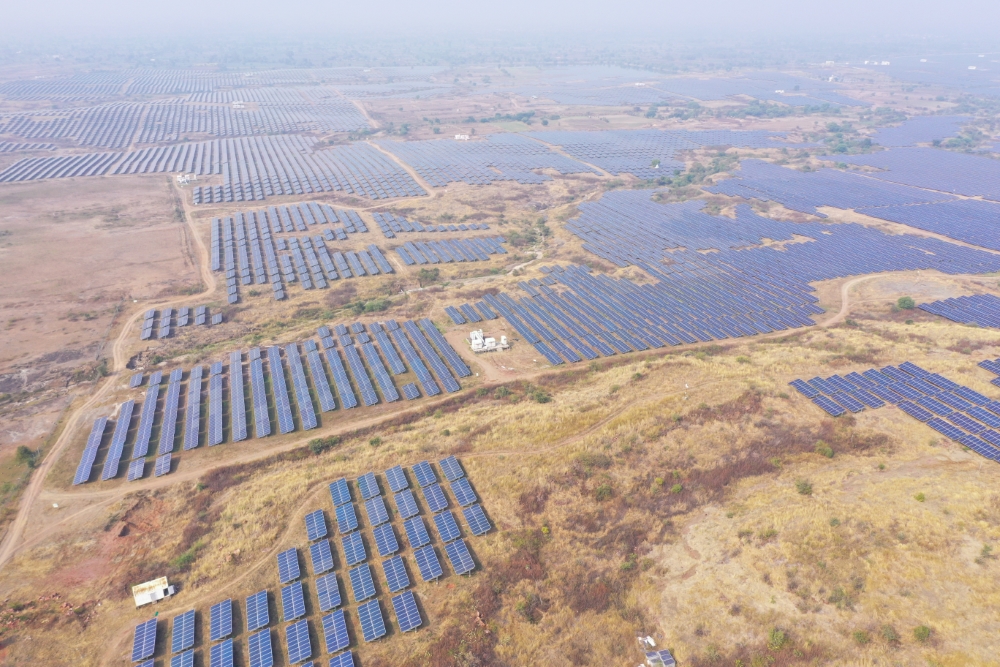
India achieved roughly 50% of its installed electricity capacity from non-fossil fuels by July 2025, five years ahead of its 2030 goal. That matters for companies evaluating manufacturing locations, particularly in energy-intensive industries.
The data demand from AI has far outpaced the energy supply and data centers are not designed adequately or built fast enough. Global tech firms will require data centers and their suppliers to meet ESG renewable energy goals. In 2026, locations without adequate renewable energy infrastructure will be eliminated from consideration earlier in the site selection process.
5. Geopolitical risk assessment will require scenario planning.
Site selection has always involved risk assessment, but the traditional approach (projecting current trends forward) doesn’t work when the variables change every quarter. The pace of change in these risks seems to be accelerating. The pandemic, the U.S.-China relationship, natural disasters, U.S. tariff policies and multiple territorial disputes including armed conflicts are factors driving risk to the forefront of site selection.
Consider the range of possible outcomes for U.S.-China trade relations in 2026 alone. The base case maintains current tariffs around 30%. A limited deal scenario sees duties settling around 50%. The escalation scenario involves potential 60% tariffs and genuine economic decoupling. All three scenarios are plausible.
CEO surveys consistently rank intensified trade wars as the most significant conflict-related business risk, with 29% identifying decoupling from China as their top economic concern. Global trade is increasingly following political alignments rather than geographic proximity.
While MNCs may have paused their greenfield investment plans for a variety of global risks in the past five years, it is getting difficult for them to not employ their pent-up capital and make investments that target near-future returns to their shareholders. C-suites need to be able to make informed decisions that include risk analysis.
In 2026, sophisticated clients will demand scenario planning as a standard deliverable. Single-point forecasts that assume stability will be recognized as inadequate.
Tractus has a 30-year history of solving complex problems for clients, assisting them in making informed decisions on the optimal locations to invest in and grow their business. For more, visit tractus-asia.com.