If I-75 is the U.S. automotive industry’s main artery, Kentucky is both the circulatory system and heartbeat.
Even as the global electric vehicle and mobility sector rides a rollercoaster of on-and-off government incentives and endures the patient build-up of supply chain and supporting infrastructure, the Bluegrass State has one message to the marketplace: “We will be charged and ready.”
Ford Motor Co. in 2025 offered a sense of that rollercoaster as the company’s battery-making joint venture with SK On dissolved in the wake of expired federal EV incentives, impacting the BlueOval SK operation on a longstanding megasite in Glendale, Kentucky. Ford, which has had a presence in Kentucky since its Louisville Assembly Plant (LAP) rolled the first Model Ts off the line in 1913, wasted no time before announcing it would repurpose that site to serve the rapidly growing battery energy storage systems market.
“This strategic initiative will leverage currently underutilized electric vehicle battery capacity to create a new, diversified and profitable revenue stream for Ford,” said the company, which plans to deploy at least 20 GWh annually by late 2027. “The company also plans to invest roughly $2 billion in the next two years to scale the business. The Kentucky site will be converted to manufacture 5 MWh+ advanced battery energy storage systems. Ford plans to produce LFP prismatic cells, battery energy storage system modules and 20-foot DC container systems at this facility. These systems are at the heart of the energy storage solution market for data centers, utilities, and large-scale industrial and commercial customers.”
Kentucky Governor Andy Beshear has publicly noted that his team has jumped in – alongside numerous community and regional partners – to help with both the workforce and the site in Glendale. In fact, more than 60 companies attended a recent job fair to speak with workers affected by the restructuring of the joint venture.
In a circular economy sense, while the repurposed site will not be manufacturing automotive products or EVs per se, it will be making systems to support the improved electrical grid the nation needs to support EVs. The battery storage market is hot due to the data center industry’s insatiable appetite and the grid’s general resilience and redundancy needs, as evidenced by the announcement of the Shelbyville Battery Manufacturing operation, which is on schedule to break ground in 2026.
It’s not the first time Kentucky and its workforce have demonstrated their versatility when it comes to cars and electrical power: In late 2024, Mitsubishi Electric announced it would invest $143.5 million to convert a plant in Maysville that made automotive electrical equipment to manufacture variable-speed compressors that are a key component of high-efficiency heat pumps, with a goal of producing 1 million compressors a year.
As companies adjust to the EV market, they have found creative ways to introduce flexibility into their product base, but that doesn’t mean electric vehicles are going anywhere.
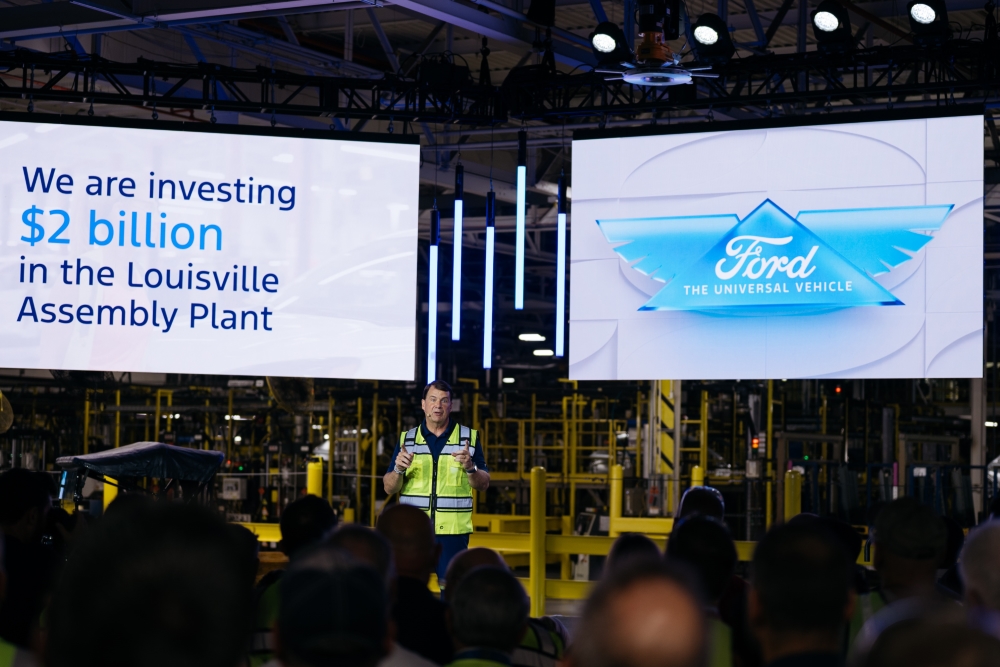
Ford, just last August, announced a nearly $2 billion investment in LAP to introduce a production platform for “an all-new, yet to be unveiled, electric mid-size pickup truck.”
“This announcement not only represents one of the largest investments on record in our state, it also boosts Kentucky’s position at the center of EV-related innovation and solidifies Louisville Assembly Plant as an important part of Ford’s future,” Gov. Beshear said at that announcement.
The LAP investment secures 2,200 jobs and represents what Ford called “a major manufacturing breakthrough” with an ‘assembly tree’ approach to increase efficiency, ergonomics and affordability. The new EV platform is expected to be completed by Q2 2027.
“We took inspiration from the Model T – the universal car that changed the world,” said Doug Field, Ford chief EV, digital and design officer, during the announcement. “We assembled a really brilliant collection of minds across Ford and unleashed them to find new solutions to old problems. We applied first‑principles engineering, pushing to the limits of physics to make it fun to drive and compete on affordability. Our new zonal electric architecture unlocks capabilities the industry has never seen. This isn’t a stripped‑down, old‑school vehicle.”
The revamped facility is proving just how important versatility really is when it comes to adapting to a changing industry.
“We put our employees at the center and re-created the factory from scratch,” said Bryce Currie, Ford vice president, Americas Manufacturing. “We live and breathe continuous improvement, but sometimes you need a dramatic leap forward. We expect ergonomic breakthroughs and complexity reduction – through elimination of parts, connectors and wire – will flow through to significant quality and cost wins.”
The assembly tree model also applies to the economic impact of Ford and its automotive brethren on the state’s economy.
Ford alone accounts for nearly 12,000 employees and close to 6,000 retirees, not to mention 165 Kentucky-based suppliers from which Ford purchases nearly $6 billion in products annually. According to an independent analysis by the Boston Consulting Group, the company supports approximately 120,000 direct and indirect jobs across Kentucky (including over 48,000 jobs in the Louisville region) and contributes more than $11.8 billion in state GDP.
Toyota’s Next Big Thing
Kentucky continues to be the No. 1 producer of cars, light trucks and SUVs per capita. A big reason why has been one company’s growth in Scott County for nearly 40 years. Toyota Motor Manufacturing Kentucky (TMMK) currently employs nearly 10,000 team members in Central Kentucky and has seen total investment exceeding $11 billion, including nearly $2.9 billion during the Beshear administration.
In 2006, TMMK was Toyota’s first plant in the United States to manufacture hybrid electric vehicles and later was selected to assemble fuel cell modules for use in hydrogen-powered, heavy-duty commercial trucks. The plant also plays a critical role in Toyota’s global electrification strategy. That’s why, in November 2025, Toyota announced a $204.4 million, 82-job expansion to boost production of hybrid vehicles, part of a larger $912 million family of investments at sites across five states that includes sits in the neighboring states of West Virginia, Missouri and Tennessee.
Photos courtesy of Toyota Motor Corporation
That news follows a commitment in early 2024 to invest $1.3 billion toward production of an all-new, three-row battery-electric SUV in Georgetown. But it didn’t have a name… until now.
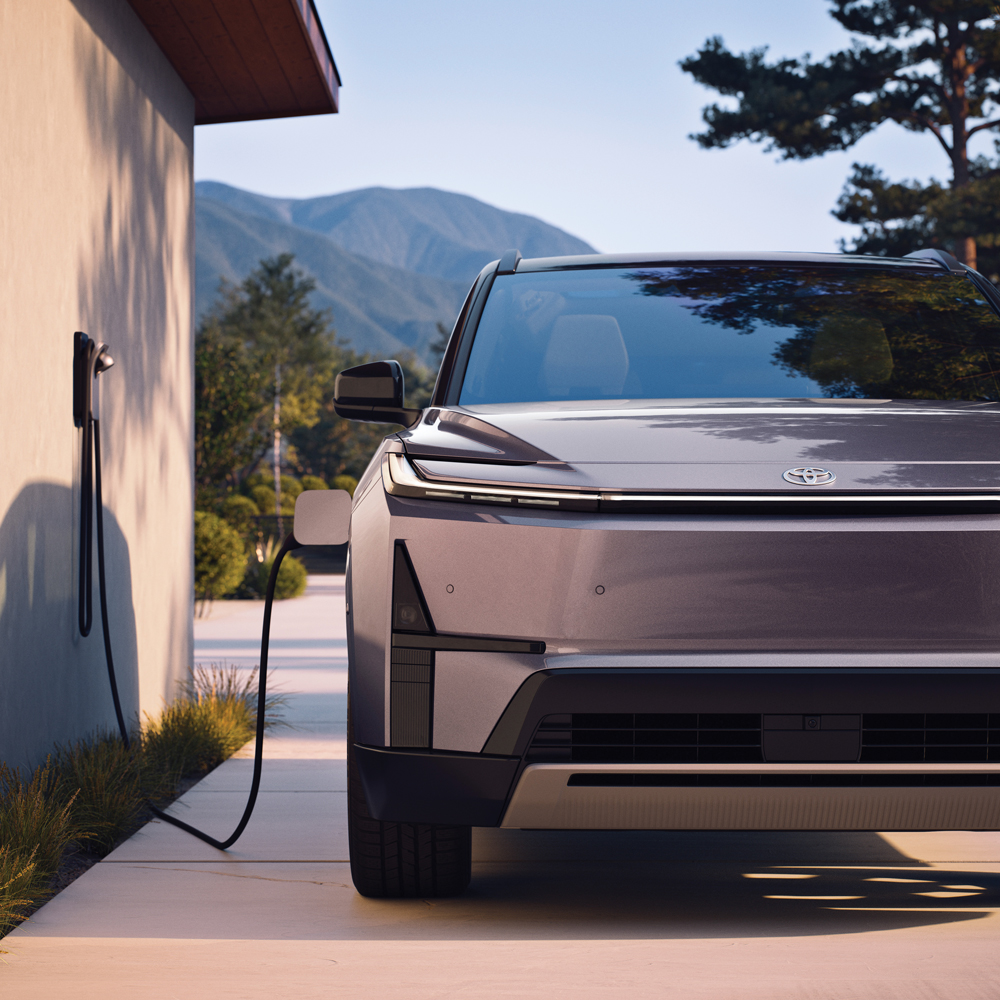
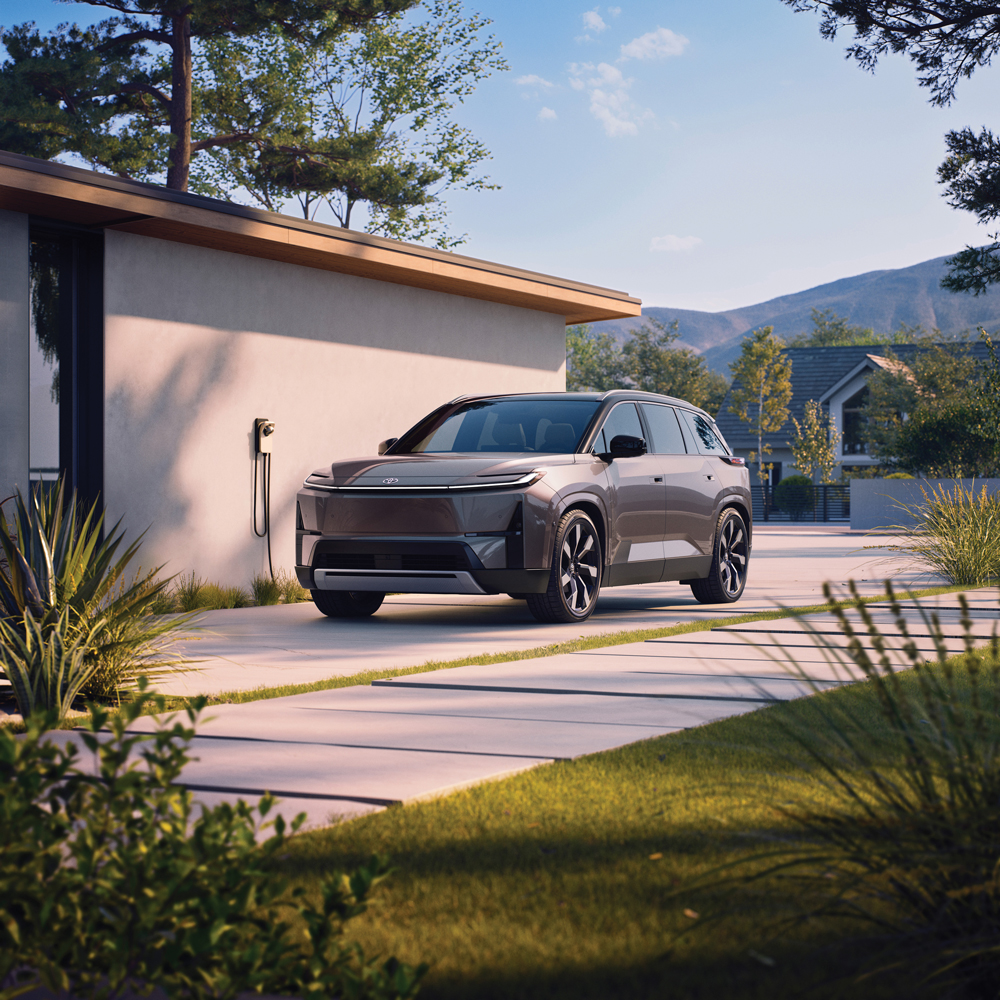
In February, Toyota announced the all-new 2027 Highlander, the company’s latest all-electric vehicle, will be assembled at TMMK and on the market later this year.
“This new Highlander is designed to be a stylish, high-tech leader in the midsize SUV segment,” David Christ, group vice president and general manager, Toyota division, Toyota Motor North America, said of the announcement. “Its sleek new look, spacious interior, and cutting‑edge technology, make it a great addition to Toyota’s growing lineup of BEVs.”
It is also the company’s first U.S. vehicle with the ability to serve as a mobile power source with vehicle-to-load (V2L) technology. With the ability to power appliances or serve as a power backup for a power outage at home, Toyota is going all-in on its electric capabilities.
A Statewide Supply Chain
Zoom out and you’ll see the commonwealth is home to roughly 550 companies in the automotive sector that employ over 100,000 people directly. In the automobile and light duty vehicle manufacturing and parts manufacturing sectors specifically, 2024 research from the Center for Automotive Research (CAR) in Michigan placed Kentucky No. 5 in the nation in total employment at just under 59,000 people.
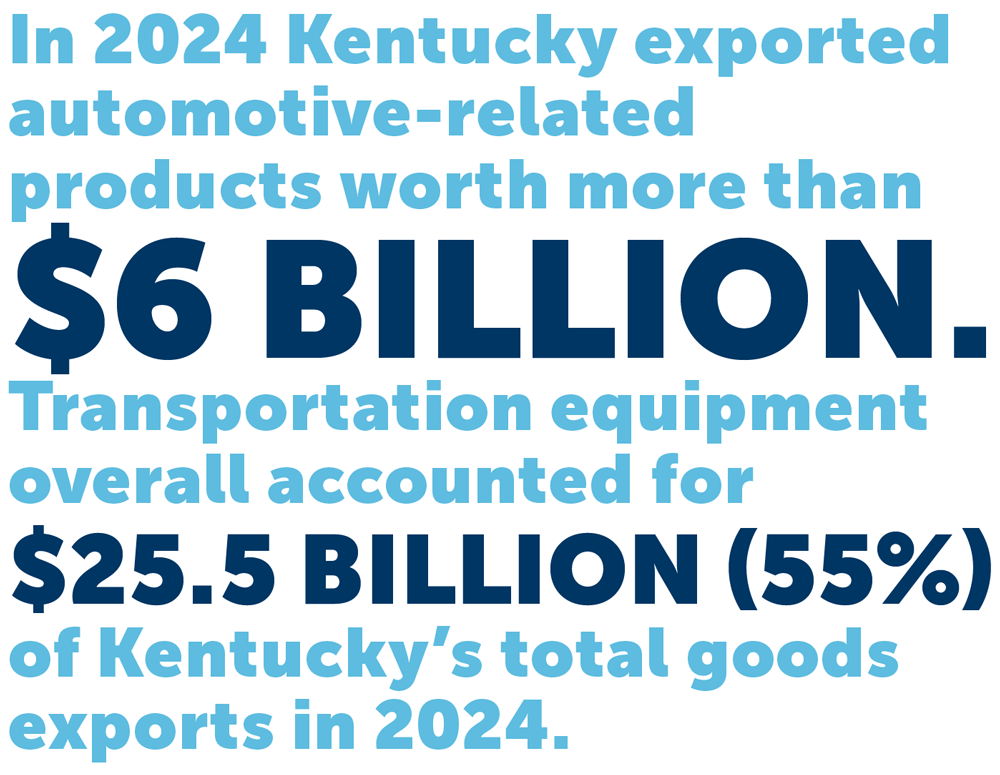
In 2024, the state exported automotive-related products worth more than $6 billion.
The Alliance for Automotive Innovation pegs the industry’s larger impact on Kentucky at more than 160,400 total jobs and more than $19.8 billion of the gross state product, accounting for 7.1% of state GDP.
Kentucky is a wide state, including the southwestern corner where folks not only fall into Central Time but might be more inclined to root for the St. Louis Cardinals than the Cincinnati Reds. A recent announcement from the South Western Kentucky Economic Development Council noted the Hopkinsville area’s proximity not only to GM’s Corvette plant in Bowling Green and to the other Kentucky OEMs but also to major OEMs and electric vehicle industry plants in neighboring states.
Photos courtesy of Toyota Motor Corporation
Hopkinsville in December 2025 welcomed the grand opening of a new $225 million facility from Toyota Boshoku America (TBA) at South Park on 50 acres in Christian County. The operation creates 157 new jobs making seat frame mechanism parts such as seat tracks, seat recliners and motors with gear. TBA’s headquarters is located in Erlanger in Northern Kentucky.
The company manufactures automotive interior systems, which include seats, door trim, headliner, substrate and carpet, in addition to air and oil filters for a variety of customers, such as Toyota, BMW and Subaru. In Kentucky, the company already operates three full production plants, located in Bardstown, Harrodsburg and Lebanon. With the completion of this plant, TBA will employ over 1,100 Kentuckians across five locations in the commonwealth, representing 8% of the company’s 14,000 employees across all of the Americas from Canada to Argentina.
“The city of Hopkinsville is proud to be the New Kentucky Home for Toyota Boshoku in Western Kentucky,” said Hopkinsville Mayor James Knight at the time of the announcement. “We welcome the company and its leadership to our growing manufacturing family, which includes 75 industries, 24 international companies and several Japanese automotive firms.”
“Today’s opening marks more than a new manufacturing facility — it reflects our commitment to innovation, resilience and long-term growth,” added Shunichi Iwamori, president & CEO of TBA. “Just as importantly, it strengthens our partnership with this community, where we are dedicated to creating opportunities and contributing to shared prosperity.”