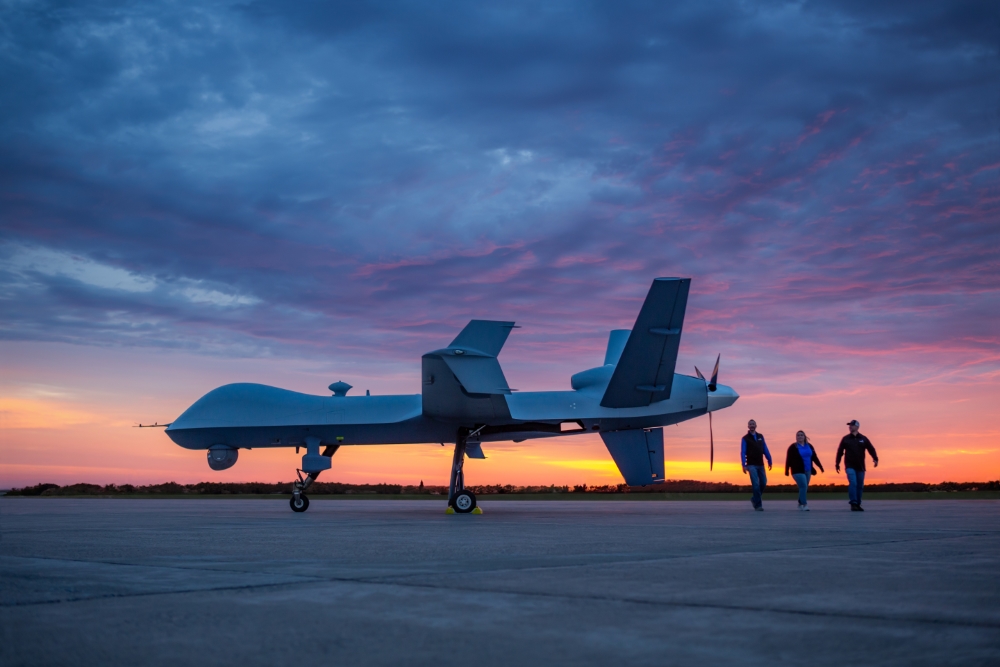
Akey moment for innovative uncrewed flight in North Dakota occurred in 2025.
That’s when a beyond-visual-line-of-sight (BVLOS) drone delivery mission successfully moved 55 pounds of medical supplies over 80 miles between Williston and Watford City, navigating uncontrolled airspace with a low-flying, non-cooperative aircraft (i.e., one operating without transponders).
This was the first mission under Project Rural Reach, a collaboration between the University of North Dakota Center for Innovation, regional partners, the Northern Plains UAS Test Site (NPUASTS) and Vantis — a first-of-its-kind statewide uncrewed aircraft systems (UAS) BVLOS network administered by NPUASTS — showcasing the effectiveness of drone technology in rural regions where traditional aircraft systems may be deficient.
The iSight Drone Services medical supply flight was the first of three planned use cases under Project Rural Reach Funded through the U.S. Economic Development Administration, the program received $50,000 to test long-range delivery operations in western North Dakota in order to prove this tech can support reliable rural delivery, sustainable operations utilizing renewable power and rapid emergency response.
Seamless movement through uncontrolled airspace utilized years of development behind Vantis, providing integrated surveillance, aircraft detection and command-and-control connectivity in real time. While the state’s overall population is on the rise, the reality of rural is not missed by North Dakota’s leadership. UAS integration provides a key solution to serving rural community needs, propelling initial state funding toward Vantis in 2019. Logistical and technical wins through Project Rural Reach’s innovative activity mark a vital milestone in strengthening a statewide UAS commercialization strategy.
“The Vantis team played a crucial role in the success of today’s flights,” said University of North Dakota Center for Innovation Project Manager Jeff Barta in July 2025. “Their diligent and tireless work behind the scenes in planning and ultimately executing the flight fully illustrates why they are recognized as leaders in UAS development. Their quiet contributions may not be apparent to the public eye but were certainly recognized by our team and deeply appreciated.”
Northern Plains UAS Test Site
If you think it’d be easier to move UAS through a rural area vs. an urban environment, you’d be wrong. According to NPUASTS Deputy Executive Director Erin Roesler, in busy airspace, such as around the Dallas Fort Worth International Airport, there is constant feedback from flying aircrafts broadcasting through an electronic beacon exact locations and altitudes.
For non-commercial aircrafts, our national airspace offers a bit of freedom at certain altitudes, not requiring pilots to broadcast position, use GPS or have a transponder during flight. In North Dakota, nowhere below 10,000 feet are pilots required to broadcast through ADS-B or a transponder.
“If I am flying a UAS, it is that much more difficult as an operator to make sure I’m clear of all other air traffic and have the ability to detect other aircrafts,” says Roesler. “That’s why Vantis is the perfect use case in North Dakota, because without that infrastructure the burden for UAS operators was immense.”
Vantis aims to solve barriers faced by lack of shared infrastructure that hinder UAS economic development potential. By leveraging the foundation set by NPUASTS, instead of companies or educational institutions building individual communication, surveillance and aerospace solutions, Vantis created a statewide network that filled that gap.
“That allowed industry partners to focus more on their aircraft and mission rather than the underlying infrastructure required to operate safely,” says Roesler. “It also created a platform that supports multiple users and use cases. It’s not just small or large UAS, it is infrastructure that is built to scale and support all UAS.”
Located in Grand Forks, the FAA-designated NPUASTS has supported UAS research, consulting and flight testing for over 13 years, housing the ideal environment and equipment for operators to experiment. Initial focuses centered around proving drones and UAS could safely operate in the airspace at all. Now, conversations have shifted to how to scale.
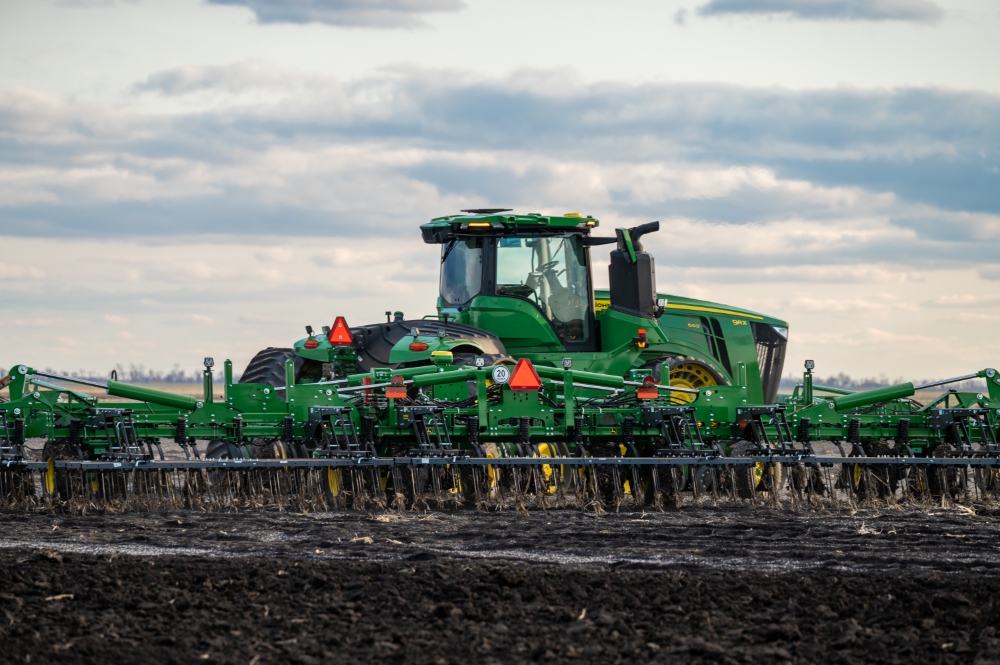
An autonomous John Deere tractor moved throughout the Grand Farm Innovation Campus in 2025, as part of the duo’s partnership focusing on future Agtech solutions.
Photo courtesy of Emerging Prairie
The site welcomes a variety of UAS operators, industry partners and non-operators curious to explore potential applications in their business. Roesler notes that many companies that come to NPUASTS are looking for practical, scalable uses in such areas as infrastructure inspections, pipeline patrol, agricultural applications, energy sector operations, emergency response and supply chain logistics operations.
“North Dakota is attractive due to our ability to safely test in complex environments and enable those operations to happen in national airspace versus a traditional test range or restricted area,” she says. “They don’t want to just test and evaluate, they want to truly integrate into their operations. That’s why they come to North Dakota.”
“North Dakota is attractive due to our ability to safely test in complex environments and enable those operations to happen in national airspace versus a traditional test range or restricted area.”
— Erin Roesler, NPUASTS Deputy Executive Director
No two days are ever the same at NPUASTS. Some days include supporting active flight testing, whether that be in a test director capacity, safety oversight or data collection. Others include engineering analysis, system integration and designing test campaigns.
The state’s four distinct seasons, from hot summers to snowy, windy winters, become vital to evaluating system performance in potentially extreme weather scenarios — an added benefit for NPUASTS rather than a challenge.
GrandSKY
Down the road from NPUASTS, at the Grand Forks Air Base, the nation’s first and only fully operational UAS research and development park, GrandSKY, took monitoring North Dakota’s weather to new heights.
GrandSKY launched the first drone-based weather forecasting system, providing data nine times more granular than the best commercial or government services. The Meteodrone returns real-time micro-weather readings above the Earth’s surface, allowing for accurate local forecasts every 30 minutes.
It’s one example of the innovative activity that has taken place here since 2015, as the site has become a well-known resource for large UAS testing, training and commercialization. A joint agreement with the U.S. Air Force provides tenants direct access to a 12,351-foot runway at the base for crewed or uncrewed flight testing. GrandSKY additionally serves as the launch and recovery site for BVLOS flights administered from NPUASTS.
GrandSKY housed Project ULTRA — standing for UAS Logistics, Traffic, Research and Autonomy — in 2024, which sought to strengthen the U.S. Department of Defense’s UAS capabilities. Similar to NPUASTS objectives, GrandSKY’s initiative targeted advancing logistics and traffic management within the National Airspace System.
In this case, Project ULTRA was responsible for enhancing airspace situational awareness by testing UTM and other traffic management systems; developing reliable, replicable, scalable logistical and delivery systems; utilizing BVLOS to create scalable service models for DoD installations; integrating small UAS capabilities; and developing counter-UAS technologies to enhance personal security and for integration within traffic management.
The combined resources and expertise at GrandSKY and nearby NPUASTS have anchored a strong, forward-looking UAS ecosystem in the region.
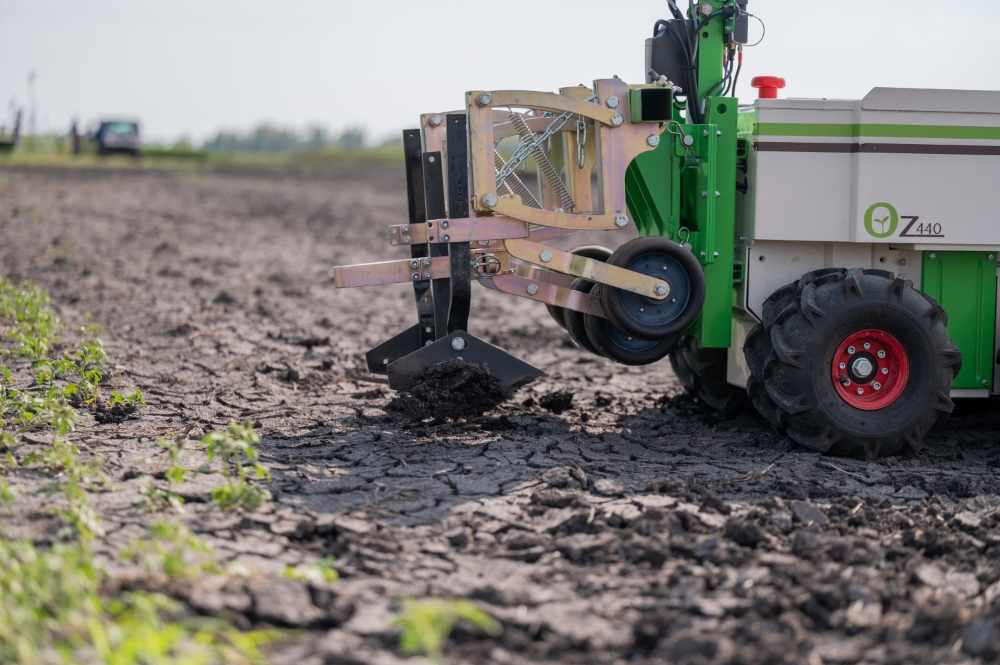
Grand Farm works with its partners to research, develop and validate new technologies.
Photo courtesy of Emerging Prairie
Grand Farm
With a majority of North Dakota’s total land area dedicated to farms and ranches, innovation at ground level is also crucial. Autonomous systems offer the state’s agricultural industry various avenues to explore potential uses and the Grand Farm Innovation Campus introduced the ideal site to exercise new tech.
The 590-acre Casselton site creates a collaborative hub for growers, startups, researchers, corporations, government and investors to pursue the development of fresh agtech. Tours, events, workshops and field days allow Grand Farm to invite the public in to learn about complex systems, demonstrations and networking opportunities.
For startups, Grand Farm offers a Startup Pilot Partnership and a Startup Ecosystem Partnership that tackle specific early-stage needs. The pilot partnership provides startups with access to a half-acre plot of land at Grand Farm, receiving project management support while showcasing the project during campus visits. On the other hand, the ecosystem partnership connects innovators to an industry-wide network of growers, leading companies and tech experts to promote their tech.
In order to validate new Agtech in a real farm setting, field trials have drawn in major companies on the hunt for data-driven insights. In 2025, Archer-Daniels-Midland and Anheuser-Busch arrived at Grand Farm to pursue crop demonstration and to conduct research designed to enhance future operations, respectively.
Growth is on the horizon as Grand Farm is in the midst of its phase two expansion, having already completed land expansion and securied an anchor tenant. This expansion will ensure the campus is evolving along with the industry and provide new space to meet increased demand to participate.
As progress continues, Grand Farm looks to provide additional capacity to conduct research, develop site infrastructure to attract global agtech leaders, and finalize the vision for the campus’ future use.