Moved in part by “America First” policy actions and tariffs from the White House that include Most Favored Nation pricing, big biopharma is bringing more than $370 billion of investment stateside. That’s one of many findings in EY’s “Biotech Beyond Borders Report,” released in June in its 36th edition.
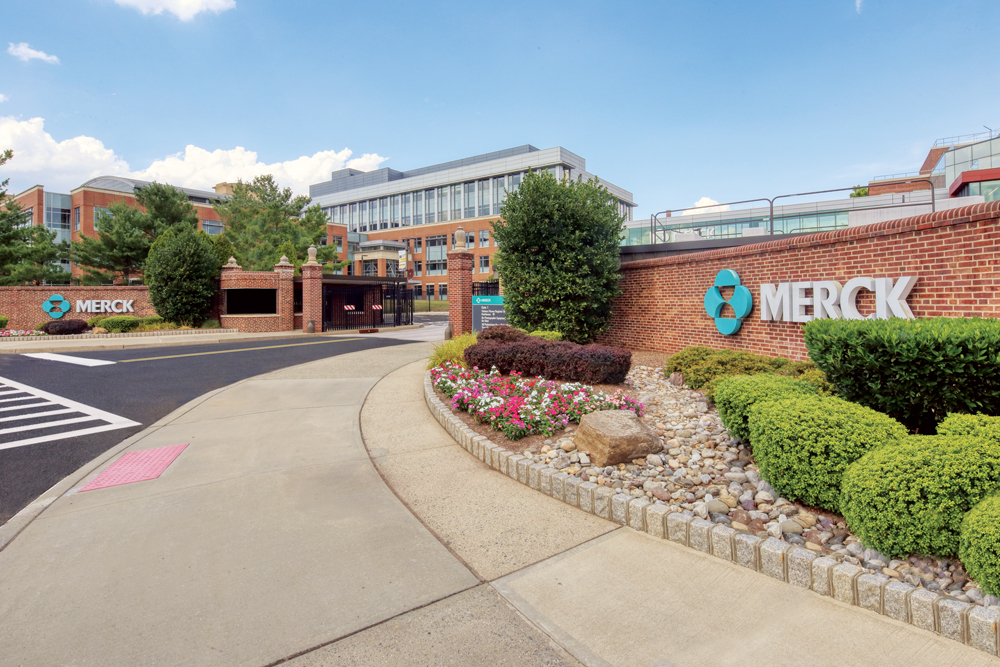
Among those spending tens of billions of dollars in the United States are AstraZeneca, Roche, Eli Lilly and Company, Johnson & Johnson and Bristol Myers Squibb. But none is pledging more in one fell swoop than Merck, which from its U.S. HQ in Rahway, New Jersey, announced last December it had reached a deal with the Trump administration that would keep prescription drug prices affordable while delaying Section 232 tariffs by three years in order to give the company time to begin investing more than $70 billion in capital and R&D spending, including at least $12 billion in capital expenditures, in the U.S. This includes Merck’s recent announcements of manufacturing facilities in Virginia, Kansas and Delaware, which alone will create 1,200 full-time jobs and support 15,000 construction jobs. These will join Merck’s 15 manufacturing and R&D facilities and a U.S. workforce of more than 30,000. The company says it has invested over $12 billion in U.S. manufacturing since 2017 and $81 billion in U.S.-based R&D since 2018.
Another finding from the EY report: “Excluding debt financing, Massachusetts and Northern California remained the clear centers of U.S. biotech activity in 2025, accounting for 288 non-debt financings combined,” EY stated, reinforcing findings from Biocom, also released in June, that show California’s life sciences sector generated $394 billion in economic output, supported more than 1 million jobs and attracted $73.1 billion in investment in 2025. “Together, the two regions raised US$8.1 billion in venture capital, approximately 55% of total U.S. biotech VC (US$14.8 billion) and US$21.9 billion in total equity financing, representing roughly 53% of all U.S. biotech equity capital raised during the year (US$42 billion Ex-debt).”
Finally, in another trend that could be considered a motivating factor behind all that U.S. investment, several sections of the EY report highlighted China’s ascendance. “China’s growing speed and sophistication as an innovator has driven a huge upsurge in industry investment, with Chinese companies representing a genuine alternative to U.S. and European biotech hubs for the first time,” the report stated. “China’s newfound credibility in the R&D space has many deep long-term causes, including major state investment into the domestic biotech ecosystem, and the return of ‘sea-turtle’ scientific talent nurtured abroad. These and other factors have enabled Chinese companies to ascend the biopharmaceutical value chain. Once predominantly regarded as an affordable destination for manufacturing, clinical trials and research, China is rapidly becoming a heavyweight innovator in its own right, boasting more R&D companies than Japan, the UK, France, Germany and Canada combined.”
“China has made enormous advances in their biotechnology programs and industry,” wrote Biotechnology Innovation Organization President and CEO John F. Crowley in a contribution to the EY report. “Rather than trying to stop what’s happening in China, which I think would be a fool’s errand, the better focus is for us to outcompete China, to focus on areas where we can be more competitive, where we can reduce the time, cost, complexity, uncertainty of drug development.”