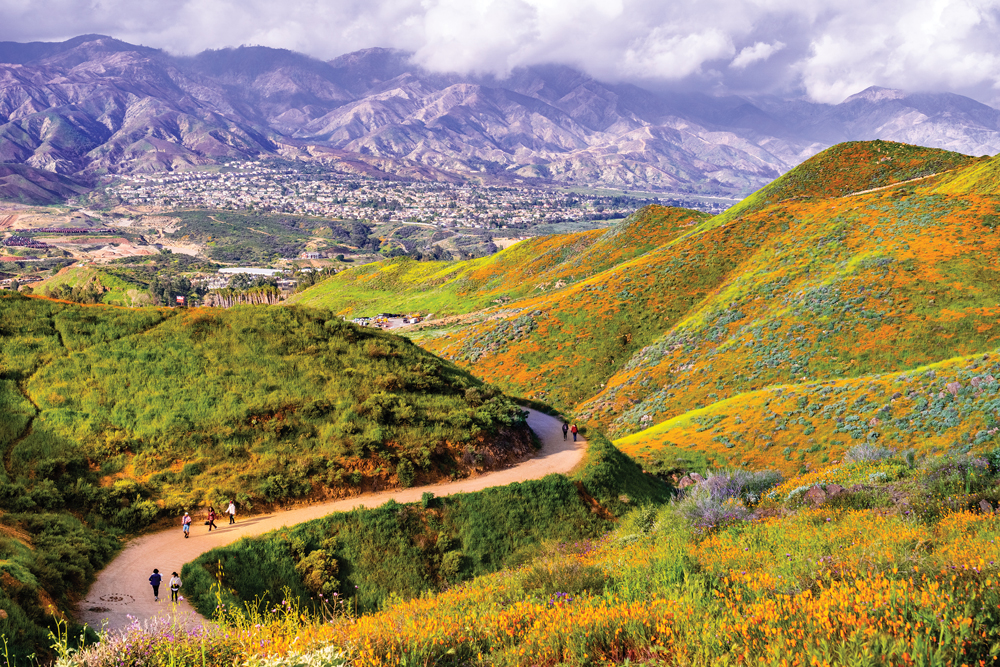
Temecula Valley is quickly making a name for itself on the global stage.
If you’re a wine enthusiast, you’re likely familiar with the wines of Napa and Sonoma Valleys. You may be less familiar, however, with the Southern California Wine Country region of Temecula Valley and surrounding towns in southwest Riverside County.
Economic development leaders in the region are working hard to change that, and judging by corporate project wins, they’re gaining traction.
From aerospace to life sciences, this stretch of Southern California in the Inland Empire is tallying an impressive roster of corporate facility expansion projects even as it grows its popular winery-based tourist business. Just ask Connie Stopher, executive director of the Southern California Wine Country Economic Development Coalition.
“Temecula 35 years ago was just a couple of stoplights. It was very rural,” she says. “We’re close to San Diego and Orange County. People could sell their $1 million condo on the coast, move here and buy a nice home for much less.”
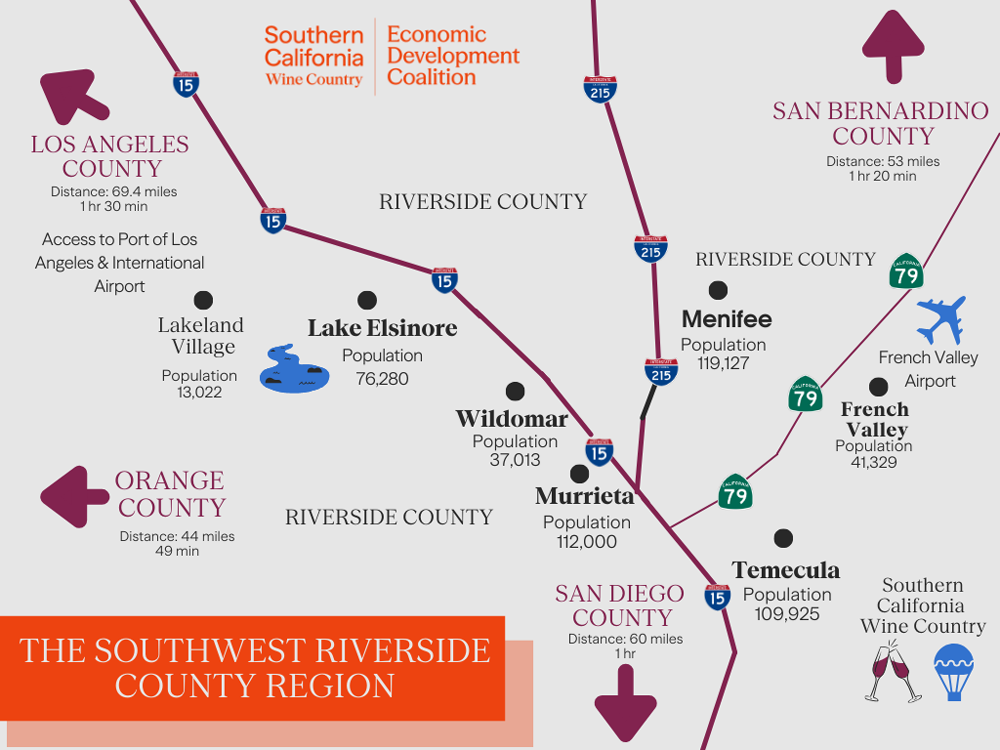
Map courtesy of Southern California Wine Country EDC
Word is getting out as more Californians relocate each year. “Riverside is the second fastest growing county in the country,” Stopher says.
One reason for that: public safety. “Temecula and Menifee are often rated as the safest places to live in the country,” Stopher says. In Temecula, the latest crime index registers at 123 — nearly half the national average for similar‐sized cities. Riverside County’s violent crime rate is 65 per 100,000 – more than 38% below the U.S. average.
Wine enthusiasts appreciate that feeling of safety and quiet, and so does a rapidly growing collection of corporate employers in the life sciences sector. Millipore Sigma and Abbott Labs are two of the larger ones expanding in the area, notes Stopher.
“Millipore Sigma is doing a project here soon,” she says. “They do a lot of pharmaceutical manufacturing. They are a European company. Abbott also has been doing quite well. They are bringing new lines in biopharmaceutical manufacturing. We’re also growing our defense contracting business by attracting investment from parts manufacturers. Our long-term goal is to grow that industry base in the region.”
From Life Sciences to Lithium
While there are many things to like about the Temecula Valley, says Stopher, the one amenity that all investors agree upon is the award-winning wines produced here.
“We are an agricultural region in general. We grow avocados and citrus. This is where the Cuties oranges were developed and grown,” notes Stopher. “People started planting grapes here in the early 1800s. The mountains separate us from the coast. That gap allows us to grow a variety of grapes. Enough cool coastal air comes through and causes just the right dip in temperature to produce high-quality grapes. Our wines are now recognized and award-winning. We can go up against any other wine region in the world.”
Located near where Interstate 15 and Highway 79 intersect, Temecula Valley is roughly 60 miles north of San Diego and 70 miles west of Palm Springs. While the first grapes were planted by Spanish missionary padres visiting from San Luis Rey in 1820, the first commercial vineyard did not open in the valley until Vincent and Audrey Cilurzo established a local operation in 1968.
By 1984, the wine-making business had grown enough to earn an official designation as an American Viticultural Area, known as the Temecula AVA. In 2004, the name was changed to Temecula Valley AVA. In 2019, Wine Enthusiast Magazine named Temecula Valley a 10 Best Wine Travel Destination; and by 2023, the region was producing more than 500,000 cases of wine annually from nearly 50 wineries. Today, at least 52 wineries dot the valley.
Stopher says vinification businesses and the corresponding wine tourism are “a huge driver of spending. People come for the wine tasting and experiences like the casino, hot air ballooning, horseback riding, vineyards and winery tours. We get a lot of tourism from Asia and Canada.”
Stopher says her goal is to leverage the tourism appeal to attract more corporate investors. “Life sciences and pharmaceuticals are a natural fit due to our proximity to San Diego,” she says. “Aerospace is another. Smaller parts makers are already here, and we have a huge veteran population — one of the highest in the country. People finish their service and want to stay. Cleantech is another target — namely, the battery sector. We’re close to the Salton Sea, which has the world’s largest deposit of lithium.”

“All of our communities are very business-friendly. Visitors were used to hearing the negative narrative about California, but you definitely won’t find that here.”
— Connie Stopher, Executive Director, Southern California Wine Country EDC
With 2.6 million people living in Riverside County, Stopher says attracting qualified workers is not a problem. “With major highways like the 15 and the 215 going up to Menifee and Riverside, getting people here is no issue. Those highways connect in Murrieta just north of Temecula. The 15 goes north to Ontario, while the 215 goes through the City of Riverside.”
Mt. San Jacinto College serves the region with worker training and maintains branch campuses in Temecula, Menifee and San Gorgonio Pass. University of California, Riverside and California State University, San Marcos are four-year schools serving the region.
‘A Less Expensive Gem’
“We know we have the labor because about 75% of our workforce commutes out of the area every day,” says Stopher. “Many of them drive four hours roundtrip every day to San Diego to work. We have 122,000 outbound commuters. If they could work 10 minutes from home, they would drop that commute. We have workers in all varieties of skillsets — from blue-collar to high-tech — and we have great workforce training partners.”
Asked what she most wants corporate executives outside of California to know, she says, “You’re not alone in not knowing about us. Our rebrand is done. Our website is launched. We want people to know that we are open for business. We are a gem. We’re only an hour from Disneyland. We’re less expensive than you think. We compare well with Las Vegas on costs. We’re cheaper than Austin, Phoenix, Denver and Seattle. When you compare us to places like the Bay Area, Los Angeles, San Diego and other big markets, we’re cheaper than all of them.”
Her biggest wish? “Come visit us. After our last fam tour, one of the site selectors said that this was the least California-like area of the state. When they got here, they said, ‘Wow, this is really nice.’ All of our communities are very business-friendly. Visitors were used to hearing the negative narrative about California, but you definitely won’t find that here.”

Bay Meadows is a transit-oriented mixed-use development in San Mateo where Roblox is nearly doubling the size of its headquarters.
Photo courtesy of Bay Meadows
CALIFORNIA MARKETS HEATING UP
When Google cofounder Larry Page announced in early January that he was moving out of California ahead of a proposed billionaire’s tax, some speculated that others could follow. Real estate markets around the state, however, aren’t seeing that.
One place springing back to life is the Bay Area. In November 2025, Roblox announced that it had negotiated a lease that will expand the company’s Bay Meadows footprint in San Mateo to 1 million sq. ft. The latest 430,000-sq.-ft. deal will make Roblox, an online game platform and game creation system, one of the biggest office tenants in the Bay Area.
The news comes as the rapidly growing firm has nearly doubled its Northern California workforce to 2,500 employees in just 24 months. Bay Meadows is the former racetrack that has been converted into an urban town center. The transit-oriented project is a $2 billion venture that will now be home to the corporate headquarters of one of California’s shining tech stars. The former racetrack’s claim to fame was hosting Seabiscuit, the legendary racehorse that won the Bay Meadows Handicap in 1937 and 1938.
AI company Anthropic announced in late January that it had signed a lease for all of 300 Howard Street in downtown San Francisco. The 420,000-sq.-ft. deal is the latest evidence that a wide-scale recovery is taking place in the San Francisco Class A office market in the CBD.
Real estate firm Kidder Mathews reported that San Francisco’s office market “continues to show signs of meaningful progress toward recovery fueled primarily by AI and technology firms while supported by renewed interest from traditional office users previously priced out of the city. Annual leasing activity hit its highest total since the pre-pandemic peak at just over 9.8 million sq. ft. in the fourth quarter of 2025, signaling growing confidence among occupiers and a shift in market sentiment.”
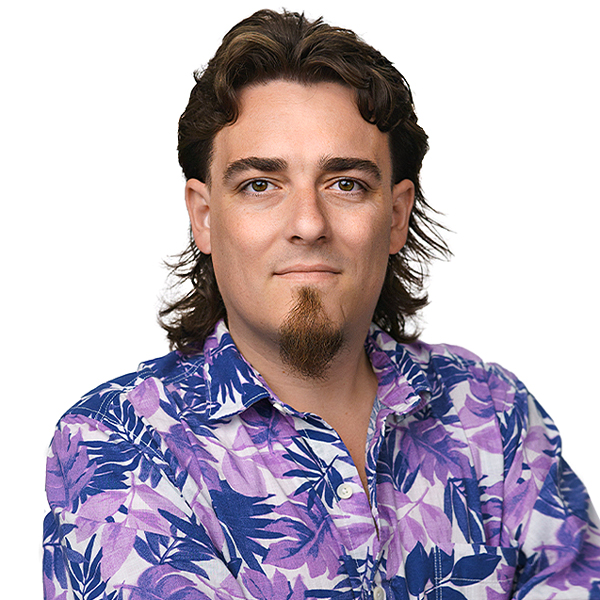
Palmer Luckey, founder of Anduril Industries, announced that his firm will invest $1 billion to develop a second Southern California campus in Long Beach.
According to a recent report in the San Francisco Times, office landlords are seeing an influx of large tenants moving into downtown buildings from San Mateo to Sunnyvale. Nvidia, the world’s largest maker of the advanced microprocessors driving the wave of AI infrastructure globally, has been among the most real estate-hungry firms in the region. Now valued at a staggering $4.58 trillion, Nvidia spent more than $1 billion gobbling up multiple properties along the San Tomas Expressway in Santa Clara last year.
“Annual leasing activity hit its highest total since the pre-pandemic peak at just over 9.8 million sq. ft. in the fourth quarter of 2025, signaling growing confidence among occupiers and a shift in market sentiment.”
— Kidder Mathews’ Q4 2025 San Francisco Office Market Report
Silicon Valley, however, is not the only market heating up. On January 21, defense manufacturer Anduril Industries announced a $1 billion expansion at its Long Beach campus in Douglas Park. The firm founded by Palmer Luckey said it would build a second major Southern California campus located near the Long Beach Airport to meet increasing demand from the U.S military and allied partners.
The Costa Mesa-based company said the new campus in “Space Beach” will support 5,500 direct jobs on site, as well as thousands of additional jobs through construction, security and other supporting services. The Long Beach campus will span 1.18 million sq. ft. and is slated to come online in mid-2027.
In a press release, Anduril explained why it chose Long Beach: “California remains one of the few places in the world where advanced technology, industrial capacity and a deep technical workforce come together at scale. Southern California has long been a center of American aerospace and defense innovation, and Long Beach sits at the heart of that ecosystem. Within a short drive of Hawthorne, Torrance and the South Bay, the region offers access to one of the deepest concentrations of engineering and technical talent in the country.”
Anduril noted that the site is 30 minutes from the company’s Costa Mesa headquarters and 90 minutes from the firm’s Capistrano test site, allowing teams to design, test and iterate quickly across multiple locations.
“The close physical integration is central to Anduril’s approach to rapid development and deployment,” the firm said.
— Ron Starner
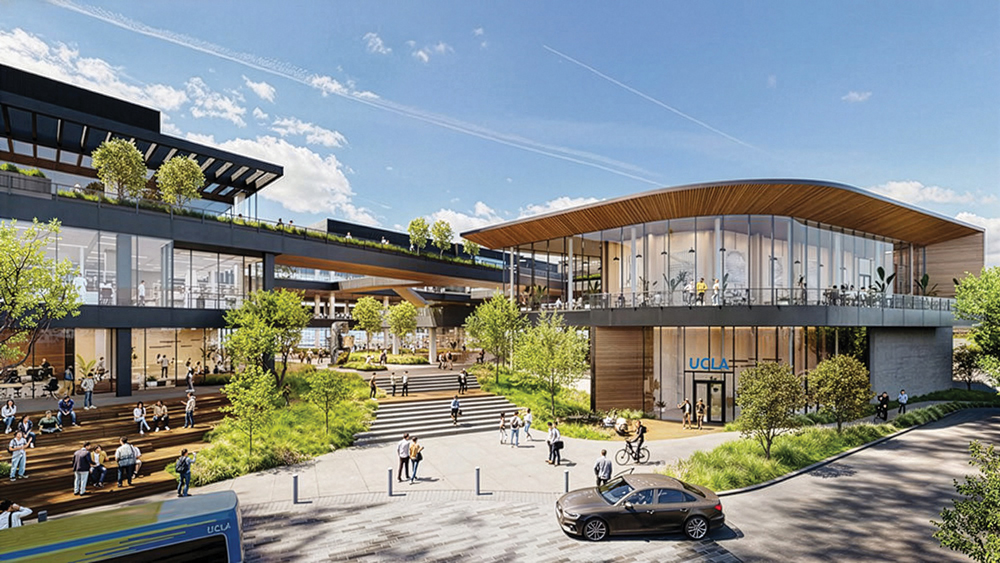
Work continues to transform the former Westside Pavilion mall in Los Angeles into the UCLA Research Park, where early occupants will include the new California Institute for Immunology and Immunotherapy (CIII) and UCLA’s Quantum Innovation Hub.
Rendering courtesy of UCLA
HIGHER EDUCATION REPORT SHOWCASES
CALIFORNIA R&D PROWESS
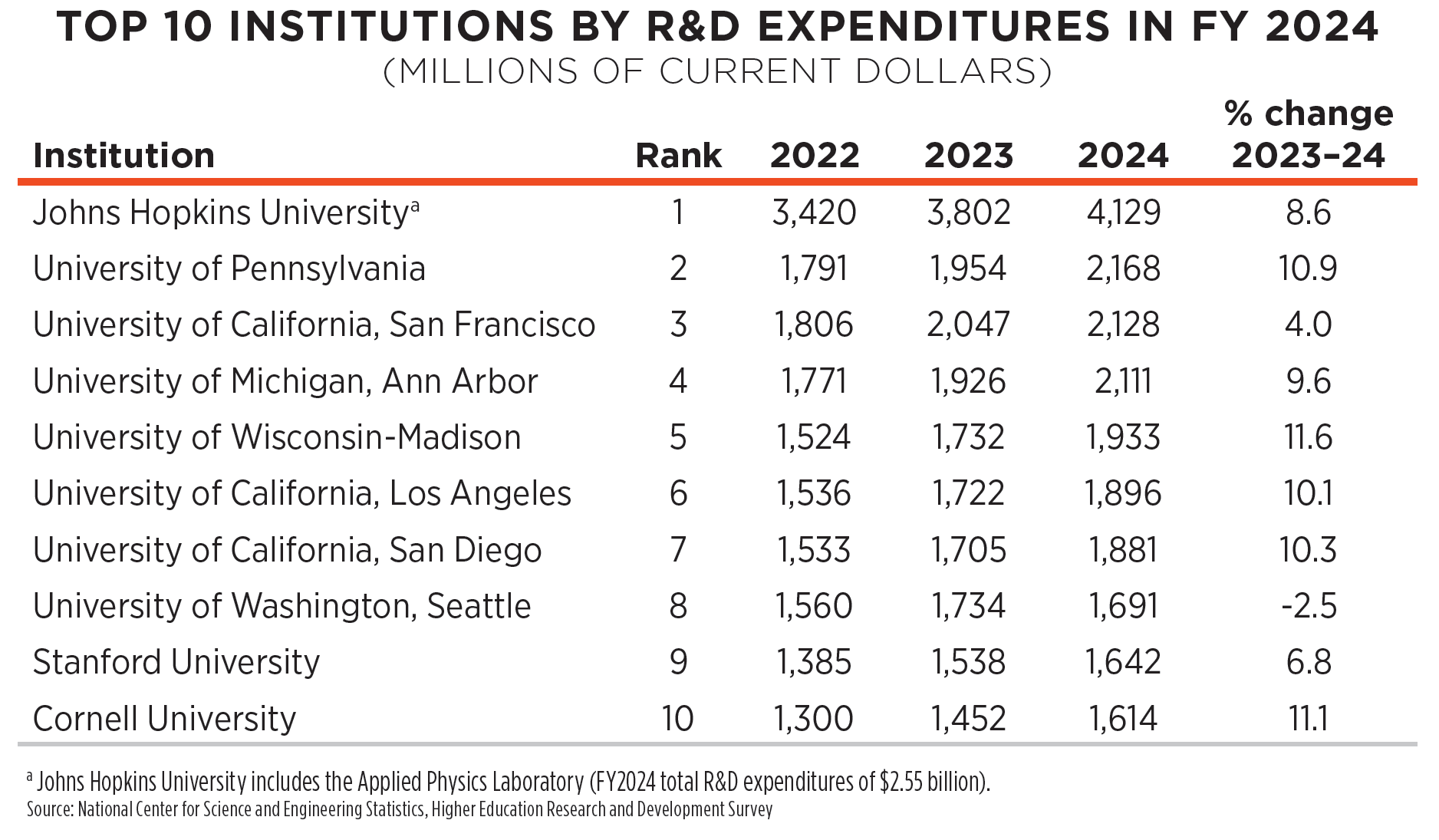
The Golden State’s investment in research at the higher education level is stunning. According to the most recently published HERD Survey, which is an annual census of U.S. colleges and universities that expended at least $150,000 in separately-accounted-for R&D in the fiscal year developed by the National Center for Science and Engineering Statistics and the National Science Foundation, California had four institutions break the survey’s top 10, with three of those belonging to the University of California (UC) public university system: UC San Francisco (No. 3); UCLA (No. 6); UC San Diego (no. 7) and Stanford University (no. 9).
The HERD survey collects information on R&D expenditures by field of research and funding source and gathers information on types of research, expenses and headcounts of R&D personnel. Johns Hopkins and University of Pennsylvania topped the list for 2024 expenditures, with $4.1 billion and $2.1 billion expended at each university that year, respectively.
UC San Francisco spent $2.1 billion, a 4% change from 2023, and UC Los Angeles and UC San Diego each saw about a 10% jump in expenditures over the same period (both universities had almost $1.9 billion each in R&D expenditures in 2024); that makes $5.9 billion in R&D expenditures by the three UC system schools in 2024. Adding in Stanford’s $1.6 billion spent in 2024, this totals out to a little more than $7.5 billion from California higher education institutions making the top 10 ranking.
The UC system has more than 300,000 students and 265,000 faculty and staff. In October 2025, the school system set a world record for Nobel Prizes, collecting five of the prestigious awards over three days. UC San Diego and UCLA alum Frederick J. Ramsdell, with his collaborators in Seattle and Japan, Drs. Mary Brunkow and Shimon Sakaguchi, won the Nobel Prize in Physiology or Medicine for their groundbreaking research in peripheral immune tolerance, specifically in identifying the cells (T cells) that prevent autoimmune system attacks on the body. The discoveries have been foundational to the fields of oncology and immunology. Overall, seventy-five Nobel Prizes have been awarded to UC faculty members.
Research Highlights
Together with UC San Francisco and UCSF Health, the UC San Diego School of Medicine and UC San Diego Health joined the Maternal-Fetal Medicine Units Network (MFMU) at the Eunice Kennedy Shriver National Institute of Child Health and Human Development (NICHD) in February 2026. The MFMU Network conducts clinical trials and perinatal studies with the aim of improving health outcomes in pregnancy, childbirth and newborns.
“The involvement of UC San Diego and UC San Francisco in the MFMU Network will assure that patients of California are represented in this important research that impacts prenatal care,” said Dr. Mary Norton, MFMU Network Center at UC San Francisco Principal Investigator. “Our two institutions have a long history of research collaboration in the area of high-risk obstetrics, and this new affiliation will further strengthen that connection.”
Research the past year alone at UC San Francisco has encompassed topics as far-reaching as tuberculosis outbreaks, AI-induced psychosis and several types of cancer.
Outside of the UC system, Stanford also performed well in the HERD Survey, ranking ninth. The university has hatched several well-known global companies, including Cisco Systems, Google, Hewlett-Packard, Instagram, Nvidia, YouTube, WhatsApp, PayPal, Nike, Netflix and Genentech, to name a few. Stanford’s recent work on AI systems and application of the technology has been envelope-pushing — in 2025, researchers at the Stanford School of Medicine developed and studied a “virtual lab” consisting of AI-created investigators and scientists trained to mimic the research methods and problem-solving capabilities of real-life leading researchers.
“There’s no shortage of challenges for the world’s scientists to solve,” said Associate Professor of Biomedical Data Science Dr. James Zou, who led a study on how the lab was developed, in a university press release. “The virtual lab could help expedite the development of solutions for a variety of problems.”
— Kelly Barraza