
Defense manufacturing investments reshape America’s industrial base.
by Savannah Yawn
The United States is moving to rebuild its defense manufacturing base as munitions shortages, supply chain vulnerabilities and rising geopolitical tensions expose gaps in production capacity. Across the country, companies are investing in new facilities and expanding output in areas such as missile systems, propulsion and advanced electronics.
From Ohio to Arkansas, Virginia to New Mexico, projects are taking shape well beyond traditional coastal hubs, reflecting a broader geographic shift in the industrial base. The push is focused on scaling domestic production quickly, with manufacturers working to address long-standing bottlenecks and increase capacity for critical defense systems.
GE Aerospace, for example, plans to invest $1 billion in the United States this year to increase engine deliveries, scale durable parts production and strengthen its supplier network. More than $275 million of that total will go toward upgrading sites that produce defense engines and components across multiple locations, including Norwich, New York; Grand Rapids, Michigan; Lynn, Massachusetts; and Rockford, Illinois, bringing total investment in defense sites to more than $600 million over three years.
Manufacturing the Arsenal
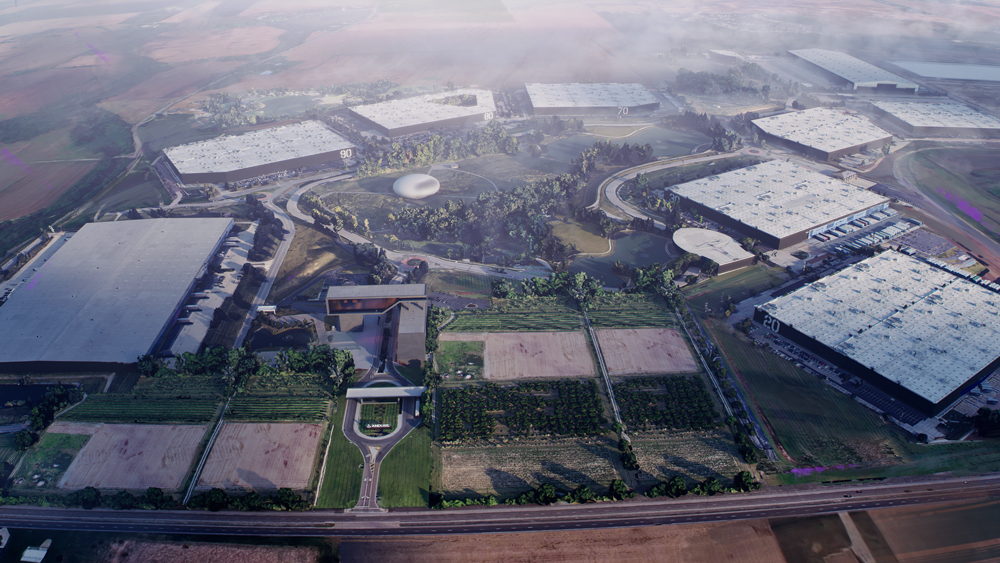
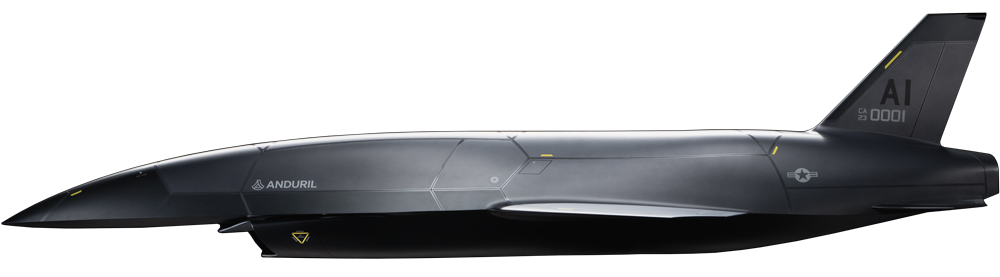
Among the most significant new projects is Anduril Industries’ planned advanced manufacturing campus in Pickaway County, Ohio.
The Costa Mesa-based company will establish a 5-million-sq.-ft. facility, known as Arsenal-1, representing an investment of more than $900 million. The project is expected to create more than 4,000 new jobs by 2035, along with an estimated 4,500 indirect and induced jobs over the next decade.
Located on 500 acres near Rickenbacker International Airport, the facility will produce autonomous military systems and weapons platforms using advanced software-driven manufacturing processes.
“Arsenal-1 represents a significant step forward in how we build the autonomous systems and weapons our nation and allies need, leveraging Ohio’s world-class workforce, robust infrastructure and scalable, software-driven manufacturing to set a new standard for securing the future of defense,” said Anduril Industries CEO Brian Schimpf in announcing the project in January 2025. “We are ready to break ground and get to work building the capabilities that will strengthen America’s industrial base and national security for years to come.”

“We are building and investing in a manufacturing design for the future. You will see continued growth for us, including factory growth.”
— Zachary Mears, Senior Vice President of Strategy, Anduril Industries, speaking to Site Selection in early 2025
The project is projected to add nearly $1 billion to Ohio’s GDP and generate more than $2 billion in annual economic output. State and regional partners, including JobsOhio, are supporting the project through a combination of incentives, site readiness funding and workforce development programs.
Anduril cited Ohio’s manufacturing workforce, business climate and proximity to infrastructure as key factors in its site selection decision. “We looked across the continental U.S. according to the core criteria we had,” Zachary Mears, senior vice president of strategy for Anduril, told Site Selection’s Ron Starner last year. “We have pretty aggressive timelines to do this.” Prime factors included characteristics of the land; access to water; logistics and infrastructure support; density of workforce and “a clear track record of 2-year to 4-year education to produce engineers and technicians,” Mears said, calling the provision of incentives “quite important.” And he said more growth is in the offing.
“We are investing in our plants in Rhode Island and Mississippi,” Mears told Starner. “We also have production capabilities just outside of Atlanta. We are building and investing in a manufacturing design for the future. You will see continued growth for us, including factory growth.”
In Arkansas, L3Harris Technologies is making a major investment to expand production of solid rocket motors, a critical component in missile systems. The company, in partnership with the state, plans to construct a large solid rocket motor production campus at its existing site in Camden. The investment, totaling nearly half a billion dollars across production sites, will significantly increase capacity for propulsion systems used in missile defense, interceptors and hypersonic vehicles.
The new campus will include more than 20 buildings across 110 acres and add more than 130,000 sq. ft. of manufacturing and office space. Once complete, the facilities are expected to provide a six-fold increase in manufacturing capacity. The company expects construction to begin this year, with production anticipated in 2027.
“Arkansas is a great place for L3Harris to fortify the domestic solid rocket motor industrial base, with its dedicated workforce and strong state and local partnerships,” said L3Harris Chair and CEO Christopher E. Kubasik. “Large solid rocket motors are essential to our nation’s missile and strategic defense, and as the Trusted Disruptor, we are strengthening our ability to produce these systems rapidly and at scale, which is essential for current demand and the Golden Dome missile defense shield.”
Avio USA’s investment in Hurt, Virginia, aims to increase domestic capacity of solid rocket motors to meet national security requirements.
Photo courtesy of Avio USA
In Virginia, Avio is expanding its U.S. footprint with a $500 million investment in a new manufacturing facility in Pittsylvania County.
The 860,000-sq.-ft. facility, located in the Southern Virginia Multimodal Park in Hurt, will produce solid rocket motors for defense, missile systems and commercial space applications. The project is expected to create more than 1,000 jobs.
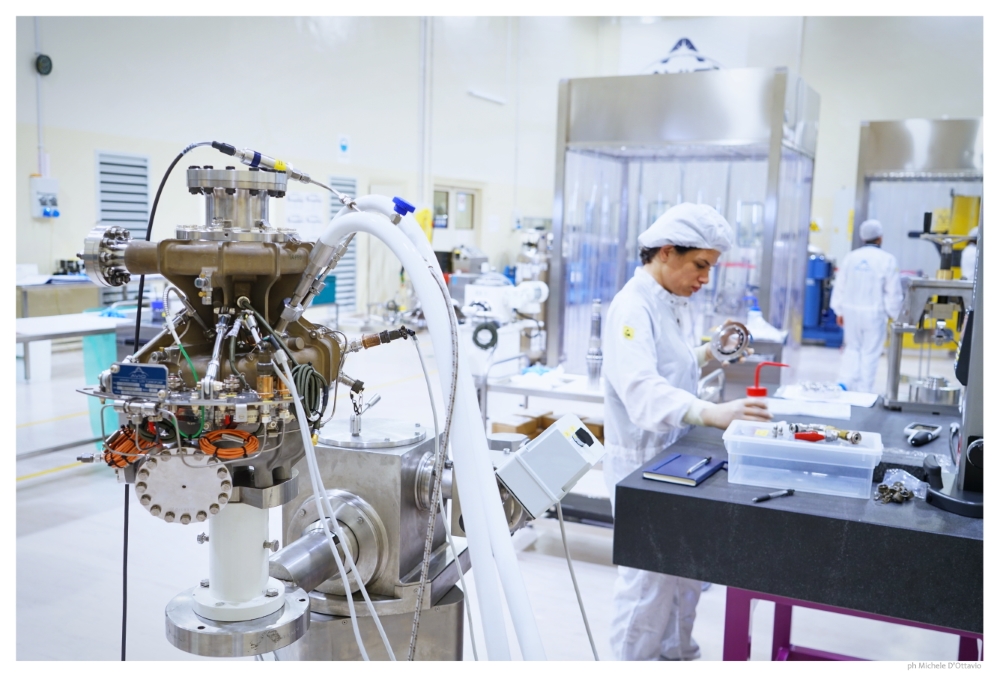
Photo courtesy of Avio USA
“With more than a century of propulsion leadership, Avio’s proven capabilities, industrial expertise and enduring legacy uniquely position us to strengthen and scale the U.S. defense industrial base,” said VADM (Ret.) James Syring, CEO of Avio USA. “I am confident that we have made the right choice with our selection of the Commonwealth and Pittsylvania County for our factory location given the complete local, regional and state support we’ve received, including a business-friendly climate, a best-in-class Virginia Talent Accelerator offering and competitive custom investment incentives. We are proud to support our U.S. government and defense customers by accelerating solid rocket motor production at the speed and capacity required to meet today’s national security priorities.”
Expanding the Industrial Base
Beyond missile systems, capacity constraints are also evident in other segments of the defense industrial base, including shipbuilding and advanced electronics.
Hadrian, an advanced manufacturing company, recently opened a new facility in Cherokee, Alabama, dedicated to the U.S. Navy’s Columbia- and Virginia-class submarine programs. The facility will mass-produce components, assemblies and finished products identified as key drivers of submarine production timelines. The project is part of a broader public-private partnership combining more than $1.5 billion in private capital with $900 million in government funding, for a total investment exceeding $2.4 billion.
The expansion comes as the Navy seeks to address longstanding production shortfalls in the maritime industrial base, where workforce constraints and specialized manufacturing requirements have limited output.
Hadrian’s approach emphasizes automation to accelerate workforce readiness, enabling technicians with limited prior experience to reach full productivity in a matter of weeks.
“The government cannot deliver the Golden Fleet alone — fast enough or at scale,” said Secretary of the Navy John Phelan. “Private-sector partnership is not optional. It is foundational.”
In New Mexico, AeroVironment is investing more than $30 million to expand its Albuquerque manufacturing campus. The project is expected to create more than 450 jobs and generate over $670 million in economic impact over the next decade.
The expansion will increase production capacity for laser systems, space payloads and advanced defense electronics, reinforcing the role of regional hubs in supporting national security priorities.
“This move marks a step change in our ability to deliver mission-critical capabilities at scale,” said President of AV’s Space, Cyber & Directed Energy segment Mary Clum. “Albuquerque is a strategic production and integration hub for space-grade components and directed energy systems that directly support U.S. national security priorities. The state’s partnership allows us to accelerate manufacturing, strengthen domestic supply chains and deliver advanced capabilities to our customers faster and more reliably.”