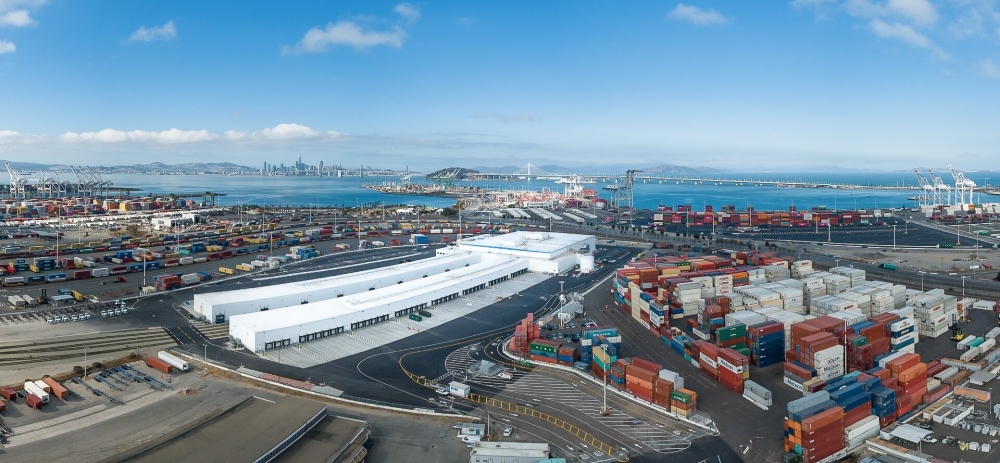
With a global network of nearly 500 facilities and more being added all the time, Lineage, Inc., knows where to place new links in the cold chain.
In September 2025 the team at public radio program Planet Money reported a story called “How Refrigeration Took Over the World” that documented the intertwined nature of the global economy and the need to keep things cold.
That same story is being told in project data: Since January 2023 Site Selection’s Conway Projects Database has tracked more than 300 cold storage facility investments around the world. Among the major investors in the cold chain space is Novi, Michigan-based global REIT Lineage, Inc., which operates a global network of more than 485 facilities. Over the past six months alone the company has broken ground for a new facility in Hutchins, Texas (DFW metroplex); celebrated the third expansion since 2008 at its largest North American site in Hobart, Indiana; broken ground on an expansion in Louisville, Kentucky; acquired three facilities in Quebec; launched an expansion in Bergen op Zoom, Netherlands, and opened a new facility at Whakatu Industrial Park in Hawke’s Bay, New Zealand.
Matt Cramer, president, North America West, for Lineage, responded to my questions about the company’s approach to global location decision-making.
Describe how the company has gone about its multi-faceted site selection and location portfolio decision-making as it expands across the nation and the world, often with several projects progressing at once.
Matt Cramer: Lineage is focused on operating strategic sites that will best serve our customers’ needs, whether that’s at a major port, near their production sites or close in proximity to infrastructure and population centers for efficient transportation. We use proprietary analytics with a wide variety of inputs from our customers to optimize the network and increase synergies throughout the extended cold supply chain.
Walk me through your site selection processes for recent new facility investments or expansions.
Matt Cramer: The criteria we use for every new facility we consider, whether it’s a greenfield opportunity or an acquisition, is whether there is customer demand for the space. Our network of warehouses is weighted toward high-population-density markets and port locations because these serve as critical nodes in our customers’ supply chains.
Additionally, our data science team has the capability to conduct network analyses to help customers optimize their supply chains and solve for challenges/meet goals.
The case studies Lineage highlights are always compelling because of the urgent nature of cold chain customer needs. Describe a recent solution you were personally involved in developing for a customer in crisis mode.
Matt Cramer: We had a customer that needed to manage the storage of a record-breaking crop and ensure they could control delivery timelines and maintain temperature integrity. We worked with the company to incorporate that projected growth into a new storage and distribution model so they could scale up to the required levels in time to accommodate the expected harvest, then added the optimal number of facilities so they could optimize the transfer of product to their customers.
Your case studies (port disruption, Canadian company dealing with tariffs) highlight the importance of port proximity and border proximity in reaching solutions for stressed customers. To what extent are foreign-trade zones helpful to your business and customers needs? Or does a bonded warehouse do the trick?
Matt Cramer: Our current priorities include utilizing bonded warehouse space to help customers navigate trade policy shifts. Being able to hold product in the U.S. without having to pay tariffs until absolutely necessary is a tactic many food importers are taking and Lineage is helping with that effort. We currently have 13 bonded warehouse facilities across the U.S. and more than 60 worldwide.
Describe how your team plans … or tries to plan … in the day-to-day drama of tariffs and a trade war.
Matt Cramer: Amid the frequently changing global trade environment, Lineage works every day to build its reputation as a partner that helps customers anticipate change and reduce impacts on the supply chain.
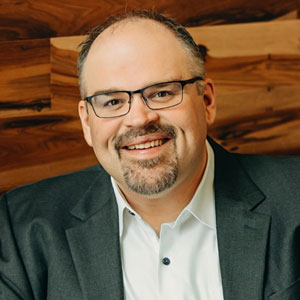
Matt Cramer, President, North America West, Lineage, Inc.
For example, a Brazilian beef importer had a shipment arriving in the U.S. at the end of last year, just before the annual quota reset, so they needed to wait for the new quotas in January. By using our bonded warehouse service, their products could be imported in December, stored in our facilities and only be inspected and released to the market when the tariff rates were most profitable for the company.
Additionally, we have a dedicated Import and Export Excellence Team, comprised of over 20 specialists focused on compliance, documentation and process optimization for products moving in and out of the U.S. This team helps customers avoid costly delays and liabilities, allowing shipments to move smoothly to over 120 global export markets, or via close supervision through the customs and import inspection process.
Your microgrid in Oregon is one example of finding energy efficiency solutions. Describe how you are addressing energy requirements amid the glut of data centers and other megaprojects draining power from the grid.
Matt Cramer: We have implemented and continue to research a variety of energy efficiency initiatives like energy walks and advancements in innovation like advanced refrigeration control systems to reduce our consumption of electricity across the network. For instance, our data science team developed flywheeling, which proactively manages energy consumption using a proprietary machine-learning technology to both control cost and reduce strain on the grid during peak consumption times.
Your facility expansions take place against the backdrop of a global explosion in cold chain investments. How do Lineage facilities distinguish themselves from the competition while at the same time collaborating across the specific networked infrastructure the cold chain represents?
Matt Cramer: Lineage continues to invest in transformational technologies and tap our in-house data science and product teams to create a smarter, more efficient extended cold chain. These efforts are far from static — they evolve to address today’s challenges and opportunities, including traceability requirements and operational processes like inventory optimization. We believe innovation is important for the continued evolution of the cold chain and have worked with customers to pilot and refine some of our proprietary technologies.
In addition, we maintain close relationships with industry experts and regulatory bodies to stay informed about policy developments. This proactive approach helps us to adapt our strategies and update our operational plans, with a focus on ensuring our customers experience minimal disruption.