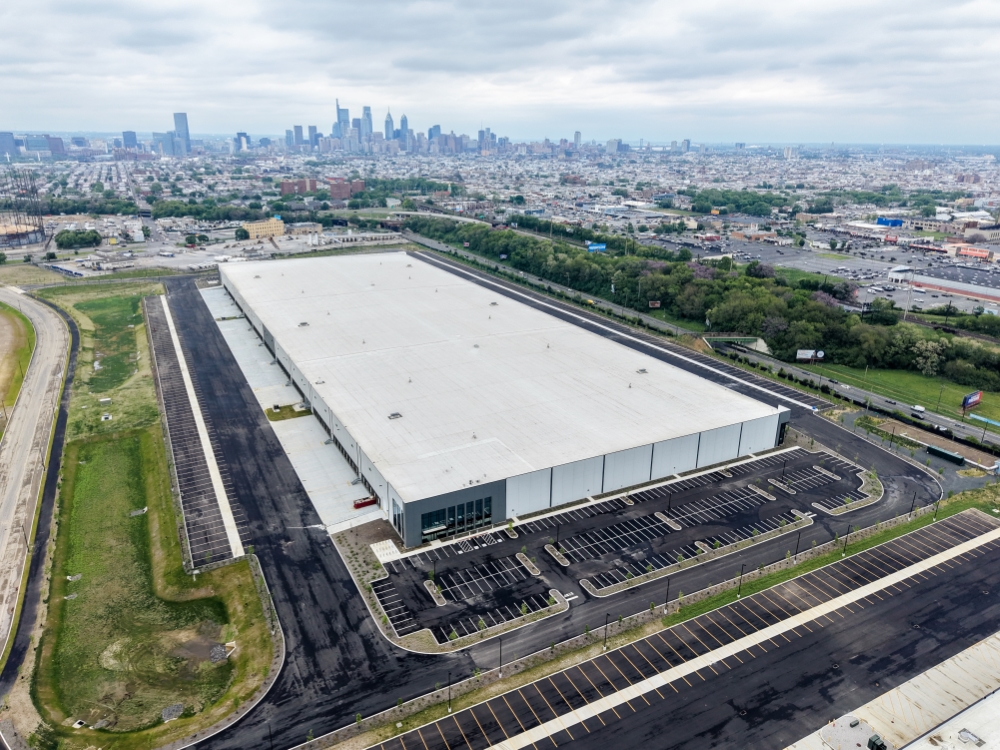
The immigrant investor program has helped back projects in urban areas too.
By Christine Chen and Jill Jones
Site Selection in the past has covered the ups and downs of the EB-5 Immigrant Investor Program. Here we present an op-ed on its past, present and potential future from Christine Chen of CanAm Enterprises and Jill Jones of JTC Group. — Ed.
Congress is on the verge of undermining one of the few federal programs that is actually delivering private capital to rural America.
For decades, rural communities have struggled with population loss, shrinking tax bases and limited access to investment. Infrastructure projects stall. Employers cannot expand. Financing flows overwhelmingly to major metropolitan areas, leaving smaller regions behind.
Yet one program has begun to change that dynamic: the EB-5 Immigrant Investor Program.
While often framed as an immigration pathway, EB-5 is fundamentally an economic development tool. It directs private foreign investment into U.S. projects that create jobs, precisely the kind of capital many rural communities have historically been unable to attract.
Since Congress passed the Reform and Integrity Act in 2022, the program has shifted meaningfully toward rural America. By reserving 20% of EB-5 visas for rural projects, lawmakers created a powerful incentive for investment to flow into underserved regions.
The results have been significant.
Billions of dollars in capital have been raised and deployed across infrastructure, healthcare, manufacturing, housing and energy projects. According to data from JTC Group, more than 535 EB-5 projects have collectively raised over $8.4 billion in capital, supporting more than 20,000 investors and developments nationwide, with rural communities increasingly at the center of that growth. Federal data show EB-5 investment rising sharply in recent years, with rural projects driving much of that growth.
In rural Virginia, for example, EB-5 financing helped launch an $80 million broadband expansion that is delivering more than 1,000 miles of fiber infrastructure across multiple counties. Thousands of homes and businesses are gaining high-speed internet access for the first time, unlocking telehealth, remote work and modern agricultural capabilities.
This is not an isolated case. Across the country, EB-5 is serving as the critical bridge financing that allows projects to move forward when traditional capital falls short. The program’s job creation impact is equally clear. Each EB-5 investor must generate at least 10 full-time U.S. jobs, but in practice, projects have consistently exceeded that requirement, supporting long-term employment in communities that need it most.
At a time when many rural counties are seeking to modernize infrastructure without increasing the burden on taxpayers, EB-5 offers a rare model: private investment tied directly to domestic job creation.
But that progress is not guaranteed to continue.
Like many federal programs, EB-5 remains subject to periodic reauthorization and shifting regulatory conditions. For investors and developers, uncertainty is a deterrent. Capital markets depend on predictability, and when that predictability disappears, so does investment.
Countries around the world actively compete for foreign investment through stable, long-term investment programs and predictable regulatory environments. When the United States repeatedly places EB-5 under short-term political uncertainty, it weakens the country’s competitive position and encourages investors to deploy capital elsewhere. Rural communities are often the first to feel the consequences because they already face steeper challenges attracting financing compared to major urban markets.
Without long-term clarity from Congress, projects will slow, capital will be redirected elsewhere, and rural communities will once again find themselves competing at a disadvantage. This is not a theoretical risk. It is how capital markets behave.
If lawmakers are serious about revitalizing rural America, the path forward is clear: Move beyond short-term extensions and provide durable, long-term authorization for the EB-5 program.
The data is no longer speculative. The capital is already flowing. The projects are already underway. The jobs are already being created. What remains is a policy decision.
Congress can either reinforce one of the few mechanisms successfully channeling private investment into rural America, or allow uncertainty to stall that progress.

Christine Chen is COO at CanAm Enterprises with more than 20 years’ experience leading EB-5 operations, global expansion and strategic business initiatives.
Jill Jones is the head of specialty administration and general counsel in the United States for global professional services business JTC.