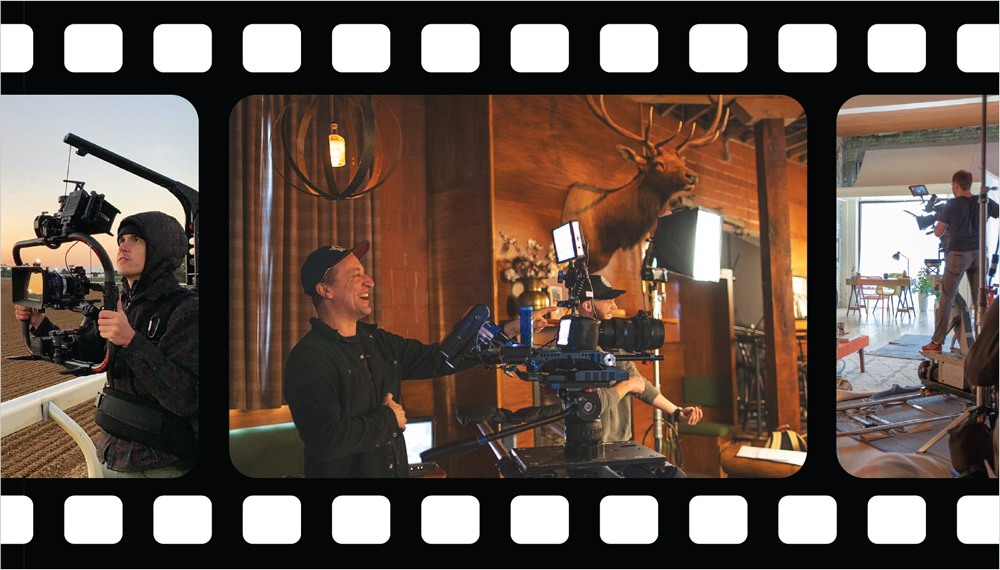
It didn’t take long for Kentucky’s entertainment industry to snag a top rank among the nation’s leading filming destinations.
In 2026, Louisville, was named No. 16 within the top 25 “Best Places to Live and Work as a Moviemaker” by Movie Maker Magazine. The publication noted the rise of film production activity in the state’s largest metro region — including anticipated upcoming films “Dead Man’s Wire” from Louisville native Gus Van Sant and Alex Vlack’s “The Revisionist” — supported by diverse locations, favorable year-round climates and an entertainment incentive that keeps directors yelling “Action!” throughout the region.
Feature-length films, television programs, documentaries and a national touring Broadway show accounted for the 73 production projects that took advantage of the Kentucky Entertainment Incentive (KEI) in 2025. Over $66 million was approved through the KEI Program last year, as 50 of the state’s 120 counties became prime production locations, led in particular by Jefferson, Fayette, Hopkins, Shelby and Trimble counties.
In the four years since the KEI Program’s launch, $274.5 million in tax incentive approvals have gone on to support upwards of 270 productions which brought in investments totaling $794.5 million.
Kentucky’s Next Film Era
Filmmakers have been drawn to the KEI Program’s 30% to 35% refundable tax credit, which requires a $250,000 minimum spend for out-of-state production companies and $125,000 for Kentucky-based companies.
“The KEI program has been a critical driver of momentum, and I see its future as both stable and strategic,” says Meg Fister, who became the Kentucky Film Office’s new executive director in January 2026.
Her homegrown roots led Fister back to Kentucky after spending nearly 20 years in leadership positions at Quinn House Productions at NBC, Universal and Warner Bros., tackling television and film development and professional theater production. Across producer and development executive roles, Fister has worked alongside actors, directors, writers and studio leadership to develop a clear understanding of the industry’s evolution — expertise that will become vital to propelling Kentucky’s next entertainment chapter.

Meg Fister in January became the first executive director of the Kentucky Film Office, which was established in March 2025. Photo courtesy of Meg Fister
“My focus will be on ensuring the KEI Program remains competitive, transparent and aligned with the realities of today’s industry, while clearly communicating its economic and cultural impact to the stakeholders here in the state,” she says. “I’m optimistic about KEI’s role in supporting long-term industry growth in Kentucky, particularly when paired with workforce development and infrastructure investment. When incentive programs are paired with local talent and strong partnerships, they don’t just attract projects, they help industries take root.”
Some of the first key priorities that will guide Fister’s role will be to strengthen relationships among state and regional film offices; crews and creatives; state legislators and economic development partners. Much of this collaboration came naturally as the industry advanced, although the goal now is to drive clear communication, streamline processes and strongly advocate for tools that make production possible while also highlighting Kentucky’s position as a reliable, competitive and filmmaker-friendly location.
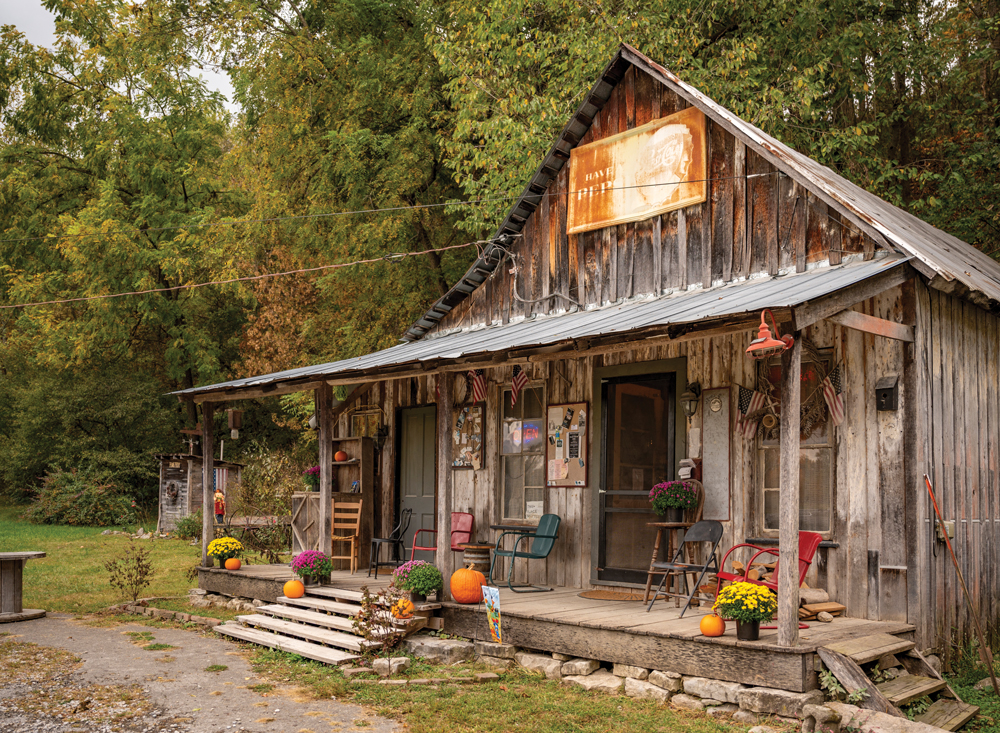
Penn’s Store, located in Danville, is the oldest country store in America to be owned by the same family since its founding.
Photo courtesy of Visit Danville Kentucky
“Even on my first day running the state office, what I heard from producers is how invested the people of Kentucky are in the work. Crews are experienced, adaptable and deeply proud of the stories being told in this state,” says Fister. “There’s also an authenticity to Kentucky, both visually and culturally, that can’t be replicated on a backlot. When productions come here, they’re not just finding incredible locations; they’re finding real partners.”
The state’s best kept secret is its depth, Fister states. Stunning landscapes, historical buildings and towns, modern infrastructure and knowledgeable crews elevate the statewide ecosystem, but community support may be the most crucial aspect of continued success. Local governments, businesses and residents know the value of film and often go out of their way to make productions feel welcomed.
“That kind of goodwill makes a tangible difference on set,” says Fister.
An all-hands-on-deck approach ensures Kentucky communities align their assets for location scouts nationwide on the hunt for ideal sites, crews and vendors.
A key resource in attracting filmmakers unaware of Kentucky offerings has been the state’s location gallery, showcasing 1,340 diverse locations fit to tell any story. Whether it’s a city ballpark, tucked away cabin, historic mansion, vibrant downtown strip or a scenic riverwalk, communities around the state pulled together an array of site imagery and respective location details. It allows communities to bring attention to assets some wouldn’t think would appeal to a filmmaker, while streamlining the process for a production to form.
Projects aiming for studio space will find a growing number of facilities popping up. The state’s largest film studio is found in Lexington from the Wrigley Media Group, appropriately named LEX Studios. In over 50,000 square feet, LEX Studios houses three soundstages, three green rooms, conference rooms, production support space and 35,000 square feet of customizable indoor and outdoor space. One of the latest studios to launch operations was Kentucky Sound Stage in Owensboro, which was designed to be an all-in-one media hub. Inside, productions will find an LED wall studio, a 2,000-square-foot green screen studio, post-production services and a 400-seat venue for events.
“Flexibility and responsiveness are essential right now, and Kentucky is well positioned for that reality,” says Fister. “Our film office works closely with productions to move quickly, problem-solve in real time and connect filmmakers with the right local partners. The state’s size is really an advantage — you can get decision-makers on the phone, scout efficiently and pivot when schedules shift.”
The next few years will deliver fresh studio space such as the anticipated completion of the $70 million Louisville Studios at the Gardens and Kentucky’s first purpose-built soundstage from Nadus Studios, a $29 million investment in Louisville.
A Robust Crew
According to the Motion Picture Association, Kentucky’s film industry encompasses over 5,910 direct and 12,740 indirect roles, contributing more than $388 million in annual wages. Skilled local crew have had a fair share of independent films, studio features, television and commercial experience from productions entering or returning to Kentucky. As more activity moves in, a readily available workforce remains top of mind.
In 2025, Louisville-based nonprofit organization 502 Films cultivated a new approach to building upon Kentucky’s film crew base. The 502 Film Front Porch Film Lab marked the state’s first filmmaker incubator, training its lens on short-form narrative storytelling in Louisville.
“502 Film was established to attract film and television productions to our region and develop workforce training opportunities to grow our local creative community, economy, and infrastructure,” says 502 Film President Soozie Eastman. “With three years of incredible growth of the film industry across our state, we are ecstatic that, through the generous support of the Community Foundation of Louisville, we can expand our programming to nurture and support filmmakers from within our own city.”
The 10-day incubator lab, which took place in mid-October 2025, brought 10 emerging or historically underrepresented filmmaking teams to pursue project development focus on the region, guided by professional mentorship and direct access to industry leaders around the nation. These teams worked alongside screenwriters, directors and producers in the development of their films, in addition to hearing career advice, marketing tips and festival and distribution strategies from guest speakers. Each team received $1,500 to cover production costs as they pushed toward a live pitch session where each team had the opportunity to present their film to community stakeholders, art benefactors and emerging film investors.
The initiative falls directly in line with the state’s goal to accelerate its film production capabilities — strengthening homegrown expertise. When Governor Andy Beshear established the state’s film office in March 2025 it was a clear signal the momentum behind the Kentucky’s entertainment industry was here to stay.
“Looking forward, I want Kentucky to be a place where people don’t just come to shoot but choose to build careers,” says Fister. “Over the next decade, success looks like a sustainable ecosystem: consistent production volume, expanded workforce development, stronger post-production capacity, and more Kentucky-based stories reaching national and global audiences. I also want to see more pathways for homegrown filmmakers to work without leaving the commonwealth.”