
by Savannah Yawn
From tires and transformers to battery materials and critical minerals, South Korean companies are helping shape Tennessee’s manufacturing landscape.
Since 2019, Korean companies have invested more than $14 billion and created more than 6,600 jobs across the state, making South Korea Tennessee’s leading foreign direct investment partner by both job creation and capital investment. Companies such as Hankook Tire, LG Chem, LG Electronics, SK On, LG Energy Solution, Hyosung HICO, ALUKO Group and Korea Zinc now represent a growing cross-section of the state’s industrial economy.
The latest and largest example came in December 2025, when Korea Zinc announced plans to invest more than $6.6 billion in new production facilities in Clarksville and Gordonsville. The project, which represents the company’s first United States operations, is expected to create 420 jobs in Montgomery County and 320 jobs in Smith County in the next five years. It also marks the largest single private corporate investment in Tennessee history.
Rather than concentrating its investment in a single location, Korea Zinc is building a two-site Tennessee footprint. The company plans to locate its U.S. headquarters and manufacturing operations in Clarksville while reviving industrial activity at a former mining site in Gordonsville.
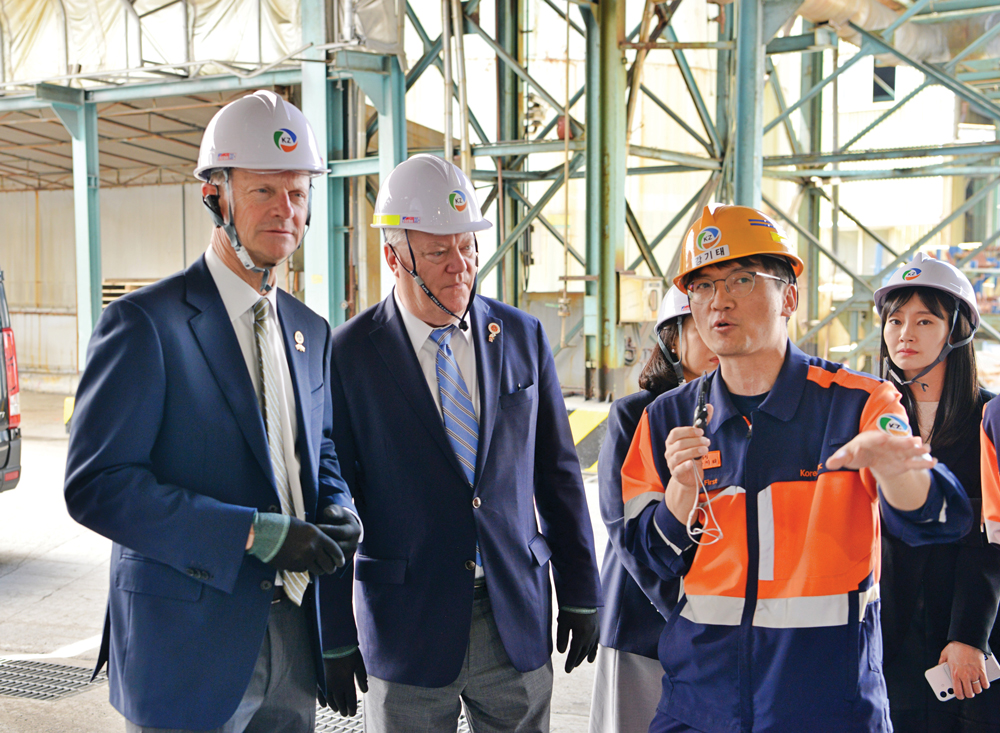
Korea Zinc personnel demonstrate production processes during a facility visit by Tennessee leaders. The South Korean company plans to establish its first U.S. operations in Tennessee through a $6.6 billion investment.
Photo courtesy of Tennessee Department of Economic & Community Development
“Tennessee offers a compelling combination of a highly skilled workforce, reliable infrastructure and strong collaboration at both the state and local levels, making it an ideal location for this project,” said Korea Zinc Chairman Yun B. Choi. “This is a transformational endeavor for Korea Zinc and our long-term commitment to the region—one that will create high-quality jobs, contribute to the local economy and uphold the highest standards of environmental stewardship and safety. We look forward to building a lasting partnership with Tennessee and the Clarksville community as we grow together.”
That blend of workforce, infrastructure and partnership comes up often in Tennessee’s conversations with Korean companies, says Hee-jung Shin, director of business development, Korea, for the Tennessee Department of Economic and Community Development.
Building a Supply Chain
For manufacturers entering or expanding in the U.S. market, Tennessee provides strategic access to major customers and markets across the Southeast, Midwest and beyond. With more than 1,200 miles of interstate highways and 96,000 miles of roads statewide, nearly 70% of the U.S. population can be reached from Tennessee within a one-day truck drive.
Few companies illustrate Tennessee’s long-term appeal to Korean manufacturers better than Hankook Tire.
The company opened its Clarksville manufacturing facility in 2017 with the capacity to produce 5.5 million tires annually for the North American market and generate 950 jobs. Five years later, Hankook announced an expansion that will double production capacity for passenger car and light truck tires, add the company’s first U.S. production of truck and bus radial tires and create an additional 1,200 jobs in the Clarksville area.
For Rob Williams, president and CEO of Hankook Tire America Corp., the decision was rooted in both people and location.
“Tennessee has proved to be a great location for both Hankook Tire’s manufacturing and corporate operations. For our manufacturing facility in Clarksville, the quality of the local workforce was a major factor in our decision,” Williams said, pointing to the area’s proximity to Fort Campbell military base and Austin Peay State University.
Williams also cites Middle Tennessee’s logistics network as an advantage for the company’s supply chain operations. Nashville provides a base for Hankook’s North American headquarters while maintaining close proximity to its Clarksville manufacturing facility. He notes that the company has also developed strong working relationships with local and state partners.
Hankook’s Clarksville facility was built around advanced manufacturing, with smart factory technologies, automation and ongoing productivity improvements helping drive operations as the company grows its presence in Tennessee. The plant now produces tires for some of the world’s largest vehicle manufacturers, and Williams says having production closer to original equipment partners creates opportunities for closer collaboration while providing greater visibility into supply chain operations.
That proximity has become an important part of Hankook’s U.S. strategy.
“The Tennessee plant represents our commitment to the U.S. market and local-to-local approach to help ensure steady supply for this market now and for the future,” Williams said. “The Tennessee plant provides a stable supply and helps strategically position us to pass on the localized cost savings to the end customer.”
ALUKO Group provides another example of how Korean manufacturers are connecting to Tennessee’s growing automotive and battery ecosystem.
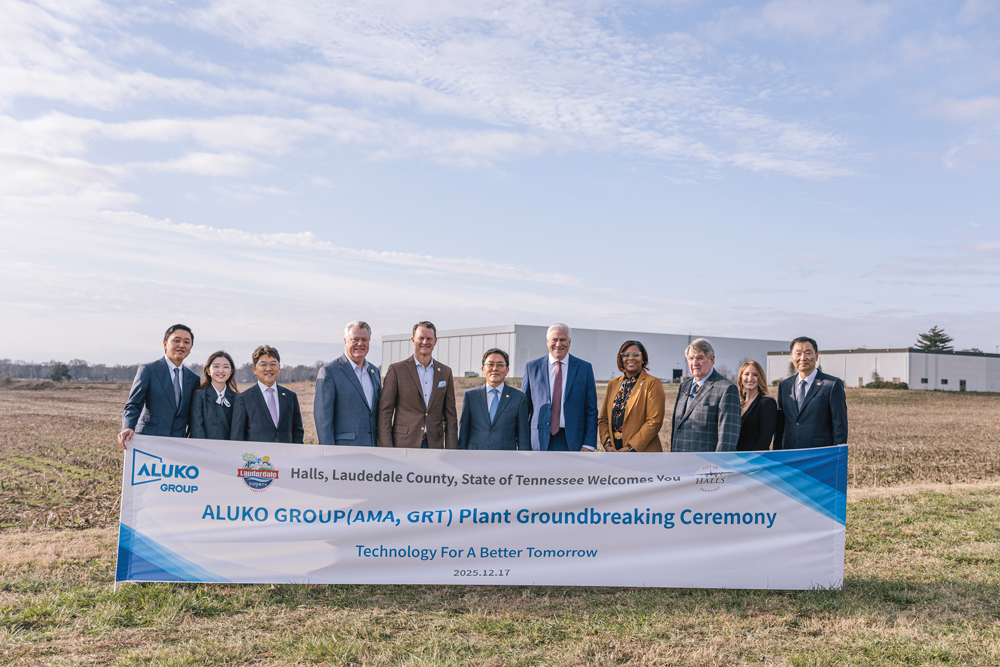
In December 2024, the company announced plans to invest $36.3 million and create 55 jobs in Madison County, where it will produce aluminum battery casings for Ford’s BlueOval City operations. The project marks ALUKO’s second manufacturing facility in the U.S. and was described by local leaders as one of the first supplier investments tied directly to BlueOval City.
“Tennessee has proved to be a great location
for both Hankook Tire’s manufacturing and corporate operations.”— Rob Williams, President & CEO, Hankook Tire America Corp.
Beyond Workforce and Logistics
Workforce, infrastructure and logistics may get companies to the table, but Tennessee officials say relationships often help close the deal. Shin said Korean manufacturers place a high value on trust, communication and long-term partnership. While Tennessee regularly competes with neighboring Southeastern U.S. states for projects, the state’s growing roster of Korean companies has become one of its strongest recruiting tools.
“Even after companies begin construction and business operations, Tennessee continues to provide ongoing support,” said Shin. “As a liaison between the state and Korean companies, I’m able to see how these positive experiences are one of our best selling points because the Korean companies already doing business in Tennessee continue to share with others that this state should be a ‘must-consider state’ for Korean investors.”
The recent wave of Korean investment offers a visible example of a bigger trend in Tennessee. Foreign-owned companies continue to play an increasingly important role in the state’s economy, accounting for roughly 70% of capital investment announced in Tennessee during 2024 and 2025.
Tennessee’s success with international manufacturers shows that many global companies are finding not only a strategic location, but also a state that values their partnership.