A conversation with Kentucky Governor Andy Beshear
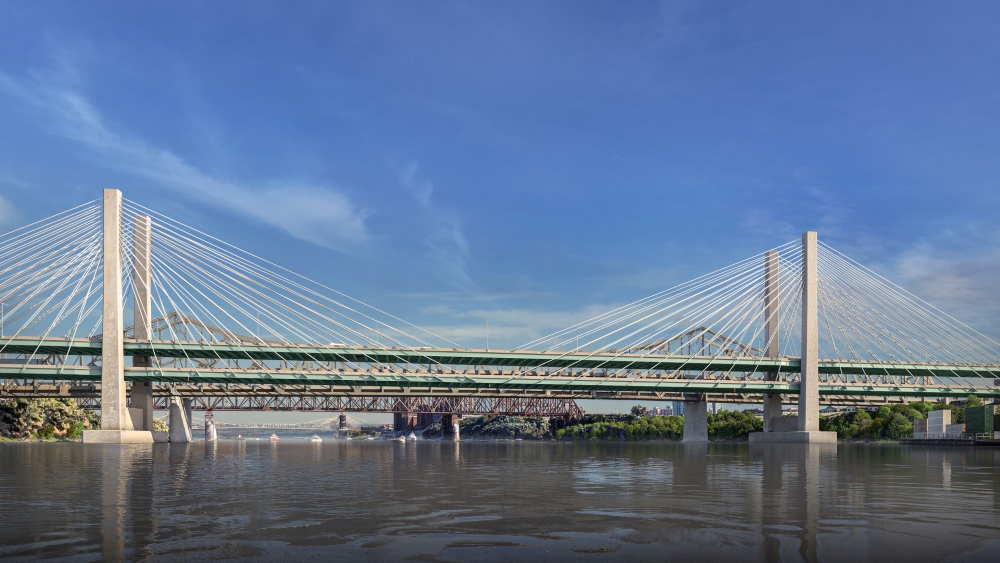
Since his first gubernatorial inauguration in December 2019 — an event that saw the Capitol in Frankfort and two inaugural balls opened to the public for the first time in history — Governor Andy Beshear and Team Kentucky have seen new employer operations opening up across the commonwealth to the tune of $45 billion in private-sector investment and nearly 69,000 full-time jobs announced. Health care access has been opened up to more people, embodied in the November 2024 opening of Norton West Louisville Hospital, marking the first new hospital in that part of the city in over 150 years. Open spigots are carrying cleaner water to Eastern Kentucky. And new bridges opening soon in Northern Kentucky and Henderson — as well as new lanes on the Mountain Parkway — will enable even more fluid goods movement in a top logistics state.
In January, Gov. Beshear spoke with Site Selection magazine Editor in Chief Adam Bruns. This excerpt of their conversation has been edited for clarity and brevity.
In Site Selection’s 2025 Governor’s Cup tallies of corporate facility investments, Kentucky is again No. 2 in the nation in projects per capita. The Greater Cincinnati region that includes Northern Kentucky makes the Top 10 among Tier 1 metros. Lexington-Fayette has moved up to No. 5 among Tier 2 metros. Bowling Green is again near the top among Tier 3 metros after being No. 1 last year. And Kentucky also comes up to second place behind Ohio with the most top micropolitan areas with 13, and 42 projects in those micros, including in the little town of Glasgow, which came from outside our top 100 to No. 9 in the nation with eight projects.
Gov. Andy Beshear: That’s great. This will be our sixth straight year while I’ve been governor that we’ve been top five per capita overall. Bowling Green has been tearing it up. It’s one of our three fastest growing areas — Bowling Green, Shelbyville, and you’re about to see Paducah go really big in the next year and a half. We’re going to talk about one of those big projects that’s located in Glasgow, from Tate [based in Ireland].
“If you pay a competitive wage in Kentucky, people will work for you 10, 15, 20 years and their kids will come work for you.”
— Kentucky Governor Andy Beshear
Let’s talk about those international connections. What are you hearing from foreign-based executives about their ongoing operations in the commonwealth and potential expansion?
Beshear: What I hear from every international CEO is that their operations in Kentucky are among the most profitable in their company. That’s what I want to hear. I tell companies I want them to be profitable because that means they’ll expand, they’ll hire more people and they’ll pay better wages. It’s good for the company and it’s good for our people. They talk about our strong workforce. If you pay a competitive wage in Kentucky, people will work for you 10, 15, 20 years and their kids will come work for you. [International CEOs] love seeing that legacy workforce that really gives their heart and soul when they’ve got a good job. I love it when they say good things about Kentucky, but they’re always talking about the specific community that they’re in — how they’ve wrapped their arms around them, but also, how they give back. I love hearing an international CEO that knows that their location in Kentucky is partnering with the United Way to do good work.
I also hear that we are now top of mind, that Kentucky is viewed internationally as especially a great place to put your first U.S. operations because we’re so strong on manufacturing. And then we’ve got a level of logistics I don’t think anyone else can claim.
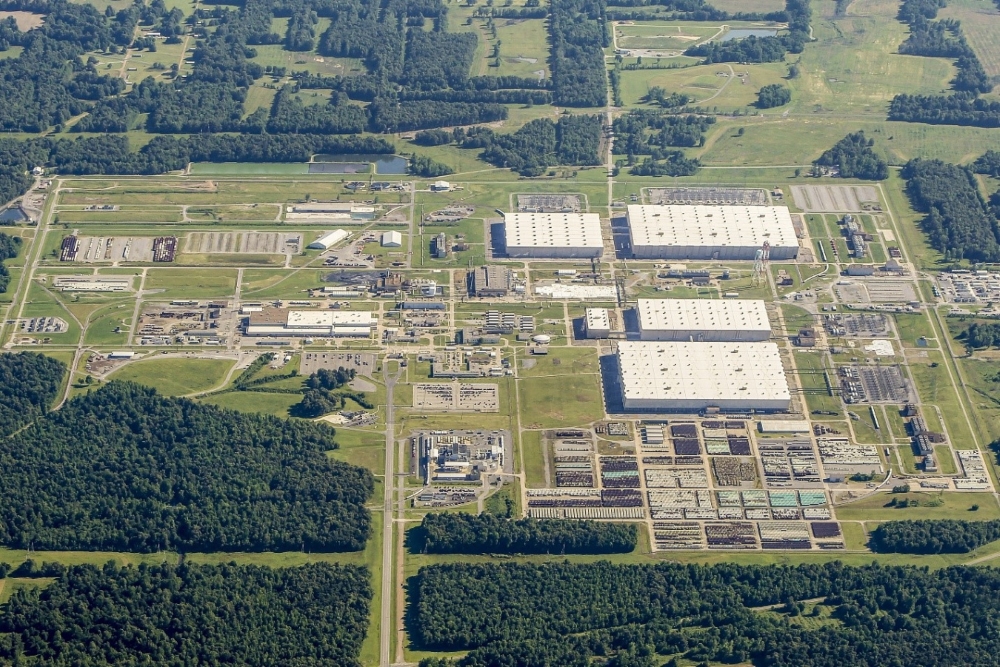
General Matter is investing $1.5 billion to revitalize uranium enrichment on part of the U.S. Department of Energy’s Paducah Gaseous Diffusion Plant to fuel the nation’s nuclear power renaissance.
Photo courtesy of DOE and University of Kentucky Center for Applied Energy Research’s Kentucky Research Consortium for Energy and Environment
At the World Economic Forum in Davos specifically, what kind of things were you able to accomplish?
Beshear: Davos is one of the most efficient places to do economic development that there is. Over the course of a couple days, I can talk to international CEOs from three continents, all in the same trip, when it would take five or six days otherwise. On the trip we just did, we went to Finland, Sweden and then Davos. Over the course of six days, I got to meet 260 business leaders. We talked with 16 companies that employ over 13,600 Kentuckians. We talked to eight companies that are looking at locating in the United States that could create about 650 total new jobs. While I can’t tell you about it yet, we had an existing company that I think is going to add at least 300 new jobs. These are trips that turn out to be really important because you can meet face to face with the head of U.S. operations for some of these companies, but they might not be the end decision-maker. When you can look the international CEO in the eye and say, “If you pick us, we’ll get you up and running six months faster than any other state can, that’s our commitment and speed to market,” that’s where you forge the relationship that can get that next big project.
I will also say it was important to be in Davos especially to talk to European companies that are looking at what’s happening in the United States with some serious and significant concern. Tariff policy is not only impacting what they do in Europe but making it costlier to build a factory in the United States — the amount of parts that you have to import could increase the cost of it by 30%. So, tariffs aren’t creating reshoring; they’re actually preventing a lot of it. And then there’s a lot of concern about the current presidential administration’s approach and how they treat Europe, and Canada for that matter. And so having governors there — myself, [Michigan Governor] Gretchen Whitmer, even [Oklahoma Governor] Kevin Stitt and we’re different parties — to be able to talk about how we appreciate foreign direct investment, about how it’s important, about how we governors are focused on the number of jobs and policies that would create and expand them, I think this is valuable.
Let’s talk about compelling projects that you’ve experienced first-hand in terms of negotiations and turning points. Tate in Glasgow is one of them?
Beshear: We closed the deal with Tate in person in Ireland. We had a trip to the United Kingdom and France because of a number of different great companies like L’Oreal, which has a big Northern Kentucky presence. After the trip was planned, this opportunity came close to where we thought we could finalize it. So we took a detour, flew one day from London over to Ireland, then took about a 2-hour bus ride to get to Tate and, with their senior executives, signed the deal right there. It is 400 new jobs making some of the infrastructure for data centers. It’s a $61.2 million investment. It will be the largest investment in Glasgow in 18 years, so it’s a really big deal, a game changer for that community. And you know what? That was one of the communities that hadn’t seen enough of this new investment. I’ve been blessed to be governor for the first, second, third and fifth best years in our history. But that doesn’t mean that every community has seen their largest announcements.
The other one I’d mention is GE Appliances, which, when it was a part of the greater GE, was suffering. While they always turned a profit, the larger company was going a different direction. So, when it had a chance to break off on its own, working with the Commonwealth of Kentucky, we’ve seen an amazing rebound. The announcement this year was pretty special. They were going to invest $3 billion in manufacturing in the United States. Since I’ve been governor, Kentucky had already had three big announcements with GE Appliances. This one was 800 new jobs and a $490 million reinvestment in Kentucky. We’re GE Appliances’ headquarters. This is special to us, both for the additional investment here, and the fact that they’re making those additional American investments from here. It means that we are not only a good place to manufacture, but a good place to run a nationwide or even global company.
General Matter made a $1.5 billion announcement in McCracken County, another area where we had been close but hadn’t had that big announcement. I think we’re going to have two to three more down there in the next six months or so. General Matter is going to help create the future of nuclear power in the United States, and they’re going to do it from Paducah. They’re going into the former USEC plant, where so many people had good jobs decades ago, and they’re going to revitalize it. I also think that this is the type of project that shows that we can work together. You know, I’m a Democratic governor. The biggest investor in General Matter [Peter Thiel] is a big funder of Republican candidates. You know what? We’re all working together on this one because a good job isn’t Democrat or Republican. It’s just really good for a family. And the programs that have allowed this to happen are both Biden and Trump programs. To me, this shows how, even in a divided world, we can push out all that noise and work together when it comes to jobs for our people.
I’ve seen your budget proposal planks for site development, infrastructure and rural economic development. Could you share some highlights?
Beshear: We’re booming in Kentucky. We just had our second best year last year in terms of private-sector investment. But we’ve seen that recent study from Moody’s that says that if each state were its own country, over half of them would be in recession. We know that to continue expanding — which we are, we’re not even flat, we’re expanding in our economy — we’ve got to work that much harder. Now the first thing we’ve got to do is to have not shovel-ready but build-ready sites. Every time we make one of these great announcements like a General Matter, then we know we have one less build-ready site for the next group. My last two budgets and then my proposal for this one are dollars to make sure that we’re running the water and the sewer to the site, that we have the access road, that the necessary power is there, that maybe we have a concrete pad to speed things up. Maybe it’s a spec building, depending on where it is. It could be the geotechnical that needs to be done on it. But we want to have the very best sites so that we can look at a company and say, “If you come here, you’re going to operate six months faster than anywhere else.” Because everybody will throw incentives at you and they’ll all probably be pretty similar, but the profit you can make being up and operating faster, that’s really enticing to companies, and it should be.
The second part is what I call a closing fund. That’s when we have large projects that say, “OK, we would locate here if only we had that access road.” This is a fund that lets us say, “OK, I can get you that access road but you’ve got to sign on the dotted line.” It’s a recognition that some of these projects are just so big that we don’t want one piece of infrastructure to prevent us from landing that next great opportunity.
The last part is a rural economic development fund. Since I’ve been governor, I think close to half of our announcements have been in rural Kentucky. What I’m seeing is companies that are focused on workforce are considering different places — for the first time jobs are coming to people instead of expecting people to drive hours to jobs. The Rural Economic Development Fund is going to help us get to important areas that may have smaller sites. It might not be 1,000 employees, but an area where 100 employees may make the biggest difference for that community, and to make sure that we’re not just looking at the numbers but the value, and to have that extra fund to make sure that we can close the deal where the value for that community is so important.
Talking about making them sign on the dotted line makes me think of what’s happening nationally with data centers, and utilities and jurisdictions deciding, “We need some new rules so that you end users are paying your fair share.” I guess you’ve been looking at that issue pretty closely like everybody else, right?
“I’m a Democratic governor. The biggest investor in General Matter is a big funder of Republican candidates. You know what? We’re all working together on this one because a good job isn’t Democrat or Republican.”
— Gov. Andy Beshear on General Matter’s $1.5 billion investment in McCracken County
Beshear: We have. For me, there are three rules that a data center has to meet. Number one is you’ve got to pay for your own power. You can’t expect the families around you [to do so] at a time when it’s so difficult to afford the things you need. Our families can’t bear the increased cost of power. Second, you’ve got to pay your fair share in taxes. These data centers don’t create a ton of jobs, but they take a lot of land and a lot of power. What’s the value to a community? First, it’s the dollars you pay into the school system. You can take an underfunded school system with a data center just paying a fair share and all of a sudden get every one of those children a world-class education. The third piece is you’ve got to go and do the work in the community. You’ve got to be wanted. You’ve got to talk about how this is going to be a long-term partnership and you’re not just going to go sit inside of your building, you’re going to get out and be a part of it. If they do all three of those, it makes sense in certain parts of America. But the last piece of advice I’d give to them is to be selective about where you’re locating.
Tell me what your vision is for housing. Something that we’re encountering more in our reporting is how often employers have started to step up and play a role.
Beshear: Amen. We have a company that is headquartered out of Miami but has a significant presence in Northern Kentucky. I was talking with their CEO and he said, “I went to our company picnic up there and what struck me is that our employees all live in houses.” And he said, “I love that my employees can work a hard day and then go home to their home where memories are made.” The American dream starts with a job but lives in a home. And it’s so critical that housing is affordable and available. Now, Kentucky is doing better than most. We rank pretty well whenever those rankings come out. And we’ve got some of the most ambitious housing projects in the country right now as we are rebuilding from tornadoes in the West. We’re actually moving people from the valleys, which we call hollers, up on top of abandoned coal mines where it flooded so badly in 2022 and after. It’s going to be 500-plus new homes in the east. I know in the end there’s going to be more of that in the West. We announced our single largest housing initiative ever out there. Taking normal funds and then taking disaster funds and putting them together with the private sector coming in and augmenting that was almost a billion dollars’ worth of affordable rentals and housing.
But we’ve got to do more. The challenge here is if you are not bold enough, if you don’t invest enough, then you don’t catch up. Then multiple generations lose out on the opportunity. I bought my first house when I was 28 or 29 years old. The average today is 40. That is unacceptable. So I have proposed adding $150 million from our rainy day fund to our Affordable Housing Trust Fund. With the private dollars that leverages, that would add a billion dollars of extra affordable housing that we could deploy and begin construction on over the next two years.
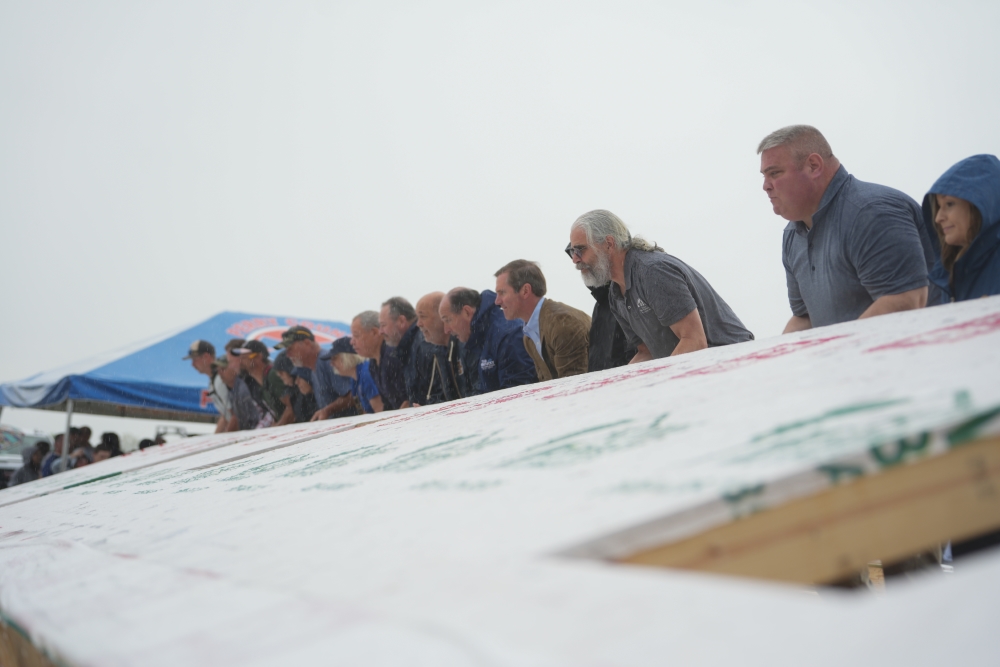
Kentucky Gov. Andy Beshear took a hands-on approach to helping with the recovery effort in Perry County.
Photo courtesy of Office of Governor
I think Democrats and Republicans should be able to agree on this, that we need to significantly increase the supply of housing and to do it quickly. I’m practical. I believe that if we create a whole new program to do it, there’s going to be program costs, there’s going to be things to figure out and it’s going to be slower. Let’s figure out the best methods we have right now that we know work that our private-sector partners understand and can leverage. Let’s push through it and let’s do it today. Let’s not wait until tomorrow.
As you deal with natural disasters and everything else a governor has to address, and as you become a national voice on so many topics, how do you keep yourself grounded?
Beshear: First, I had the blessing of watching my dad in this job. I realized that if you think being governor makes you taller, smarter or better looking, this job will eat you up. It is one that has significant responsibility but can’t change who you are if you want to do it well. The second piece is I’ve got an amazing wife. I have two teenagers, so they don’t think I’m special at all because of this job. I go home and, because I have teenagers, I don’t know anything [laughs]. Now I get to watch everything they’re doing, be so proud of them, and get to take my time off of work and maybe live in their life a little bit instead of mine.
I hit the treadmill every morning. I think exercise is incredibly important. I try to keep good friendships. I try to make sure that I follow different things that aren’t just about politics or about the job. I like sports. I like music. I now have a podcast that’s only partially political. We had Tyler Shough, the New Orleans Saints quarterback on [voted NFL Rookie of the Year in February]. We’ve had Coach Cal [University of Arkansas men’s basketball coach John Calipari, the former national championship-winning coach at University of Kentucky]. We had [Golden State Warriors coach] Steve Kerr. I’m just trying to keep a number of different interests, so you’re not always talking about the same thing.
But at the end of the day, it’s how you view the job. Some people think that politics is a career, and it might be to some. If this is the last political job I ever have, I’ll be OK. It is an honor to be the governor of Kentucky. I love the place that I’m from. The idea that we’ve had five straight years to date where we’ve been top five per capita in Site Selection’s rankings for economic development means life’s better for my people than it was five years ago. There’s an incredible amount of satisfaction in that.
“If you are not bold enough, if you don’t invest enough, then you don’t catch up. Then multiple generations lose out on the opportunity. I bought my first house when I was 28 or 29 years old. The average today is 40. That is unacceptable.”
— Gov. Andy Beshear on confronting the attainable housing challenge
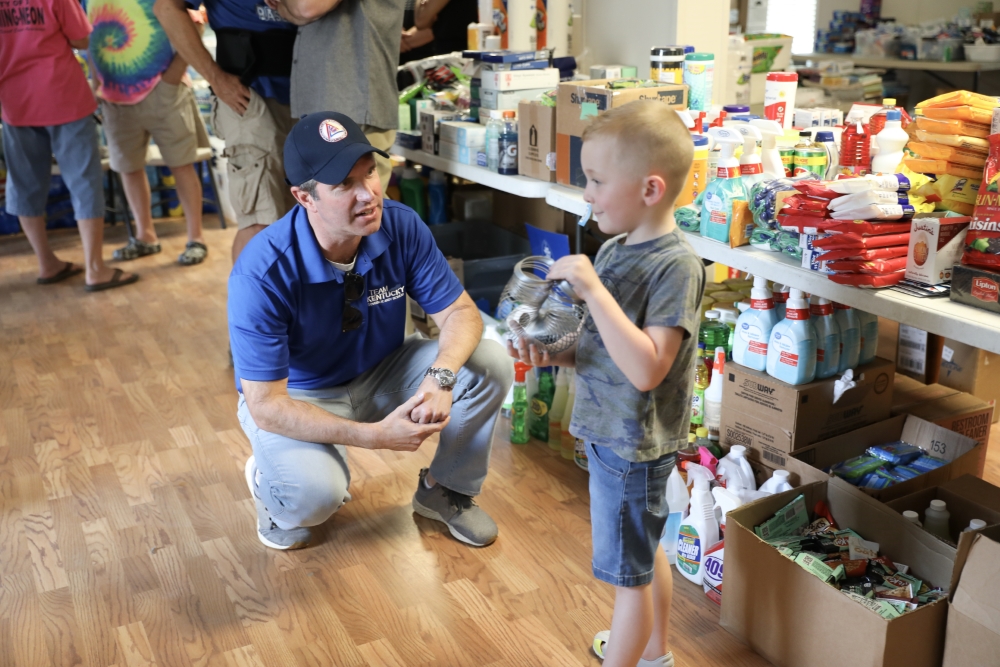
Kentucky Gov. Andy Beshear comforts a resident of Eastern Kentucky after a 1,000-year rainfall event in July 2022 triggered the deadliest non-primotropical flash flooding in the U.S. since the 1970s.
Photo by Charity M. Hedges courtesy of Kentucky Cabinet for Economic Development
FRONT & CENTER
You try to take the lessons learned and get better for the next time we experience one of these and the next time after that,” says Kentucky Governor Andy Beshear of the 15 federally declared weather disasters, multiple helicopter crashes and the recent UPS aircraft disaster that have occurred during his tenure. “But you never forget about the pain of the people who are lost. That always needs to be front and center.”
The most recent instance of disaster recovery is the snowstorm that struck in January 2026. Beshear says there is the immediate response phase — search and rescue, road clearing, making sure people have a stable and warm place to stay — followed by a stabilization phase. “When someone has lost their home, where are they going to stay for the next six months as they get back on their feet?” he says. “And then you have the longer-term rebuilding piece.”
What do such experiences teach him? “What you learn through it is, as governor, you’ve got to show up,” he says, “you’ve got to be able to truly empathize with your people, and then you’ve got to follow through.