
by Savannah Yawn
When people think of Illinois’ economy, the conversation often centers on Chicago. Yet some of the state’s most significant manufacturing investments are taking shape hundreds of miles from the Windy City skyline.
Recent announcements from ADM, Combe, Intermountain Electronics and Continental Tire span agricultural processing, consumer products, industrial equipment and automotive manufacturing, underscoring continued capital investment across the state.
One of the largest recent commitments comes from ADM in Decatur, where the company announced plans to invest more than $100 million to modernize its manufacturing operations while retaining more than 1,000 jobs. With support from the State’s Economic Development for a Growing Economy (EDGE) program, ADM has committed to investing at least $103 million and creating at least 50 new full-time jobs.
The project will upgrade infrastructure at one of ADM’s largest processing complexes, reinforcing Decatur’s longstanding role as a global hub for agricultural processing and food production. Rather than constructing a new facility elsewhere, the company is investing in an operation that has anchored the local economy for generations.
“With more than 4,000 colleagues based here, Decatur represents ADM’s largest footprint and employee population, making it a vital hub that helps connect U.S. farmers with markets and customers around the world,” said Chris Cuddy, president, North America and Carbohydrate Solutions, ADM. “Investments like this strengthen our ability to support customers, drive economic growth and reinforce Illinois’ leadership in agriculture.”
A Half-Century Commitment in Rantoul
Moving east, another long-established manufacturer is deepening its footprint in Rantoul.
Consumer products company Combe is investing $30 million to expand and modernize its local manufacturing facility, supported by a $5 million state investment. The project will increase production capacity, upgrade equipment and reinforce the company’s long-term presence in east-central Illinois. The company is relocating operations from California to Illinois, bringing more than 20 new full-time jobs to the region while retaining over 100 existing positions.
Combe first opened its Rantoul facility in 1974, as the company was scaling its global personal care brands. More than 50 years later, the site remains a key part of its global supply chain and a symbol of its continued commitment to U.S.-based production. The company’s portfolio includes well-known brands such as Clearasil, Odor-Eaters, Just For Men and Vagisil.
“Investing in Rantoul is not about capacity, but about durability,” said Keech Combe Shetty, executive chair of Combe Inc. “Our roots in Rantoul run deep, and we are incredibly grateful to our dedicated team here, and this commitment ensures that these jobs remain in the community that has supported us for over half a century. We are grateful to the State of Illinois, the Village of Rantoul, and the County of Champaign for their support, allowing us to maintain and grow our operations and keep these essential jobs in the region.”
Building the Workforce Alongside the Factory
Farther south, Intermountain Electronics is expanding in step with rising demand from the mining, energy and industrial sectors.
The company plans a $15 million expansion of its Centralia manufacturing campus, adding more than 108,000 sq. ft. of production space and roughly 60 new jobs. The project will increase capacity for electrical equipment used by customers across North America and further solidify Centralia’s role as a regional manufacturing hub.
Since its founding in 1985, Intermountain Electronics has evolved from a small equipment repair operation into a nationally recognized manufacturer of heavy electrical systems and engineered power solutions. Its Centralia facility, which opened in 2012 with just 12 employees, has nearly quadrupled in size and now employs 141 people. Once the expansion is complete, the site is expected to employ about 201 workers by the end of 2028.
The company has also built out a strong pipeline for that growth, working with partners including Kaskaskia College, Centralia High School and the Illinois Department of Employment Security to develop apprenticeship and training programs that support both hiring and long-term retention as production increases.
“Kaskaskia College is excited to see the tremendous growth Intermountain Electronics has experienced over the last decade,” said Kaskaskia College Dean of Workforce Engagement & Industrial Career Services Joy Fitts. “The partnership we have established with Intermountain Electronics has created outstanding career opportunities for students in the College’s Industrial Technology, Welding, and Electrician programs. Through the development of Registered Apprenticeships and ongoing workforce training collaboration, Intermountain Electronics continues to invest in student success while strengthening the region’s skilled workforce pipeline.”

Nik Pearce – Plant Manager, Continental Tire Plant Mount Vernon, Illinois
Automation Strengthens a Manufacturing Legacy
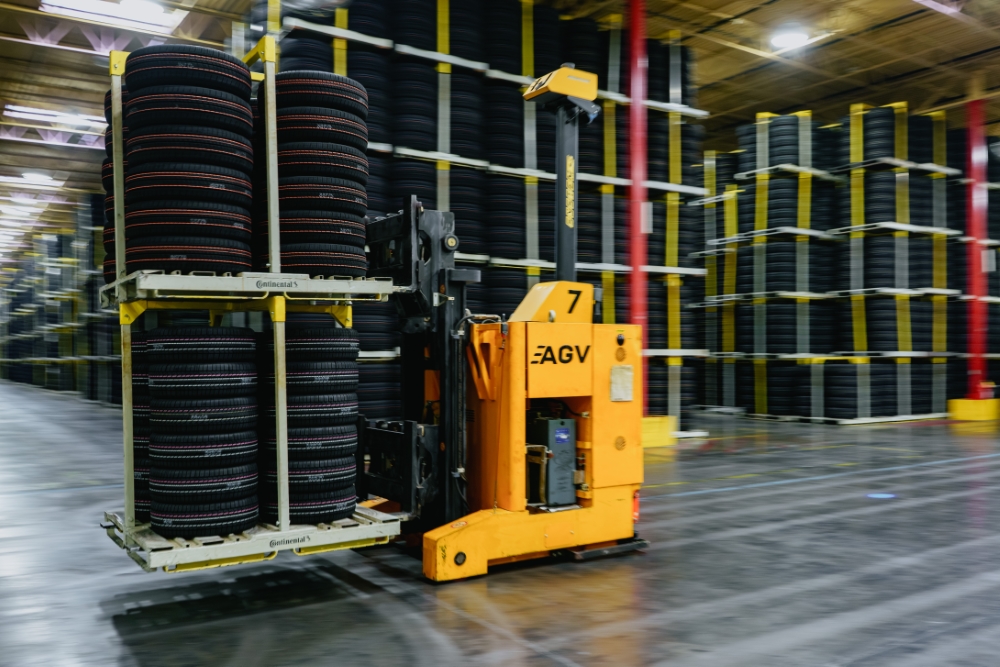
In Mount Vernon, Continental Tire is investing in a different kind of expansion, one focused less on adding production lines and more on making an already large operation run more efficiently.
The company is putting $76 million into a highly automated warehouse that will support one of its largest tire manufacturing facilities in North America. The project is designed to streamline material handling and logistics, using automation to better align storage and movement of finished tires with ongoing production needs.
The new facility will span an area larger than six American football fields and hold up to 500,000 passenger car tires. Construction is expected to begin in summer 2026, with operations planned for 2027.
“This investment is a strong signal for the future of our Mount Vernon plant,” says Nik Pearce, plant manager of Continental Tire’s Mount Vernon tire plant. “It enhances our capabilities, further modernizes our operations, and makes our plant logistics more efficient. At the same time, it strengthens our operations at local level and creates new development opportunities for our employees.”
The Mount Vernon site is Continental’s largest tire plant in the United States and a central hub in its Americas production and supply network. In operation for more than 50 years, the facility first opened in 1974 and was acquired by Continental in 1987. Today, it produces tires for passenger cars, light trucks and commercial vehicles. Spanning 3.4 million sq. ft., the plant has an annual production capacity of approximately 11.4 million tires and employs more than 3,500 people.
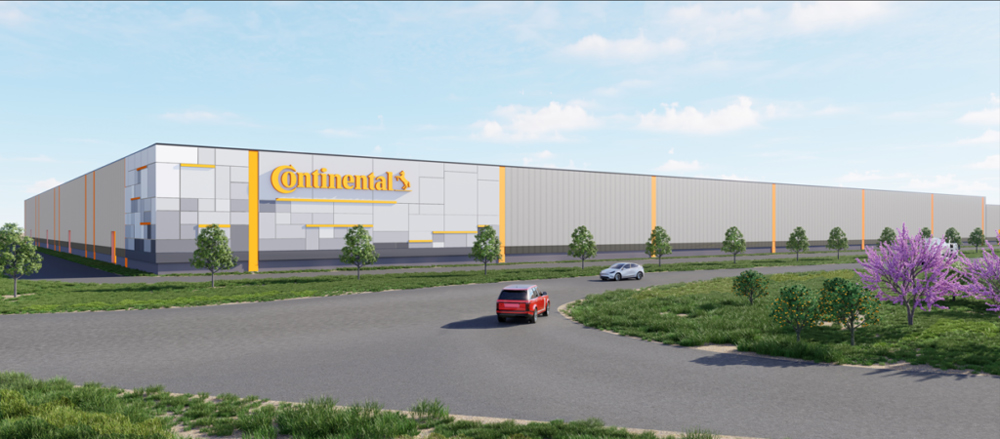
Continental Tire’s warehouse, Mount Vernon, Illinois
Rendering courtesy of Continental Tires the America
Confidence in Communities That Build
Taken individually, each announcement reflects the needs of a different industry. Together, they paint a broader picture of manufacturing across downstate Illinois. Agricultural processors are modernizing long-established facilities. Consumer products manufacturers are expanding production. Industrial equipment companies are adding capacity to meet growing demand. Global manufacturers are investing in automation to improve efficiency and strengthen existing operations.
The projects also share another common thread: Each company chose to build on an established Illinois presence rather than relocate production elsewhere. That decision reflects the advantages these communities continue to offer, including experienced manufacturing workforces, multimodal transportation access and industrial sites capable of supporting long-term growth.
Southern Illinois Brims With a Project and Power Surge
Talk to any economic development leader in Southern Illinois, and you quickly learn that project announcements are happening apace throughout the region.
Deb Barnett, executive director of Southern Illinois Now (SI Now), an organization that serves Illinois’ 17 southernmost counties, says projects are occurring across multiple industries and “demonstrate confidence in Southern Illinois’ workforce, strategic location, site readiness and business climate. From advanced manufacturing and specialty materials to logistics, food distribution, river commerce and outdoor recreation, the region is translating years of strategic planning into tangible results. Southern Illinois recently secured significant private-sector investments from existing employers and new companies, reinforcing the region’s role as a key contributor to Illinois’ economic growth.”
Among the bigger deals of note were the following:
- Continental Tire is investing $76 million in Southern Illinois operations through advanced automation at its largest North American facility in Mt. Vernon
- Prysmian is expanding operations through multiple investment phases, strengthening the region’s role in supporting national energy and infrastructure supply chains, in Du Quoin. The new 100,000-sq.-ft. expansion is supported by a solar farm that now provides roughly half of the plant’s energy. The $63.8 million investment adds 80 new jobs and positions the facility to support booming sectors — from EV infrastructure to renewable power generation.
- Penn Aluminum is growing its advanced manufacturing operations and employment opportunities in Murphysboro by adding 50 new jobs at the plant.
- Manner Polymers is establishing a major manufacturing presence that further diversifies the region’s industrial base with a $54 million deal in Mt. Vernon.
- Fare Foods is investing in expanded food distribution and logistics capacity in Du Quoin, where it is adding 66,000 sq. ft. of warehouse and office space.
Barnett notes that recent large investments into site preparedness are paving the way for even larger deals in the future. “Site readiness success began with a Delta Regional Authority grant of $129,000 that funded a comprehensive Top 20 Sites assessment in partnership with Global Location Strategies,” she says. “The project provided a data-driven roadmap for identifying the region’s most competitive industrial properties and prioritizing investments needed to move them toward market readiness. That initial planning effort became the catalyst for more than $12 million in subsequent state funding, generating an estimated return approaching 100-to-1 while creating a pipeline of sites positioned to compete for nationally significant projects.”
Eric Whitfield, economic development director for Ameren Illinois, one of the largest electric utility service providers in the state, says that his firm is “seeing strong activity in advanced manufacturing, food processing, logistics, distribution, agribusiness and technology-driven industries. Companies continue to be attracted to downstate Illinois because of its central location, skilled workforce, extensive transportation network and competitive cost structure.”
To make sure these new plant investments succeed, Whitfield says Ameren is investing millions into upgrading power infrastructure throughout the downstate region. “Ameren Illinois continues to invest in electric and natural gas infrastructure that supports safe, reliable and affordable energy service for our customers. Over the past year, we’ve advanced projects that strengthen the grid, improve resiliency and enhance service across our communities,” he notes. “Looking ahead, we will continue modernizing our infrastructure to meet the evolving needs of customers while maintaining the reliability and affordability that are critical to economic growth and business investment. Reliable energy infrastructure remains a key factor in site selection decisions, and these investments help ensure Illinois remains competitive as companies evaluate locations for expansion and new development.”
Whitfield adds that outside of Chicago, some of the fastest-growing areas for new development in Illinois now include Southwestern Illinois, portions of Central Illinois and several communities located along the state’s major interstate, rail and river transportation corridors. “We’re seeing significant interest from advanced manufacturing, logistics and distribution, food and beverage processing, agribusiness, life sciences, clean energy supply chain companies and technology-related industries,” he says. “Communities that offer shovel-ready sites, strong infrastructure and access to workforce continue to attract the most attention from developers and corporate investors.”
— Ron Starner