
Tennessee’s educational and research assets harbor a strong legacy of innovation.
Home to a roster of 11 public universities and special purpose institutes, 34 independent colleges and universities, 13 community colleges and 22 Tennessee Colleges of Applied Technology (TCAT), the state is cultivating talented individuals who are taking advantage of access to skilled industry expertise, hands-on training experience and evolving degree pathways that lead into high-quality careers.
Higher education institutions across the state are preparing the next generation for careers in Tennessee’s leading industries, including aerospace and defense, nuclear energy, automotive, technology and advanced manufacturing. In an effort to drive the state’s innovation economy forward, Tennessee colleges and universities are enhancing assets and navigating the development of vital space to keep talent competitive in the workforce.
New Space To Innovate
With a focus on elevating internal research, industry collaboration and promoting local entrepreneurship, Vanderbilt University has its sights set on 40 acres of underutilized space at its 153-year-old campus in Nashville.
Late last year, the university announced plans to develop a new mixed-use, pedestrian-centric hub on the campus’s west side. The goal would be to build upon the innovative activity present in the region and anchored by Vanderbilt’s research capabilities, promote business growth, integrate corporate R&D and support budding entrepreneurs while forging new partnerships within the private sector. Vanderbilt has a firm grip on research innovation in the state’s capital region, investing over $100 million into research initiatives, innovation and entrepreneurial scholarships through Discovery Vanderbilt; securing more than 600 patents and executing over 900 licenses in the past decade through targeted investments and grants; supporting 66 startups and delivering 48 Innovation Catalyst Fund grants since 2023.
Close proximity to the university’s research centers, university partners, faculty and students provides prime access to interact with R&D entities, venture capital and other private industry resources.
One of the most vital aspects of the new neighborhood will be its live, work and visit draw. Aside from fresh space for startups, entrepreneurs and businesses, the district will look to include retail, affordable housing and a hotel to enhance the community impact outside of university operations. According to the university’s proposed plan, the innovation district will be built out over four to five phases, taking up to 30 years to complete.
More Space for Technical Training
About two hours northwest in Henry County, TCAT Henry/Carroll will soon shift its activities into a fresh 99,600-square-foot facility. Growth within a variety of the college’s technical training programs has placed constraints on how students can maneuver within the current facility.
The existing TCAT facility in the city of Paris comes in at around 67,000 square feet, which TCAT President John Ridgeway says was adequate when the facility was first built 54 years ago, as max capacity in classrooms ranged from 12 to 15 students.
“We are carrying up to 25 students in some programs now,” he said. “The biggest difference students will notice is more space for modern equipment. They won’t be cramped.”
TCAT Henry/Carroll has become a regional hotspot for students pursuing careers within automotive technology, HVAC, industrial maintenance, residential building maintenance, welding, IT systems management, telecommunications, practical nursing and cosmetology. Local manufacturers, including auto parts producer Dana Incorporated, custom rubber products company PML Marugo and the state’s largest pork producer, Tosh Farms, represent a few of the industrial leaders regularly tapping into the college’s talent pipeline.
Ridgeway says the largest program at the Paris campus is residential building maintenance. Right now, students are restricted to operating out of two bays across from one another. In addition, due to maxing out the current facility, programs such as welding and cosmetology are housed across the street at Henry County High School.
The ability to bring all programs together at a central facility with an additional 32,000 square feet of work space will be a game-changer for future training capabilities. Without the capacity, the TCAT campus in Paris made aspects such as specialized industry training challenging. In a recent collaboration with steel lamination manufacturer Eurotranciatura, lack of dedicated space made it tough to blend employees and students together when training.
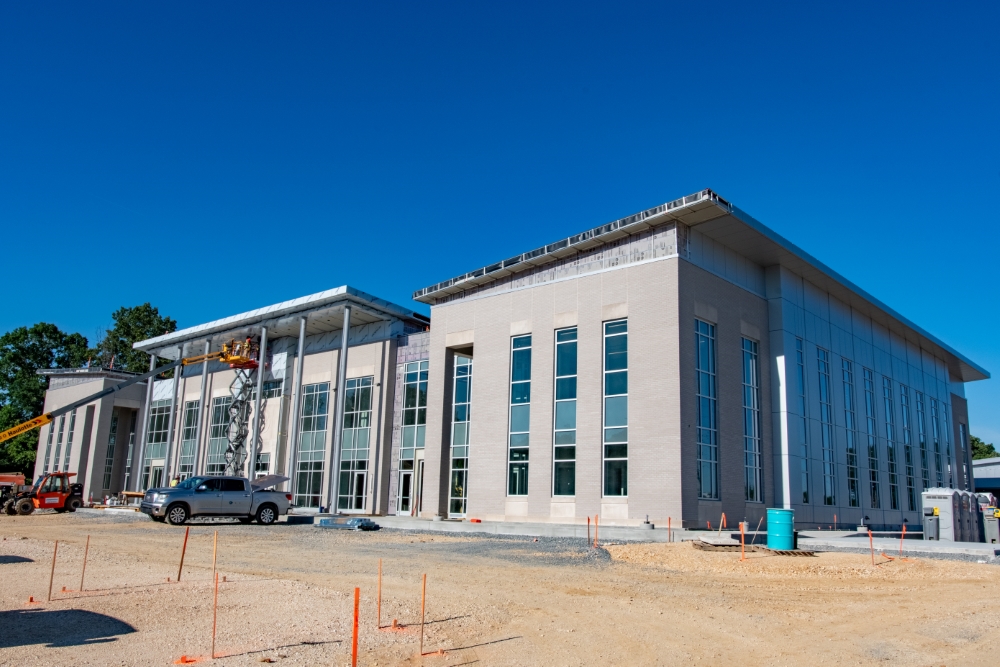
Construction of the new TCAT Paris facility will provide students with over 30,000 square feet of new workspace to support a range of training programs.
Photo courtesy of TCAT Henry/Carroll
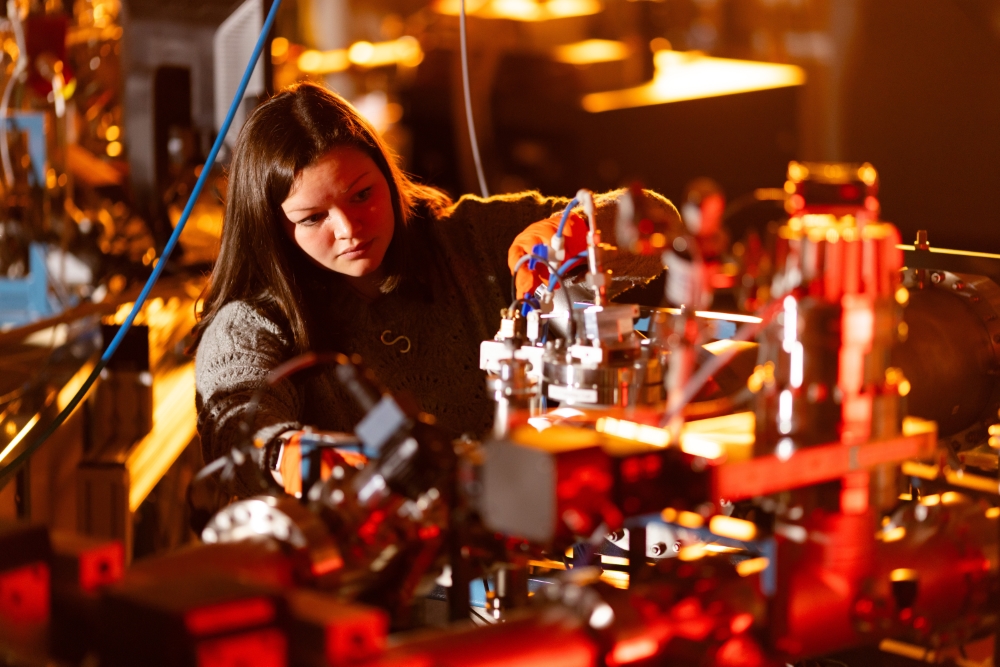
Photo courtesy of Steven Bridges/ University of Tennessee, Knoxville
“We’ll have a spot in the new facility to be able to house specialized industry training for local industries like automotive and food,” Ridgeway said. “As these industries evolve, having this new space will greatly help us do more based on equipment we have now and being tight as far as space goes.”
The $47 million initiative came out of funding approved by Governor Lee and the General Assembly in 2022, which enabled all 22 TCAT campuses in the state to upgrade or expand outdated facilities. The nearby TCAT Henry/Carroll campus in McKenzie underwent construction of a new academic and administrative building in March 2025, adding 18,000 square feet to the current campus. Soon after, TCAT Paris entered the construction phase. It is fair to say the excitement throughout the region was palpable.
“This is the biggest construction project in this county in 15 years. Keeping folks off the site is a big deal. Everybody wants to see it,” Ridgeway continued. “In fact, I was in Nashville yesterday and got a text from the city manager asking about the opening.”
Why is community interest so high? About a quarter-mile from the new facility, the Paris-Henry County Industrial Committee is in the midst of developing the upcoming 400-acre Paris Industrial Park. Proximity to the new TCAT campus will be a vital element to attracting new industry to Northwest Tennessee and an exciting prospect for enhanced local opportunities for students.
“These new developments are going to give us a chance to evolve, recruit new industry, train for that and keep this rural part of Tennessee growing,” Ridgeway said. “It goes to show that with good forward thinking, it will happen. It just might not happen overnight.”
A Haven for Innovation
A site that once served as a University of Tennessee, Knoxville (UT Knoxville) dairy and animal research farm in East Tennessee is now better known as UT Research Park at Cherokee Farm, a public-private research and technology hub. Situated adjacent to UT ’s flagship campus, just across the Tennessee River, this campus serves as a research playground for companies and entrepreneurs aiming to drive innovation across targeted sectors—advanced materials and manufacturing, future mobility, energy and environment, artificial intelligence and human health and wellness—in collaboration with UT Knoxville faculty and students.
“One of the greatest impacts of the UT Research Park has been the ability to intentionally bring together university research, industry, entrepreneurship, healthcare and economic development within a single connected innovation ecosystem,” said Cherokee Farm Development Corporation President and CEO Brett Malone.
Six years ago, the research park launched its Spark Innovation Center, a space designed to accelerate entrepreneurial development and commercialization of technology-focused startups. Through affordable lab space, prototyping workshops, access to UT Knoxville and Oak Ridge National Laboratory researchers, networking with local companies and connections to entrepreneurial service providers, the center encompasses the ideal ingredients to guide early-stage startups to a successful exit. The Spark Innovation Center spent its initial years growing via the introduction of vital support through programs like the two-year Spark Incubator, Spark Scholars and a 12-week Spark Accelerator.
“These programs are seeing increased interest from founders, industry partners and students seeking access to UT’s research capabilities and the broader Oak Ridge innovation corridor,” Malone said.
A new collaboration with the Tennessee Advanced Energy Business Council and Launch Tennessee brought the Spark Mobility Lab to life in early 2026, welcoming an initial five companies—Electrovia, Fuel Daddy, PF DesignLab, PRSVR Systems and ThermoVerse—to learn the technical and economic tools needed to scale through direct industry engagement and specialized workshops. With the success of these programs, UT Knoxville is now looking to expand its capabilities across quantum, biosciences and cancer research. In March 2026, it was announced that within the Peninsula Innovation District of Cherokee Farms three new buildings would be introduced by 2030. This includes a 140,000-square-foot Quantum Foundry facility, a 140,000-square-foot Biosciences and Engineering facility and a new 65,000-square-foot Cancer Institute at The University of Tennessee Medical Center.
“This is the right moment [for these facilities] because UT and the broader East Tennessee region are experiencing a convergence of research growth, industry demand, federal investment and workforce opportunity unlike anything we have seen before,” Malone continued.
“The region already possesses globally significant assets—including Oak Ridge National Laboratory, UT’s top-ranked nuclear engineering program, nationally recognized materials and manufacturing research, growing AI and quantum initiatives and a rapidly expanding life sciences and healthcare innovation ecosystem,” he said. “These new facilities are designed to build on that momentum while creating infrastructure that allows research, commercialization and industry collaboration to scale together.”
These initiatives will support the university’s goal of increasing its research spending to $550 million, while cultivating live-work-play communities that open vital doors for regional entrepreneurs to unlock new growth. Forward-looking expansion efforts by Tennessee colleges and universities continue to deliver room for stronger public-private partnerships, gather resources to bolster local innovation and enhance capacity for new research and workforce development initiatives.