
Why the Chicago-Milwaukee I-94 corridor is attracting the next generation of industrial investment.
by Savannah Yawn
Over the past two years, a series of multibillion-dollar announcements has reinforced the industrial importance of the I-94 corridor between Chicago and Milwaukee. Pharmaceutical manufacturers are expanding production capacity at the same time technology companies are building AI infrastructure. All the while, economic developers on both sides of the Wisconsin-Illinois border are positioning the region for the next generation of industrial investment.
In southeastern Wisconsin alone, Eli Lilly and Company announced plans to invest up to $4 billion to expand in Kenosha County, while Microsoft continues developing a multibillion-dollar data center campus in Mount Pleasant. South of the state line, AbbVie announced major investments to expand pharmaceutical manufacturing at its North Chicago campus. Together, the projects represent billions of dollars in new capital investment across advanced manufacturing industries.
While each project reflects the company’s unique long-term growth strategy, together they reveal a bigger trend. The corridor is attracting industries that value site readiness, workforce availability and speed to market. Those advantages did not emerge overnight.
“The region has also done the work to be ready,” says John W. Miller, secretary and CEO of Wisconsin Economic Development Corporation (WEDC). “Over the last decade, communities along the corridor have prioritized utility capacity, transportation improvements, site development and long-range planning so that projects of any size can move quickly when opportunities arise.”
The I-94 corridor has long served as a manufacturing backbone for the Midwest. This strategic artery between Milwaukee and Chicago provides companies access to two major labor markets while connecting them to interstate highways, Class I railroads, international airports and Great Lakes shipping.
“The I-94 corridor between Milwaukee and the Illinois border offers a combination of advantages that are difficult to find anywhere else in the Midwest.”
— John W. Miller, Secretary and CEO, Wisconsin Economic Development Corporation
Those traditional advantages remain important, but WEDC believes today’s site selection decisions increasingly depend on a broader ecosystem.
“The I-94 corridor between Milwaukee and the Illinois border offers a combination of advantages that are difficult to find anywhere else in the Midwest,” says Miller. “Companies gain immediate access to two major labor markets, Milwaukee and Chicago, while benefiting from Wisconsin’s competitive cost structure, available land, highly trained and skilled workforce, outstanding infrastructure, world-class educational institutions and forward-looking business environment.”
A New Era of Pharmaceutical Manufacturing
Perhaps no project better illustrates the corridor’s changing industrial profile than Eli Lilly’s expansion in Kenosha County.
In 2025, the company announced plans to invest up to $4 billion to expand its recently acquired manufacturing campus, creating approximately 750 highly skilled jobs while significantly increasing production capacity for injectable medicines. The investment represents the company’s single largest U.S. manufacturing investment outside of Indiana, where it is headquartered.
“We are grateful for the partnership and leadership shown by Gov. Evers, WEDC, state, county and local officials, as well as other stakeholders in supporting this project,” said Executive Vice President and President of Lilly Manufacturing Operations Edgardo Hernandez. “Together, we’re advancing innovative manufacturing capabilities, building capacity for the medicines of tomorrow, creating high-quality jobs, and ensuring that patients here and around the world have access to life-changing treatments. We look forward to contributing to the region’s strong legacy of innovation and economic vitality for years to come.”
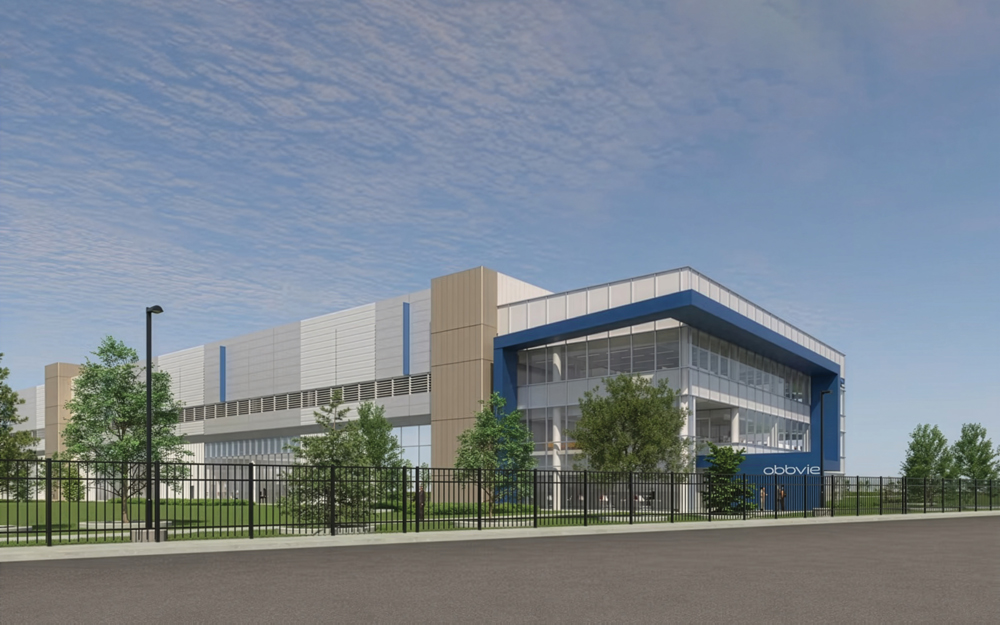
Roughly 40 miles south along I-94, the trend continues at AbbVie’s North Chicago campus, where the company announced a $195 million investment to expand manufacturing operations in 2025 before following it with an additional $380 million expansion in 2026. Together, the projects will expand active pharmaceutical ingredient (API) manufacturing while supporting production across several therapeutic areas. The expanded facility will grow AbbVie’s footprint in Illinois, where it is headquartered and already employs more than 11,000 people.
“Over the next decade, AbbVie will expand production of API, drug product, peptides and medical devices in the U.S. to support future medical breakthroughs,” said AbbVie Chairman and CEO Robert A. Michael. “This is an important step to maintain U.S. leadership in pharmaceutical innovation and deliver next-generation medicines that make a remarkable impact on patients’ lives.”
Although Eli Lilly and AbbVie are pursuing different business strategies, their investments depend on many of the same regional capabilities. Modern pharmaceutical manufacturing requires highly skilled labor, sophisticated infrastructure, dependable utilities and established supply chains. Those are capabilities the corridor has spent decades developing.
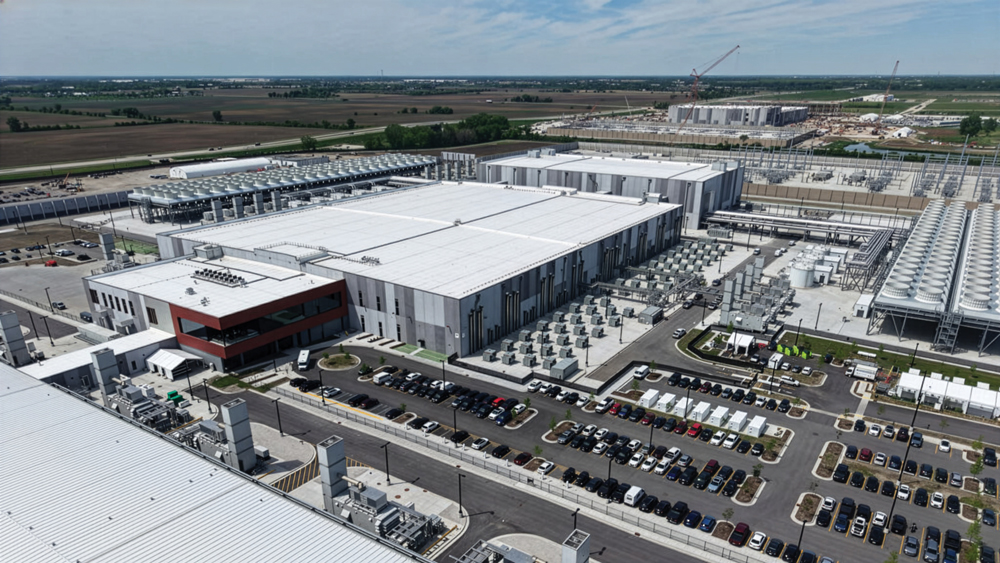
Microsoft’s Mount Pleasant campus is part of the company’s multibillion-dollar investment in southeastern Wisconsin supporting the next generation of AI infrastructure.
Photo courtesy of Microsoft
Manufacturing Meets AI
Manufacturing is not the only industry making major commitments along I-94. Microsoft is building a substantial artificial intelligence and data center presence in southeastern Wisconsin, adding a new layer to a regional economy long associated with the production of physical goods.
In June 2026, Microsoft announced that its first Mount Pleasant data center was fully operational after equipment came online and startup activities began in April. The facility, announced in May 2024, was completed ahead of schedule with contributions from nearly 10,000 construction workers over two years. Approximately 550 full-time employees were supporting the facility when Microsoft announced its completion.
“With our Fairwater data center now fully operational, Wisconsin is now home to the world’s most powerful supercomputer,” said Microsoft Vice Chair and President Brad Smith. “This campus will help power the next generation of AI innovation globally and provide long-term economic opportunity locally through hundreds of highly skilled jobs and continued investment in the region.”
The company estimates that it will spend $4.7 billion on hyperscale construction in Wisconsin between 2024 and 2028. Microsoft has purchased directly from 29 businesses across 11 Wisconsin counties, including contractors, steel fabricators, electrical equipment manufacturers and machinery manufacturers. Construction is already underway on a second facility adjacent to the first, with completion scheduled for 2028. Microsoft expects its full-time Mount Pleasant workforce to reach approximately 800 when the second facility is operational.
The company is also pursuing future data center development in Kenosha County. In January 2025, county officials announced Microsoft’s planned acquisition of approximately 240 acres northwest of I-94 and Highway 142, extending the company’s potential footprint farther south along the corridor.
Yet the significance of Microsoft’s presence extends beyond the data centers themselves. In partnership with the University of Wisconsin-Milwaukee and WEDC, Microsoft established an AI Co-Innovation Lab focused on helping small and midsize manufacturers apply AI tools in their workplaces. According to WEDC, it is the first lab of its kind in the United States, with a goal of increasing productivity throughout the Midwest and the national supply chain.
Gateway Technical College has also partnered with Microsoft on a Data Center Academy designed to prepare workers for careers in information technology and data center operations. The initiative adds a workforce component to Microsoft’s physical investment while helping the region build the specialized talent needed to support continued growth in digital infrastructure.
Although data centers differ significantly from pharmaceutical and advanced manufacturing facilities, they depend on many of the same location fundamentals: available land, dependable power, infrastructure, workforce capacity and communities prepared to accommodate long-term investment. WEDC points to Microsoft’s investment as evidence that southeastern Wisconsin can support technology-enabled facilities at scale while using those investments to strengthen the manufacturing economy already rooted along the corridor.
The Competitive Formula
Companies evaluating billion-dollar investments need confidence that they can hire workers, build facilities and scale operations over decades.
“The combination of workforce, infrastructure and available sites has been central to virtually every major announcement here,” said Miller. “Companies evaluating billion-dollar projects need confidence that they can recruit talent, move products efficiently and begin operations on a predictable timeline.”
Infrastructure remains equally important. Access to I-94, freight rail, Milwaukee Mitchell International Airport, O’Hare International Airport and robust utility systems allows companies to move products efficiently while supporting future expansion. WEDC also points to proactive local planning, available industrial land and coordinated regional partnerships as competitive advantages that continue attracting investment.
That readiness is reinforced by a coordinated regional approach. WEDC works with Milwaukee 7, community development organizations, utilities, educational institutions and local governments to help companies navigate requirements and identify the resources needed to grow. Miller says that team structure gives companies a more seamless site selection experience and allows the state to mobilize quickly when large projects are under consideration.
Biohealth, advanced manufacturing and digital infrastructure are among the sectors generating the strongest interest today. WEDC expects those industries to remain key drivers of future investment as companies continue seeking locations capable of supporting increasingly complex operations.
“Microsoft and Lilly are not isolated successes,” says Miller. “The entire southeast Wisconsin region has seen tremendous growth from companies of every size, including HARIBO, cooling systems manufacturer IEA, and industrial automation leader Yaskawa. These are signals of what is happening across southeastern Wisconsin: companies discovering a region that combines scale, speed, talent and quality of life in a way few markets can match. For organizations planning the next generation of growth, the I-94 corridor is one of the Midwest’s most compelling destinations.”