
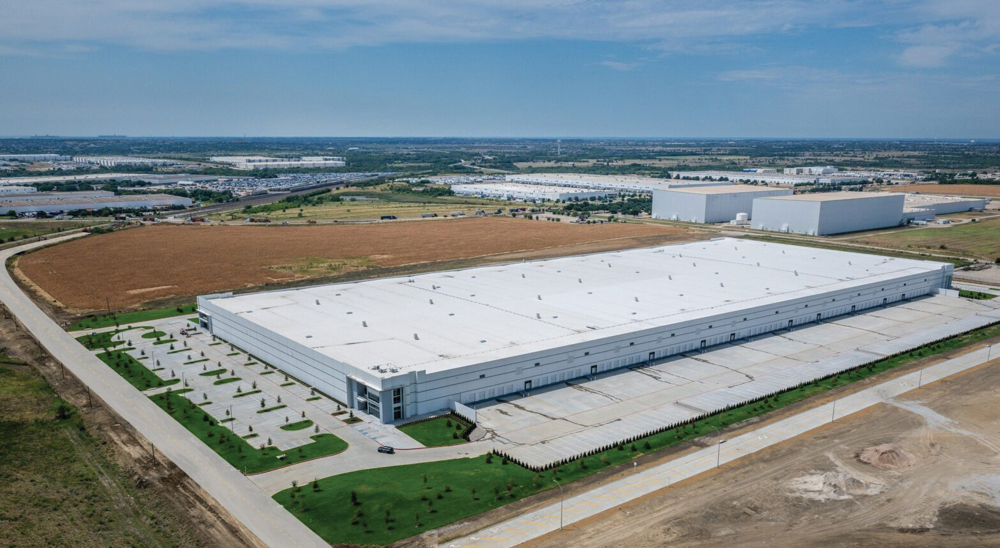
From semiconductor manufacturing to power infrastructure, the state is anchoring the next generation of data center growth.
by SAVANNAH YAWN
Anew wave of AI infrastructure investment is taking shape across the United States, led by hyperscale data center development and multibillion-dollar capital commitments from global technology firms. Initiatives such as the Stargate project, which is expected to span multiple U.S. locations and is backed by OpenAI, SoftBank and Oracle, signal a shift toward building dedicated AI computing capacity at unprecedented scale, with Texas emerging as a key geography in that buildout.
At the same time, companies such as Google and Meta continue to expand their data center footprints across the state, reinforcing Texas’ role as a central node in the nation’s digital infrastructure network. These facilities are not only larger and more energy-intensive than previous generations, but are increasingly purpose-built to support AI workloads.
Beyond servers and storage, AI is driving investment in advanced semiconductors, cooling systems, power equipment and the industrial capacity required to manufacture and deploy them. In Texas, those elements are converging and positioning the state as a foundation for the broader AI infrastructure ecosystem.
“Texas leads the nation in semiconductor manufacturing and advancements in technology,” said Governor Greg Abbott. “As demand for technologies powered by artificial intelligence continues to grow, we will work with industry leaders from around the globe to accelerate production, ensure supply chain resilience, and lead the American resurgence in advanced manufacturing from Texas.”
Manufacturing the Engines of AI
In Texas, that demand is translating into advanced manufacturing investment tied directly to AI hardware production. Companies across the semiconductor and computing ecosystem are expanding their U.S. footprint, with Texas playing a key role in that strategy.
NVIDIA, in partnership with global manufacturing firms Foxconn and Wistron, is establishing AI supercomputer manufacturing operations in Houston and the Dallas-Fort Worth region. These facilities are expected to ramp up mass production within the next 12 to 15 months, marking a significant step toward domestic production of advanced computing systems.
“The engines of the world’s AI infrastructure are being built in the United States for the first time,” said Jensen Huang, founder and CEO of NVIDIA. “Adding American manufacturing helps us better meet the incredible and growing demand for AI chips and supercomputers, strengthens our supply chain and boosts our resiliency.”
The move reflects a broader push to localize critical segments of the AI supply chain. As demand for high-performance computing continues to accelerate, companies are investing in U.S.-based manufacturing to improve resiliency, reduce geopolitical risk and scale production capacity.
North Texas has become a focal point for this activity. In Fort Worth, Wistron has selected the AllianceTexas development for a $761 million project tied to AI supercomputer production, reinforcing the region’s role as a hub for advanced manufacturing and logistics.
Building the Supporting Supply Chain
Beyond chips and computing systems, AI is driving investment across a range of supporting industries, including cooling systems, electrical equipment and facility components.
In Grand Prairie, Modine is developing a new advanced manufacturing and assembly facility focused on data center cooling technologies. The project is expected to bring more than 1,000 jobs to the region, with an average annual wage of about $66,760. The facility is expected to be operational later this year and will produce high-efficiency cooling systems under the Airedale by Modine brand, supporting the thermal management needs of next-generation, high-density data centers.
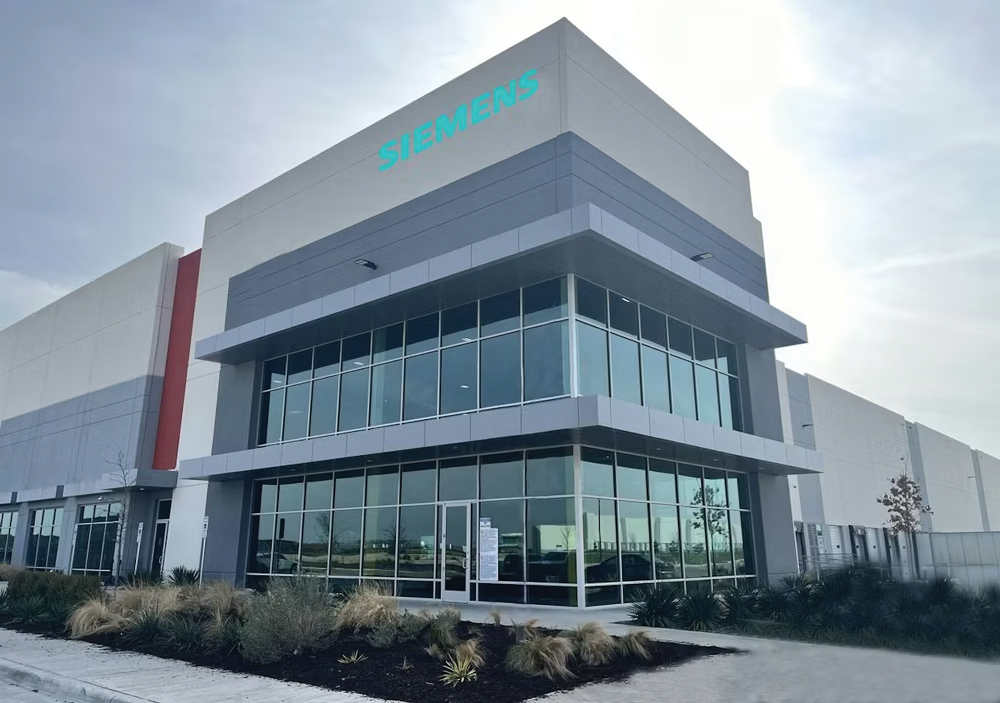
A new 500,000-sq.-ft. site allows Siemens to scale American production of critical electrical infrastructure solutions and create up to 800 jobs.
Photo courtesy of Siemens Smart Infrastructure
“Opening our new facility in Grand Prairie marks an exciting milestone in Modine’s growth journey,” said Modine Group Vice President, Data Centers, Americas John Williams, “This expansion not only enhances our ability to serve the rapidly evolving data center market with innovative Airedale by Modine cooling solutions, it also represents a meaningful investment in the local community and access to a new and talented workforce. We’re grateful to the City of Grand Prairie for their partnership and support, and we look forward to contributing to the region’s continued economic growth.”
Similarly, Siemens has opened a $190 million electrical equipment manufacturing facility in Fort Worth. The 500,000-sq.-ft. site produces low-voltage switchboards and other critical components used in data center and industrial power distribution systems. The facility is expected to support up to 800 jobs by 2026 and incorporates advanced training programs to prepare workers for highly technical manufacturing roles.
Energy is a key defining factor in the expansion of AI infrastructure. Data centers require significant and reliable power, and the ability to integrate renewable energy sources is becoming increasingly important.
TMEIC Corporation Americas has relocated its headquarters to Houston while expanding its manufacturing footprint in Brookshire, where it is developing a facility dedicated to producing utility-scale photovoltaic inverters. The site will support renewable energy systems and help meet the growing power demands associated with large-scale data center operations.
“We are excited to make these investments for an expanded presence in the Houston area with the relocation of our headquarters and the opening of our new manufacturing facility. These investments and expansions will potentially create up to 300 jobs in the local community,” said Manmeet S. Bhatia, president and CEO of TMEIC Corporation Americas. “This strategic expansion underscores TMEIC’s dedication to the renewable energy industry, advancing clean energy technology, maintaining strong client relationships, and competing on a global basis while proudly manufacturing in the United States.”
Texas’ energy ecosystem, spanning traditional generation, renewables and grid infrastructure, provides a unique advantage in this context. As AI adoption accelerates, access to reliable and scalable power is proving to play a decisive role in site selection decisions.
Workforce and Ecosystem Advantages
Manufacturers are leveraging regional talent pipelines while also developing new training models to meet evolving needs. At Siemens’ Fort Worth facility, for example, educators, including former teachers and principals, have been integrated into workforce development efforts to design training programs and accelerate the transition from classroom learning to production floor readiness, according to the company.
Established logistics networks and access to major domestic markets continue to support large-scale industrial investment across Texas. Clusters in the Dallas-Fort Worth region and along the Houston corridor provide companies with access to suppliers, transportation infrastructure and a growing base of specialized expertise.
What comes next will be built as much on the ground as in software. Across Texas, new fabs, assembly lines and power systems are coming online to meet AI demand and that physical buildout will determine how fast the technology scales.