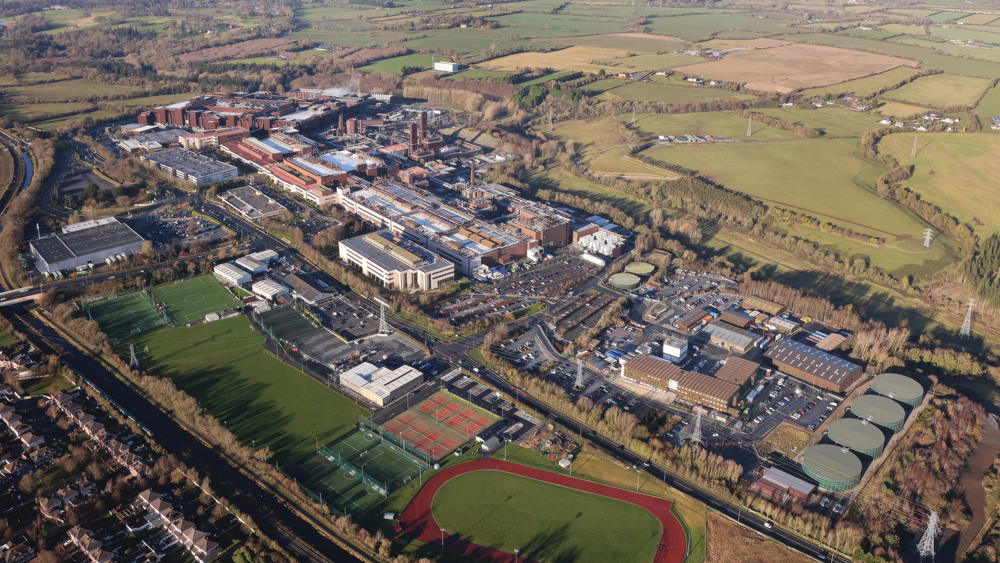
Ireland, Texas and Indianapolis know keeping up with infrastructure helps keep companies interested.
If there’s one sector that knows the importance of infrastructure to its operations, it’s semiconductors, where power, water and precision brook few interruptions in order to manufacture to ever more minute specifications.
So it’s fitting that Ireland — this year’s top country in Site Selection’s Global Groundwork Index that blends corporate investment data with infrastructure investment data — in July welcomed the news that Intel is investing €5 billion ($5.7 billion) in the Leixlip campus it’s operated since 1989. “The expansion involves upgrading existing fabrication facilities and the installation of leading-edge manufacturing equipment,” Intel announced, before detailing its own infrastructure investment: “Key infrastructure enhancements include the expansion of the automated track system to integrate disparate campus modules into a singular, high-velocity production environment.”
Ireland is doing its best to make its entire territory a “singular, high-velocity production environment.” Sometimes the corporate and infrastructure threads overlap and intertwine: In addition to a €40 million program of upgrades Shannon Airport is pursuing, the airport in July welcomed Ryanair’s announcement that it would be investing €50 million in a new maintenance, repair and overhaul hangar that would bring with it over 400 new jobs.
Site Selection’s Global Groundwork Index for non-U.S. countries combines the past five years of corporate facility project data (along with affiliated job creation numbers, when available) with available infrastructure investment data from the Organization for Economic Co-operation and Development and its OECD Data Explorer. Readers will note a drop out of the rankings by Canada (last year’s No. 1) and the United Kingdom (No. 4 last year), but that doesn’t necessarily mean they’re faltering. OECD sister agency the International Transport Forum stated in mid-July that “Canada, the UK, India, Romania and some other countries are not included in the latest year’s data because they did not provide this information by the time of our publication.”
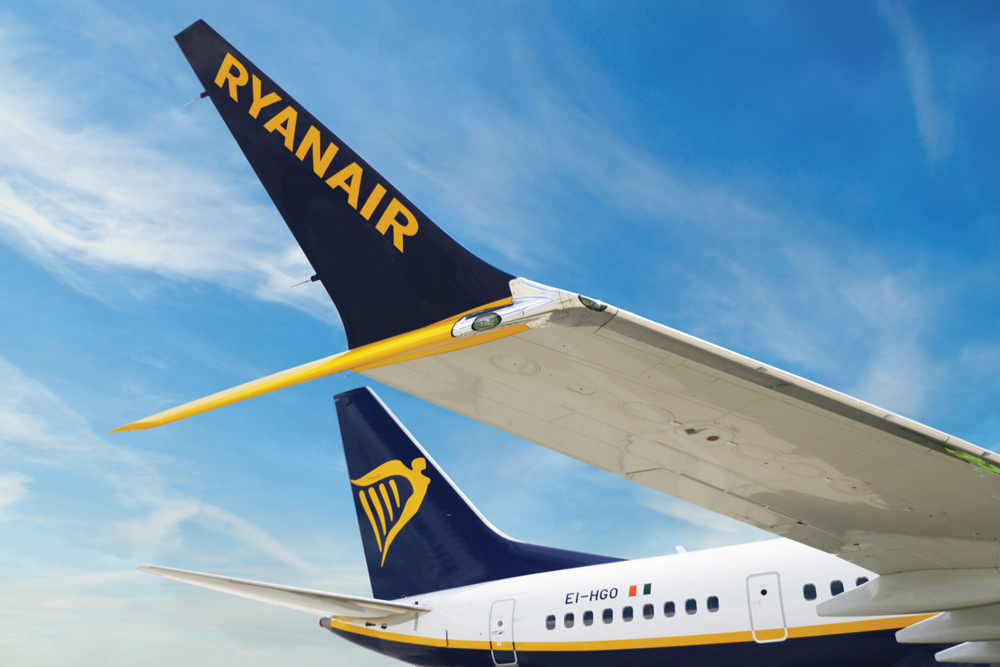
Ryanair, whose aircraft carried a record 22 million passengers in July, is investing in a major 400-job MRO operation at Ireland’s Shannon Airport.
Photo courtesy of Ryanair
Meanwhile, Ireland data keep getting more solid on both sides of the coin. The Ryanair project at Shannon joins a long parade of 190 investments and more than 10,400 affiliated new jobs secured by IDA Ireland in the first half of 2026 across tech, financial services, life sciences and industrial engineering, among other sectors. “Investment activity points to a strong concentration of next-generation technology projects, with global companies choosing Ireland as a European growth platform, a base for regional headquarters activity, and a location to scale and support strategic EMEA operations,” the agency said in a release highlighting projects from such companies as Novo Nordisk (€432 million investment in Athlone); Qualcomm (€125 million in Cork); OpenText (€105 million and 400 new jobs across several Irish sites); and Medtronic, which announced the establishment of a European software development hub in Galway.
“Government is committed to ensuring the right enabling conditions are in place to keep Ireland competitive, including investment in infrastructure, energy, housing, skills and innovation,” said Ireland Minister for Enterprise, Tourism and Employment Peter Burke.
As reported by the International Trade Administration, the Irish government last August launched a National Development Plan (NDP) committing $121 billion in public investment for 2026–2030, with total funding projected to reach $216 billion by 2035.
“Funded through corporate tax windfalls and government surpluses, the plan focuses on key areas like housing, water, energy and transportation,” the ITA announced, noting major injections of capital such as $26.2 billion for transport infrastructure, over $4 billion for water systems and $3.7 billion to upgrade the power grid. It represents the largest public investment initiative in Ireland’s history. “This initiative,” the ITA continued, “offers potential opportunities for U.S. companies offering leading-edge products and technologies in these sectors.”
Texas, Louisiana and North Carolina Top State Chart
As it happens, airport investment also captures the “singular, high-velocity production environment” that continues to reign in Texas, No. 1 in this year’s Global Groundwork Index of U.S. states. Dallas-Fort Worth International (DFW) is in the midst of a $12 billion upgrade. A new $70 million, 250-job MRO operation from Embraer is ramping up at Perot Field Alliance Airport in Fort Worth on Hillwood’s Alliance development. Elsewhere in Fort Worth, Modern Aviation broke ground in June on two new business jet hangars at Meacham International Airport. Corpus Christi International Airport is getting an $8.1 million upgrade thanks in large part to federal funds. And more Texas infrastructure projects continue to take off at nearly the same rate as new corporate facilities in Site Selection’s perennial top state for company projects.
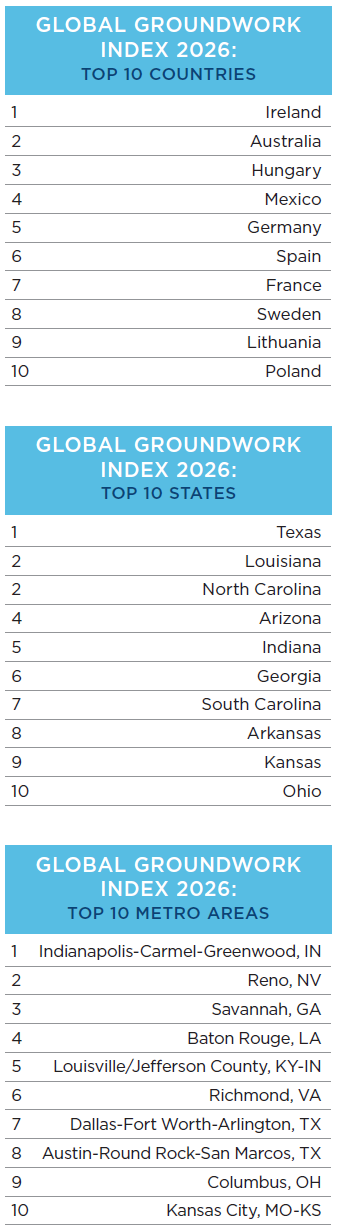
METHODOLOGY FOR TOP U.S. STATES AND TOP U.S. METROS: Cumulative and per-capita calculations based on Conway Projects Database projects, project-affiliated job creation and project-affiliated capital expenditure, Jan. 2022 through July 1, 2026. Cumulative and per-capita calculations based on project and funding data from Permitting Dashboard for Federal Infrastructure Projects, part of the Federal Permitting Improvement Steering Council established in 2015 by Title 41 of the Fixing America’s Surface Transportation Act (FAST-41); and from the U.S. Department of Transportation’s (USDOT) Better Utilizing Investments to Leverage Development (BUILD) grant program, which released data July 9, 2026, for investment of $1.73 billion into 127 projects across the country.
Sometimes the airport project is a road.
Such was the case at DFW, which in June celebrated the completion of the $30.8 million East-West Connector Project, “a critical new roadway that has been nearly two decades in the making. The new corridor improves regional mobility, reduces congestion and enhances access to growing commercial areas surrounding the airport … First envisioned nearly 20 years ago, the connector fulfills a long-term transportation vision for the airport’s southern corridor,” DFW stated in a release. The $30.8 million project was funded in part through federal transportation programs and administered by the North Central Texas Council of Governments (NCTCOG), which provided approximately 80% of the project funding.
A study released by The Perryman Group in December reported that DFW contributes more than $78 billion annually to the North Texas economy and supports more than 684,000 jobs across the region. American Airlines last year committed to increase its planned investment in DFW’s Terminal F to $4 billion as part of an agreement that also extends American’s Use and Lease Agreement with DFW through 2043.
“DFW is American’s largest and most critical hub, and with this expanded plan for Terminal F, DFW has a clear path to become the largest airline hub in the world,” said American Airlines CEO Robert Isom last year. “Dallas-Fort Worth is one of the fastest growing regions in the country, and we’re excited that American and North Texas will continue to grow together.”
It’s not all big cities when it comes to Texas infrastructure. In July, the U.S. Department of Transportation (USDOT) awarded a $24 million federal Better Utilizing Investments to Leverage Development (BUILD) grant to advance the Fueling Economic Growth: I-20 Energy Sector Interchange project in Midland County. The project will reconstruct the interchange at I-20 and South Lamesa Road in Midland, one of the most heavily traveled freight corridors in the Permian Basin.
“This investment represents a major step forward for safety and economic vitality in West Texas,” said TxDOT Odessa District Engineer Saul Romero. “By modernizing this critical interchange, we are improving travel for Texans, supporting the energy industry and ensuring this corridor can meet the demands of a growing economy.”
Texas received approximately $105 million in BUILD funding, representing the largest total amount awarded to any state in this funding round. The awards will support improvements to highway, freight, rail, transit, port and border infrastructure in communities across the state.
U.S. state and metro area rankings are derived from cumulative and per-capita calculations based on Conway Projects Database projects, project-affiliated job creation and project-affiliated capital expenditure, Jan. 2022 through July 1, 2026; cumulative and per-capita calculations based on project and funding data from Permitting Dashboard for Federal Infrastructure Projects, part of the Federal Permitting Improvement Steering Council established in 2015 by Title 41 of the Fixing America’s Surface Transportation Act (FAST-41); and from the BUILD grant program, which released data July 9, 2026, for investment of $1.73 billion into 127 projects across the country.
Indy, Reno and Savannah Deliver the Goods
At the metro level, Indianapolis-Carmel-Greenwood, Indiana, leads the way, and it’s not just because of Carmel’s legendary penchant for traffic circles. Sometimes the path is straighter.
In June, Indianapolis Mayor Joe Hogsett and other city officials presided over the grand opening of the Grassy Creek Greenway, which together with a later phase will add 4.5 miles to the city’s trails and greenway network. “At over 240 acres, Grassy Creek Park is one of the city’s largest parks,” a city release explained. The phase-one 1.6-mile greenway “is a $3.3 million investment into the city’s trails and greenways network, helping better connect neighbors to city amenities. Since 2016, this network has grown by 60 miles.” Most of the funding came from the Central Indiana Community Foundation.
“More people, especially younger people, are choosing to live in communities that invest in a healthier future,” said Jenny Boyts, executive director for The Parks Alliance of Indianapolis. “They want to live and remain in places that invest in quality of life, making it easier for people to live actively in safer, connected places.” Overall, the Indianapolis Department of Public Works’ 2026 capital infrastructure budget calls for $279 million in investments to roads, sidewalks, trails, bridges and stormwater infrastructure.
Meanwhile, Indy’s airport, like the airports in Ireland and Texas, is also a harbinger of growth.
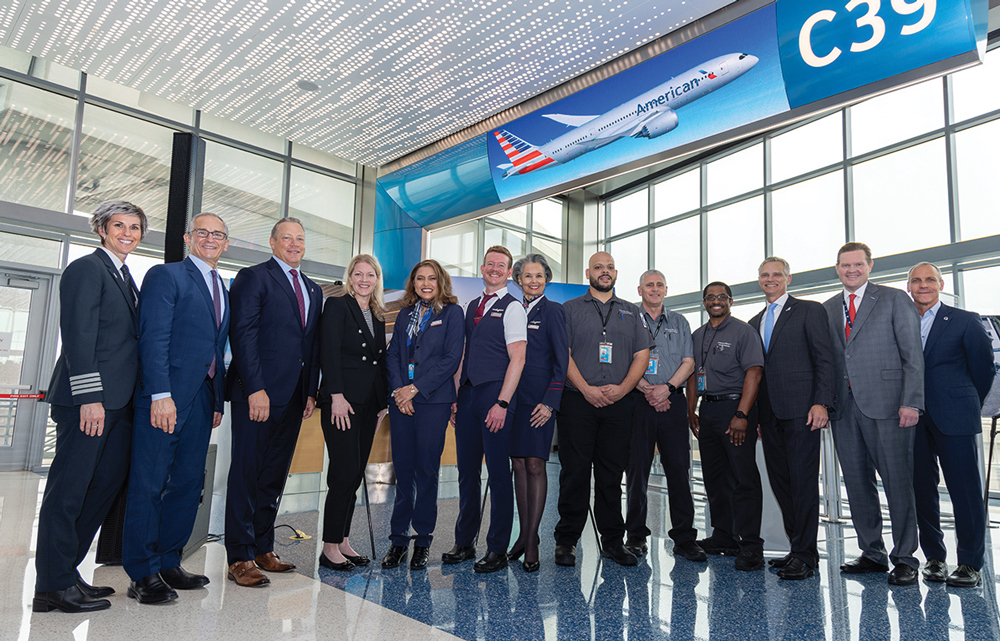
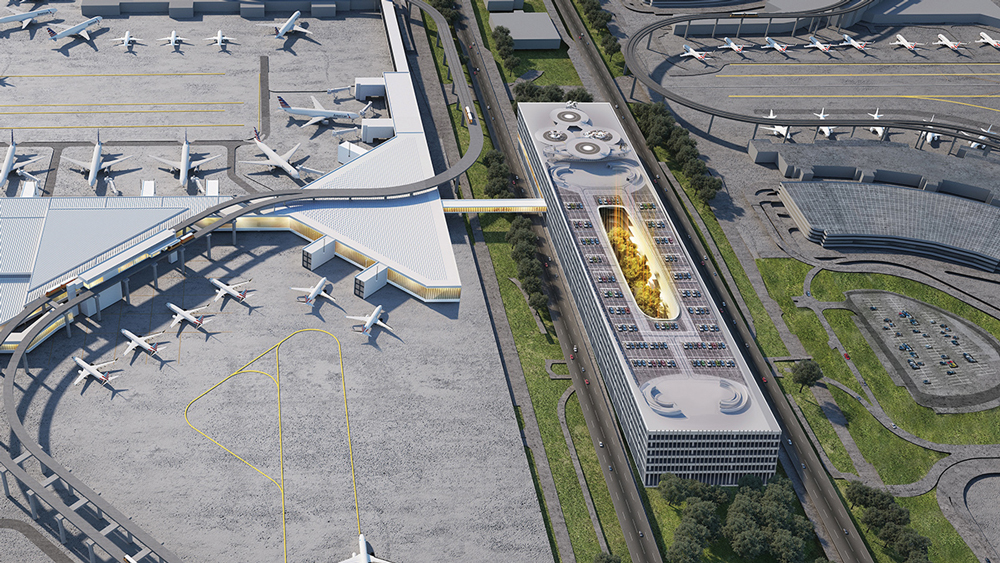
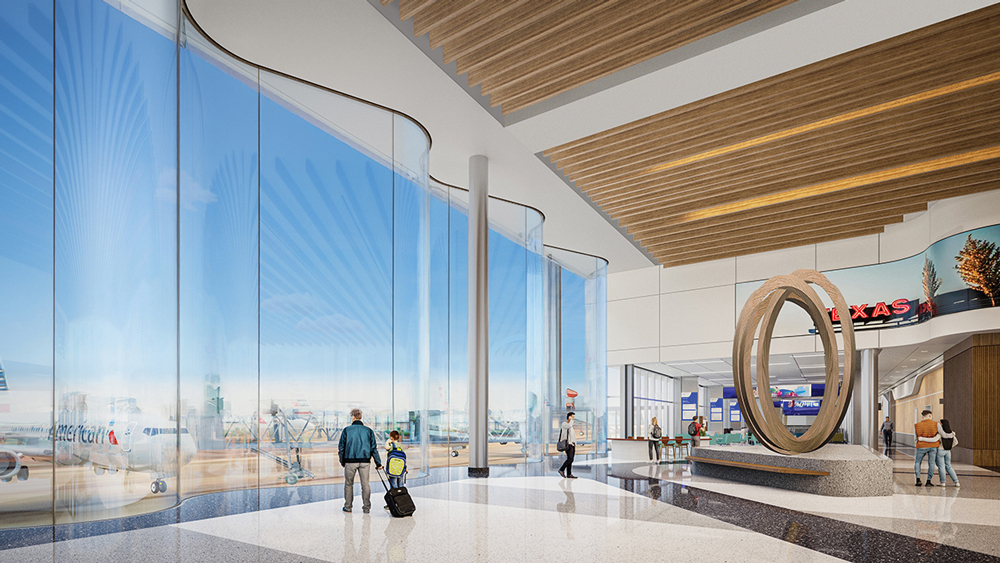
American Airlines team members last year celebrated an agreement that extends the airline’s lease and use agreement with DFW to 2043 and raises the airline’s planned investment in Terminal F to $4 billion.
Images courtesy of American Airlines
Indianapolis Airport Authority (IAA) officials, along with community, construction, design and hotel partners, gathered in May to mark the structural completion of the new, on-airport Westin Indianapolis International Airport hotel with a topping-out ceremony. “This is a jobs and economic story, but at its heart it’s a community story,” said Barbara Glass, IAA board president, of the $205.8 million project. “Hundreds of workers have shown up every day to build something that will serve this city long into the future. When travelers check in, the revenue supports Indianapolis — and they’ll leave with the experience of Hoosier Hospitality. That’s what a good public asset investment looks like.”
Among the airport’s increased flight routes is one that comes full circle among this year’s Global Groundwork Index leaders: Aer Lingus nonstop service between Indianapolis and Dublin, Ireland. As of April 2026, the airline responded to demand by adding a flight to make five departures per week. “The development of this route clearly demonstrates the growing demand for travel between Indianapolis, Ireland and the wider European market,” said Reid Moody, chief strategy and planning officer at Aer Lingus, on the occasion of the route’s one-year anniversary in March.
The Indy–Dublin service also gives travelers connections to more than 20 destinations beyond Dublin, including major European and UK cities such as Paris, London, Frankfurt, Rome and Amsterdam, the IAA explained. “Air service analysis shows an average of 330 people travel from the Indianapolis area to European destinations daily. By attracting Indiana’s year‑round transatlantic flight, the IAA estimates the service could have a more than $50 million annual impact on Indiana’s economy. Indiana is home to 52 Ireland‑based businesses and more than 1,090 foreign‑owned business establishments representing over 40 countries and territories — reinforcing the business case for continued international connectivity.”
More flights and the facilities to support them, in other words, are the sort of infrastructure you can take to the bank.