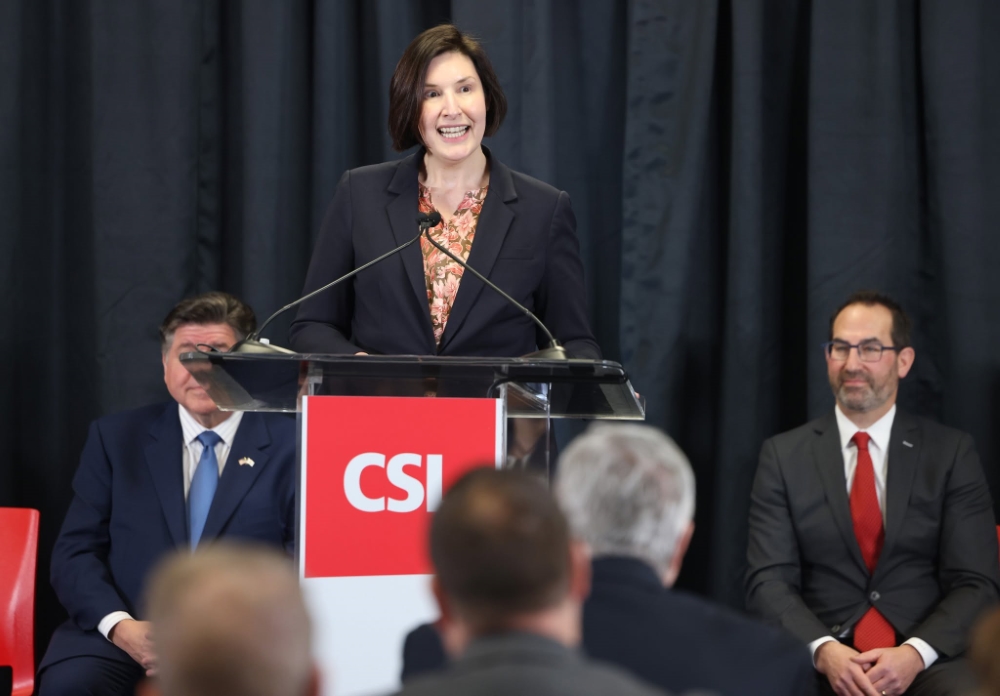
DCEO Director Kristin Richards brings more than two decades of experience in state government to bear on everything from STAR bonds to startups.
Raised in Belleville in southwestern Illinois near St. Louis, educated at Millikin University in Decatur and now residing in Chicago, Kristin Richards knows the terrain of her home state well — including the halls of the State capitol in Springfield, where among other accomplishments she guided bipartisan negotiations that led to the Illinois Jobs Now comprehensive infrastructure investment program. More recently, she worked with the Office of the Governor and the State legislature to pass sweeping enhancements to State incentives that support business attraction and development.
In summer 2026 she responded to a few questions from Site Selection Editor in Chief Adam Bruns. What follows are excerpts from that exchange.
This spring I had the pleasure of touring mHUB in Chicago, one part of the state’s award-winning startup ecosystem. How does your team approach supporting entrepreneurs and startups and also extending that ecosystem into every corner of the state?
KRISTIN RICHARDS: While some of the nation’s largest companies call Illinois home, we’re also seeing numerous small businesses and startups choosing Illinois. DCEO is consistently building on established support for startups and small businesses. DCEO established the EDGE for Startups program that allows new companies without a corporate income tax liability to claim EDGE credits against their withholding liability, which supports emerging companies when they need it most. Additionally, the Advantage Illinois Loan Guarantee Program increases capital options available to small businesses, and the Illinois Innovation Venture Fund (INVENT) is critical for reversing inequities that startups face when pursuing a loan or investment. Support is also offered to entrepreneurs through Small Business Development Centers (SBDCs), which have expanded by almost 50% since 2019, enabling us to reach thousands more small businesses. DCEO has economic development professionals in each of the 10 economic development regions across the state through our Regional Economic Development Team (Team RED). This team provides local support for businesses to provide them information on available programs, identify regional needs, and work on business retention and attraction efforts.
In the first quarter of 2026 you saw more announced job creation from companies qualifying for EDGE incentives than all of last year with EDGE and REV (Reimagining Energy and Vehicles) combined. How will the advent of Workforce Pell help to fill the workforce pipeline these companies need?
RICHARDS: EDGE and REV — Illinois’ most active incentive programs — continue to drive strong results with companies committing to creating and retaining thousands of good jobs for Illinois families. These record-breaking investments and growth continue to strengthen our position as a global economic powerhouse. By expanding access to short-term, high-quality training programs through Workforce Pell, we’re helping more Illinoisans gain skills and credentials while also strengthening the talent pipeline that supports business growth statewide. DCEO has informed the process of creating this program in Illinois, using feedback from employers about workforce needs across the state. Opening access to training through Workforce Pell is just one more example of Illinois’ commitment to connecting people with good-paying careers and ensuring employers have the skilled workforce they need to compete and succeed in Illinois.
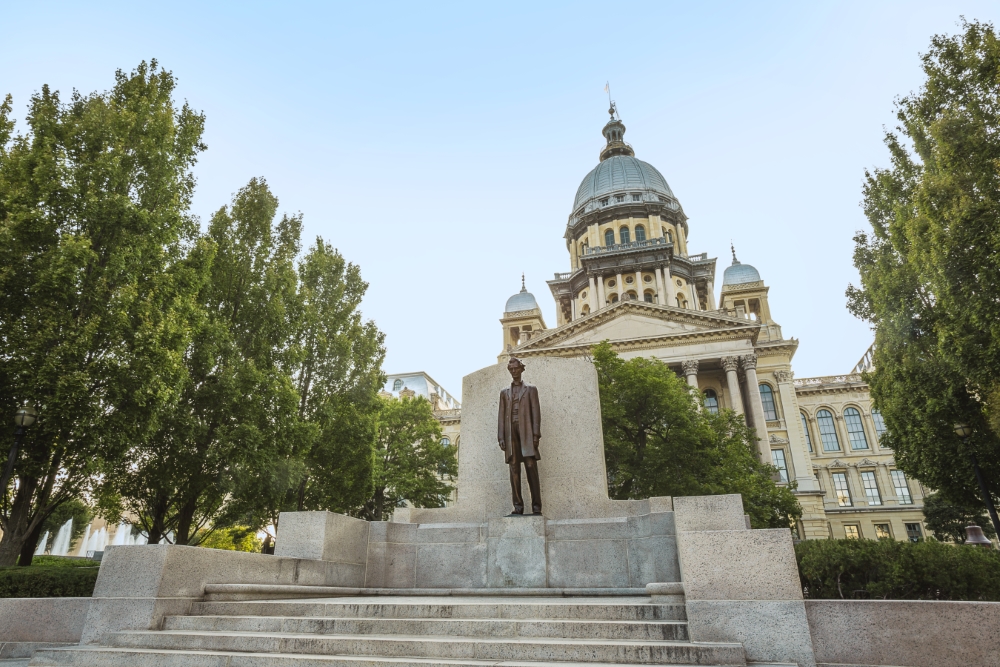
The State Capitol Building in Springfield.
Photo courtesy of Illinois EDC
DCEO encompasses the State’s Office of Tourism. Describe how you see the intrinsic connections between tourism and the attraction of corporate end-user investment and job creation.
RICHARDS: Illinois celebrated record-breaking tourism achievements in 2024. We welcomed 113 million domestic and international visitors who spent a record $48.5 billion — an increase of 500,000 visitors and $1.3 billion in spending from 2023. This tourism surge also led to a new all-time high in hotel tax revenue figures in FY25, totaling $367 million — a 14% increase over the previous record set in FY24. This boost in revenue has stimulated Illinois’ economy while directly supporting more than 282,000 jobs in our tourism and hospitality industry. Every visitor in Illinois — whether they’re coming from near or far — spends their money in Illinois hotels, restaurants, small businesses and attractions. From offering new and legacy tourism grant programs to an award-winning tourism campaign, the State is making investments that are driving longer stays from visitors who boost our local economies.
As Illinois positions itself as a must-visit destination for travelers from around the globe, businesses are also taking notice that there’s something for everyone in our state. Companies seeking locations to expand their operations take into consideration the quality-of-life locations will offer their workforce, and that includes access to cultural assets, parks and trails, sports, restaurants, small businesses, quaint main streets and other world-class attractions that establish communities as places where people want to work and live. DCEO’s tourism programs promote these assets and shine a bright light on why Illinois is a destination of choice for hundreds of millions of visitors year after year.
Earlier this year, after a record year in film and TV production in the state, DCEO introduced the first incentive in the nation for sustainable film productions. Describe the uptake so far.
RICHARDS: The phones in DCEO’s Illinois Film Office have not stopped ringing since we launched this first-in-the-nation incentive. The expansion reflects our commitment to growing Illinois’ economy in a way that’s both competitive and sustainable. We’re attracting world-class productions while building the infrastructure and workforce needed for a cleaner future, ensuring that the benefits of this growth are felt statewide. Illinois is already a premier destination for film and television productions, as seen by our record-breaking expenditures, and now we’re paving the way toward a greener future in our film industry that will be felt by generations to come. It’s not only possible but popular to promote both economic opportunity and sustainable productions hand in hand. Many productions were already close to if not already meeting many of the criteria needed to be recognized as a “certified green production,” and now they have the resources and guidance to pursue this tax credit uplift.
The Illinois Film Office is busy supporting existing productions that are ready to become more sustainable and we’re hearing about projects that are considering locating in Illinois because of this incentive. Whether productions are choosing Illinois because of our leading green uplift, expanded Film Production Tax Credit, or successful Film and TV Workforce Training Program, Illinois is a world-class destination for award-winning productions and momentum is only growing with this new incentive.
February saw the expansion of the State’s STAR bond program. Describe the types of projects being supported by the program, and how you see these projects enhancing the quality-of-life appeal of certain regions of the state.

“…The common thread across all of these divisions is harnessing State tools to make the lives of Illinoisans better.”
— Kristin Richards, Director, DCEO
RICHARDS: Through the STAR bond program, the State aims to support communities in every corner of Illinois by promoting revitalization, development and job creation. This program was designed to support economic growth with financing options to develop and revitalize communities through major tourism, entertainment, retail and destination-based projects in STAR bond districts. Governor Pritzker’s expansion of STAR bond eligibility to include municipalities statewide is empowering municipalities throughout Illinois, providing them with additional financing options to meaningfully invest in capital projects that will attract visitors and spur additional revenues in local economies. Encouraging large-scale development projects will generate both immediate and long-term employment opportunities by supporting construction jobs, permanent positions in tourism, entertainment and retail, and related employment.
With dozens of notices of intent already submitted to DCEO, if all eligible STAR bond projects are completed, they could eventually generate at least $1 billion in sales and create more than 5,000 new jobs across Illinois.
You have been engaged in many levels and arms of state government policy over the course of your career. Which policy or legislative achievement you’ve been attached to do you think has had the greatest impact on Illinois citizens?
RICHARDS: With more than two decades of experience in Illinois state government — in both the legislative and executive branches — I’ve had the opportunity to shape state policy at multiple levels. I’ve also seen the very best of Illinois. That background gives me a deep understanding of how Illinois works, how businesses interact with government, and what it takes to build meaningful, lasting economic growth. It also allows me to approach challenges with a clear sense of what tools, partnerships, and strategies actually lead to solutions and investment.
After years in which the state wasn’t fully maximizing its role in business development, under Governor Pritzker’s leadership we have transformed Illinois into a proactive, coordinated, business-focused partner.
DCEO is redefining how a state’s economic development agency can engage employers. We are modernizing incentive structures, improving workforce alignment, and ensuring our processes are efficient and responsive.
When I joined DCEO in 2023, I brought the experience built throughout my career in public service to the agency. My focus has been on strengthening the entire economic development ecosystem: aligning state agencies, federal partners, local governments, and workforce providers so companies get seamless, effective support. This coordinated approach is one reason companies that once overlooked Illinois are now actively pursuing opportunities here.
Across DCEO’s more than two dozen divisions our goal is simple: use every state tool to make Illinois the best place to live, work, and do business. The results speak for themselves. Companies consistently tell us that Team Illinois gives them something they don’t find elsewhere: unified support, clear communication, and a genuine commitment to their long-term success. This feedback makes me proud and tells me that our strategy is working.