Oak Ridge Takes Commanding Lead in Nuclear Fusion
When Kyoto Fusioneering announced August 11 that it’s relocating its U.S. headquarters and testing operations to Oak Ridge, Tennessee, the news served as the latest evidence that the Volunteer State has taken a commanding lead in breakthrough fusion technology.
Kyoto, the premier fusion technology and integrated systems developer, plans to invest $47 million and create 50-plus high-wage jobs in Oak Ridge in the heart of the East Tennessee Innovation Valley corridor.
Tennessee Gov. Bill Lee and Deputy Gov. and Department of Economic and Community Development (TNECD) Commissioner Stuart C. McWhorter joined Kyoto Fusioneering (KF) executives in announcing the firm’s move from Seattle to Oak Ridge.
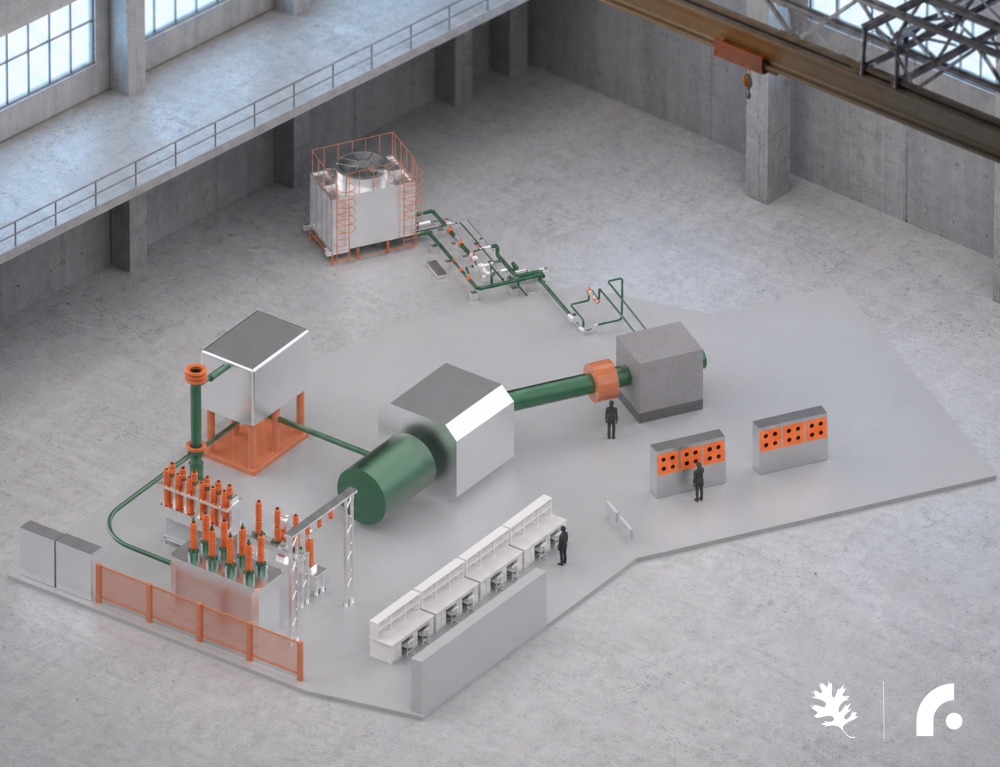
The Anderson County project will include buildout of critical fusion testing infrastructure designed to reduce fusion technology risk. At the center of the deal is the development of UNITY-3, a unique fusion nuclear test facility to be built at Oak Ridge National Laboratory (ORNL) through a public-private partnership announced earlier this year.
A U.S. Department of Energy grant made the deal possible when DOE declared fusion technology a national priority. UNITY-3 uses a deuterium-tritium (D-T) fusion neutron source to validate tritium breeding and performance under realistic fusion-nuclear conditions. Ultimately, UNITY-3 will enable the industry to design and develop commercial fusion power plants.
Launched in Japan in 2019, KF anchors the fusion supply chain for top-tier private and public fusion energy development programs worldwide. KF operates in the U.S., Japan, Europe and other locations around the globe.
“Relocating our U.S. headquarters to Oak Ridge was a strategic decision driven by our partnership with ORNL and the region’s rich nuclear innovation ecosystem.”
— Bibake Uppal, President, Kyoto Fusioneering America
“Relocating our U.S. headquarters to Oak Ridge was a strategic decision driven by our partnership with ORNL and the region’s rich nuclear innovation ecosystem,” said Bibake Uppal, president of Kyoto Fusioneering America. “By anchoring our operations here, we are doing more than expanding KF — we are building the critical, commercial-scale testing infrastructure and robust supply chains that the entire fusion industry needs to scale. We are incredibly grateful for the welcoming business climate fostered by TNECD and the State of Tennessee, whose support makes this landmark investment possible.”
In an interview with Site Selection, Uppal said that “the main driver of our relocation is our partnership with ORNL around Project UNITY-3 and our R&D program. East Tennessee presents a compelling opportunity around nuclear more broadly. We saw it as a very attractive area to focus our growth.”
When I asked Uppal to outline the site selection factors that led KF to Oak Ridge, he cited:
- The company’s partnership with the lab.
- The ability to leverage the lab’s capabilities to accelerate the realization of the new facility.
- The fact that the state of Tennessee supports nuclear energy. “The governor is very pro-nuclear,” says Uppal.
- A broader workforce potential via the University of Tennessee network and the school’s highly regarded nuclear engineering program. “We believe that will be a key source of talent for us,” he notes.
What This Means for Future Growth
“This means a lot for the growth of KF and fusion technology,” says Uppal. “We’re planning to grow our U.S. footprint with our focus in East Tennessee. The talent is here. This area has a very strong heritage in science and research in nuclear. There is also an industrial aspect here because the workforce talent spans that spectrum — from R&D and science to a lot of the industry. That is applicable to fusion as well.”
Uppal says the search was national. “There were a few specific areas that we were most drawn to; and Oak Ridge was one of them,” he says. “We looked at other areas too. In the end, proximity to the lab, the density of the entire nuclear ecosystem, and the state alignment around nuclear technology led us to Tennessee.”
Uppal adds that state and local incentives were important to the final deal. “For us, it was important because we want the state engaged in this project,” he says. “The technology derisking aspects and creating that infrastructure layer required us to engage with the state early on.”
Uppal says he sees a renewed appetite for nuclear energy driven by growth in energy demand for things like AI hyperscaling and semiconductor manufacturing. “It is happening around the world,” he says. “Fusion has achieved several key breakthroughs. When Gov. Lee created the Nuclear Fund, that showed it was a priority for him to engage in nuclear energy. The public here is very comfortable with nuclear energy. There is a strong history of fusion and fission research at ORNL.”
It also helped that DOE named Tennessee one of the five fuel-cycle innovation hubs in America, along with Utah, Oklahoma, Idaho and Louisiana. “There is a lot of momentum in this sector in East Tennessee,” Uppal adds. “That’s why we’re here.”
Patience Pays Off for Tennessee
Confirming that Tennessee played the long game to win KF, TNECD Global Director of Research & Development Initiatives Callie Cook says her organization first learned about the KF headquarters site search in late summer of 2025. “A rep from ORNL then introduced us to Kyoto Fusioneering during a workshop in October of last year,” says Cook. “We had a more formal conversation with the company last December on what the project would look like and how we could support them. It was tied to UNITY-3 at ORNL.”
By January 2026, ORNL and KF had entered into and publicly announced their partnership. “By summer 2026, we issued a joint announcement supporting their relocation to Tennessee; and ORNL announced it would contribute funding to the project and the test facility,” says Cook. “As our discussions continued, it became evident that this would not just be a new research location.”
Cook says Tennessee learned that KF wanted to be located in a nuclear-friendly ecosystem. “That’s why Tennessee was a top contender,” she says. “This was not a traditional site search. Their research project takes place at ORNL. KF knew they would have this project here.”
Cook also admits that Tennessee competed against other states to land KF. “I am not at liberty to discuss the other states, but I do know that they wanted to be on the ORNL campus,” she says. “We offered a grant from our Nuclear Supply Chain Investment Fund.”
That grant was $510,000. “We also worked hand in hand with the Tennessee Valley Authority on this project,” says Cook. “They supported the project as well, but I am not at liberty to share the amount of TVA assistance.”
After securing several major project wins in the nuclear sector over the last few years, Tennessee is gaining traction with corporate investors, says Cook. “First, our Nuclear Supply Chain Investment Fund set up by Gov. Lee in 2023 is being used by the state to grow nuclear companies in Tennessee. We saw a lot of activity after the announcement of that fund,” she says. “Legislators have since approved more funds. This year we received an additional $25 million.”
Cook says other factors make a difference. “Companies are impressed by our team-first approach,” she notes. “There is high demand for good quality jobs in East Tennessee. The state has great resources to support these projects. Nuclear firms want to be part of a very friendly nuclear regulatory environment. For example, Tennessee became the first state in the nation to establish regulation for nuclear fusion in June.”
When I asked Cook if she expects to see more projects announcements in this sector in Tennessee in the near future, she said, “Yes, we have a healthy pipeline of prospects. This is a really exciting time for us.”
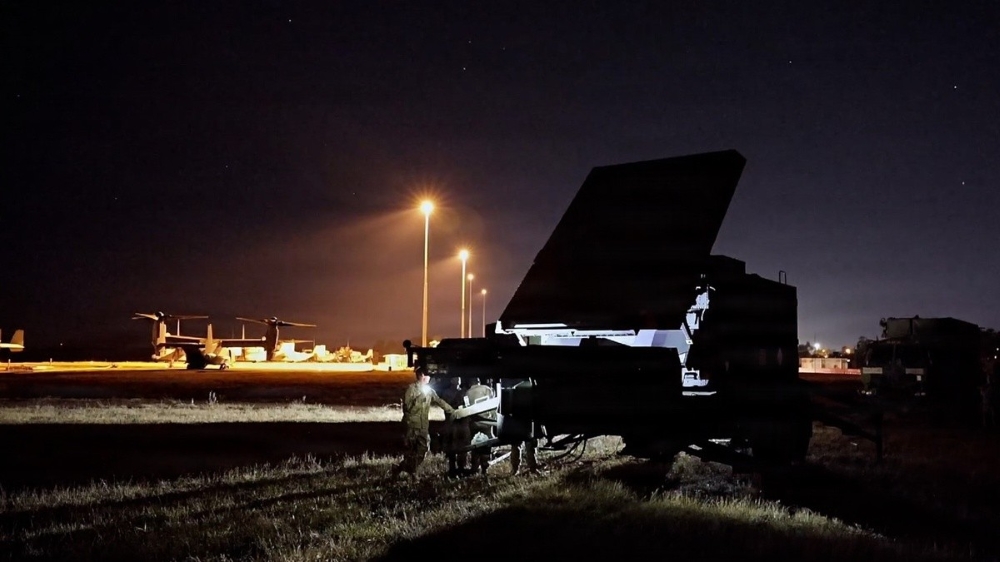
U.S. Army Soldiers from 1st Battalion, 1st Air Defense Artillery Regiment, 38th Air Defense Artillery Brigade emplace a Patriot radar system under night conditions, on July 19, 2025. The Janus Program, the Army’s next-generation nuclear power program, aims to deliver secure, resilient and reliable energy to support national defense installations and critical missions.
U.S. Army photo by Capt. Frank Spatt
U.S. Army Signs Pact with Private Industry
for Nuclear Micro-Reactors
The Department of the Army announced August 26 that the Janus Program has selected five nuclear energy vendors and five initial locations. In partnership with the Department of War Innovation Unit (DIU), the Army is awarding up to a combined $2.2 billion to own, construct and operate nuclear micro-reactors on military installations. The vendors will deliver nuclear power to support the Army while supporting the revitalization of American industrial capacity and technological leadership. With the private sector funding expected along with government dollars, the Army expects more than 20 total nuclear micro-reactors will be built and operated across Department of War installations.
The five selected vendors and installations are as follows:
- Antares Nuclear, Inc. – Fort Bragg, North Carolina
- BWXT Advanced Technologies, LLC – Fort Campbell, Kentucky
- General Atomics Electromagnetic Systems – Fort Hood, Texas
- Radiant Industries, Inc. – Fort Benning, Georgia
- Westinghouse Government Services – Fort Drum, New York