
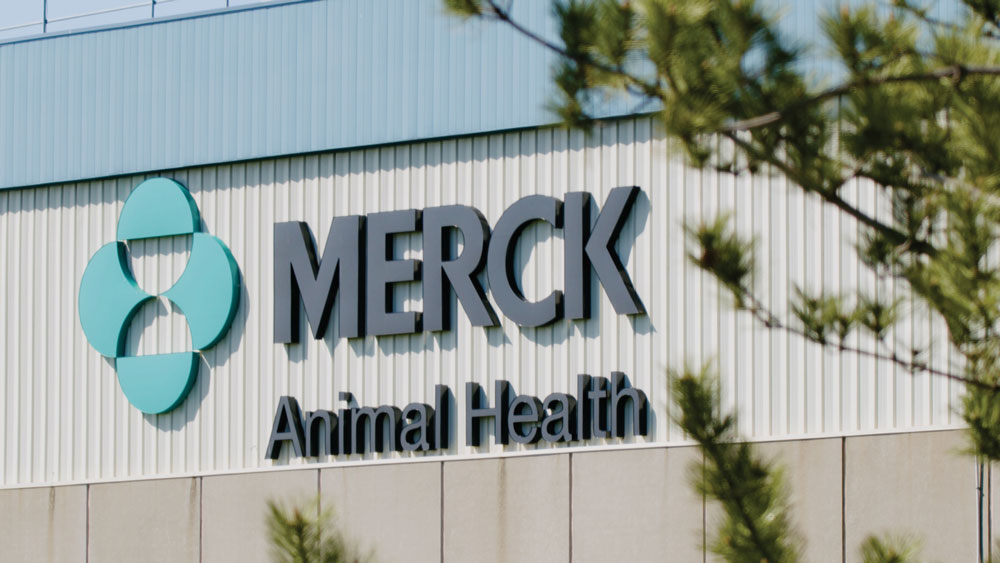
The Sunflower State’s largest capital investment project so far in 2025 was announced in May, when Merck Animal Health announced an $895 million expansion of its manufacturing facility in De Soto, $35 million of which is earmarked for investment in its R&D labs. Commercial manufacturing is expected to begin in 2030, creating more than 200 full-time roles.
The company says the 200,000-sq.-ft. manufacturing facility project will expand filling and freeze dryer capacity for large molecule vaccines and biologic products.
“This investment in our site is designed to increase Merck Animal Health’s ability to meet the growing customer demand for its portfolio of animal biologics products and ensure the company remains at the forefront of innovation in the animal health sector,” said Richard DeLuca, president, Merck Animal Health, in a statement. “This initiative also reflects our dedication to advancing animal health and our ongoing investment in the communities where we operate.”
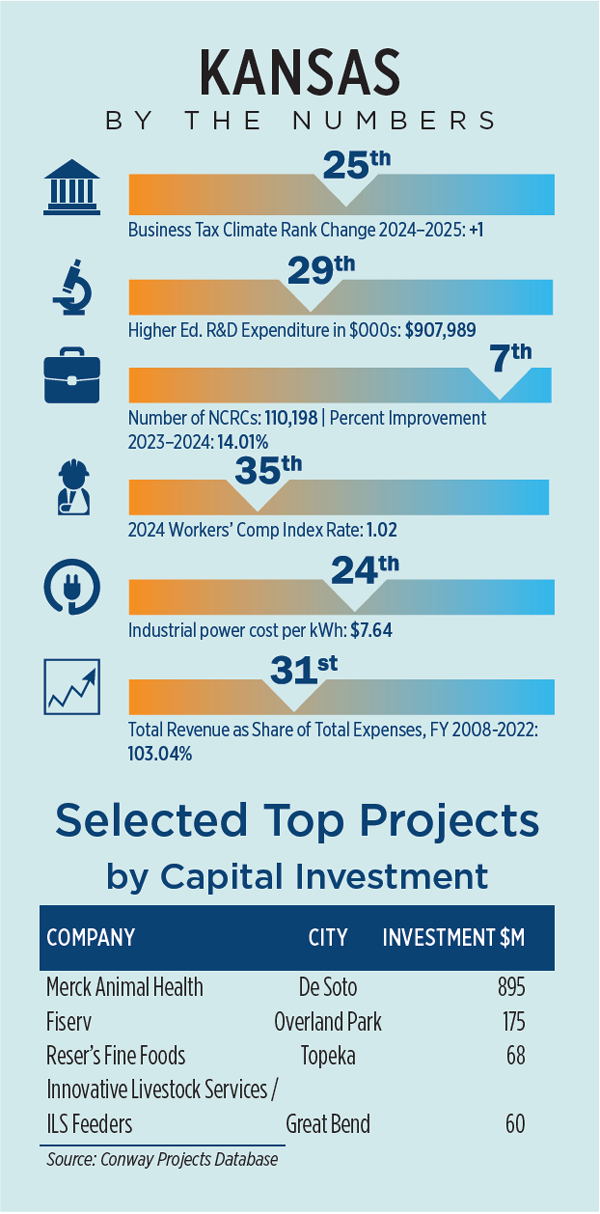
Kansas won its largest office recruitment project in state history in April, when payments and financial services technology provider Fiserv announced it will open a strategic fintech hub employing about 2,000 at the former Sprint campus, now called the Aspiria campus, in Overland Park.
The site includes 427,000 sq. ft. of space across two buildings. The company says it was selected for its central location in the country, proximity to Fiserv’s Midwest client base, affordable living and the opportunity to attract exceptional tech talent.
“The greater Kansas City Metro area offers a dynamic environment with a growing population of tech talent, making it the ideal location for Fiserv’s next strategic fintech hub,” said Frank Bisignano, chairman and CEO of Fiserv. “Working with local and state leaders, we are committed to driving growth and prosperity for both Fiserv and Kansas while contributing to the vibrancy of the Overland Park community.”
The company is investing $175 million in the project.
Thoughts on the WICHITA INDUSTRIAL MARKET
Wichita is starting to capture large industrial projects that used to go elsewhere, thanks to the city taking a more aggressive posture in recent years to win them.
“Prior to about 2017, we weren’t ready for a lot of that bigger business,” says Ted Branson, SIOR, senior vice president and Industrial Division director at Landmark Commercial Real Estate in Wichita. “The city was considering a spec building program to encourage 100,000-square-foot buildings with IRBs and tax abatements.”
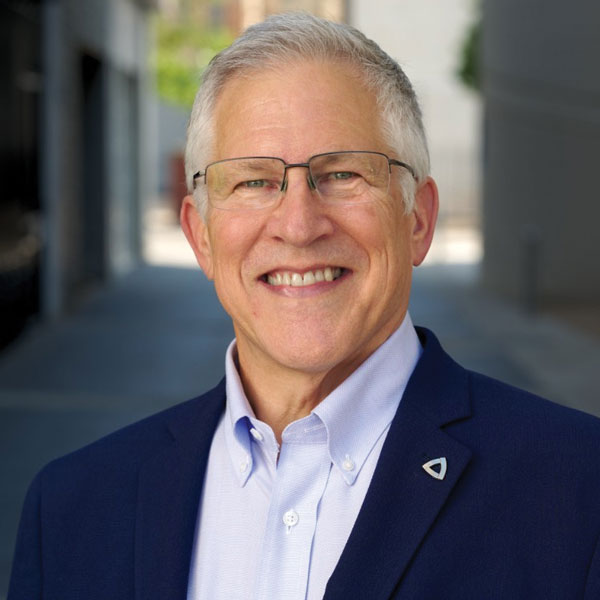
Ted Branson
Branson and others encouraged the city council to make 100-acre, ready-to-build sites available and get some buildings up, or big companies would not consider the Wichita area. “They passed a spec building program, and warehouses have gone up to meet that demand,” he relates. The program affords tax abatements for buildings 100,000 sq. ft. or larger with no signed tenant. It’s working.
“Since that program took effect, we probably have had 12 to 15 spec buildings of 100,000 square feet or more go up, and most of them are full,” notes Branson. Adjacent cities in the metro area have their own such programs, driving growth beyond Wichita city limits.
The Air Capital of the World’s many aerospace companies have kept Wichita’s industrial market active, even during economic downturns, says Branson, until 9/11. “Suddenly we had something that directly affected the market’s big industry — aircraft manufacturing,” he relates, “but we’ve recovered well from that.” In fact, Wichita’s aerospace industry is poised for significant growth as commercial, defense and space technology spending accelerates.