
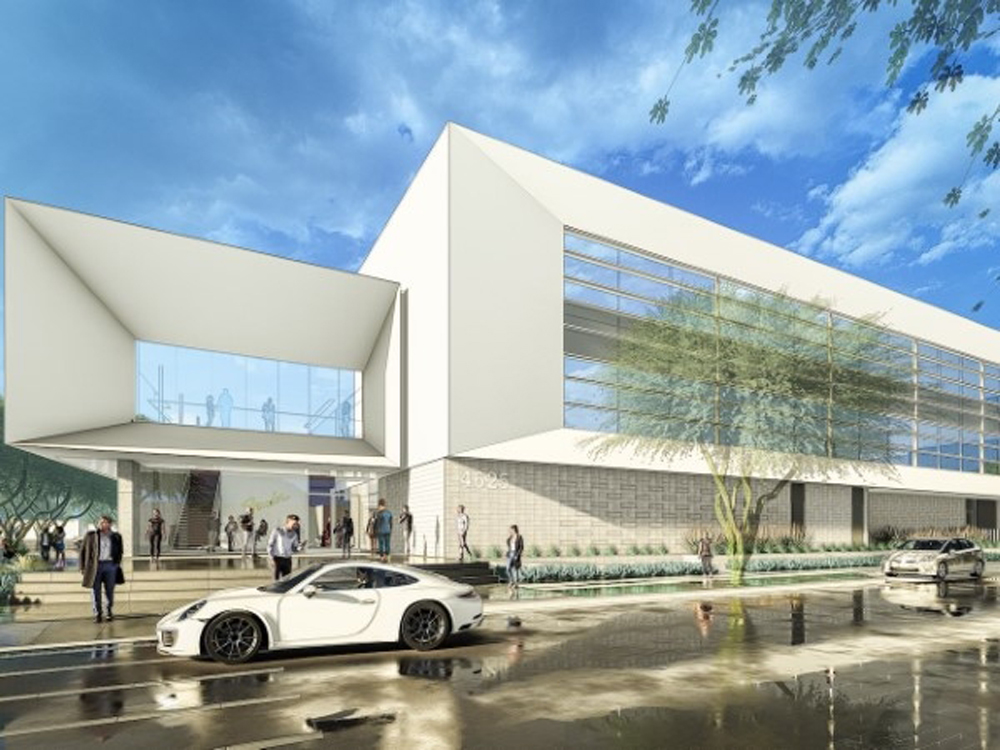
Shopping mall sites have the potential to transform communities. Here’s why.
By Sarah Raehl and Preston Tucker, Deloitte Consulting
There was a time when the local mall was more than just a shopping destination — it was a familiar fixture in everyday life. Teenagers flocked to food courts after school, families spent weekends browsing department stores, and holiday seasons brought crowds together under glittering lights. These sprawling complexes, once symbols of suburban prosperity and social connection, now stand at a crossroads as the digital age and changing consumer habits reshape the landscape.
Today, the story of the American mall is being rewritten. As e-commerce continues to thrive, these once-bustling spaces are finding new purpose. Across the country, we’ve seen many developers breathing new life into former retail centers, transforming these sites into commercial offices, multi-family residences, manufacturing facilities and vibrant, mixed-use, live-work-play districts.
The scale of mall closures underscores the sweeping transformation underway. According to Capital One Shopping, there are approximately 1,200 malls in the United States, with projections suggesting that number could drop to just 900 by 2028. Vacancy rates reflect this trend: At the end of 2024, malls had an 8.7% vacancy rate — more than double the national retail average — with Class C malls experiencing vacancy rates as high as 13.3%.
As developers look to reclaim the value of underperforming retail assets, these sites are increasingly being submitted as options to support broader-use redevelopment. Following the COVID-19 pandemic, as companies ramp up return-to-office initiatives, centrally located, amenity-rich sites are well suited to meet the evolving expectations of today’s workforce and enhance quality of life in an increasingly in-person work environment. Building on those strengths, former mall sites are emerging along two common redevelopment paths: office and mixed-use transformation, and modern manufacturing reuse — each unlocking new value in distinct ways.
Office and Mixed-Use Transformation
In addition to their scale and redevelopment potential, former mall sites offer a distinctive advantage for office users: the unique intersection of established infrastructure, onsite parking and amenities. Unlike greenfield sites, these locations are often situated near existing restaurants, retail, entertainment and other services that cater to both employees and visitors. This built-in amenity base — combined with strong infrastructure for transit inflow and outflow and ample parking — creates an environment that is both convenient and connected. Together, these factors can not only enhance the day-to-day experience for office tenants but also support talent attraction and retention, while the site’s legacy as a retail destination enables access to existing transit and utility infrastructure to help streamline the transition to a modern, mixed-use office campus.
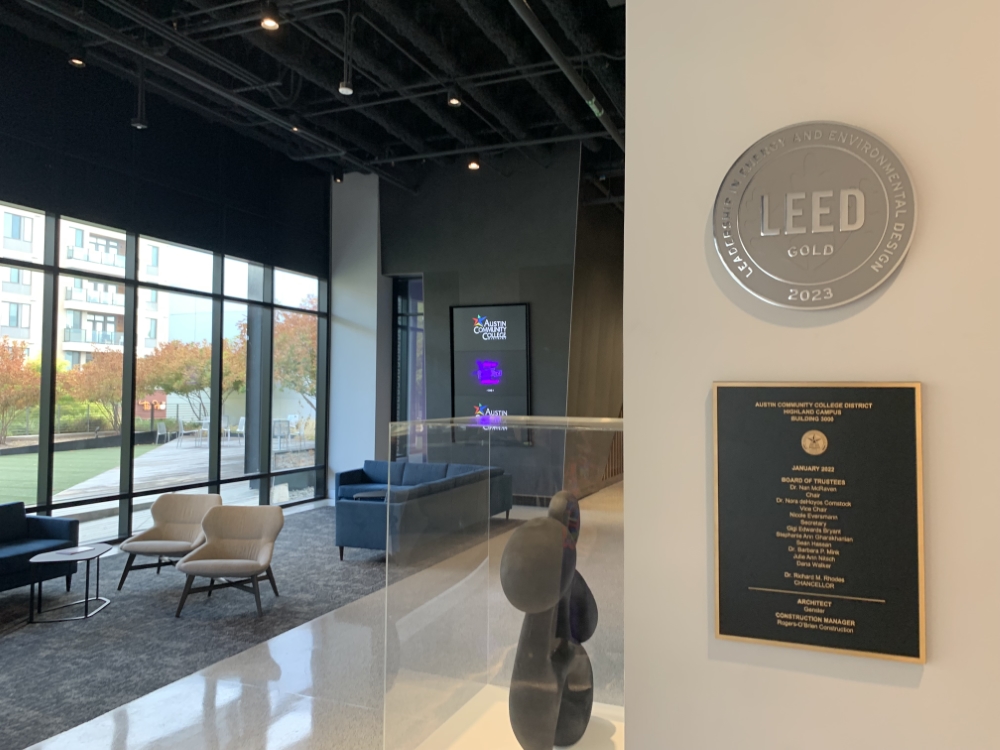
The reception area highlights the building quality of Austin Community College’s Highland Campus, which continues to transform the former Highland Mall in Austin, Texas.
Photo by Adam Bruns
In a recent office site selection project, Deloitte supported a client requiring up to 1 million usable square feet of existing space that could be restructured into Class A office space.
During the site search, a former regional shopping mall site in the Southwest region of the U.S. was submitted for consideration. It comprises approximately 100 acres and has been subdivided into parcels, targeting office projects and other supporting assets to create a vibrant mixed-use, live-work-play environment. A major developer has begun construction on a multi-billion-dollar
redevelopment of the site. The initial phase of the project will deliver retail, dining, and entertainment space anchored by a national grocery retailer, a 400-unit multifamily residential community and a large office headquarters for a company in the music industry. Each component is intended to be connected by centrally located parks, fostering a sense of community and accessibility.
As more organizations seek flexible, amenity-rich environments, the transformation of former malls into office and mixed-use campuses is poised to accelerate — unlocking new value for tenants, developers, and local communities alike, and helping to create the kind of 18-hour districts that blend work, living and leisure.
Manufacturing on Reimagined Grounds
In another example, a life sciences company conducted a site search for a prospective U.S.-based biopharmaceutical manufacturing facility. The client required a site of up to 100 acres, with established utility infrastructure and efficient access to support a workforce of up to 1,000 employees. As part of the evaluation process, a business park in the Northeast region — a 150-acre site that previously housed a regional shopping mall — was considered. Following the mall’s closure and subsequent demolition, the property was rezoned for heavy industrial use and is now positioned to accommodate over 1 million square feet of industrial development.
Former retail sites like this can be particularly attractive to manufacturing clients. These properties can often offer strong existing infrastructure — such as power, water and road networks — which can significantly reduce upfront development costs and timelines. Additionally, their strategic locations, originally chosen for retail accessibility, typically provide excellent highway access and proximity to population centers, supporting both logistics and workforce needs.
A key differentiator for this site was its existing heavy industrial zoning. Securing zoning approvals for new industrial development can be a lengthy and uncertain process, often taking months or even years and requiring extensive community engagement and regulatory review. By contrast, sites that have already been zoned for heavy industrial use allow manufacturers to accelerate project timelines, reduce permitting risk and focus resources on facility construction and operations rather than navigating complex entitlement processes. In an environment where speed-to-market and certainty are critical to securing investment and meeting production demand, this advantage
can be decisive. However, as communities become increasingly sensitive to industrial projects, proximity to population centers — while advantageous for workforce access — can also heighten potential “Not in My Backyard” (NIMBY)-related challenges that should be evaluated early in the planning process.
For organizations willing to look beyond traditional options, former retail sites can present a compelling path to accelerated development and long-term success if there is community alignment to support the redevelopment.
Assessing Alternative Options for Redevelopment Sites
When evaluating alternative options for redevelopment of similar properties, especially those that have been demolished and are ready for redevelopment, several factors should be considered to enable long-term success and community alignment.
Key Evaluation Criteria Include:
Local Workforce
- What are the prevailing skills and educational backgrounds?
- Is there a talent pool that supports advanced manufacturing, life sciences, or technology, or does the community lean toward service industries or residential needs?
Industry Demand
- Which existing or emerging industries are driving regional growth and/or have unmet site demand needs?
- Where is new investment likely to have the most impact?
Site Context
- Are surrounding areas primarily residential, commercial or industrial?
- Could certain uses (e.g., heavy industrial) conflict with neighborhood/community character?
Infrastructure Readiness
- How reliable is the utility capacity, transportation access and broadband connectivity relative to the desired future use?
- Does the site offer proximity to schools, parks or transit for residential or mixed-use projects?
In addition to the strategic considerations referenced above, the determination of alternative redevelopment options is also influenced by a range of stakeholders, each with distinct priorities —
from operational needs and workforce availability to economic development goals, market demand and quality-of-life considerations. Balancing community sentiment and local government objectives with market realities is essential. Ultimately, success depends on integrating stakeholder priorities with market and workforce realities to achieve redevelopment outcomes that are both sustainable and broadly supported.
As the American mall evolves from a symbol of retail dominance to a canvas for innovation, its story is far from over. Former mall properties, once defined by commerce and community, are now being reimagined as engines of economic growth, hubs for collaboration and anchors of revitalized neighborhoods.
The transformation of former malls demonstrates the power of adaptive reuse and strategic vision. By embracing new possibilities, communities and companies alike can unlock value in these familiar spaces — turning yesterday’s shopping destinations into tomorrow’s centers for work, living and connection. The next chapter for America’s malls is being written not in the shadow of decline, but in the potential of reinvention.
If you’re considering the future of a mall property or exploring new opportunities for adaptive reuse, now is the time to think creatively about what’s possible. With the right strategy, these sites can become vibrant centers for economic and community life once again.

Sarah Raehl is a Specialist Leader in Deloitte Consulting’s Location Strategy practice with over 20 years of experience advising companies on site selection, labor market analysis and incentive negotiations.

Preston Tucker is a Manager in Deloitte’s Location Strategy practice, advising clients on real estate and location decisions worldwide.
This document contains general information only and Deloitte is not, by means of this document, rendering accounting, business, financial, investment, legal, tax, or other professional advice or services. This document is not a substitute for such professional advice or services, nor should it be used as a basis for any decision or action that may affect your business. Before making any decision or taking any action that may affect your business, you should consult a qualified professional advisor.
Deloitte shall not be responsible for any loss sustained by any person who relies on this document. As used in this document, “Deloitte” means Deloitte Consulting LLP, a subsidiary of Deloitte LLP. Please see www.deloitte.com/us/about for a detailed description of our legal structure. Certain services may not be available to attest clients under the rules and regulations of public accounting.