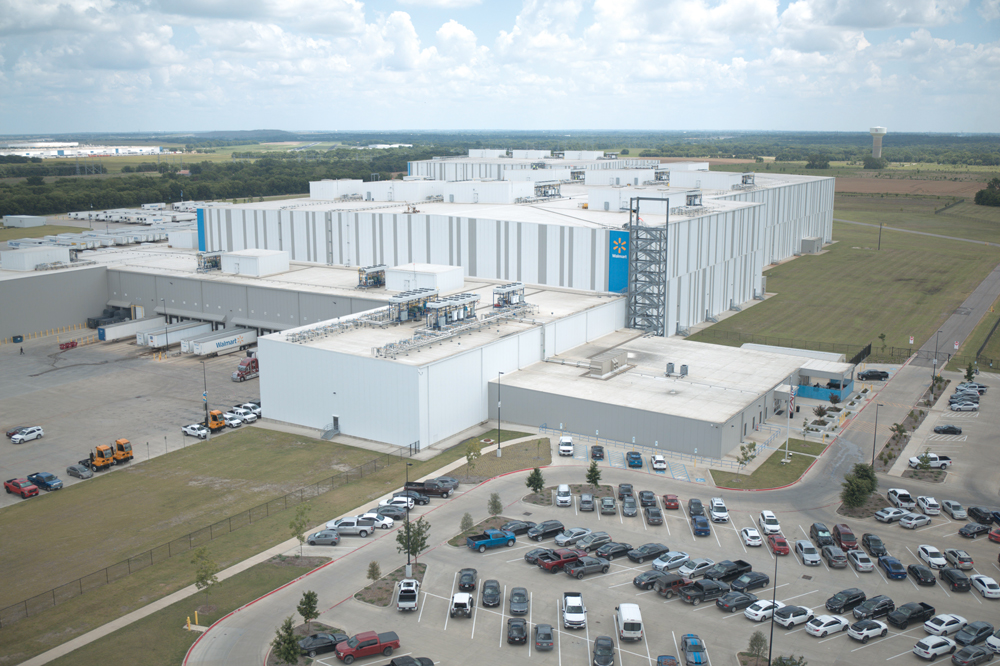
They also perform well in the cold chain niche, where things are changing rapidly.
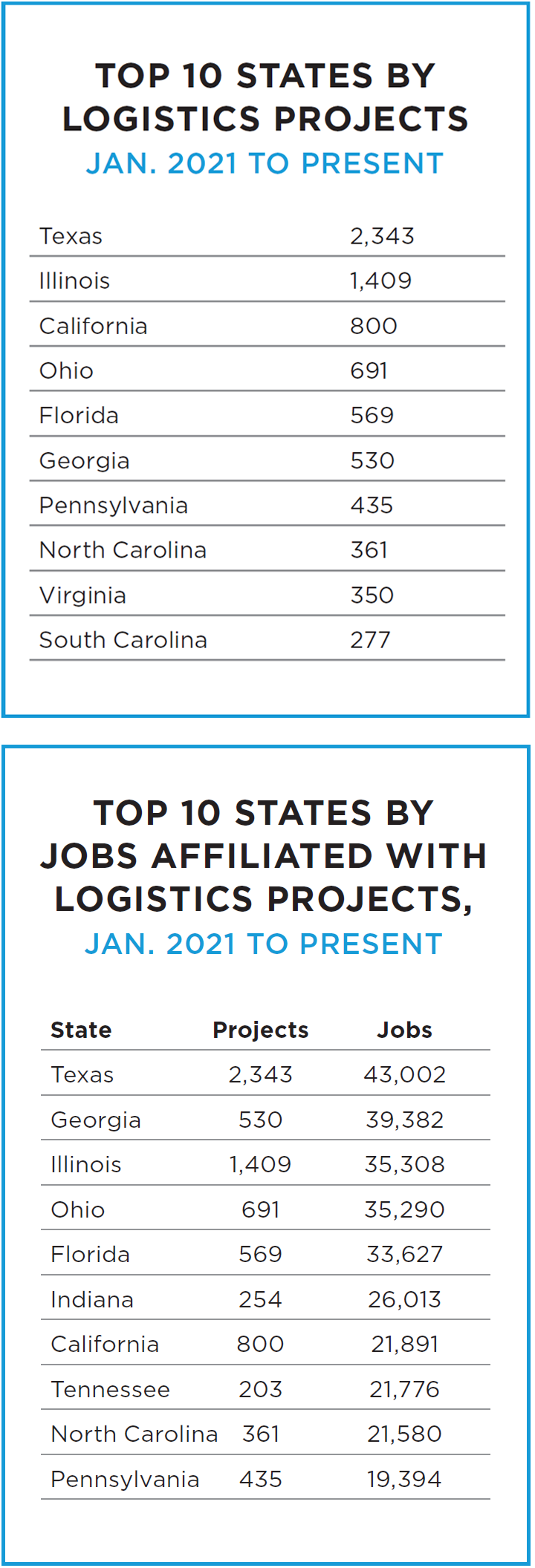
Of the more than 16,000 logistics facility investments Site Selection’s Conway Projects Database has tracked since January 2021, more than 12,000 are in the United States and more than 2,300 are in Texas, the No. 1 state over those five years with 2,343 projects — 934 more than No. 2 Illinois and more than 1,500 more than the nation’s produce capital, California.
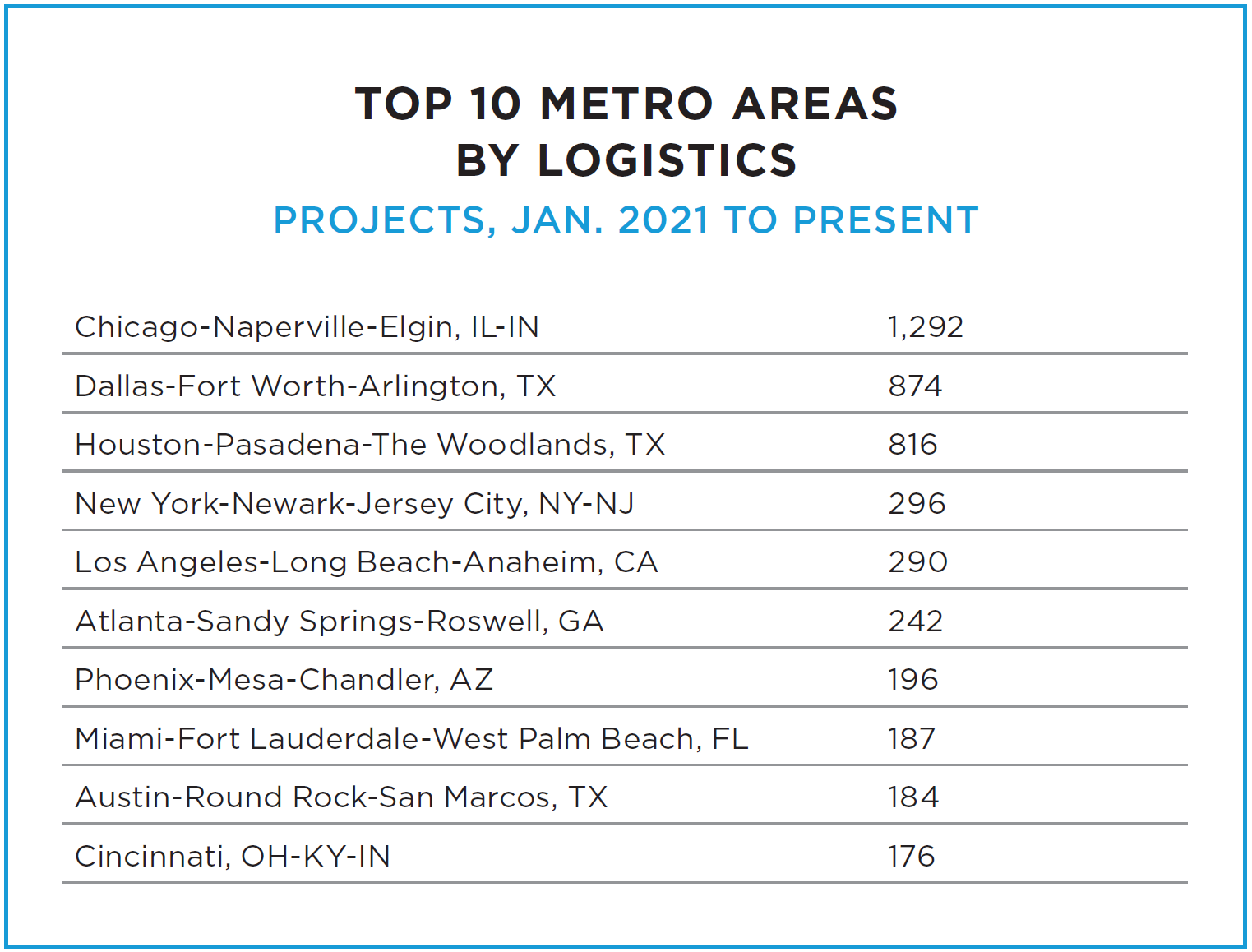
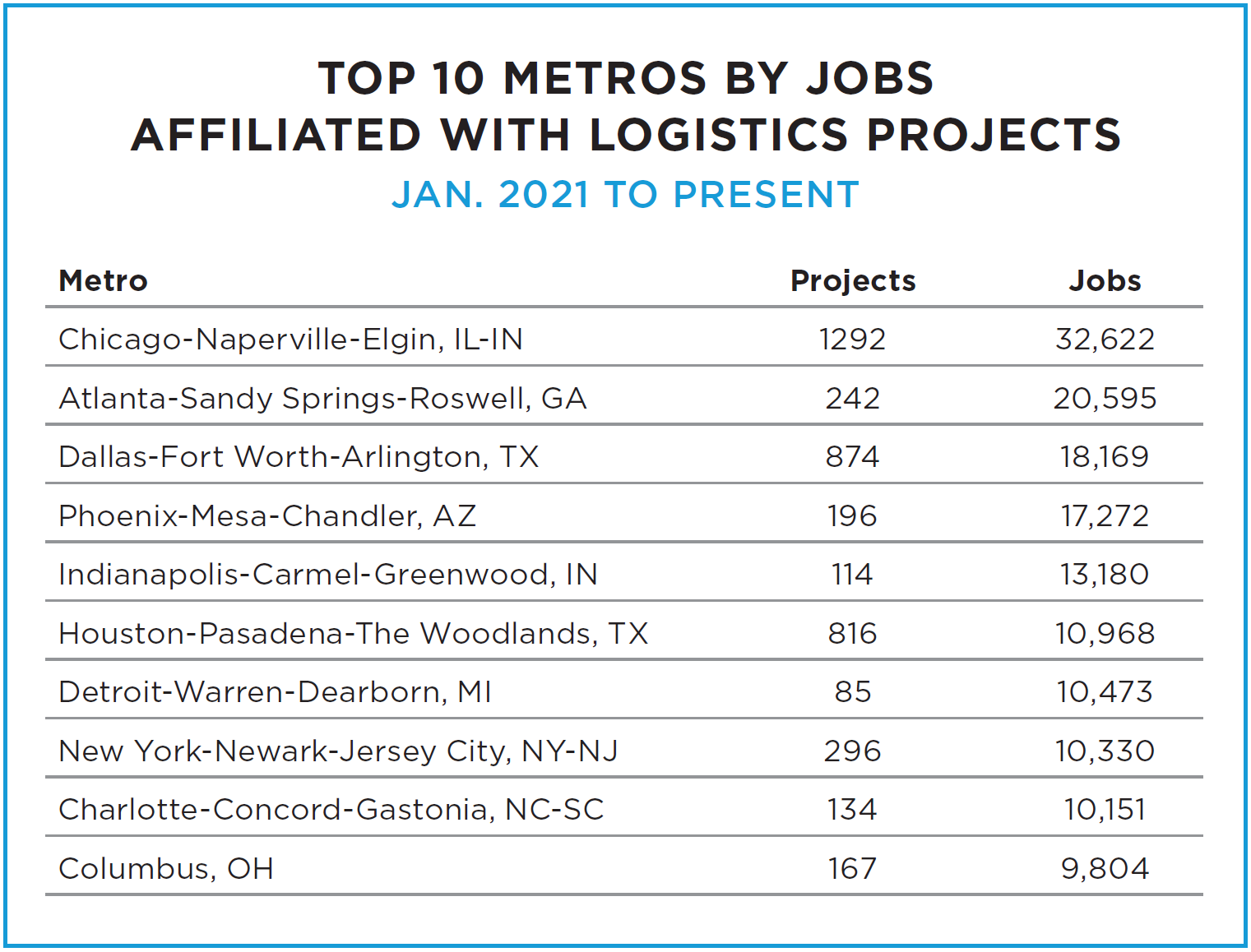
The charts displayed on the following pages show the top 10 states by number of projects, top 10 states by jobs affiliated with those logistics projects, the top 10 metro areas for projects (led by Chicagoland, Dallas-Fort Worth-Arlington and Houston) and the top 10 metros by number of jobs affiliated with logistics projects.
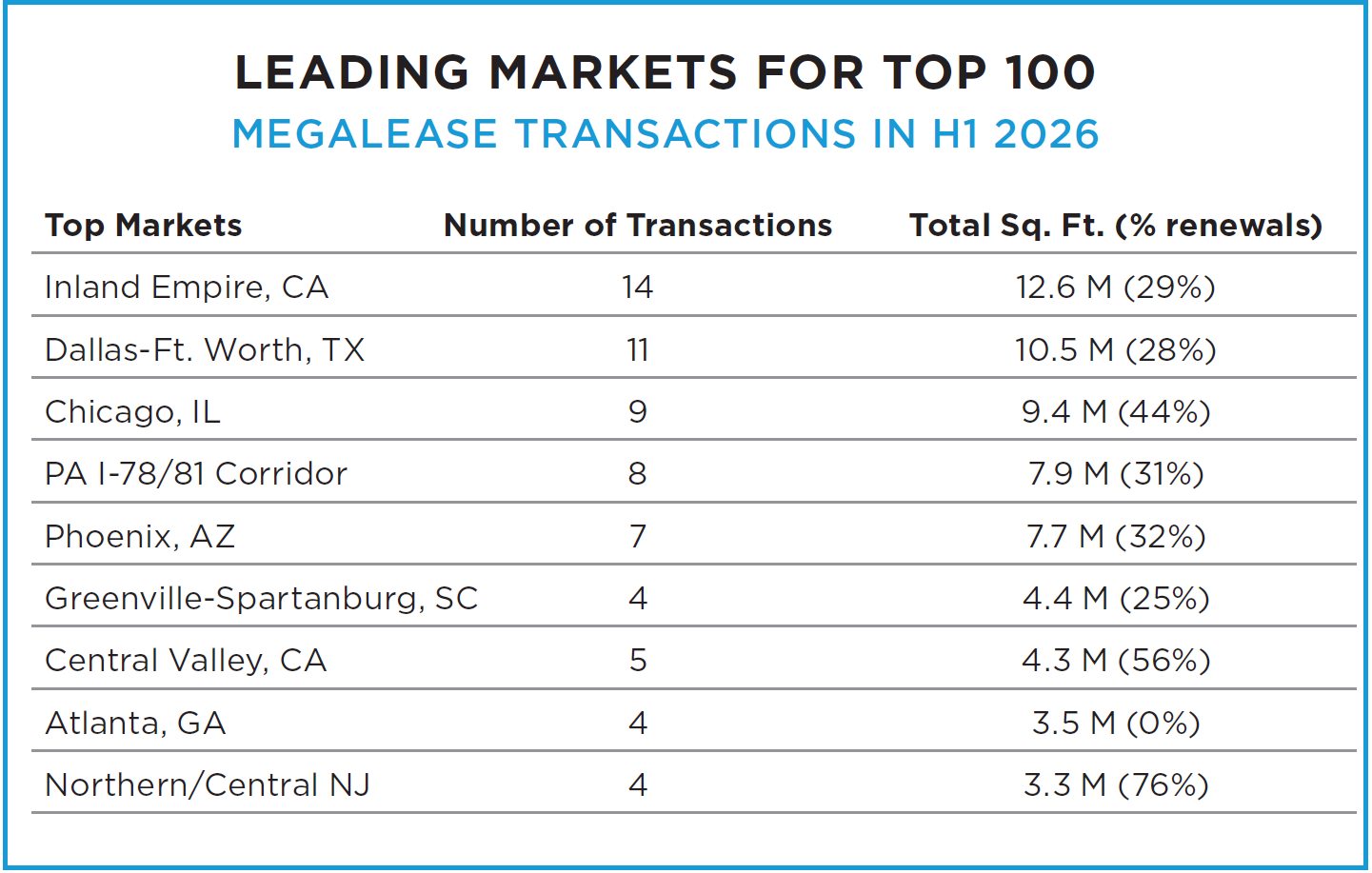
Notably, many of the regions known for large numbers of logistics facilities are also known for large facilities, period. In its analysis of industrial “megaleases” (at least 1 million sq. ft.) cemented during the first half of 2026, CBRE highlighted a number of regions that appear on Site Selection’s list of top logistics metros or are adjacent to those metros:
“The number of industrial leases of at least 1 million sq. ft. more than doubled to 38 in the first half of 2026 from 16 a year earlier, underscoring the momentum in the industrial leasing market this year,” CBRE stated in a release. “Occupiers are also making longer-term commitments,” said Chris Zubel, executive managing director, Americas Industrial & Logistics at CBRE, “which reflects increased confidence in their business prospects and logistics planning.”
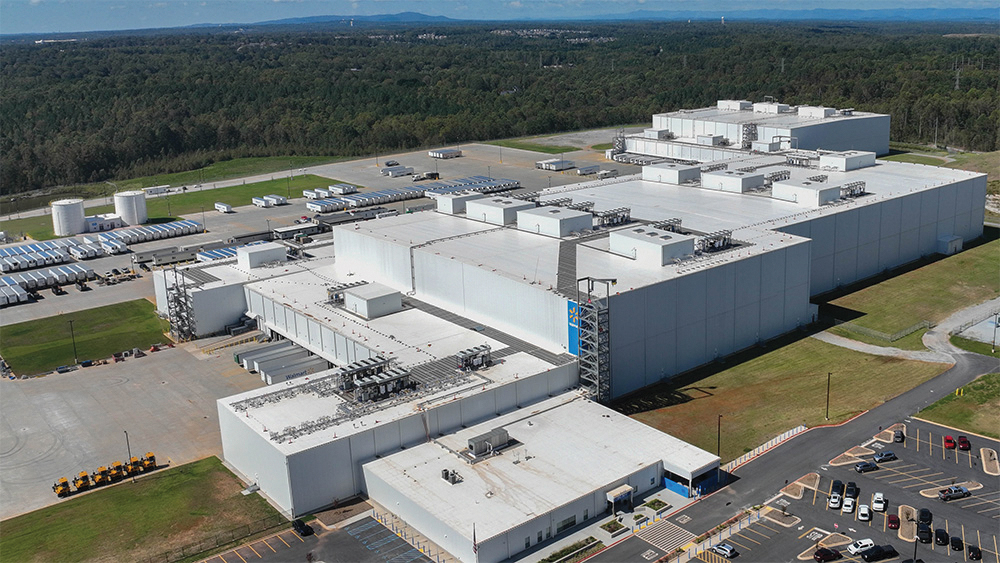
Photo courtesy of Walmart
Those 100 largest leases totaled 93.6 million sq. ft., up 26% from 74.4 million sq. ft. a year earlier. Their average lease size increased to 936,000 sq. ft. from 744,000 sq. ft., while their average lease term lengthened to 89 months from 84 months. While third-party logistics providers (3PLs) accounted for 30 of the largest leases, food & beverage recorded the largest increase from the year before as the sector’s leased square footage among its share of largest leases more than tripled to 16.6 million sq. ft.
Cold Chain Expands as Waistlines Contract
A good bit of that food & beverage space is devoted to keeping perishables unperished.
As author Nicola Twilley wrote in her award-winning 2024 book “Frostbite: How Refrigeration Changed Our Food, Our Planet, and Ourselves,” the refrigerated warehouse “is the missing middle in food’s journey from farm to table: a black box whose mysterious internal workings allow perishable food to conquer the constraints of both time and space.”
Newmark’s H1 2025 U.S. Cold Storage Market Overview report observed that the U.S. cold storage pipeline had dropped from record highs yet remained “historically elevated, totaling 7.4 million square feet, with approximately 10% of the current inventory built in the last five years.” By H2 2025, the development pipeline had “fallen from recent record highs to roughly 5.9 million square feet, its lowest point since 2020, signaling a gradual easing of supply pressure.” The year saw around 3.5 million sq. ft. of net absorption recorded in 2025. Meanwhile, average cold storage taking rents “have grown more than 100% since 2020, prompting some occupiers to evaluate building or owning facilities rather than leasing.”
The national cold storage market at the end of 2025 stood at 342 million sq. ft. or approximately 7.5 billion cubic feet, Newmark reported, noting that, while important, cold storage still only represents 1.9% of the overall industrial base.
Continuing cautious consumer spending in response to skyrocketing food prices was one factor. But there’s another type of “missing middle” making an impact worth mentioning: “Growing use of GLP-1 medications,” Newmark stated, “is reshaping food consumption patterns and expanding pharmaceutical cold-chain needs, creating new dynamics for cold storage demand.”
Not only do the pharmaceuticals need more chilled storage, but the use of GLP-1s drives consumption of a certain type of perishable. Said one unnamed food conglomerate quoted in the report, “Overall, in the data we’ve been analyzing around GLP-1 users, we’ve seen certainly advantages in the frozen space … more portion control in meals with protein, a lot more frozen appetizers, and certainly a lot more nutrient-dense snacks.”
All of which impacts how companies sort and move their cold chain density. As for cold chain density in major markets, Newmark listed these heavy hitters:
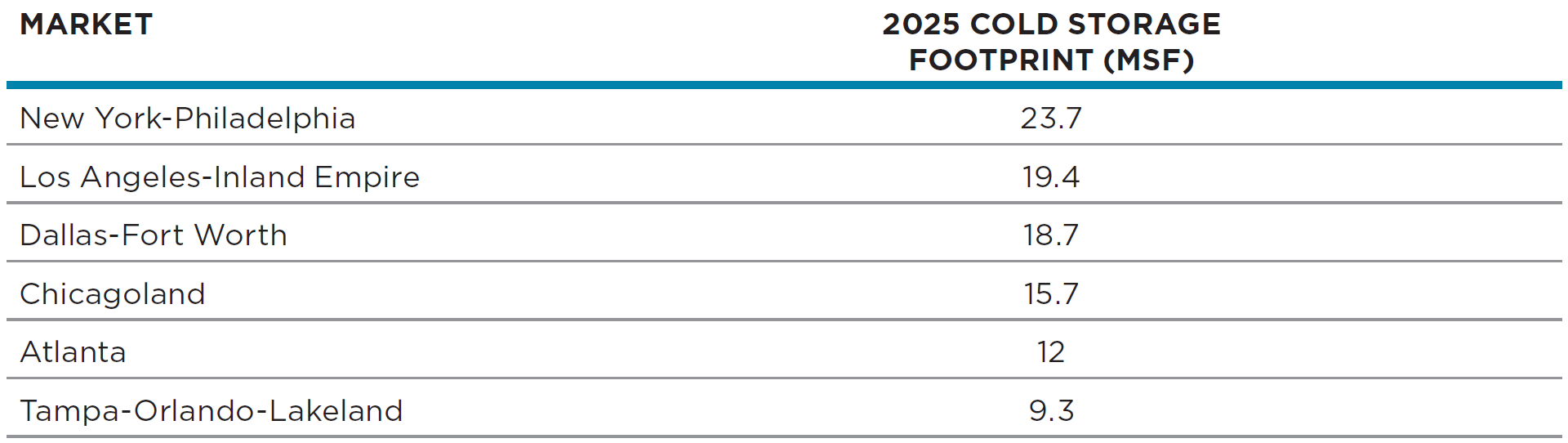
The Newmark report cites a Kaiser Family Foundation poll in November 2025 that found 18% of U.S. adults have used a GLP-1 and 12% were currently using one. Then it cites a report from the Kansas City Fed that cited research finding “if 10% of U.S. adults use GLP-1 drugs, total caloric demand could fall by up to 3% and annual food spending could decline by roughly $50 billion, while consumption shifts toward protein and fresh produce. For cold storage, it implies a reallocation of demand across food categories rather than a simple contraction, while pharmaceutical cold-chain needs remain supported by growing volumes of refrigerated GLP-1 injectables and other biologics.”
Based on projected population growth between 2024 and 2034, Newmark says the top three markets by the volume of estimated additional cold storage needed are Dallas-Fort Worth-Arlington, Texas (2.9 MSF); Houston-Pasadena-The Woodlands, Texas (1.3 MSF); and Atlanta-Sandy Springs-Roswell, Georgia (1 MSF).
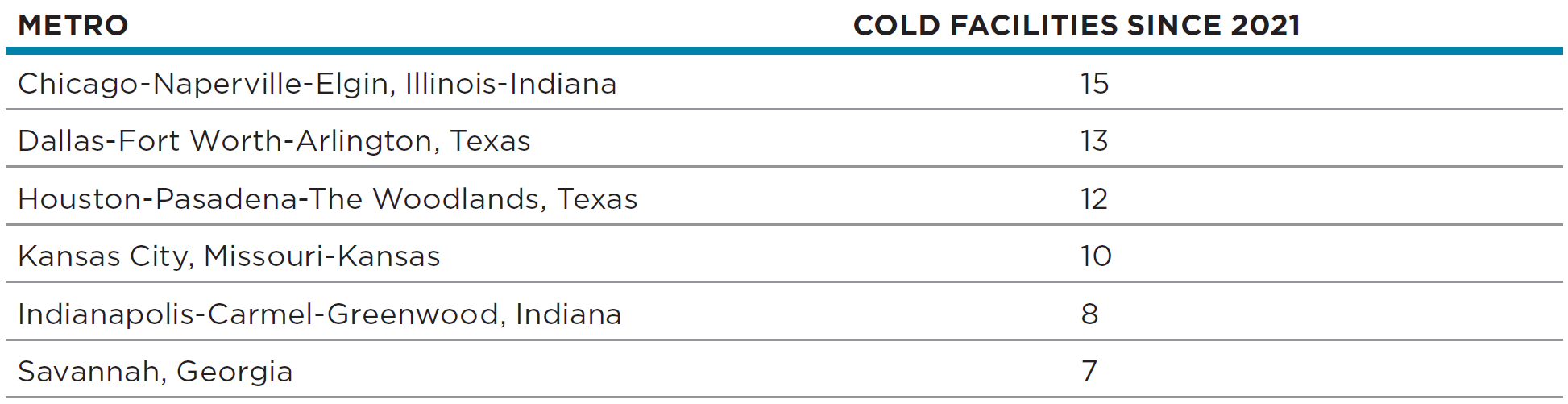
A dive into Site Selection’s Conway Projects Database produces a compelling companion to Newmark’s list. Here are the leading territories for new or expanded refrigerated warehouse projects that have involved at least $1 million invested, at least 20 new jobs created or at least 20,000 new sq. ft. of space over the past five years:
If Not for Efficiency’s Sake, Then Do It for the FDA
Among recent pharma-driven cold chain projects cited by Newmark is a 530,000-sq.-ft. facility in Harrison, Ohio (Greater Cincinnati), from Cencora; a 1-million-sq.-ft. InspiroGene network facility in Clermont, Kentucky (south of Louisville on I-65) from McKesson with 12,000 sq. ft. of cold chain space to support cell and gene therapies; another 1-million-sq.-ft. healthcare logistics/cold chain center from DHL Supply Chain (Healthcare) in Annville, Pennsylvania; and Frontier Scientific Solutions’ 500,000-sq.-ft. cGMP cold storage facility for injectable pharmaceuticals located at Wilmington International Airport in North Carolina.
Pharma company Cencora is also opening new specialty pharmaceutical facilities in Fontana, California, and Dothan, Alabama.
“Scheduled to open in 2026, the East Coast facility will operate as a Foreign Trade Zone, addressing the growing demand for tariff mitigation and expedited customs processing,” said DHL in January of its new facility in central Pennsylvania near I-76 and I-81. “As pharmaceutical companies navigate tariff changes, rising demand for temperature-controlled infrastructure and strict regulatory compliance, they need logistics partners with proven expertise,” said Mark Kunar, CEO of DHL Supply Chain North America.
At the same time, DHL is responding to changing cold-chain requirements by partnering with RL Cold, a real estate development firm specializing in cold storage warehousing and processing for the food and beverage sector. The partners announced in February they will develop more than 5 million sq. ft. of advanced temperature-controlled facilities across North America and will jointly pursue multi-temperature distribution centers, though any clues about where were missing.
“In top U.S. markets, the average age of cold-storage warehouses is about 31 years, making the need for modern, automation-ready facilities in the right locations a priority for food & beverage brands,” said Dennis Lutwen, president, Consumer at DHL Supply Chain North America.
Two months later, Lutwen and the DHL team applied a different promotional tactic for the RL Cold partnership: government regulation.
“As the U.S. Food & Drug Administration (FDA) moves toward enforcement of the Food Traceability Final Rule (FSMA Section 204(d)) beginning July 20, 2028,” the company announced in April, “DHL Supply Chain is urging food and beverage producers to use the extended runway to strengthen traceability capabilities across their cold-chain operations. With more than 78% of U.S. cold storage warehouses built before 2000, and approximately 10% of current inventory built in the last five years, many producers are dependent on legacy facilities that were not designed for today’s data traceability and high-volume operating demands.” The new FDA rule requires entities to maintain records containing Key Data Elements (KDEs), such as lot codes, product descriptions, quantities, locations, and timestamps, associated with Critical Tracking Events (CTEs), including receiving, shipping, and transformation.
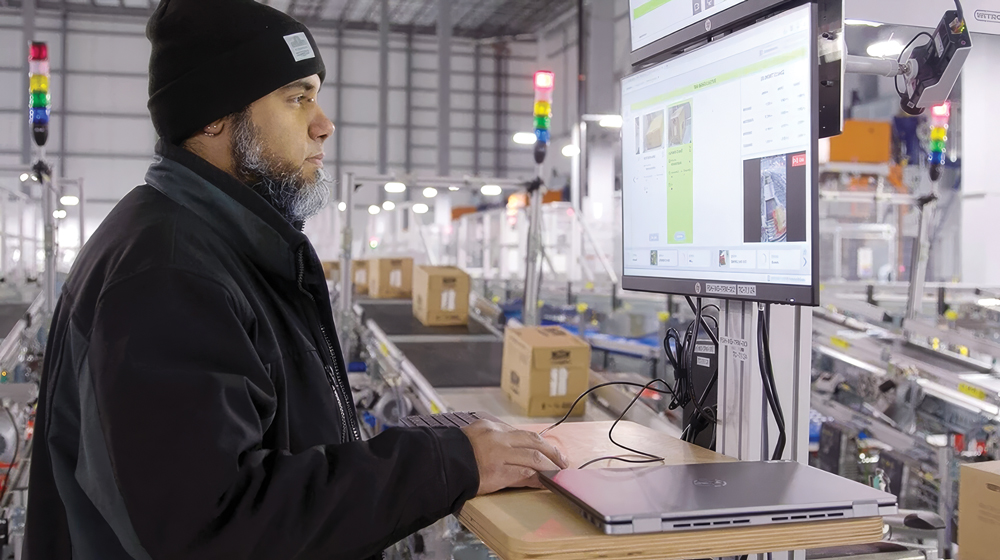
An automation data specialist works in a Walmart facility in Wellford, South Carolina.
Photo courtesy of Walmart
One of the most active companies investing in the cold chain space is Walmart, whose grocery and pharmaceutical operations have grown substantially. One clue to the demand is evident in the company’s career section, which is highlighting the need for real estate facility services general maintenance and HVAC/refrigeration technicians, who can make between $26 and $76 per hour before bonus awards.
“Skilled trade professionals keep America running, and demand for these careers continues to grow as industries face a shortage of qualified workers,” Walmart says. “Walmart and Sam’s Club Real Estate Maintenance Technicians apply specialized skills across critical trades, including HVAC and refrigeration, electrical systems, automation and controls and facility maintenance that help keep our facilities operating safely and efficiently … Through Walmart’s Associate to Technician program, associates can transition into skilled trades careers with no previous technical experience required. More than 600 associates have already completed the program, and Walmart seeks to enhance the skills of 3,000 technician roles by 2030. As facilities become more advanced, demand for skilled technicians in these trades will grow, making this a future-ready career.”