Two expansions offer a glimpse of Kentucky’s goods movement versatility.
Even with trucks, freight trains or cargo planes, Kentucky’s river cities know how to move things. Just ask leaders at an international logistics giant and one of the most respected transport companies on America’s waterways.
In May 2025, Arvato, the global logistics arm of Germany’s Bertelsmann AG, announced it had acquired land to add a new facility to its arsenal of five facilities already employing 1,000 people in Louisville and Bullitt County. The new, 400,000-square-foot smart logistics hub, outfitted with the latest automation and robotics, will create 300 jobs in the Louisville area, which happens to be the same number of jobs Arvato had in total when it launched operations in the region 20 years ago.
“The site, strategically located near Louisville International Airport (SDF), will serve both B2B and B2C clients,” the company says, “leveraging Louisville’s excellent connectivity and optimized cut-off times.” The location also offers the opportunity to acquire adjacent buildings, enabling a future expansion of the campus to over 1 million square feet.
Around 20,000 employees work at around 100 Arvato locations worldwide, including what will now be 21 sites in the United States. While Easton, Pennsylvania, and Miami also boast more than one facility, Louisville, boosted by a nearly 970,000-square-foot facility that opened with more than 300 new jobs in 2024 and this new facility scheduled to open in Q1 2026, will lead the pack by a long shot with seven — one-third of Arvato’s U.S. portfolio. In an interview, Andreas Podwojewski, managing director of Arvato North America and Brazil, spoke to why.
“Over the past two decades, Louisville has become a strategic cornerstone of our U.S. network — a place where we can scale, innovate and reliably deliver for our clients over the long term,” he says. “The region offers an exceptional combination of location, connectivity and a workforce that really understands logistics. Proximity to the UPS Worldport and other key freight forwarding infrastructure enables time-critical, high-volume distribution across the U.S. and globally, which directly supports our promise of speed, precision and reliability for clients in demanding industries.”
Equally important, Podwojewski says, is the performance culture of the Louisville team.
“Our operations, engineering and leadership teams have repeatedly demonstrated their ability to launch complex programs, meet demanding SLAs [service level agreements] and deliver operational excellence at scale. That proven execution capability is a key reason Louisville continues to earn our confidence for long-term investment.”
As recent pilot testing of humanoid robots at the Louisville sites demonstrated, Arvato approaches workforce development with the belief that people and technology must evolve together.
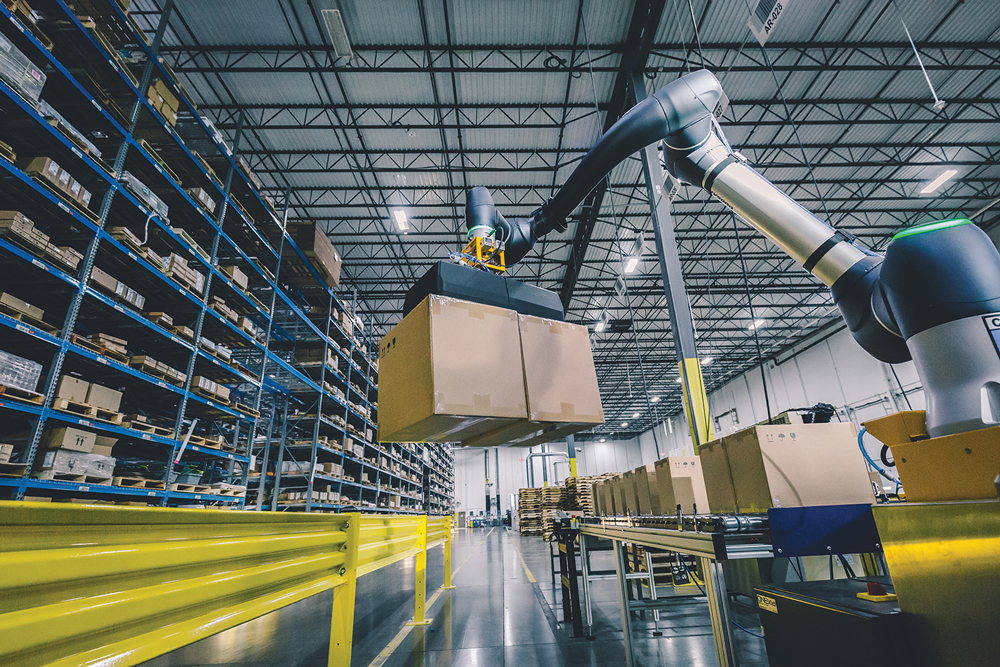
“As automation and robotics become a bigger part of our operations, we invest heavily in hands-on training and upskilling so employees are empowered to work confidently with advanced technologies,” Podwojewski says. “For instance, we implemented Boston Dynamics’ Stretch robots in Louisville to automate looseload container unloading, improving safety and throughput. We also work closely with local partners — including community organizations, chamber of commerce and universities — to build a sustainable talent pipeline: supporting programs that introduce students and jobseekers to modern supply-chain careers, creating internships and collaborating on workforce hiring initiatives as we expand our operations.”
Podwojewski says the Louisville region continues to be well positioned to support the company core verticals of tech, consumer products and health care.
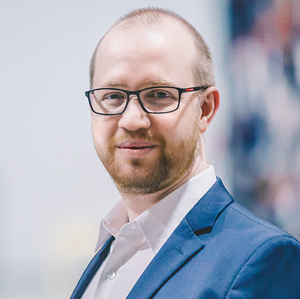
“Louisville has become a strategic cornerstone of our U.S. network … The region offers an exceptional combination of location, connectivity and a workforce that really understands logistics.”
— Andreas Podwojewski, Managing Director, Arvato North America and Brazil
“Clients rely on speed, compliance and absolute reliability — capabilities that are reinforced by the region’s connectivity and infrastructure,” he says. “The scale and performance of the available carrier infrastructure, handling millions of packages daily and connecting hundreds of flights, help us maintain consistent service levels even in peak or volatile periods, in combination with still relatively affordable logistics space in comparison to other logistics hotspots. Overall, we see a very business-friendly environment for 3PLs like Arvato in Louisville.”
Meanwhile, adjacent verticals beckon. The 2025 acquisition of Carbel gave Arvato capabilities in fashion and retail logistics.
“Furthermore, the acquisition of ATC Computer Transport and Logistics has enabled us to significantly grow in the area of white-glove transportation and technical services in the data-center space,” Podwojewski says. “These are natural complements to our Louisville network and offer our clients broader end-to-end solutions in the U.S.”
Asked to expound on the area’s connectivity assets, he says the WorldPort is the clearest example.
“With over 300 flights a day and the ability to process around 2 million packages daily, it creates an incredibly dependable backbone for time-critical logistics. Additionally, Kentucky’s multi-year transportation plans continue to strengthen key interstate corridors. Those improvements help maintain predictable transit times and support the reliability our clients count on.”
The region’s logistics advantages extend well beyond infrastructure, however.
“Louisville benefits from a broad network of logistics service providers and partners that complement the advantages of UPS WorldPort for both domestic and international distribution,” Podwojewski says. “Supported by strategic highway corridors, along with active rail and riverport infrastructure, these strengthen ground transportation reliability and create smoother connections across the Midwest and East Coast. On the technology side, the region has developed a strong network of partners in automation, robotics and systems integration. These relationships enable us to combine advanced innovation like automated sorting, robotic unloading and smart packaging with transportation and last-mile partners. All of this creates a collaborative environment where we can build resilient, end-to-end supply chains, stay agile during disruptions, and constantly operate on a high-quality level as we continue growing our footprint in Kentucky and across the U.S.”
Paducah: Logistics Locus, People Focus
A three-and-a-half-hour drive west of Louisville (a bit longer by boat on the Ohio River), you’ll find in downtown Paducah Doe’s Eat Place, a steak and catfish restaurant that’s a favorite stop for members of America’s Great Loop Cruisers’ Association, an organization of around 6,000 devoted to assisting boaters undertaking navigation of a 6,000-mile nautical route encompassing the Atlantic Intracoastal Waterway, the New York State Canals, the Canadian Canals, the Great Lakes, the inland rivers and the Gulf of Mexico.
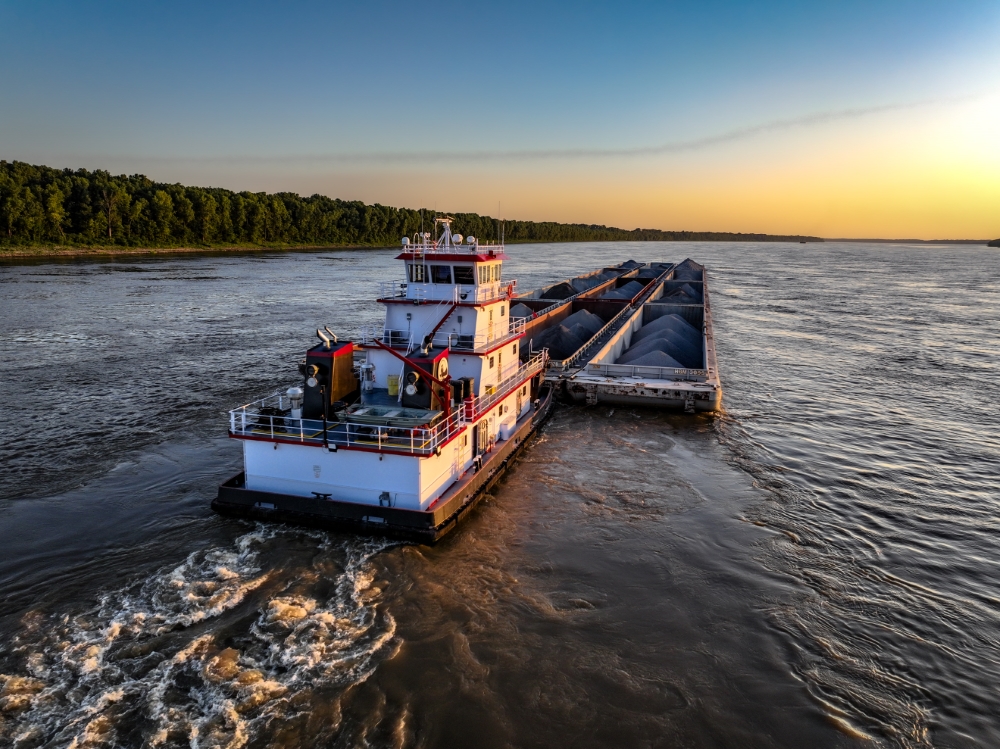
You’ll also find the Paducah headquarters of a company that knows much of that Great Loop better than most. Marquette Transportation Company, the leading independent provider of barge towing services on, as it happens, 6,000 miles of America’s inland waterways. The company’s assets include 130 tow-and-tugboats and some 300 open-top barges. Its work last year totaled 29 million barge miles and 2 million vessel miles.
The numbers don’t stop there: Last year also saw Marquette announce an investment of more than $5 million that will add 55 jobs to a shore-based payroll of around 150 people in Paducah. The company employs around 250 shore-based personnel nationally, but Marquette President and CEO Damon Judd explains why that figure can be misleading.
“Most of our workforce is really out on the water every day,” he says. “If you look companywide, we’ve got well over 1,500 mariners.”
Located about 50 miles upstream from where the Ohio and Mississippi rivers meet, and 20 miles downstream from the confluence of the Cumberland and Ohio, Paducah is what Judd calls the epicenter of the inland waterways. It’s been the right place for Marquette ever since John Eckstein, son of company founder Ray, moved the company’s headquarters from his father’s hometown of Cassville, Wisconsin, on the bluffs of the Upper Mississippi River in 1991.
“You have in a very short range the confluence of the Cumberland, the Tennessee, the Ohio and then the Ohio dumping into the lower Mississippi,” Judd says. “So from a boat operations standpoint, it really is a natural hub in our industry because you can access equipment operating on so many different waterways in a much easier fashion.”
Confluence breeds connectivity: Some 45 miles down the Ohio sits Cairo, Illinois, the legendary meeting point of the Ohio and Mississippi Rivers where Judd says “in one day we can go catch very easily sometimes 10 Marquette boats” for crew changes or simply to meet up.
Judd says the new facility is overdue: “We’re at that stage where we’re busting at the seams in the building that we’re in, we’ve converted all the conference rooms to either working space or offices and you see people in the parking lot on phone calls,” he says. “So we needed to catch up a little bit with growth and also position ourselves for future growth.”
Paducah’s riverborne commerce ecosystem starts with people who have understood the river’s power for generations.
“Just from a cultural standpoint, I always tell people it’s incredible to work in a town that really understands and appreciates the importance of the industry and what goes on on the other side of the floodwall,” says Judd, noting the city’s pleasant cultural blend of the Midwest and the South.
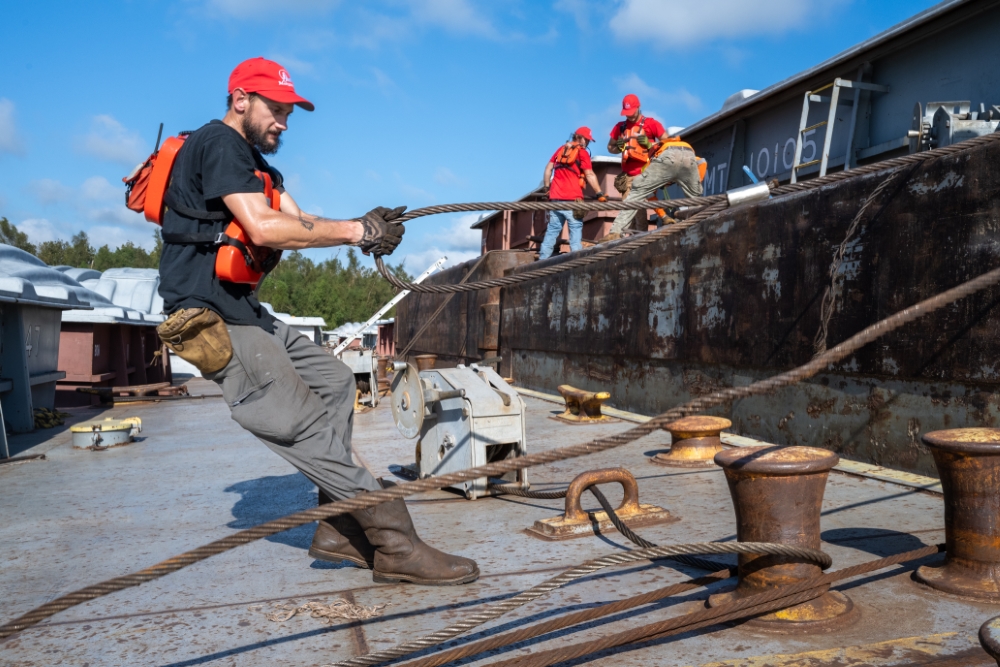
Marquette Transportation Company President and CEO Damon Judd says the company’s continued growth in Paducah cements cultural ties with the community and reinforces a sense of family between the company’s 1,500 mariners and shore-based personnel.
Photos by David Rider courtesy of Marquette Transportation Company
Assets include a world-class training facility at Seamen’s Church Institute, the New York-based service organization for mariners whose Paducah location trains over 800 mariners each year on four full-mission bridge Kongsberg simulators. But there’s always room for more learning: In addition to new office and warehouse space, the Marquette expansion will include a new training center that to Judd means even more fruitful cultural and professional interaction between employee cohorts who work both sides of that floodwall.
“Mariners within our river division come through Paducah for crew changes,” he explains. “Even though they’re not sitting there in an office in Paducah every day, they’re coming through the office and making crew changes out to vessels that operate across the system … You have to really focus on culture in a business where you have a workforce that from a physical standpoint is more distributed. And so as we’ve grown, we’ve really focused on that balance. You have to have process to scale, but we’ve got to keep a family feel. A lot of people will look at the business and see it as an equipment business because the boats and barges are big. They’re large investments, but it’s very much a people business.”
Three Megaprojects On the Way
Judd and his colleagues aren’t the only ones who understand the attractions of Paduch and the competitive advantages of infrastructure. Kentucky Governor Andy Beshear does too.
“Through our Interstate system, you can reach 60% of the country’s population in a one-day drive,” he tells me. “You have DHL’s North American headquarters in Northern Kentucky. You’ve got UPS Worldport in Louisville. You’ve got multiple large rail operators. You’ve got the river for barge. And so, no matter what you make, if you want to sell your product in the United States, international CEOs see Kentucky as an ideal place to do it.
Consequently, infrastructure investment is essential.
“We recognize the value of our roads and bridges,” Gov. Beshear says, noting the importance of a dependable and safe commute to both making a living and supporting a family. “We’ve invested over a billion dollars on our roads and bridges in each of the last five-plus years.”
The funds are not only maintaining superior roadways but supporting three simultaneous megaprojects.
Gov. Beshear expects the four-laning of the Mountain Parkway to be complete right about the time his tenure ends as governor.
“That will create an Interstate-like artery into the heart of Appalachia, which will address what a number of potential employers have said: ‘We’ve got to have a four-lane highway to locate in a specific place.’ Well, for the first time, some of these communities will have that ability and we’re already seeing companies expressing interest.”
The two other projects include the Brent Spence Companion Bridge connecting Northern Kentucky and Cincinnati over the Ohio River, “one of the most important crossings in the United States,” Gov. Beshear says. And the new I-69 bridge connecting Henderson, Kentucky, and southern Indiana figures to further open up economic development opportunities in a region that’s already emerging.
“That’s one of the hottest areas for economic development in the state in the Hopkinsville area,” Gov. Beshear says, “but it’s also, I think, going to be one of the hottest areas in the country once that bridge is built.”