
Major expansions by VulcanForms and Boston Dynamics are turning research-driven technologies into industrial investment and thousands of new jobs.
by SAVANNAH YAWN
Abreakthrough technology may begin in a university laboratory, but its greatest economic impact comes later, when it moves into production. Two Massachusetts companies are now making that leap through projects that will bring a combined $1.4 billion in investment and more than 2,300 new jobs to the Commonwealth.
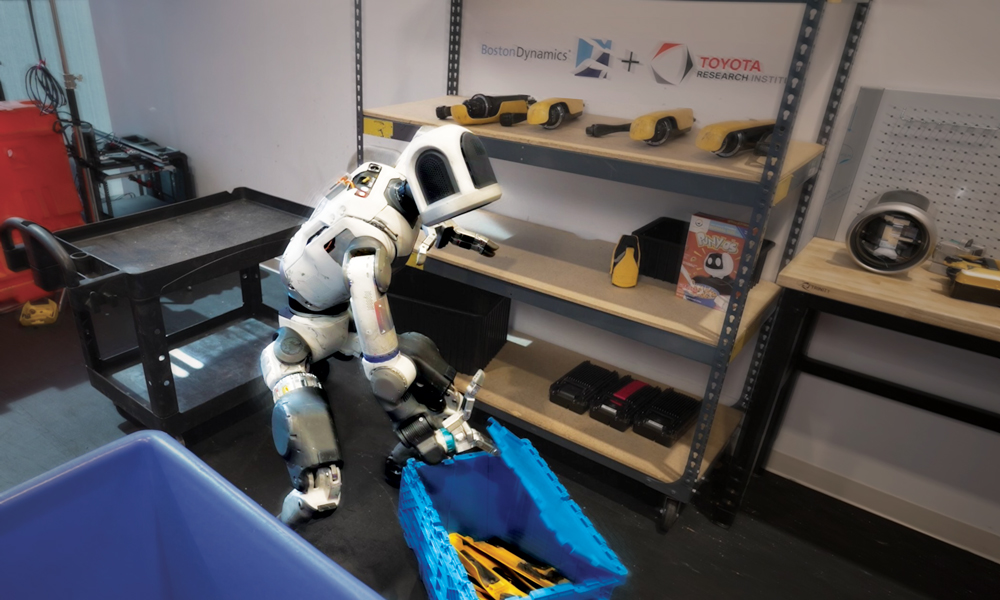
VulcanForms plans to invest $1.3 billion in an advanced manufacturing operation in Devens, where the company expects to build up to 1 million sq. ft. of vertically integrated additive manufacturing capacity and create 1,063 jobs. In Waltham, Boston Dynamics will invest $100 million to transform a 323,000-sq.-ft. property into an advanced robotics and artificial intelligence center. The project will expand the company’s manufacturing capabilities while creating 1,250 jobs by 2033. The two companies share more than the scale of their expansions. Both emerged from the Massachusetts Institute of Technology. VulcanForms was founded by MIT professor John Hart and former graduate student Martin Feldmann after their work to bring metal additive manufacturing to industrial scale. Boston Dynamics began as a spinout from MIT’s Leg Lab, where founder Marc Raibert conducted research on dynamic robots.
Massachusetts Economic Development Secretary Eric Paley says Massachusetts has always been a place where innovative technologies are created, but the state’s competitive advantage is its ability to retain and grow those companies.
“VulcanForms and Boston Dynamics are great examples of companies that grew out of our world-class research ecosystem and are now choosing to manufacture at scale in Massachusetts,” says Paley. “That combination of talent, research institutions, capital and a deep network of innovative companies gives us an extraordinary foundation to lead the next generation of advanced manufacturing.”
Scaling Digital Manufacturing
VulcanForms’ expansion reflects the company’s broader effort to scale an integrated digital metal manufacturing platform that combines advanced additive manufacturing, precision machining, automation, inspection and proprietary AI-enabled software.
The company’s model brings production processes that might otherwise be divided among multiple vendors and locations into a single manufacturing workflow. VulcanForms says the approach can reduce complexity, waste and production time while strengthening domestic supply chains for high-performance metal products.
Building on that physical expansion, the company also announced a $220 million financing round in January 2026 to expand its manufacturing facilities, advance its technology roadmap and support future capacity growth. VulcanForms said it has moved into scaled production and secured multibillion-dollar commercial programs across medical devices, aerospace, defense, consumer products and industrial markets.
“American manufacturers need a domestic alternative that can compete with global production at scale with superior speed and precision,” said VulcanForms CEO Kevin Kassekert. “This financing enables us to meet surging demand and expand our role as a critical partner to companies rebuilding resilient domestic supply chains.”
Massachusetts is supporting that next phase of growth with $21.26 million in Economic Development Incentive Program (EDIP) tax credits approved for the Devens expansion.
Building the Robotics Workforce
Boston Dynamics is expanding through the redevelopment of an existing property near its current headquarters in Waltham. The new center will consolidate operations currently located in three nearby buildings and bring manufacturing, AI, workforce training and R&D together under one roof. It will support the company’s Atlas, Spot and Stretch robotic platforms, and Boston Dynamics expects to begin moving into the property in phases in mid-2027.
The Healey-Driscoll Administration awarded the project $25 million through EDIP to support renovation and buildout activities tied to manufacturing, workforce training and operations.
“Boston Dynamics has called Waltham home for many years, and this expansion is a reflection of how fast our industry is moving. The investment gives our team the space and resources we need to launch our third robot platform this decade. We will continue recruiting and hiring excellent talent to lead this emerging industry and meaningfully contribute to the greater Boston business community,” said Amanda McMaster, interim CEO of Boston Dynamics.
An Unusually Deep Research Base
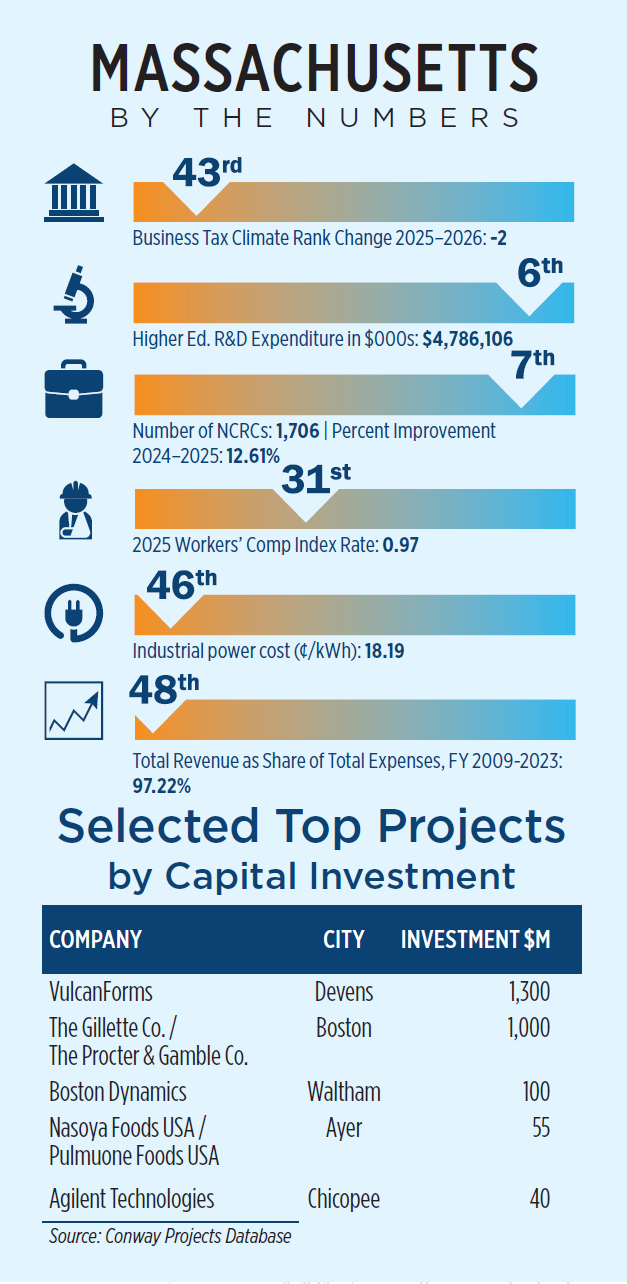
The companies are emerging from a research economy with a large national footprint. According to the UMass Donahue Institute, Massachusetts plays an outsized role in the national R&D economy, accounting for just 2.4% of total U.S. employment but 11.3% of all R&D jobs. This concentration — 4.6 times the national average — helps explain why companies like VulcanForms and Boston Dynamics continue to anchor major investments in the state.
That R&D intensity is reinforced by the scale of federal support flowing into the state. In fiscal year 2024, active federal awards represented an estimated $8.57 billion in annual R&D funding in Massachusetts, supporting roughly 81,300 jobs and generating $7.8 billion in income and $16.3 billion in total economic activity when accounting for direct, supply-chain and household-spending effects. Notably, the impact extends well beyond the labs and firms directly receiving funding: Approximately two out of every five jobs supported by this activity are in industries outside the immediate recipients, underscoring how deeply R&D spending permeates the broader state economy.
These figures show research matters beyond universities, with economic impact flowing through contractors, suppliers and consumer-facing businesses, and ultimately enabling major capital projects like the VulcanForms and Boston Dynamics expansions.
Building the Next-Generation Research Pipeline
Massachusetts is also investing in facilities intended to support that same progression in emerging fields including quantum technology, advanced optics and photonics. The state has committed up to $25 million in matching funds for a new Quantum Systems Laboratory at MIT, where academic, government and commercial users will have access to shared quantum research infrastructure.
“Greater Boston has the greatest concentration of quantum talent anywhere in the world, working on a range of potential applications. Through the new Quantum Systems Laboratory, we will help position Massachusetts to lead the next era of quantum technologies,” said MIT President Sally Kornbluth. “This facility will serve those at the edges of our wildest imaginations in physics and quantum computing, yes. But it will also equip the talent in our region — and ultimately, our nation — to push our knowledge to new limits and new innovations.”
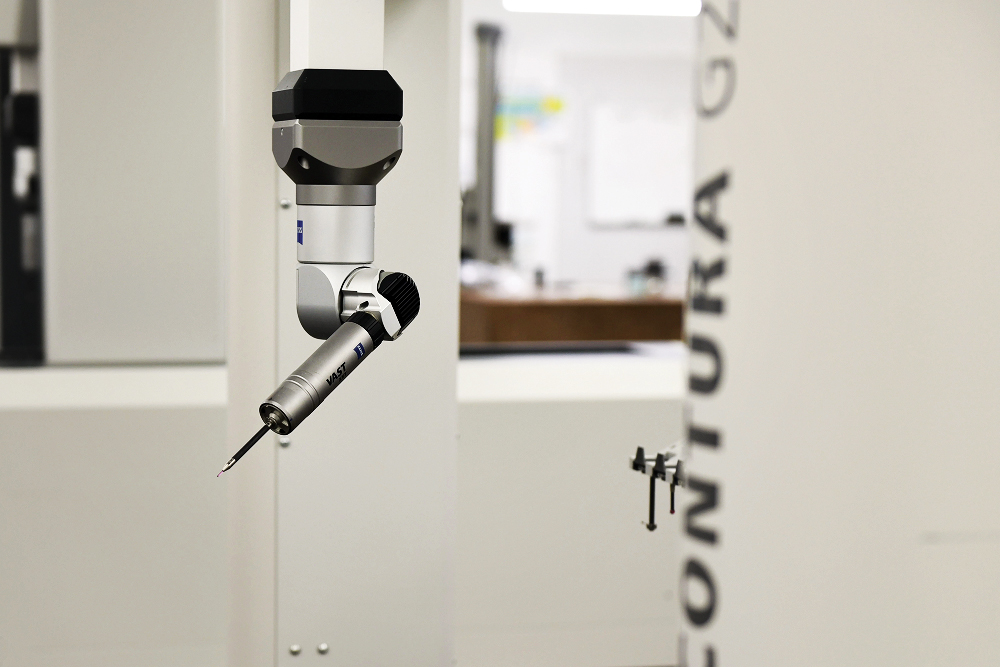
VulcanForms is scaling advanced metal additive manufacturing in Devens, where its planned expansion will create more than 1,000 jobs and strengthen domestic production capacity.
Photo courtesy of VulcanForms
MIT’s quantum ecosystem has already contributed to the creation of QuEra, which develops neutral-atom quantum computers, and Atlantic Quantum, an MIT-founded quantum hardware startup whose team joined Google Quantum AI in 2025. Their growth offers an early indication of the commercial activity that can develop around specialized research infrastructure and talent.
A similar effort is connecting innovation more directly with manufacturing in Western Massachusetts. The state awarded $2 million to the Berkshire Innovation Center in Pittsfield for an Advanced Manufacturing for Advanced Optics Lab. Anchored by Myrias Optics Inc. and Electro Magnetic Applications, the laboratory will also support workforce training and collaboration among companies, researchers and regional partners in the growing optics and photonics industry.
Making Room for the Next Breakthrough
The investments in innovative and emerging technologies are intended to produce the next generation of Massachusetts companies. Whether those companies ultimately build their production operations in the Commonwealth will depend partly on something far less experimental: the availability of large, permitted sites with sufficient power and infrastructure.
“For the incredibly limited number of sites that are truly shovel-ready, offer meaningful scale [500,000 sq. ft. or larger] and have robust utility infrastructure, I would characterize the current market for industrial and advanced manufacturing in Eastern Massachusetts as ripe for the picking as I have ever seen it,” says Ed Marsteiner, president of National Development, a Newton-based real estate investment, development and management firm.
“Access to the R&D ecosystem at some of the world’s leading universities, combined with an incredibly deep technology-based labor force that has thrived in Eastern Massachusetts for more than 50 years, are a couple of the key factors that make the region an ideal location for advanced manufacturing investment,” Marsteiner says.
The difficulty is finding properties that combine that access to talent with the physical requirements of modern manufacturing. Land availability, power, infrastructure and permitting complicate many site searches in Eastern Massachusetts. Marsteiner says that properties like National Development’s 75 Reed Road site in Hudson show the kind of rare “purple unicorn” opportunities that can be found in the state, where multiple ideal attributes come together in a single location.
The fully permitted site can accommodate 950,000 sq. ft. and offers up to 100 megawatts of power, along with on-site water and sewer service and regional highway access. It also benefits from access to an established workforce and power supplied through Hudson Municipal Light & Power, which Marsteiner says has the lowest electricity rates in Massachusetts because of its long-term power purchase agreement with the Seabrook Nuclear Power Plant.
VulcanForms and Boston Dynamics demonstrate Massachusetts’ ability to carry innovation from the laboratory into large-scale commercial production. With new investments strengthening the research pipeline and manufacturing-ready sites bringing together talent, infrastructure and utility capacity, the Commonwealth is positioned to turn more of its emerging technologies into companies, facilities and jobs that grow and scale within Massachusetts.