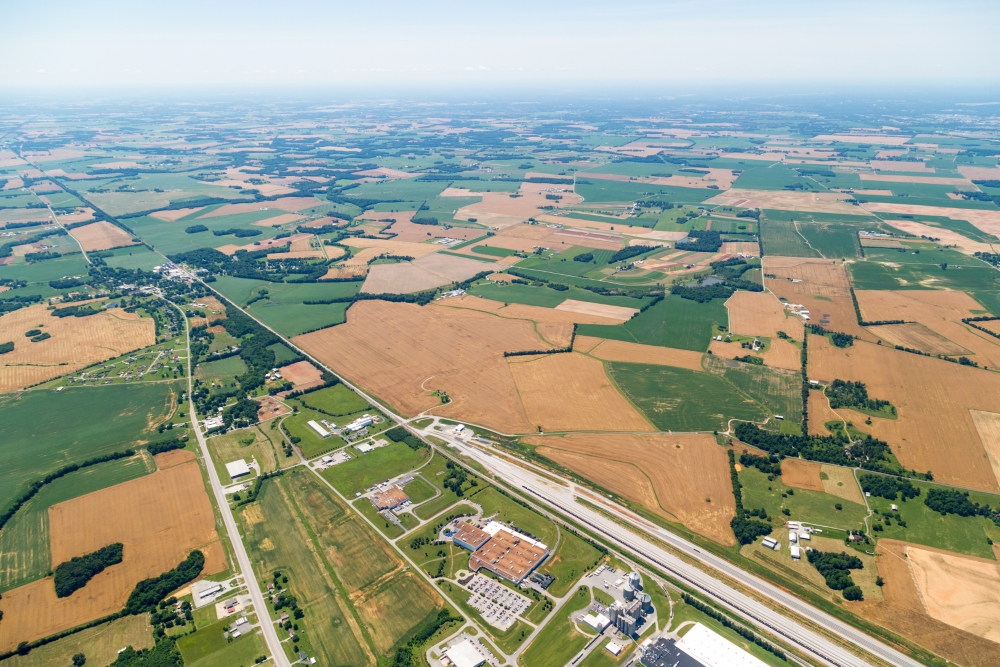
How Kentucky uses KPDI to fund megasites.
Corporate executives and site selection consultants know that the best economic development incentives are not the ones offered at deal-closing; they’re the ones invested into product development long before a facility site search even begins.
The Commonwealth of Kentucky understood this long before most, which is why Gov. Andy Beshear and the Kentucky General Assembly created the Kentucky Product Development Initiative (KPDI) in 2022 — a program that earmarks state dollars for local communities to use to secure and prepare shovel-ready sites for development.
The math says it’s working. On December 18, Gov. Beshear announced that 2025 was the commonwealth’s second-best year on record for new investments in the private sector, with $10.5 billion in projects announced. This means that the top three years for growth, and four of the top five, have occurred since the inception of KPDI.
Kentucky’s most recent record year of investments came from 185 new location and expansion projects creating 9,600 full-time jobs, per the Kentucky Cabinet for Economic Development (CED). The average incentivized hourly wage rose in 2025 to $29.58, the highest on record in the Bluegrass State. Since 2022, the average incentivized hourly wage has topped $26 in four straight years for the first time. This run leads to one conclusion: Kentucky’s ability to land corporate facility deals increased exponentially with the launch six years ago of KPDI.
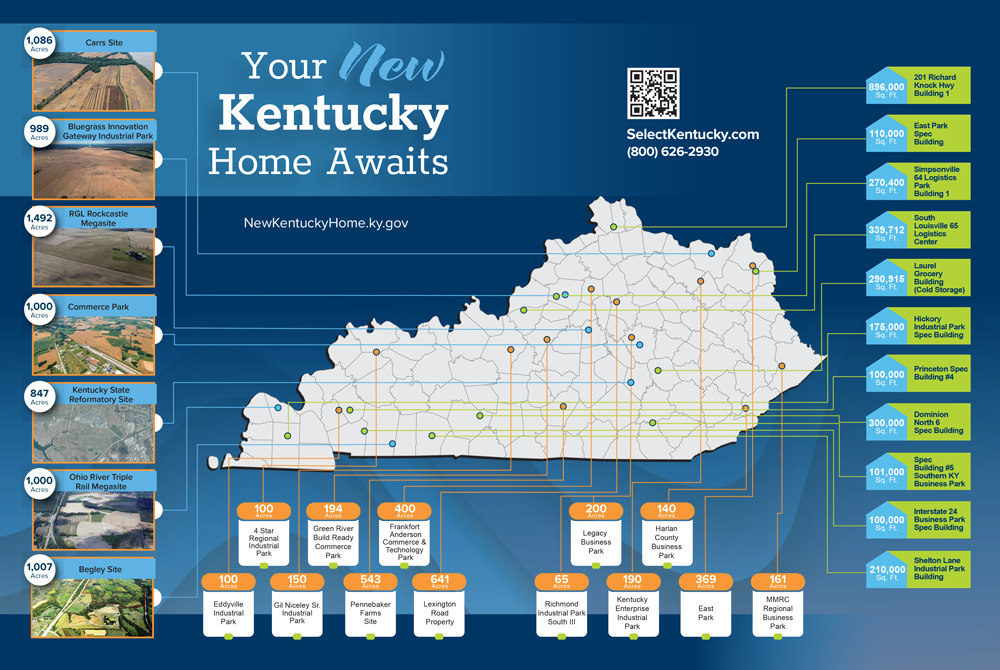
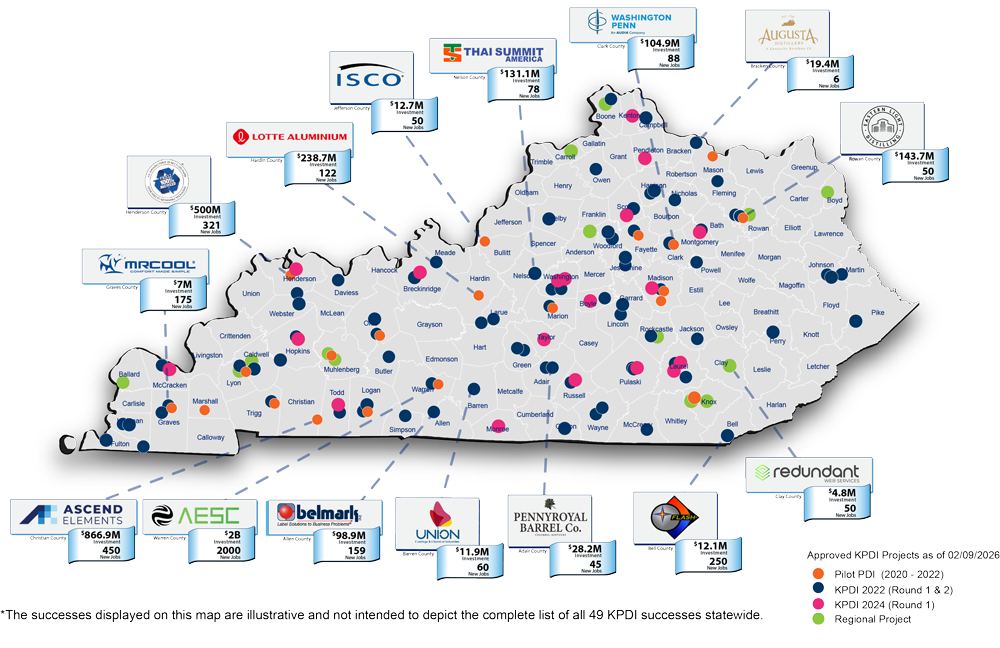
A state-funded program that provides matching grants to localities for the development of shovel-ready sites, KPDI has proved to be a game-changer for communities across Kentucky. Projects like Ascend Elements in Christian County and Pennyroyal Barrel in Adair County came about because KPDI enabled local jurisdictions to improve sites and prepare them for industrial development. According to CED, 51 firms have located on KPDI or pilot PDI-funded sites, investing $5.7 billion and generating 7,444 jobs for Kentuckians.
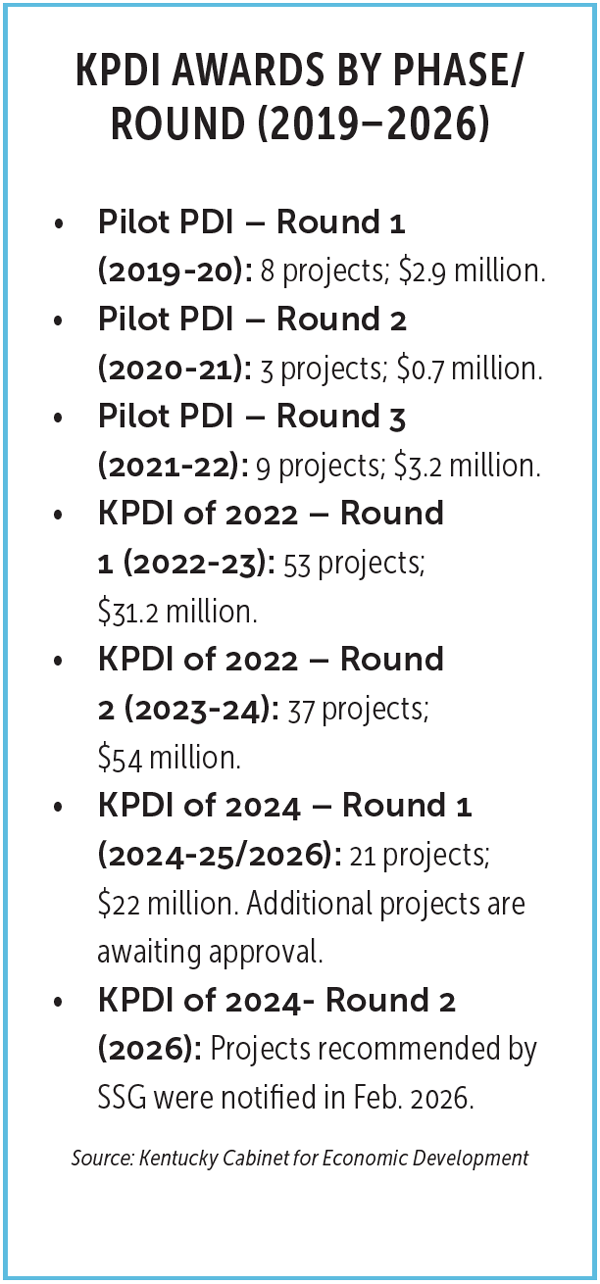
Brandon Mattingly, CED communications director, notes that the latest funding for KPDI allocated in 2024 was $70 million across two rounds, or $35 million per round. The first of those two rounds is nearing completion with 21 approvals totaling $22 million in funding from KPDI, supporting over $46 million in total investment including local contributions. Additional projects are still moving toward approval for that round, he adds. Approvals for the second round of KPDI 2024 will be coming later in 2026.
The structure for the program is outlined on the KPDI website: “KPDI applicants, such as local governments and economic development organizations, may seek funding assistance for transformative site and infrastructure improvement projects that will generate increased economic development opportunities and job creation for Kentucky residents. Through KPDI, funding is available through a competitive application process, with each of the 120 Kentucky counties eligible for a maximum funding amount calculated based on population. There is a maximum of $2 million per county per project. Applicants are encouraged to submit regional projects, which allow available funding for multiple counties to be combined, increasing the maximum allowed for a given project.”
Since the program’s inception, Kentucky has set aside $170 million for site development — money that has been used to help communities land record-setting amounts of corporate facility investments across the state’s 120 counties.
CED Secretary Jeff Noel says, “Our Collaborative Blueprint laid out our key deliverables to ensure Kentucky continues to win well into the future. Best products and best service have allowed KPDI to drive site improvements through a commitment to match local investment in quality sites statewide. We also invested heavily in unprecedented levels of engineering and due diligence for our top 10 megasites, which have positioned us to attract companies that will make a major impact.”
A BIG Gateway to America
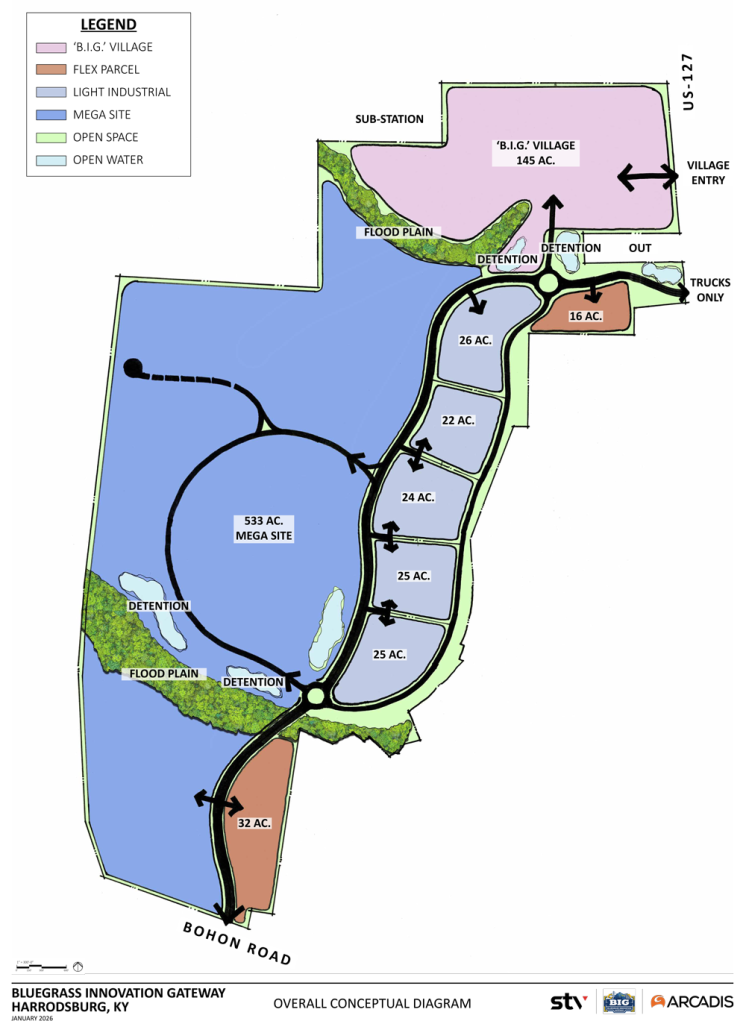
Case in point is Mercer County, where the Harrodsburg-Mercer County Industrial Development Authority has assembled the Bluegrass Innovation Gateway (BIG) Megasite, one of nine megasites in Kentucky.
“This community had not seen a significant economic development win in years,” says Greyson Evans, director of the local industrial authority. “After a couple of modest expansions at Corning, they’re now getting a huge investment from Apple.”
Cupertino, California-based Apple announced last August that it will invest $2.5 billion into the Corning plant in Harrodsburg to make the cover glass for the iPhone and Apple Watch.
The BIG project, on Highway 127 about 30 miles southwest of Lexington, took even longer to assemble. Work on BIG began in 2018.
“We closed on the purchase of the land last October,” says Evans. “The city and county issued general obligation bonds for us to buy 958 contiguous acres with two miles of Norfolk Southern rail on site. Substations are under construction. We will build 50 to 75 MW of power.”
The project benefited from $11.5 million from the General Assembly in 2024 to deploy water and wastewater service on site for a build-to-suit tenant.
“We have a pending KPDI application now,” says Evans. “We’ve applied for the maximum amount — $2 million. This is a first for the county.”
Evans says he expects BIG to receive site certification from the Site Selectors Guild this spring.
“This is widely known as one of the preeminent sites in the Mid-South. We’ve also received funding to connect Highway 127 to Highway 390; and we just completed our master plan. We’ll add even more infrastructure with the use of grants. A new water line will follow the primary utility easement on the main road. Topographically, the site is set up very well to have an anchor tenant on each side of the arterial road that we will build.”
Mega Plans Out West
Carter Hendricks, executive director of the South Western Kentucky Economic Development Council (SWK EDC), has an even larger tract that he’s marketing to tenants in Christian County. It’s called the Commerce Park II Rail Site, a 1,000-acre Platinum Certified CSX Rail Megasite.
“The land was put under option 10 years ago,” he says. “TVA InvestPrep grants were used to do due diligence on the land. We began the CSX Select Sites process and got it certified in 2024.
Just north of Clarksville, Tennessee, the site is about an hour west of Bowling Green.
“We are on I-24 and I-169 and about 30 minutes to I-69 and I-65,” says Hendricks. “Nine major markets are within 250 miles. You can get to downtown Nashville in 50 minutes. Memphis, Louisville, Indianapolis, Cincinnati and St. Louis can be reached in four hours or less.”
Hendricks says he’s targeting aerospace and defense firms as well as ag-related manufacturing.
“We’re exploring certification as an Ag Park,” he notes. “Commerce Park I already has 12 manufacturing firms. We can show prospects that we’ve already assembled a diversified manufacturing base in Western Kentucky.”
Where ‘Credibility is Everything’
Jeff VanHook, CEO and executive director at RGL Regional Industrial Development Authority in Rockcastle County, meanwhile, is marketing the 1,400-acre RGL Rockcastle Megasite in Mount Vernon. Located near I-75, U.S. Highway 150 and Kentucky Route 461, this massive tract was assembled from 55 separate parcels to support major industry projects. It is widely recognized throughout the country as one of the premier megasites in the Mid-South featuring CSX rail service.
“The real catalyst was the KPDI,” says VanHook. “We saw that as an opportunity to create a regional partnership of Rockcastle, Garrard and Lincoln counties. We are along I-75. The other two counties border us. We share the Highway 150 corridor, which gets you through Lincoln County and onto Danville. Trucks use that route to get to I-64.”
VanHook says, “Once it was under option, we started getting site visits. One visitor said, ‘This is the best large site I have ever seen in Kentucky.’ We’ve had several looks. Our vision was about creating transformational and generational change. This has the potential to impact the entire 23-county region of southeastern Kentucky.”
VanHook says the state kicked in $1 million in KPDI funds, which were matched by the three participating counties.
“With that money, we were able to buy the first 200 acres and get access to the railroad,” he adds. “Today, it is a CSX Select Site.”
With Knoxville, Chattanooga and Atlanta all less than five hours away, the site is attracting interest from investors who want access to the South, says VanHook.
“I have to thank Brad Thomas and his team at Kentucky’s Touchstone Energy Cooperatives,” he adds. “It takes partnerships to get big projects done. Credibility is everything.”