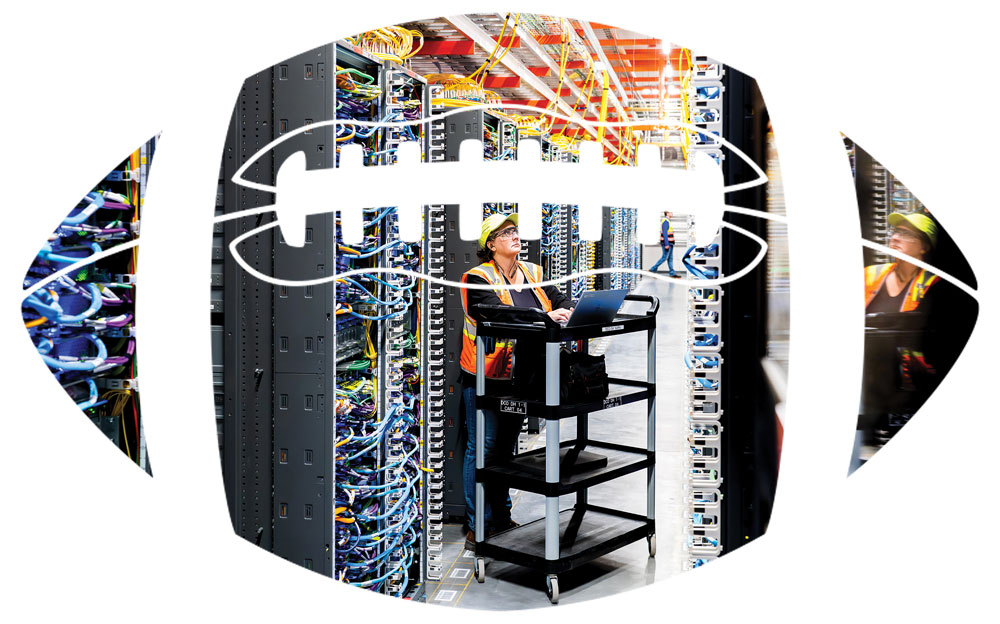
How Hobart used ‘Brickie pride’ to compete for a record-setting project.
You don’t necessarily need a hard-hitting football player’s mentality to land a $15 billion data center project in a small town in the Upper Midwest, but it sure doesn’t hurt.
Just ask Josh Huddlestun, former high school and college football star who now serves as mayor of Hobart, a city of 30,000 people in Lake County, Indiana, along the south shore of Lake Michigan about 30 miles southeast of Chicago.
Thanks to the pluckiness of Huddlestun and economic developers in the state and region, Northern Indiana was selected by Amazon Web Services in November to receive the largest private capital investment in state history. The record-setting $15 billion project is slated to be built in northwestern Indiana near Illinois and Lake Michigan. The company said the new facilities on multiple sites will support artificial intelligence and cloud computing.
As of press time, Huddlestun and his team at the City of Hobart were involved in negotiations with Amazon over one of these project sites — a 650-acre tract at 61st Avenue and Colorado Street about a mile from Interstate 65.
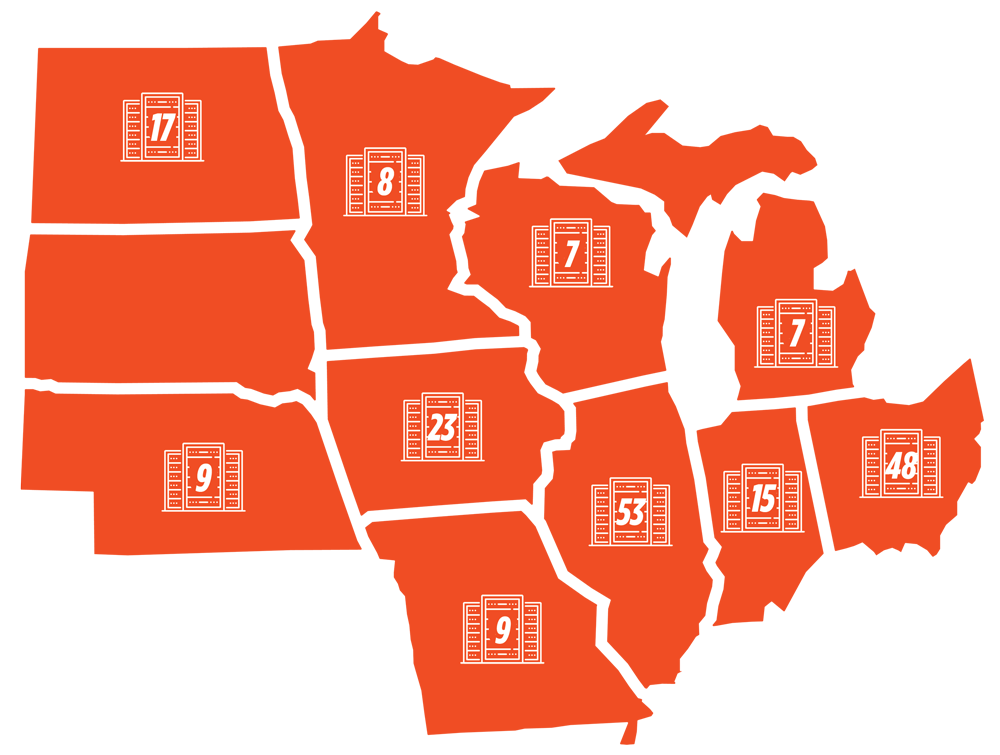
Top Data Center Locations in the Midwest (2020-2025)
“Our site is one that Amazon has zeroed in on,” says Huddlestun, mayor of a 26.5-square-mile city forged by millworkers and brickmakers. “As I-65 heads south, this site is literally at the crossroads of 61st Avenue. A large site is available for light manufacturing. Over the last 20 years, significant investment has been made in widening the road here. The previous administrations envisioned this as a distribution center or manufacturing site, but local residents pushed back because they didn’t want the truck traffic. Guess what data centers don’t have? They don’t have any truck traffic after the construction is over.”
Huddlestun adds that “we are going through a development agreement with them [Amazon] and hope to finalize that in the next month or so.”
The Seattle-based juggernaut valued at $2.48 trillion made the announcement on November 24, just three days before Thanksgiving. According to the world’s largest online retailer and biggest web services provider, this new investment in Northern Indiana to build multiple data center campuses will create 1,100 high-skilled jobs and support thousands of additional jobs in construction and the data center supply chain.
Saving Power Customers $1 Billion
The project adds 2.4 gigawatts of data center capacity — or about 10% of Indiana’s total electrical capacity — in the region; and under the terms of an agreement with NIPSCO (Northern Indiana Public Service Company), it will do so at a $1 billion cost savings to rate-paying customers over the next 15 years. This unique pact between NIPSCO and AWS calls for Amazon to pay fees to access existing power lines and cover costs for any new power infrastructure required to serve the data centers.
Serving 900,000 natural gas customers and 500,000 electric customers across the northern third of Indiana, NIPSCO is the largest natural gas distribution company and second-largest electric distribution company in the state. NIPSCO President and CEO Vince Parisi said that “by structuring this agreement thoughtfully, we’re ensuring our current customers are protected, without increasing their rates, while we expand our capacity to meet growing demands.”
The AWS news comes even as NIPSCO invests $7 billion into a combined-cycle gas turbine project to generate power at the utility’s Schaffer Generating Station in Wheatfield. Meeting the electrical demand generated by the new AWS facilities in northwest Indiana will create about 2,000 construction jobs just on the power side, says Parisi.
Given that rising power bills are the No. 1 complaint raised by data center opponents, Indiana Gov. Mike Braun celebrated the NIPSCO-AWS agreement as a major victory for the state. “This is a massive win for Hoosier ratepayers,” he said. “This agreement will ensure a surplus in new energy development that will deliver real savings to Hoosier ratepayers. Amazon’s historic investment shows that Indiana’s business-friendly climate continues to attract world-class employers and drive growth in our state. This project will create more than a thousand jobs while supporting thousands more across the region, further strengthening Indiana’s position in energy dominance and economic leadership.”
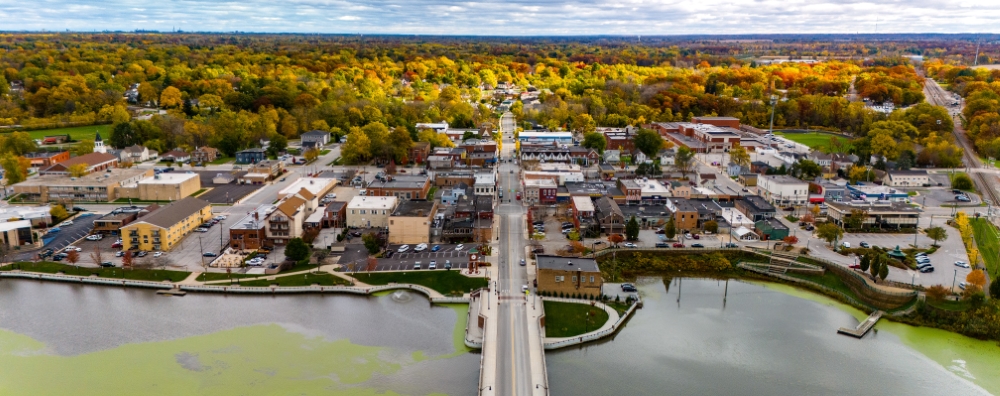
Aerial view of Hobart, a city of 30,000 people in Lake County in northwest Indiana
Photo by Above Reality Aerial
Since 2010, Amazon has announced investments of more than $31.3 billion in Indiana — by far the most of any Midwestern state. This includes an $11 billion deal announced by AWS last year in New Carlisle in St. Joseph County in northeast Indiana. AWS says it has contributed more than $29.9 billion to the state’s GDP and supported 24,500 full-time and part-time jobs, along with 27,500 indirect jobs, across various facilities.
Amazon’s new deal with the state calls for the company to bring training and education programs, including data center technician programs, fiber-optic fusion splicing workshops, and STEM awareness and learning opportunities for K-12 students, to various communities across the region.
Mayor: This Is Why I Ran for Office
Huddlestun says he campaigned two years ago for mayor on a platform that would modernize the local economy and deliver big economic development wins like this. “Northwest Indiana is one of the best-kept secrets in the country,” he says. “We are 40 minutes outside Chicago. You can go anywhere east, west, north or south via major highways. We have a very good labor market for building. We have fiber, rail, airports, highways, water, etc. You can throw a rock into Lake Michigan from Hobart; and we’re close to one of the largest economies in the world — Chicago.”
He adds that Hobart offers the industrial infrastructure coveted by data center firms. “We have the 345-KV high-tension transmission lines. Fiber runs to Chicago. We have the robust fiber network that these companies need,” he says. “Plus, we have a mild climate with no tornadoes or hurricanes. And we have a very good tax climate.”
The 345-KV high-tension lines are critical because they serve as major electrical arteries and form the backbone networks in North America for moving large amounts of electrical power efficiently over long distances. Companies like AWS like this because this mode of transmission reduces energy loss and connects regional grids to major generation sources and substations. They’re also essential for grid stability.
When I asked Huddlestun whether the city or county would offer Amazon incentives, he said he would not be able to discuss specific incentives until they were finalized and brought up for city approval “in a few weeks. But I can say that we pack a mean economic development punch. We may have a small-town feel, but we’re capable of landing large economic development projects. We have Daifuku, a Japanese confectionary, and Albanese candies. We have the second-largest shopping mall in the state and an active retail corridor.”
Despite already seeing local opposition, Huddlestun says the AWS project will bring long-term benefits to Hobart. “We look at it from multiple prongs,” he says. “One is job creation for the community. Data centers typically don’t bring in a massive amount of jobs, but what they do bring in is revenue. It will allow us to do all the things we want to do as a community, such as pay for parks and recreation, police and fire, roads, and other public utilities and services. The previously passed Rollback 1 Bill gave property relief to residents. This will put us into a position where we will not have to increase the income tax.”
When Huddlestun references “Rollback 1,” he’s talking about Senate Enrolled Act 1 from the 2025 Indiana state legislative session — a major property tax relief package that offers homeowners tax credits and aims to save homeowners billions of dollars in taxes over three years. SEA 1 also enacts long-term property tax reforms, including changes to homestead deductions, impacting schools and local governments.
‘Decade of Dominance’ On & Off the Field
While an economic impact study has not yet been done on the AWS project, the mayor says the city and county expect to see “hundreds of millions of dollars in wages during buildout. Other industries will follow. We’ll see significant benefits to our community.”

“We pack a mean economic development punch. We may have a small-town feel, but we’re capable of landing large economic development projects.”
— Hobart Mayor Josh Huddlestun
With support from the Indiana Economic Development Corp., Gov. Braun and NIPSCO, the project ultimately is expected to win approval, says Huddlestun. “It has been met with resistance, but in the long run, we expect to see this project get done,” he notes.
Besides, he says, it’s in the DNA of the community to overcome any obstacles in the way of progress. “We were founded by the local grist mill,” says Huddlestun. “We are called the Hobart Brickies because we literally had a brick factory. We are a blue-collar community. We are a place where people go to work and care about their neighbor. And we are a big football community. We call it Brickie pride. When the Hobart High School Brickies won four state championships, we called it our decade of dominance. With low crime, good schools and beautiful Lake George, there is a lot going on here.”
Site selection consultant Jay Garner, president of Atlanta-based Garner Economics, said he is not surprised that Indiana keeps winning big deals like this one. “Indiana has had a long history of being a pro-business climate. It appears that the governor and legislature are aligned well on maintaining their positive business environment.”
According to the Conway Projects Database, Indiana ranks fifth in the Midwest with 15 data center projects since the beginning of 2020. Illinois leads the region with 53 data center deals since then, followed by Ohio with 48 and Iowa with 23. From January 1, 2020, through December 10, 2025, a total of 201 data center projects were announced in the 12-state Midwest Region that includes Indiana, Ohio, Michigan, Illinois, Iowa, Minnesota, Wisconsin, North Dakota, South Dakota, Missouri, Kansas and Nebraska.
Over the last two years, Indiana has had 10 corporate facility projects of $1 billion or more from the likes of Amazon, Eli Lilly, Toyota, Microsoft and others. In addition to the two large AWS investments in Northern Indiana, the state secured two investments totaling $9.7 billion from Eli Lilly and Co. in Lebanon in Boone County; a $1.4 billion investment by Toyota in Princeton in Gibson County; and a $1 billion project from Microsoft in La Porte County.
AWS: Indiana Is an ‘Important Partner’
David Zapolsky, Amazon’s chief global affairs and legal officer, said that “Indiana has long been an important partner for Amazon. We are proud to affirm our commitment to long-term investment and growth, underscoring our dedication to fueling AI innovation while generating meaningful economic impact throughout the state.”
He adds that “by expanding our advanced cloud infrastructure in Indiana, we are investing in Indiana’s technological future through job creation, skills training initiatives and community engagement programs. We’re excited to help power the next wave of technological advancement while delivering tangible benefits that will enhance the lives of Indiana residents for years to come.”
AWS is not alone in favoring Indiana. Google, Meta and Microsoft are all engaged in massive data center projects in the Hoosier State. A big reason for this is I-Light — a high-speed fiber-optic network that connects users to state, national and international research and education communities. IEDC bills this network as “frictionless fiber for 40 elite institutions statewide.”
Under Gov. Braun’s administration, qualified projects can receive certain tax exemptions for up to 50 years. The administration also requires incentive awards to be more transparent and ROI-driven. For example, under Braun, the average incentive cost per job has decreased from $55,000 to $16,000 even as the average wage incentivized by IEDC jumped from $37 an hour to $41 an hour last year — a 10% bump representing an increase of $8,000 in pay per job.
After multiple years of sustained growth in data center and other IT jobs, Indiana-based operations now employ more than 32,000 workers in computer and data-related services, according to IEDC.