The tides of innovative economic growth continue to lap at the shores of Gulfport, Mississippi.
In less than a month, between August and September 2026, the port city attracted three project investments aimed at the region’s Blue Economy. Two landed within the Port of Gulfport, while one legacy shipbuilder in the region is moving to upgrade its nearby operations.
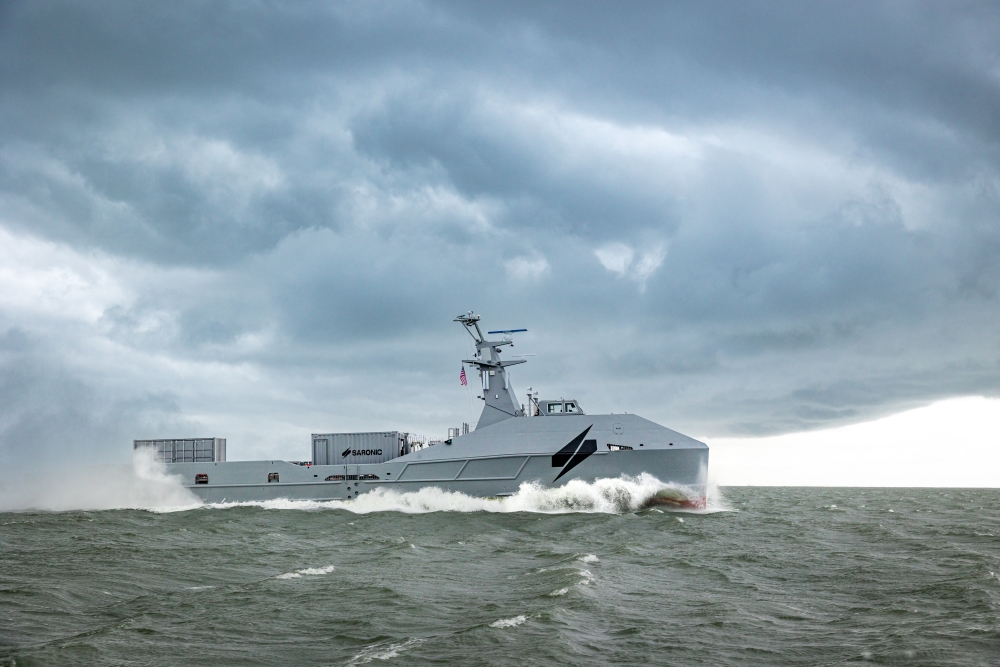
News of Saronic Technologies establishing an initial site for on-water testing of its Medium Unmanned Surface Vessel (MUSV), Marauder, arrived first. Marauder was designed, built and launched in under a year from the company’s Franklin, Louisiana, shipyard and began testing at the Port of Gulfport in July, prior to the official announcement.
Saronic snagged a 30,000-sq.-ft. site with dedicated port access, office space and warehouse space. As MUSV production continues at the Franklin shipyard, Gulfport will now serve as each Marauder’s next destination. The company noted that the Mississippi State Port Authority’s foresight to develop a growing deepwater container gateway and partner with the University of Southern Mississippi (USM) on the Roger F. Wicker Center for Ocean Enterprise resulted in a coastline with the pieces in place to launch a dedicated MUSV site.
The research center, which houses government entities and private companies involved in autonomous vehicle testing, opened next to the university’s Marine Research Center at the port in 2023. USM’s focus on expanding uncrewed maritime systems R&D capabilities and prior partnership with OceanAero led the company to fully relocate operations from San Diego, California, to the Port of Gulfport the same year.
“Investments made by USM and the existing testing sites in the Gulf of America are a huge advantage for new blue technology,” says Harrison County Development Commission Executive Director Bill Lavers.
Within the port’s East Pier, OceanAero has developed the world’s first and only Autonomous Underwater and Surface Vehicle, TRITON. The system can autonomously sail and submerge to collect data both above and below the surface and relay it in real time, applicable to a number of industries. In August, the maritime technology company announced plans for a $4 million expansion of its existing site and will create 45 new jobs. Project details include converting 25,000 sq. ft. of current storage space into an area fit for production, additionally installing new manufacturing equipment to support increased TRITON production capacity at the site.
From the conference room where Lavers conducted our interview he shared that, within a mile of where he was sitting, five different shipbuilders are in operation. A potential sixth is eyeing the region. An entire industry ecosystem is at play here — manufacturers, suppliers, federal agencies, military bases, research universities and adaptable talent — solidifying Harrison County as a hotbed for innovation.
“We’ve been building ships for decades. Making them autonomous is news for y’all, but not for us,” says Lavers. “The U.S. Navy’s Seahawk and Sea Hunter were built, tested and shipped from here over seven years ago. OceanAero is producing more product here than they did in California. And Edison Chouest is a great example of our generational adaptive industry.”
A few miles away from the Port of Gulfport, Gulf Ship has been producing vessels for the government and private industry at its Gulfport site for over two decades. The Edison Chouest Offshore company now aims to modernize its existing shipbuilding and steel fabrication facilities supported by a new $43.81 million investment.
The project would upgrade Gulf Ship’s production buildings and supporting infrastructure at its shipyard, installing new automated steel fabrication and facility equipment. This includes advanced panel and subassembly manufacturing lines, T-beam fabrication equipment, automated welding systems, material handling improvements and other modern shipbuilding technology to improve production efficiency and scale current capacity. Construction is slated for completion by the end of 2027 and Gulf Ship plans to create 121 new jobs.
Asked what this activity signifies about the port’s maritime and industrial momentum, Lavers says, “It’s uncharted waters, literally. A state-of-the-art growing port with incredibly fast service delivery matched with cutting edge technology companies — pretty sure it’s a unicorn in the industry.”
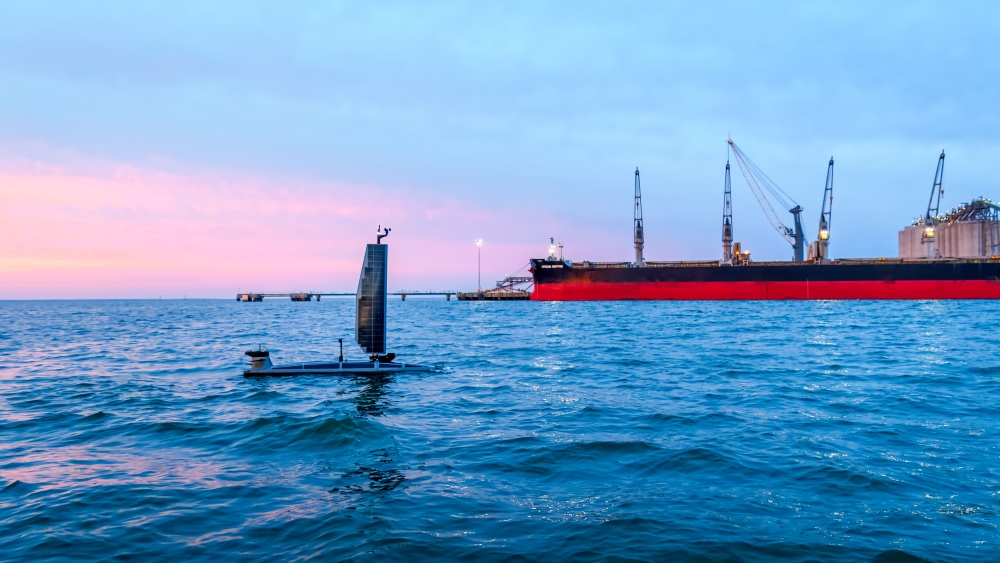
OceanAero is expanding production capabilities at the Port of Gulfport as the company moves to increase production capacity for its Autonomous Underwater and Surface Vehicle, TRITON.
Photo courtesy of OceanAero
A Deeper Impact
New investment breaching at the Port of Gulfport fits into the generational Blue Economy solidified in the region, flowing through several channels.
Access to deep water and lack of congestion have made the region ideal for companies constructing and testing vessels in federal waters or the Mississippi Sound, which are located 18 miles from the port. Maritime innovation activity has filed in to take advantage of the region.
At the same time, the Port of Gulfport has been evolving due to millions in private, state and federal funding coming in to enhance infrastructure and reduce emissions. A new milestone was recently reached as the U.S. Army Corps of Engineers has recommended a channel deepening project for congressional authorization in this year’s Water Resources Development Act. If approved, the estimated $548 million project would deepen the port’s channel from 36 feet to 46 feet and widen it from 300 feet to 350 feet.
“The Port of Gulfport’s highest priority is deepening and widening our channel. This project is an absolute game-changer for the port. When complete, it will allow the port to grow exponentially in the future,” says Port of Gulfport CEO and Executive Director Jon Nass. “If the project is approved in this year’s Water Resources Development Act, we will move forward to reduce cost and shorten the time frame of both design and construction.”
Nass notes a number of benefits that would come as a result of an additional 10 feet of depth and 50 feet of width. The channel would enable larger, more modern vessels to call on the port, resulting in increased competitiveness, expansion of new trade lanes and fresh market opportunities. Greater ship capacity translates to increased cargo volumes that create new jobs and welcome economic development opportunities throughout the state. Moreover, it allows accommodation of all classes of military vessels, thus enhancing national defense capabilities.
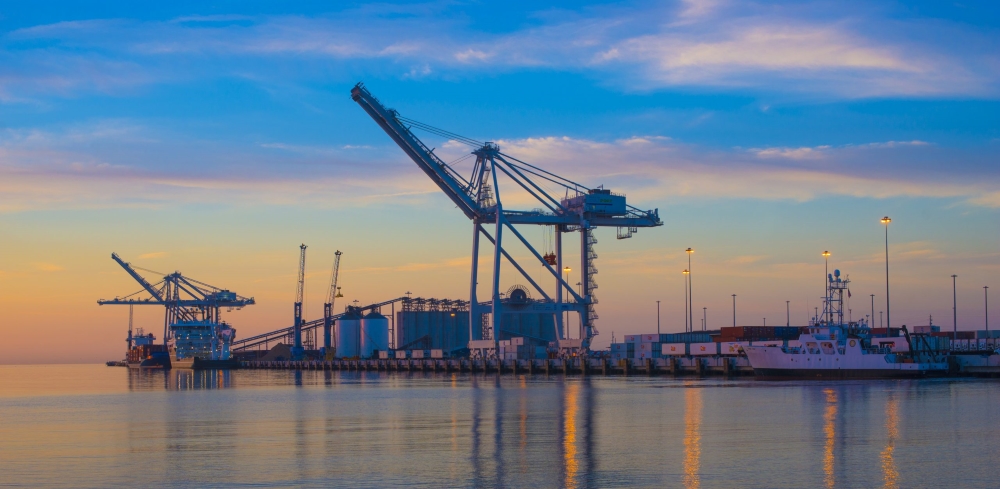
In June 2026, the U.S. Army Corps of Engineers recommended a channel deepening project at the Port of Gulfport for congressional authorization.
Photo courtesy of the Port of Gulfport
In May 2026, the U.S. Department of Transportation Maritime Administration awarded the Port of Gulfport an $11.25 million grant through the 2025 Port Infrastructure Development Program. The funding will contribute to a $24.5 million project designed to further enhance the port’s rail connectivity, refrigerated cargo capabilities and intermodal operations. According to data from the Observatory of Economic Complexity, from June 2025 to June 2026 exports from the port increased by 11.4%, while imports rose by 6.3%. Looking ahead, advancing channel deepening will help expand the port’s long-term cargo opportunities.
“Growth in imports and exports reflects the Port of Gulfport’s continued investment in infrastructure, equipment and operational capabilities, along with the strength of our relationships with customers, tenants and industry partners,” says Nass. “We are encouraged by the positive trade trends and remain focused on building on that momentum.”