Project Green and Project Spade aim to deliver $25 billion to one rural Missouri county.
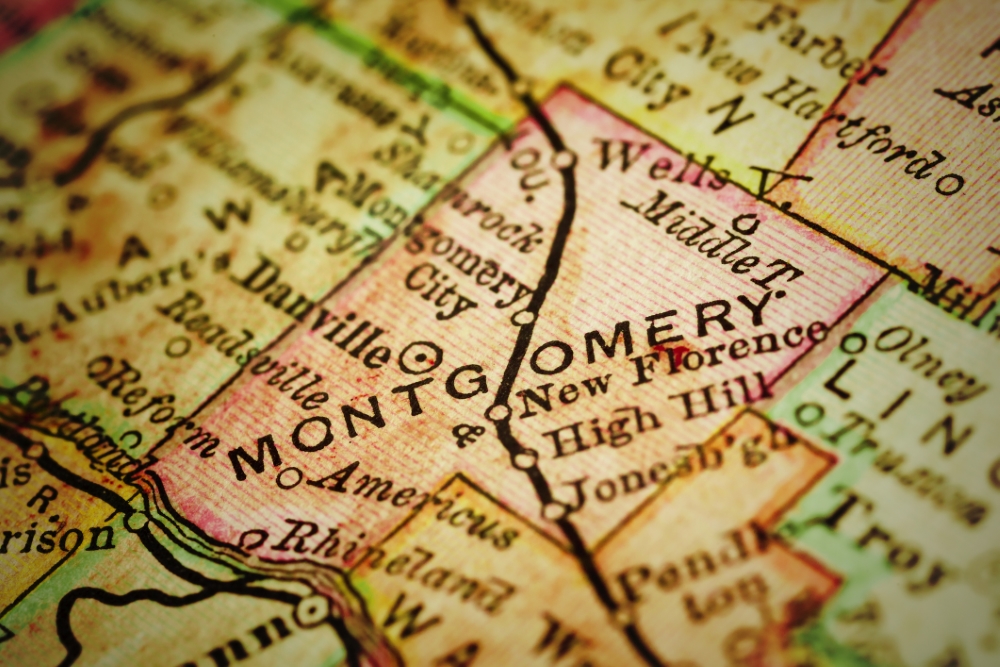
Tucked into east-central Missouri, part way between St. Louis and Columbia and next door to the Missouri Rhineland and wineries around the town of Hermann, sits Montgomery County, a territory of just over 11,500 people.
It’s the sort of county whose official website features a photo of the courthouse. Over the past 10 years Site Selection’s Conway Projects Database has tracked only two major facility investments there: a $1.3 million, three-job investment by Hartman Cabinetry in Jonesburg and a $13 million, 110-job potato chip plant from Uncle Ray’s Snacks & Chips in the county seat of Montgomery City.
Over two months this spring, this sleepy territory was jolted awake by two megaprojects.
On June 15, not long before Amazon Prime Day, Missouri got the sort of news that makes every day a prime day, as the company announced it plans to invest $10 billion in a new data center campus in Montgomery County. Code-named Project Green, the campus will have up to 17 facilities located on a megasite in the northeast quadrant of I-70 and Highway 19.
“Today’s announcement represents more than a major investment in Missouri’s future — it represents new opportunities for Montgomery County and the surrounding region,” said Governor Mike Kehoe. “Projects like this create lasting benefits for local communities by supporting critical infrastructure improvements, generating new tax revenue for schools and public services, and strengthening the foundation for future economic growth.”
Even the fact that data centers create few jobs is turned by AWS into a positive: In a presentation to local authorities in December, Amazon presented a graphic showing how its data centers compare to commercial, industrial and residential development in terms of traffic, revenue, high pay and resource use. The company gave itself green check marks in the low traffic category (“a low number of employees and visitors at one time”); revenue (“net positive tax revenue generation”); compensation (“staffed with highly paid local employees”); and community resource use (“little strain on resources like schools, fire, police, etc.”).
Residential got red “X”s all around, while commercial and industrial got them too for creating so much more traffic. The company’s presentation to local authorities stated plans to hire at least 150 full-time employees with average wages of $85,000. Later documents refer to the potential to create as many as 400 full-time data center positions. Meanwhile, despite the lack of traffic its operations will generate, construction is another thing altogether. Amazon says it is making several roadway improvements and building a new bridge over the Norfolk Southern Railway to replace an existing railroad crossing, so drivers will no longer have to stop and wait for trains to pass.
What about natural resources? AWS says its power use will be subject to Ameren’s large load tariff with a separate rate structure designed to protect from any impact to resident rates. “Amazon’s investment in Montgomery County reinforces Missouri’s strong position as a hub for innovation and a state with an exceptionally skilled workforce,” said Martin J. Lyons Jr., chairman, president and CEO of Ameren Corporation, at the announcement. “We applaud local and state leaders who support economic growth and job creation while ensuring that consumers are protected.”
As for water, AWS anticipates using 2.9 million gallons per building annually, or up to 50 million gallons at full buildout, and claims it only expects to use water for cooling during 7% or less of the year. “Two independent engineering firms confirmed that the underlying aquifer contains abundant water volumes of more than 23 trillion gallons,” the company stated in its presentation, “with only 8% of the aquifer’s annual safe yield currently being used.”
In fact, the company plans to bring its water practices to area residents: Amazon says it is working with agricultural technology company Arable Labs to implement technology to help Missouri farmers “improve irrigation efficiency, eliminate unnecessary watering and help reduce groundwater withdrawals. The project is expected to reduce water use by 100 million gallons of water.” Meanwhile, Amazon also investing to build the water infrastructure its facilities need. “Once construction is complete, we will donate the entire system to Montgomery County Public Water Supply District No. 1 at no cost,” the company says. “This means the Water District can use it to expand water service to other parts of the community as it sees fit.”
The county’s cost-benefit analysis projects Amazon’s real property tax contributions will range from $326 million to $1.5 billion. The company also plans to make $1.5 million a year in upfront community investment payments in 2026 and 2027 and anticipates paying up to $308 million in PILOT payments over the agreement term. For comparison’s sake, the land currently generates around $8,000 a year in tax revenue, or $200,000 over 25 years. The 25-year Personal Property Tax Incentive with a payment in lieu of taxes (PILOT) structure calls for a fixed annual payment of $3 million over years 1-5; PILOT for 5% of taxes otherwise due in years 6-15; and PILOT for 25% of taxes otherwise due in years 16-25.
AWS highlights fusion splicing workshops the company has launched in other communities that train residents in fiber-optic installation and repair, as well as paid digital infrastructure pre-apprenticeship programs “for careers in building, connecting, powering and operating data centers.” Amazon, which first invested in the state in 2017, already employs more than 10,000 Missourians.
Google This
Twenty-six days before the AWS announcement, at a community celebration at the Laborers and Contractors Training Center in New Florence in Montgomery County, Google announced a new $15 billion investment in building infrastructure in Missouri that includes a new data center in New Florence. This one, code-named Project Spade, will be constructed on the southeast quadrant of I-70 and Highway 19. The company emphasized that it pays for 100% of the power it uses, and it will cover the infrastructure costs directly driven by its operations.
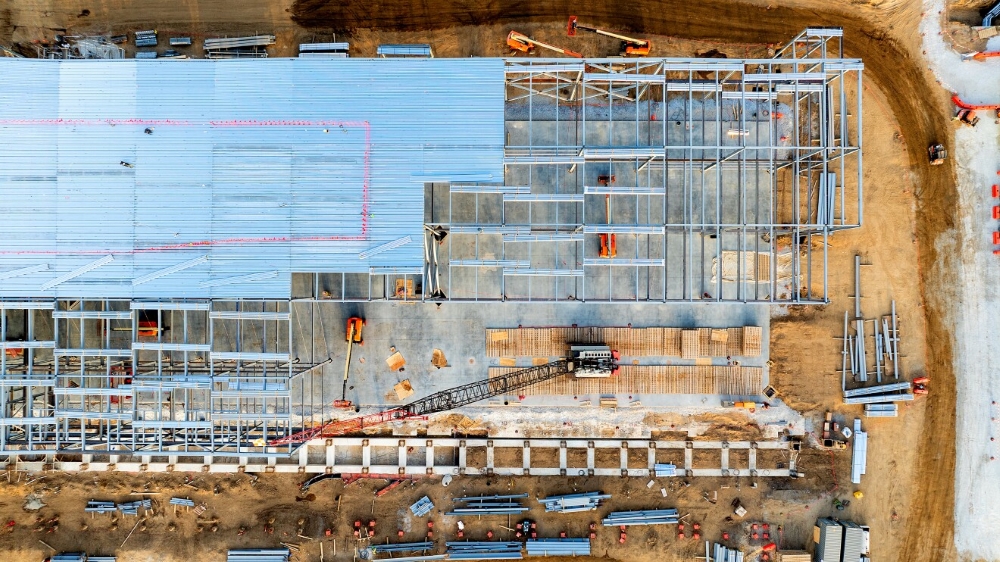
Soon construction like this at Project Rainier in Indiana will be coming to Amazon’s site in Montgomery County, Missouri.
Photo courtesy of Amazon
“To date, Google has contracted to bring more than one gigawatt (GW) of new generation capacity to Missouri, and — through its partnership with Ameren — Google is supporting the development of more than 500 megawatts (MW) of additional capacity,” the company announced. The company recently started construction on a $10 billion data center in the Northland area of Kansas City as well, after working out a special rate with Evergy. The company has worked with Ameren and Evergy to bring the Capacity Commitment Framework (CCF) to Missouri, “which ensures Google and other large energy customers pay for their electricity and infrastructure needs, protect local ratepayers and actively bolster the long-term resilience of the electricity grid,” the company stated.
Google is collaborating with the Construction Laborers and Contractors Joint Training Fund of Eastern Missouri to support the Laborers and Contractors Training Center. The project will enable the center to train more than 2,300 construction laborers, including 1,500 apprentices, over the next two years.
“Google’s continued growth in Missouri reflects both the strength of our state and the company’s long-term commitment to the communities where it operates,” said Subash Alias, CEO of Missouri Partnership. “This investment in Montgomery County represents another significant milestone for our state and reinforces Missouri’s position as a leading destination for technology and innovation.”
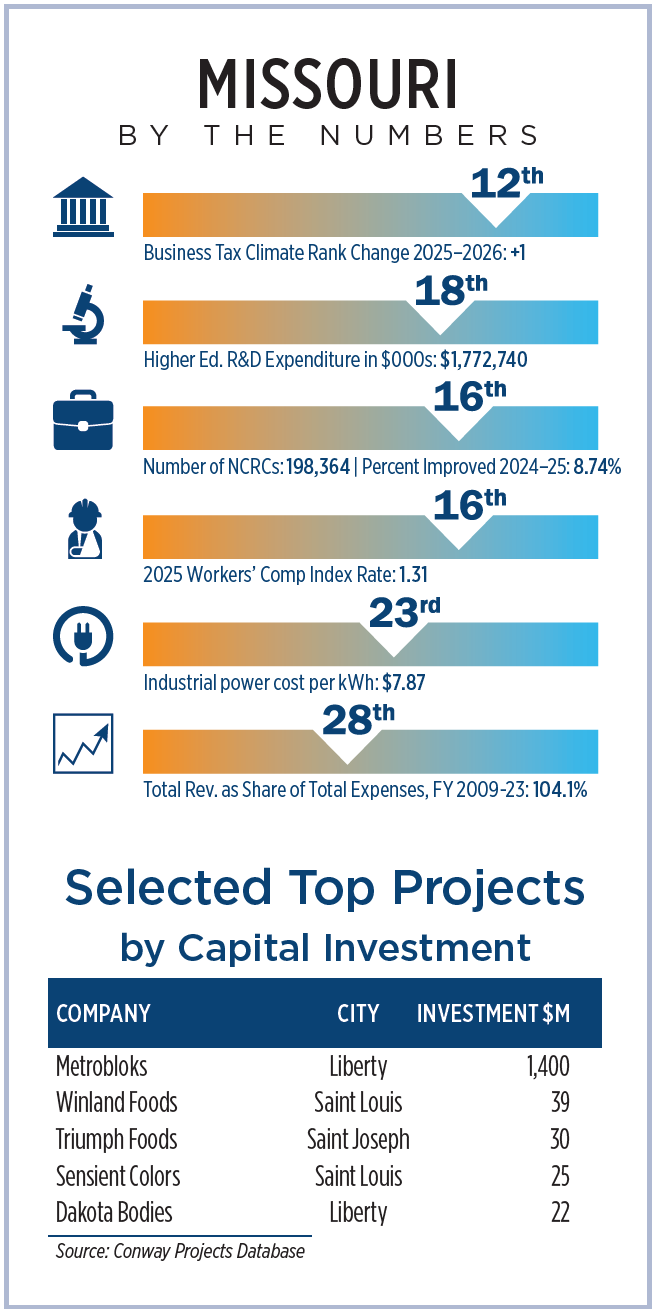
According to the Conway Projects Database, Missouri has welcomed 13 data center projects since 2020, including an AI factory campus on 400 acres in Independence announced by AI cloud company Nebius eight days before the Google announcement. The project is expected to create 1,200 construction jobs and 130 operational jobs. The project is also expected to generate $650 million in tax payments to local school districts and taxing jurisdictions over the next 20 years.