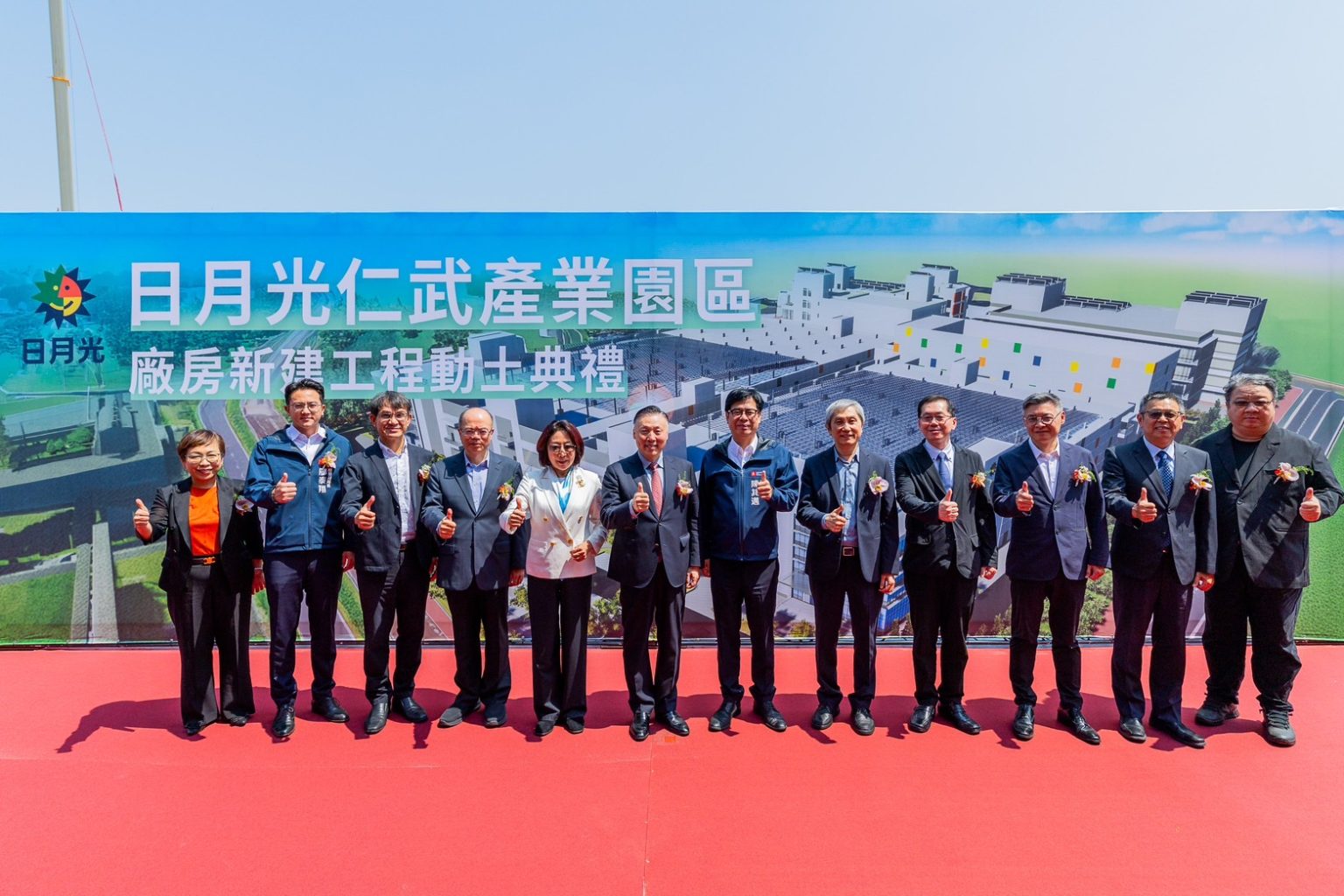
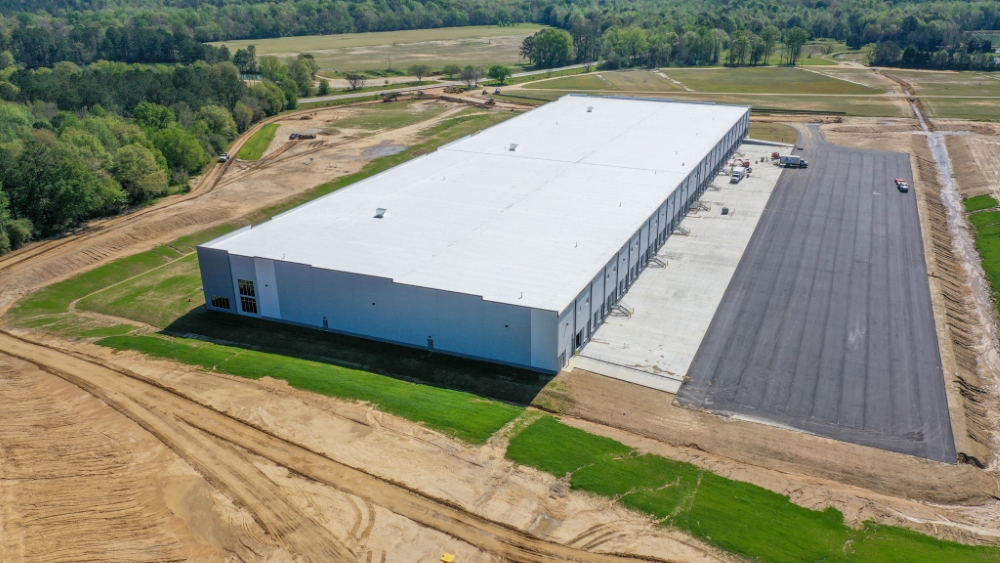
Advanced Semiconductor Engineering breaks ground on a $3.4 billion semiconductor manufacturing center at the Renwu Industrial Park in Taiwan. Aligned Data Centers (see Maryland interview below) announces a new six-building hyperscale campus in northwest Texas. Transportation company Prime Inc. will establish a new $160 million Southeast region hub in Spalding County, Georgia.
Temecula Valley is quickly making a name for itself on the global stage. Plus: A report on upbeat project activity in the Bay Area and other markets, and insights from the NSF on why four California universities made the national top 10 in R&D expenditures.
Maryland accelerates innovation across key tech and science sectors. Hear what we learned from conversations with Maryland Department of Commerce Deputy Secretary Ricardo Benn, Aligned Data Centers EVP of Brand Strategy Joanna Soucy and Questar Properties Vice President of Development & Acquisitions Abdo Roffe.
REAL Park is a 700-acre master-planned industrial park near Auburn, Alabama, that will ultimately feature over 7 million sq. ft. of Class A industrial space located in a Qualified Opportunity Zone. This building was leased last April by South Korea-based Samkwang Co., Ltd., a manufacturer and supplier to Samsung, Kia, and Hyundai that will create hundreds of jobs.
Photo courtesy of Farpoint Development and Opportunity Alabama
GIS WebTech on Wednesday, April 22, will present a free webinar titled “Navigating Opportunity Zones 2.0 with Data & Strategy” at which the firm says it will introduce the first nationwide Opportunity Zones 2.0 GIS layer featuring qualifying census tracts, offering “an early look at how to identify and evaluate potential areas.”
They are not alone in getting the word out. Beginning July 1, 2026, governors will be able to nominate 25% of their respective states’ eligible census tracts to be designated as opportunity zones. A mapping tool from Novogradac displays OZs as of the latest designation in 2018. The U.S. Department of Housing and Urban Development itself explains that in OZ 1.0 “there are 8,764 designated census tracts in the United States, many of which have experienced a lack of investment for decades. The OZ 1.0 map is in effect through the end of 2028. In 2026, governors will nominate census tracts for Treasury to designate, creating a new OZ 2.0 map. The OZ 2.0 map will be in effect through the end of 2036. New OZ maps with designated census tracts will be chosen every 10 years.”
Site Selection has reported on Opportunity Zones in a dedicated feature every year since the program came into existence, most recently in the November 2025 contribution from Economic Innovation Group Senior Fellow Kenan Fikri, “What Opportunity Zones Permanence Means for Corporate Investors.”
The sciences, tech and engineering pick up across the U.S. and globe. Plus: A researcher has looked into whether the U.S. met a 2012 goal of 1 million more undergraduate STEM degrees over the next decade.
NEMA Sr. Director of Global Policy Patrick Lozada (first from right) and NEMA member company representatives met with the Assistant U.S. Trade Representative in February 2026 to discuss the upcoming USMCA review and North American supply chains.
Photo courtesy of NEMA
In a trilateral letter distributed on April 8, the America’s National Electrical Manufacturers Association (NEMA), Mexico’s La Cámara Nacional de Manufacturas Eléctricas (CANAME), and Canada’s Electro-Federation Canada (EFC) urged the United States-Mexico-Canada Agreement’s principal negotiators “to finally unleash the USMCA’s potential” because the agreement “is more than just the cornerstone of continental market integration. It is the foundation upon which any future pursuits of regional energy security, AI leadership and manufacturing onshoring depend.”
The letter highlights three areas the industry leaders say can be strengthened as USMCA negotiators approach the July 2026 review period:
Strengthen technical standards harmonization by reinforcing the work of the Council for Harmonization of Electrotechnical Standardization of the Nations of the Americas (CANENA) and North American Standards Developing Organizations.
Improve Rules-of-Origin, consulting with industry on any changes to Rules-of-Origin.
Eliminate policy uncertainty and potential market fragmentation by preserving the trilateral structure of the USMCA.
The electrical manufacturing industries produce the equipment and systems needed to generate, store, transmit, deliver and use electric power. In a release, NEMA stated that, according to the organization’s data, electrical components comprise “approximately one-third of the total spend to build a typical AI data center, and 10% of the total spend to build a new U.S. manufacturing facility.”
The letter’s authors credit the USMCA – in effect since July 2020 – with helping the continent’s electrical manufacturing industries significantly reduce reliance on imports of electrical products from outside of North America. “By one measure, U.S. electrical manufacturers have reduced their collective dependence on materials from China by more than 49% since 2018, while investing more than $185 billion in domestic production capacity over the same period,” NEMA states, noting that the USMCA covers nearly $2 trillion of trade in goods and services between countries representing roughly 30% of the global economy.” The highest amount invested in the electroindustry sector since 2018 has occurred in North Carolina ($18.8 billion), followed by Georgia ($18.4 billion) and South Carolina ($18 billion).
PHOTO OF THE DAY
The Kruunuvuorensilta bridge was built at a cost of €326 million and is part of the €998 million Crown Bridges Light Rail project that includes three bridges altogether, connecting the suburbs of Laajasalo, Korkeasaari and Kalasatama to the Hakaniemi district in Helsinki’s city center.
Photo by Markus Lintu courtesy of Helsinki Partners
The longest and tallest bridge in Finland opened on Saturday, attracting over 50,000 visitors and nary a car in sight.
Built exclusively for public transport (trams), pedestrians and cyclists, the new Kruunuvuorensilta bridge, connecting Korkeasaari and Kruunuvuorenranta in Helsinki, is part of the Crown Bridges Light Rail project, one of Helsinki’s largest urban development initiatives, which includes three bridges and a new tramline connecting the city center to Laajasalo island. “The population of Laajasalo is expected to double by 2040,” says a release today from Helsinki Partners, “and the new connection will ensure smooth and reliable public transport for the growing area.” The overall project in 2024 was approved for €400 million in financing from the European Investment Bank. Population projections place Laajasalo’s population in 2040 at just over 40,000. Helsinki’s overall population is expected to exceed 700,000 this year after a record surge of around 11,000 last year.
By 2030 planners anticipate around 23,000 daily tram trips by citizens and around 3,750 daily cycling trips across the bridge, which is 135 meters (443 ft.) high and spans 1,191 meters (just shy of three-quarters of a mile). Helsinki Partners says the majority of journeys in Helsinki are made using sustainable modes: around 41% on foot, 25% by public transport and 11% by bike, while only about 20% are made by car.
“New districts such as Kruunuvuorenranta and Kalasatama have been planned around this principle, with the new connection enabling smooth, car-light mobility between them and the city center,” the release explains. “The tramway was selected as the primary mode of transport as it provides a fast and reliable connection, supports urban growth and reduces pressure on existing metro capacity. Allowing private car traffic on the bridge would have significantly increased congestion in central Helsinki.”