This week’s bulletin features projects that landed in three of the 19 states whose names end with the letter “a”: Google is the investor behind the $8-billion-plus “Project Pegasus” in western Georgia. AbbVie plans to invest $1.4 billion and hire a very specific 734 employees at a new biomanufacturing plant in Durham. Meta’s 32nd data center complex in the world is headed to Tulsa.
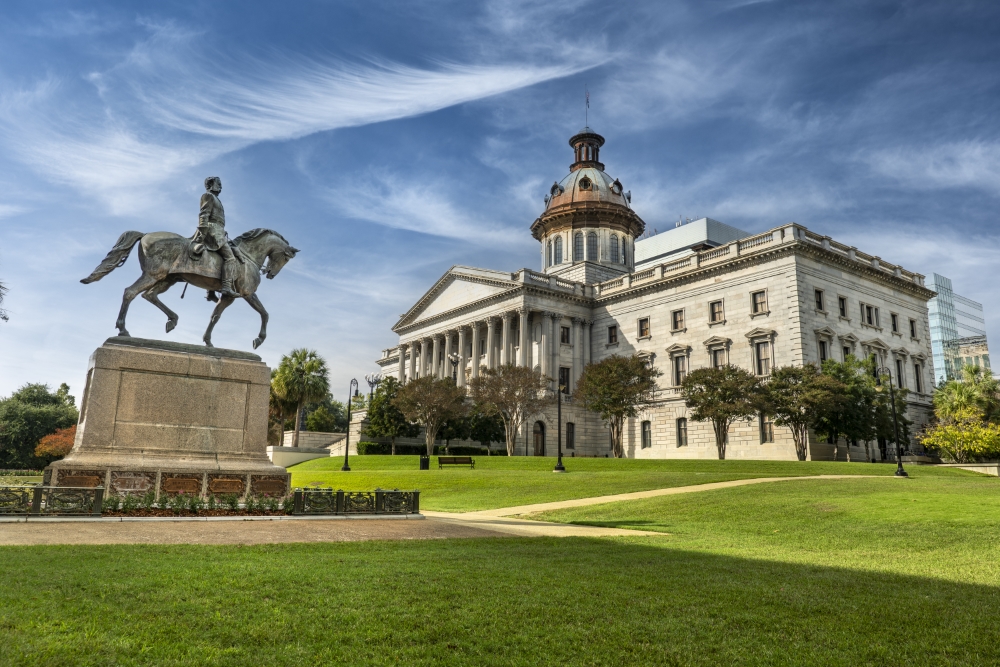
South Carolina Secretary of Commerce Harry M. Lightsey III tells Alexis Elmore the state’s metro areas were already well known, but last year “was a real turning point for our rural areas.” (Site Selection’s July issue will feature the publication’s annual look at the Rural Advantage.)
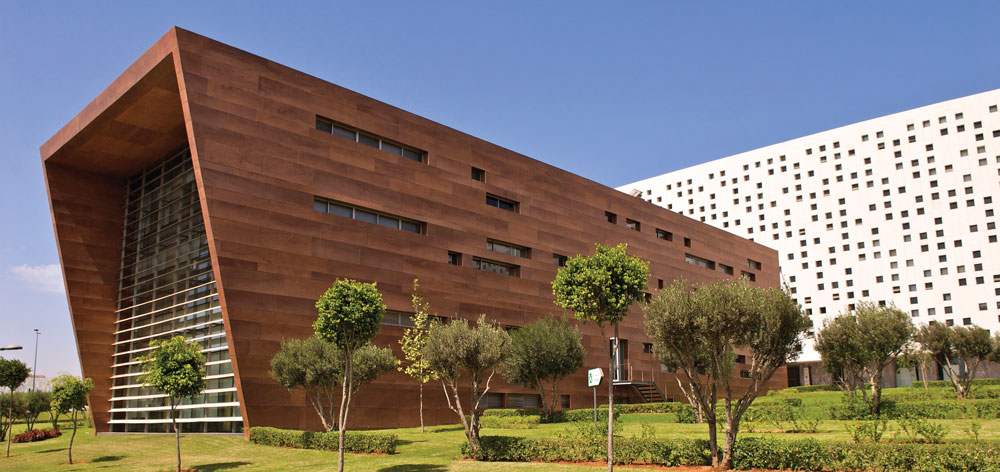
One projects 1,000 jobs. The other is starting with around 100. Both projects, which opened around six months apart last year, herald groundbreaking thresholds for digital infrastructure in their respective regions.
Archer’s goal is to enable passengers to replace 60-90 minute trips on the ground with quiet, all-electric flights using Midnight, the company’s piloted electric air taxi designed to carry up to four passengers.
Photo courtesy of Archer Aviation
The U.S. Department of Transportation and Federal Aviation Administration last month announced they had selected partners of Archer Aviation in Texas, Florida and New York to participate in the White House’s eVTOL Integration Pilot Program (eIPP), “marking a major step toward bringing electric air taxis to market in the United States,” said an Archer release.
“This is the clearest sign yet from the White House, the FAA and the DOT that bringing air taxis to market in the United States is a real priority,” said Adam Goldstein, founder and CEO of Archer. The company stated it “expects this effort to generate valuable operational experience that will help inform future deployments in the U.S. and drive public acceptance, including as it continues to prepare for air taxi operations in Los Angeles for the 2028 Olympic Games.”
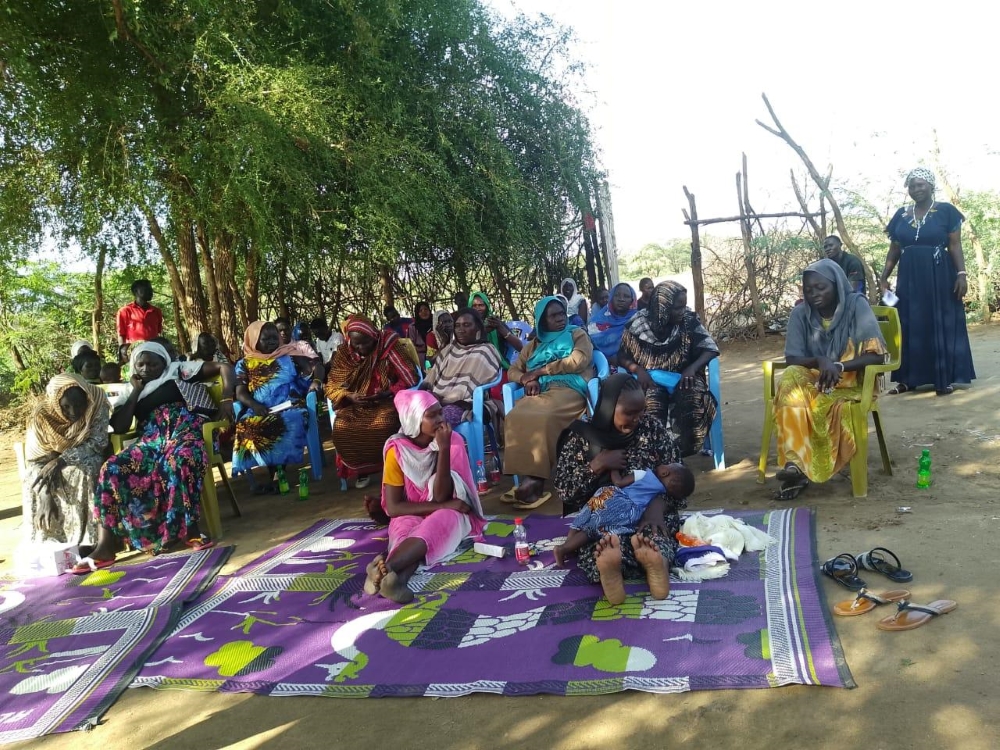
Among the Wege Prize finalists, Nutri-Más is blending whey — typically discarded by dairy producers and a cause of water contamination —with locally grown sorghum, maize and groundnuts to create a nutrient-dense composite flour for children facing malnutrition in Bor, South Sudan.
Photo courtesy of Wege Prize
Wege Prize, the annual competition that “ignites game-changing solutions for the future by inspiring university students around the world to design a better future,” has announced the five finalists for this year’s edition. For the first time, all hail from Africa, which “reflects the passion, commitment and collective spirit of young African entrepreneurs who have cultivated a mindset of cooperative disruption and changemaking,” said Gayle DeBruyn, leader of Wege Prize and an award-winning professor at Ferris State University’s Kendall College of Art and Design, known as KCAD, which organizes the competition with support from the Wege Foundation.
In May, the five finalist teams will present their solutions developed over the course of a nine-month process with expert input from Wege Prize’s judges. “Finalist projects include an emissions control and recapture system for incinerators, a sustainable edible insect rearing and processing system addressing infant malnutrition, and a use of banana crop waste to make affordable and biodegradable sanitary pads,” said the university. “Another team is creating flours from local farming products including whey, which is typically discarded and can end up contaminating water sources, while the fifth finalist turns waste streams from cocoa production into soil-enhancing biochar, a type of charcoal.” The free public event takes place Friday, May 15, streaming live at wegeprize.org and live, in person, starting at 10:00 a.m. EDT at Ferris State University’s KCAD in Grand Rapids, Michigan.
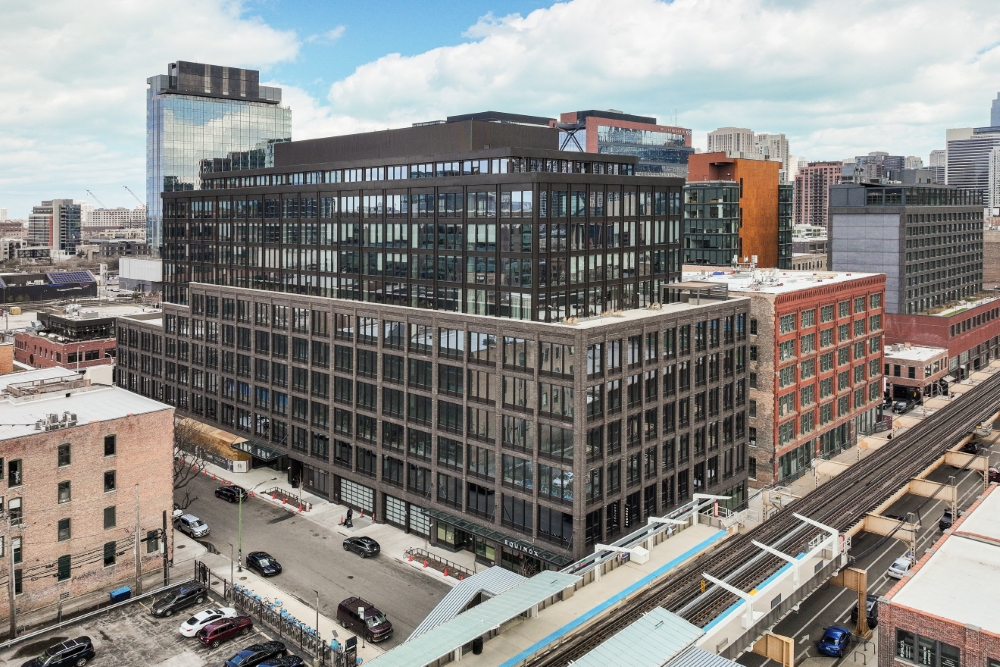
The Fulton in Chicago already has welcomed tenants including The Coca-Cola Company’s Midwestern headquarters and financial firms Harrison Street Asset Management, BlackEdge Capital and Permanent Capital.
Photo courtesy of Skender
Contractor Skender announced last week the completion of construction of The Fulton, an 11-story, 535,000-square-foot development at 217 N. Sangamon Street in Chicago’s Fulton Market neighborhood. “Developed by Fulton Street Companies and the Shanna Collective, the WELL- and LEED Silver-certified property is the only Class A office building to break ground in Chicago since 2023,” Skender stated, noting that a glass atrium connects the new portion of the development with a redevelopment of the historic Schwinn Bicycle factory, which is being converted from apartments into office space.
Ignaz Schwinn and Adolf Arnold founded Arnold, Schwinn & Company in 1895 in Chicago, where they produced their officially named product, “World Bicycles.” A year later, professional cyclist Major Taylor became the first African-American world champion cyclist while riding a Schwinn, a few years before Mile-a-Minute Murphy became the first man to go 60 mph by bicycle, says a company history.