|
|
|
|
|
|
|
|
|
|
|
|
|
|
|
|
|
ADVERTISEMENT

|
|
|
|
|
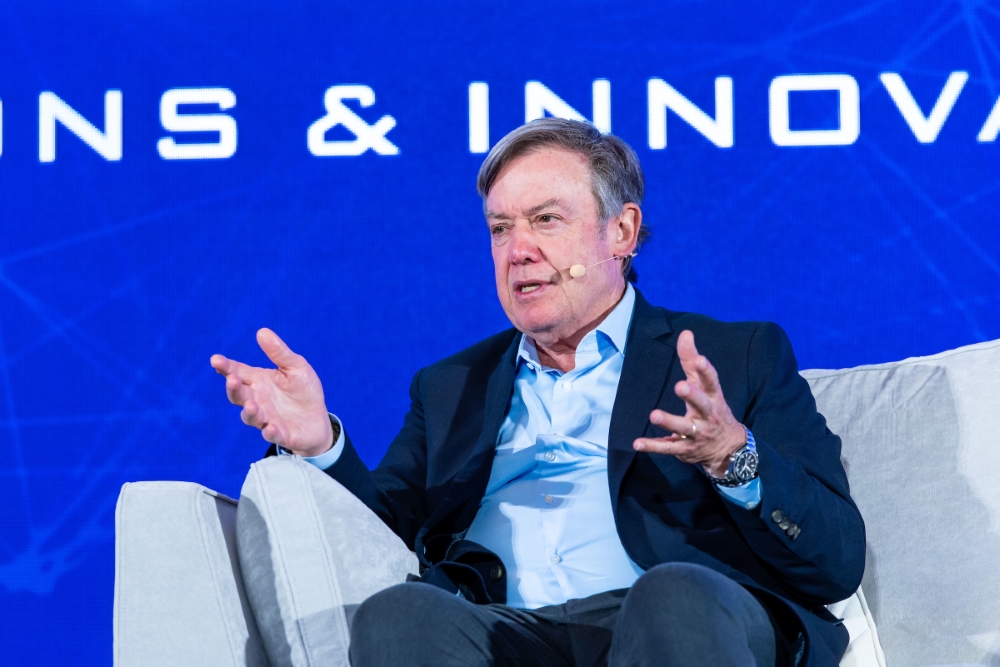
Last year’s Edison Award recipients included Arizona State University President Michael Crow.
Photo courtesy of Edison Awards
|
|
Last week more than 140 finalists were named for the 2026 Edison Awards, which recognize outstanding innovators. The organization called the nominees “a remarkable lineup of visionaries, disruptors and problem-solvers who are redefining what’s possible across every sector imaginable. From groundbreaking medical devices saving lives to sustainable technologies reshaping our cities, from AI applications that enhance human potential to consumer products, these innovations exemplify the power of human ingenuity that will shape the future of the world as we know it.”
A review of last year’s award winners turns up Arizona State University President Michael Crow, who has served the university in that position since 2002. “Lauded as the ‘No. 1 most innovative’ school in the nation by U.S. News & World Report (2016-2025), and garnering top accolades for global impact and student employability, ASU is a student-centric, technology-enabled public enterprise focused on complex global challenges related to sustainability, economic competitiveness, social embeddedness, entrepreneurship and global engagement,” read the Edison Award citation, noting the establishment of more than 30 transdisciplinary schools, record-breaking enrollment and a more than six-fold increase in research expenditures under his watch.
Site Selection has checked in with President Crow and his university several times during his tenure, including the September 2024 article “Laying the Foundation for Innovation.”
|
|
|
|
ADVERTISEMENT

|
|
|
|
|
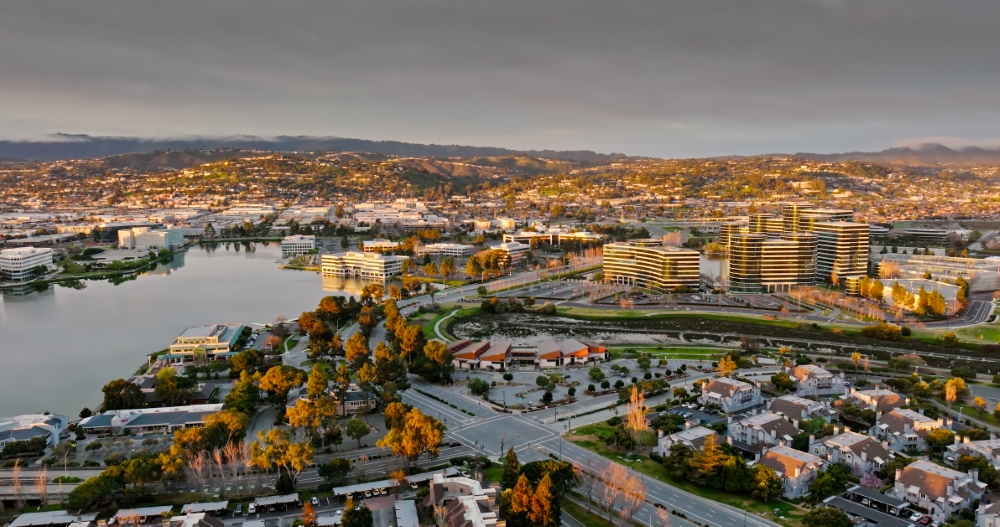
In saluting the United States’ No. 1 business environment for innovators, a new index calls out innovation hubs such as Silicon Valley (pictured here is Redwood City), Boston and Cambridge, metro Austin and the Research Triangle.
Photo by halbergman: Getty Images
|
|
This week StartupBlink, whose Global Startup Ecosystem Index (GSEI) is one of the data sets fed into Site Selection’s annual ranking of those ecosystems, unveiled the Innovators Business Environment Index (IBEI) 2026, ranking 125 countries by how conducive their business environments are for innovation. Unlike the GSEI, the organization said, the IBEI “assesses the foundational environment, including systems, institutions and infrastructure.”
The report is nothing if not thorough, coming in at 326 pages. Among its findings:
- The United States, Singapore and the UK lead the StartupBlink IBEI 2026.
- The UK, Switzerland and Netherlands top Europe.
- Saudi Arabia ranks No. 1 for business-friendly policy tools, while all six Gulf Cooperation Council countries (UAE, Bahrain, Oman, Saudi Arabia, Qatar and Kuwait) lead globally in tax competitiveness.
- Nordic countries lead globally digital infrastructure.
|
|
|
|
|
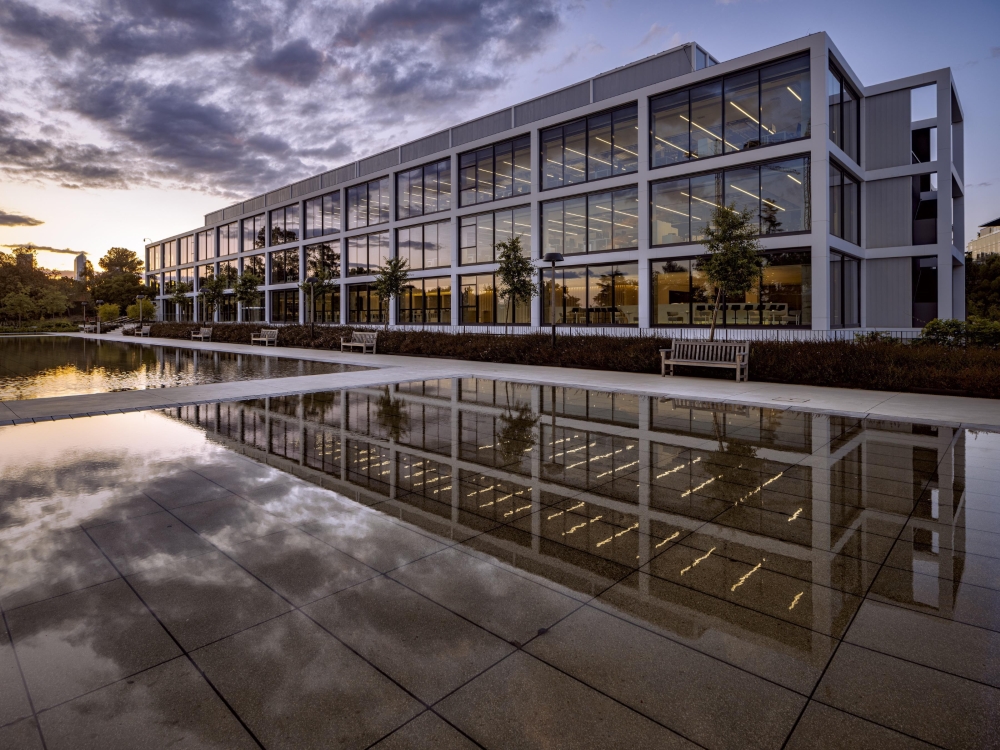
Photo courtesy of Perkins&Will and v2com newswire
|
|
Chicago-based architecture firm Perkins&Will (yes, their name has no spaces even if their work does) recently shared this photo of Acciona’s new headquarters campus in central Madrid, which it called “a new global benchmark in people-focused workplace design.” The design repurposed a decades-old corporate campus site for the infrastructure and renewable energy giant’s 4,000 employees.
Completed last March, the 400,000-sq.-ft. campus on 25 acres has achieved LEED Platinum and WELL Platinum certifications while also aligning with EU Taxonomy, says Perkins&Will, which performed the interior work. It operates entirely on renewable electricity, with on-site solar PV, geothermal systems and heat recovery technologies.
|
|
|
|
|