|
|
|
|
|
|
|
|
|
|
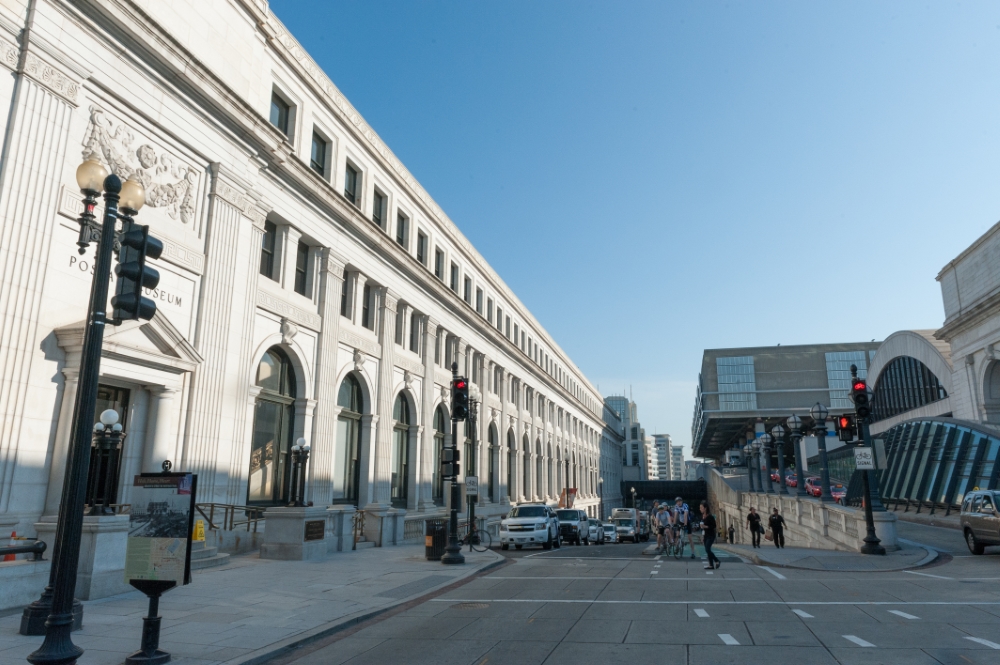
Fingers on the Federal Pulse
Two experts from Avison Young — which recently debuted a new database documenting expiring federal agency leases — talk with us about what’s going to happen with all that office space.
|
|
|
Read More >>>>
|
|
|
|
|
|
|
|
LEGAL SERVICES
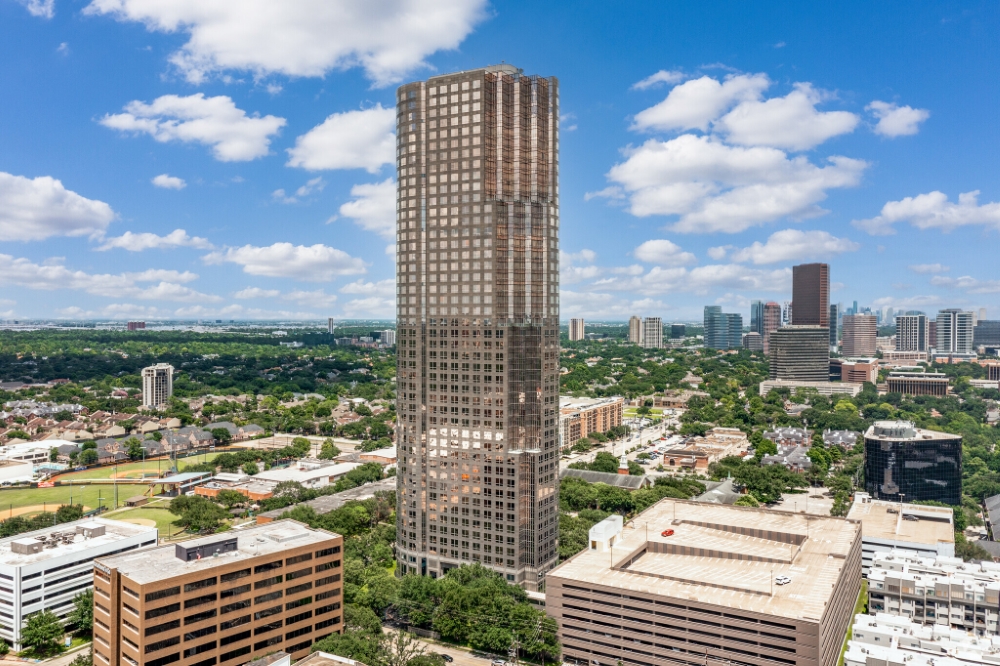
A Change of Venue for Law Firms
Exclusive analysis by Cresa explores where law firms are leasing and what’s driving their choices. (Subscribers: Scan the QR code in Site Selection’s print or digital edition for bonus data and insights.)
|
|
|
Read More >>>>
|
|
|
|
|
|
|
ADVERTISEMENT

|
|
|
|
|
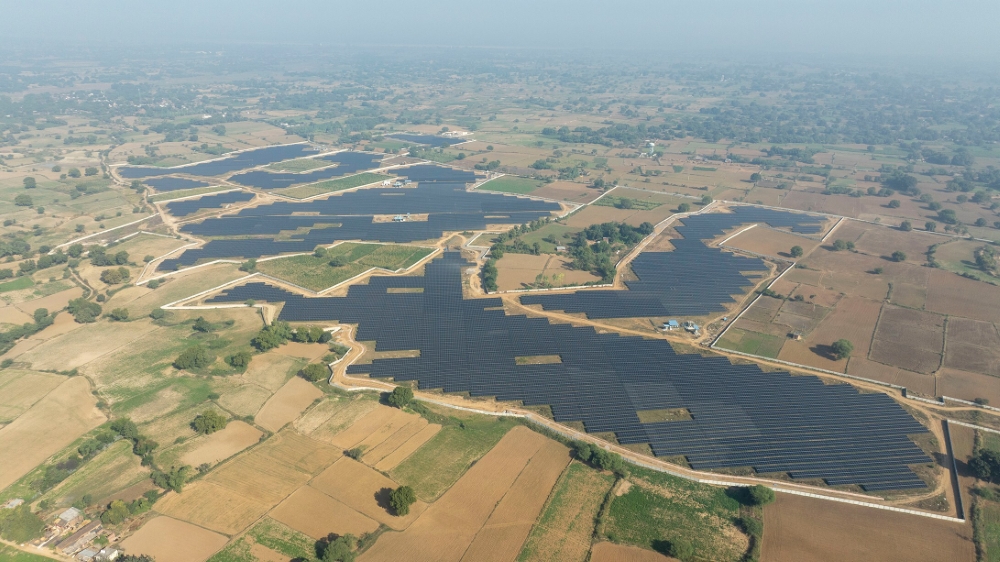
Sunsure Energy’s solar power plant in Augasi, Uttar Pradesh, India, joins other active solar installations in the Agra, Banda, Mahoba, Jhansi, and Unnao regions of the state.
Photo courtesy of Sunsure Energy
|
|
Rhodium Group’s Clean Investment Monitor has gone global. Yesterday marked the expansion of the tracker of clean energy and decarbonization technologies manufacturing and deployment from the U.S. to the entire world, spanning the years 2018 through 2025.
“In 2025, total global clean investment hit record levels, reaching $1.96 trillion — a tripling of investment from only seven years ago,” Rhodium Group stated. “However, investment growth has slowed somewhat in the past two years, rising only 7% in 2025 after a 28% jump in 2023. Total clean investment in China declined 3% from its 2024 peak, reaching $849 billion. While investment in Europe and the U.S. rose only modestly in 2025, the most rapid growth occurred in India — which saw a 46% increase to reach $101 billion.”
If announced projects come to fruition, India will have the largest manufacturing capacity in batteries, solar, and wind outside China and the U.S. by 2030, the organization said, noting, “Turkey, Indonesia, South Korea, Canada and others represent a widening geographic footprint for clean technology manufacturing.”
Compare Rhodium Group’s findings to Site Selection’s most recent Sustainability Rankings published last July. The organization is also well known for its robust analysis of Chinese outward FDI, cited in Site Selection’s May 2024 exploration of increasing ties between Chinese companies and Latin America.
|
|
|
|
|
|
|
|
|
|
|
|
|
ADVERTISEMENT

|
|
|
|
|
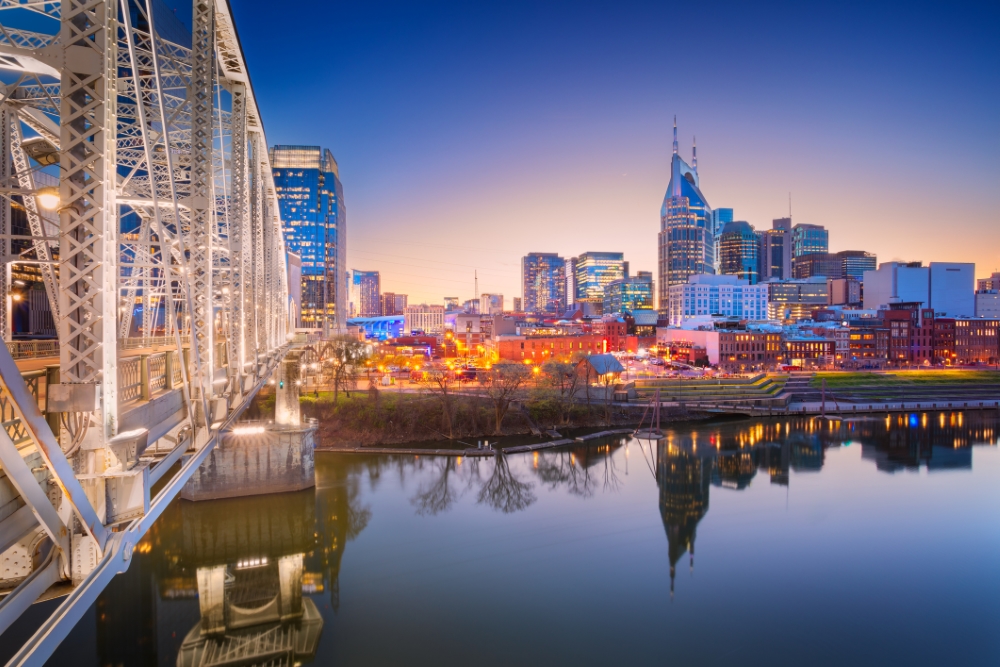
Nashville, Tennessee
Photo by Rudy Balasko: Getty Images
|
|
On Tuesday — one day before the Federal Reserve maintained interest rates — Seyfarth Shaw LLP released its 11th Annual Real Estate Market Sentiment Survey. “Despite ongoing concerns around interest rates, construction costs and geopolitical instability, 86% of surveyed CRE [commercial real estate] executives view 2026 as a year of opportunity, signaling confidence that the market’s positive momentum will continue,” the law firm announced.
“Interest rates haven’t disappeared as a concern,” said Paul Mattingly, national chair of Seyfarth Shaw’s real estate department, “but they’ve become part of the assumed backdrop. Geopolitical instability and tariff uncertainty are increasingly viewed as real-world risk affecting supply chains, insurance, construction costs and capital movement.” Among other findings, as discussed in today’s Site Selection Snapshot above, office-to-residential conversion emerged as the No. 2 most impactful trend (57%) selected by respondents, though structural challenges and construction costs continue to be barriers. No. 1 by far was data center development, which 85% of respondents identified as having the greatest impact on commercial real estate in 2026. “Nevertheless, only 30% see data centers as a top three investment opportunity for their organizations, down from 41% in 2025,” the survey notes.
Asked to name attractive markets for their investment strategies, survey respondents “are increasingly focused on Nashville, Austin, Charlotte, and Raleigh-Durham,” says the report, “cities where population growth, business formation and lower costs create desirable return profiles, even as gateway markets remain central to long-term strategies.”
|
|
|
|
|
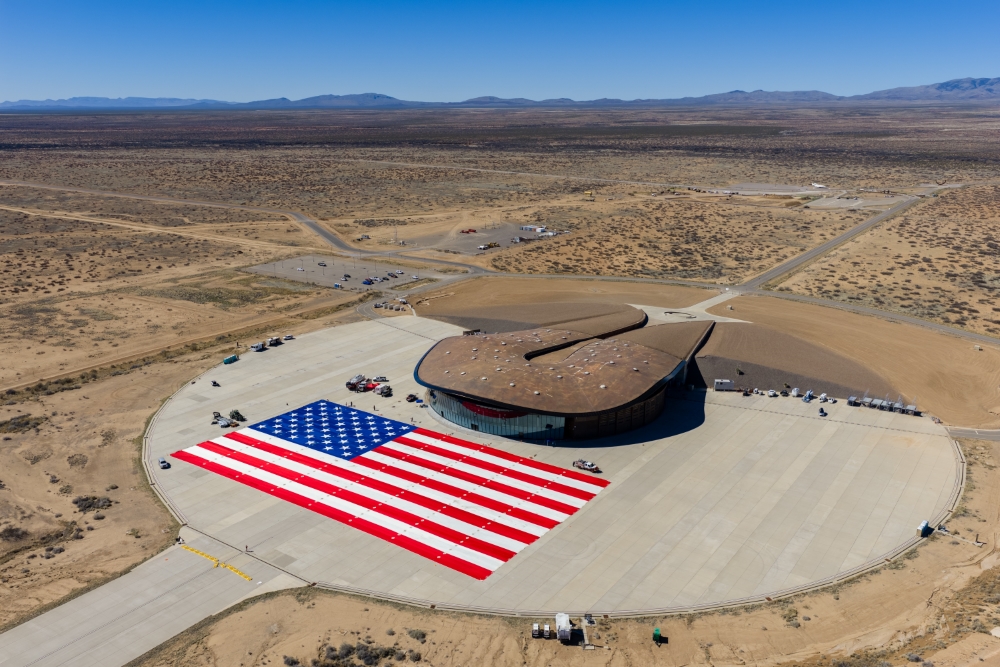
The Great American Flag was unfurled last weekend at Spaceport America, an FAA-licensed launch complex situated on 18,000 acres adjacent to the U.S. Army White Sands Missile Range in southern New Mexico.
Photo courtesy of Spaceport America
|
|
It’s only 107 days until the Fourth of July. Do you know where your flag is? The Great American Flag Preservation Group sure does. The second-largest U.S. flag ever produced could be found last weekend at Spaceport America in Las Cruces, New Mexico, where it was completely unfurled for the first time in nearly seven years for comprehensive cleaning by around 100 volunteers. Among other facts, the flag weighs 14,000 pounds and each star measures 13 feet across.
“We spent six years trying to find the right location to do this, and there were a number of factors we considered,” said Josh Dorfman, co-founder of the Great American Flag Preservation Group alongside AJ Rehberg. “First, there had to be a facility large enough to keep the flag. Second, security was important to us, and Spaceport America has a top-notch security team. We also needed a partner that was willing, and we found that.”
“Anchor Industries in Evansville, Indiana, assembled the 86,000-square-foot flag ahead of its debut at the Evansville Airport on March 22, 1980,” a release from Spaceport America stated, noting that the flag has only been displayed 13 times since then. “The initial display was dedicated to the United States citizens who were, at the time, being held hostage in Iran.”
Individuals or groups interested in making a tax-deductible donation for the upkeep, care, transportation and viewing of this U.S. flag may do so at www.greatamericanflag.org. In the meantime, watch this space for a full exploration of the unique site selection circumstances surrounding the flag’s upkeep and display at yet-to-be-determined locations between now and the nation’s 250th birthday.
|
|
|
|
|