|
|
|
|
|
|
|
|
|
|
|
|
|
|
|
|
|
ADVERTISEMENT

|
|
|
|
|

In March 2025, TSMC announced its intention to invest an additional $100 billion in the United States in Arizona to support three additional advanced semiconductor fabs, two advanced packaging facilities and an R&D center.
Photo courtesy of TSMC
|
|
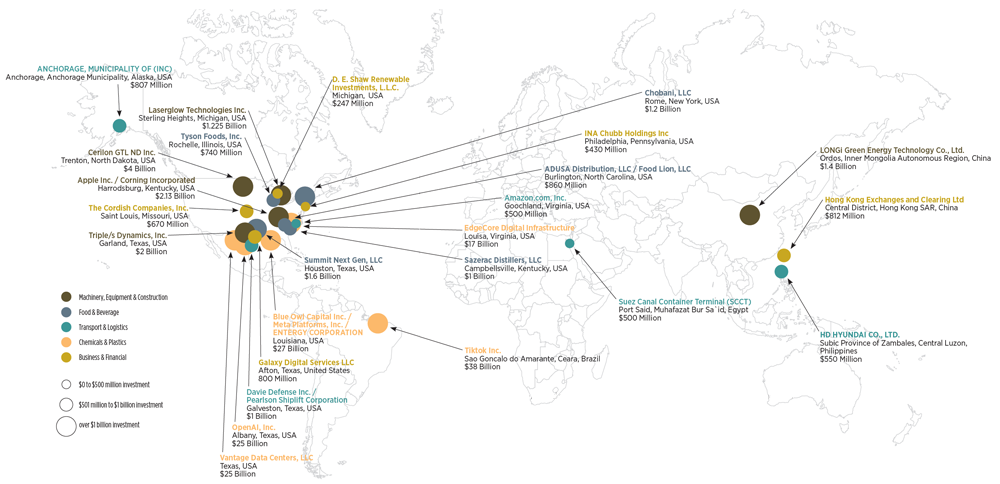
Looking for corroboration of the global corporate facility project tracking accomplished by Site Selection’s Conway Projects Database? Avison Young last week launched its U.S. Manufacturing Investment Tracker, which tracks one particular subset: announced manufacturing investments in the U.S. of $100 million or more. To align with the eligibility requirements of the One Big Beautiful Bill Act (OBBBA), AY said, the dashboard is retroactively dated to January 21, 2025, producing records of 114 projects as of last Thursday (120 as of this morning) impacting 42 states and now totaling nearly $3.4 trillion in investments. Driven by semiconductor projects, Arizona and Texas top the charts, followed by North Carolina.
Avison Young’s various tools also include the Office Busyness Index, which measures office utilization across major U.S. metros, and the Federal Property Pulse, which tracks federal lease termination activity nationwide. Watch this space for an upcoming Site Selection Snapshot featuring our conversation about the federal government’s occupancy pullback with Avison Young U.S. Life Science Lead and U.S. Office Agency Lead, Market Intelligence Tucker White and Senior Manager, U.S. Office Lead, Market Intelligence Danny Mangru.
|
|
|
|
|
|
|
|
|
|

|
|
|
SKILLS SHORTAGE
Can We Shrink the Skills Deficit?
In September 2025 the Georgetown University Center on Education and the Workforce (CEW) released “Falling Behind: How Skills Shortages Threaten Future Jobs.” By special arrangement with CEW we present an adapted excerpt of that report.
|
|
|
Read More >>>>
|
|
|
|
ADVERTISEMENT

|
|
|
|
|
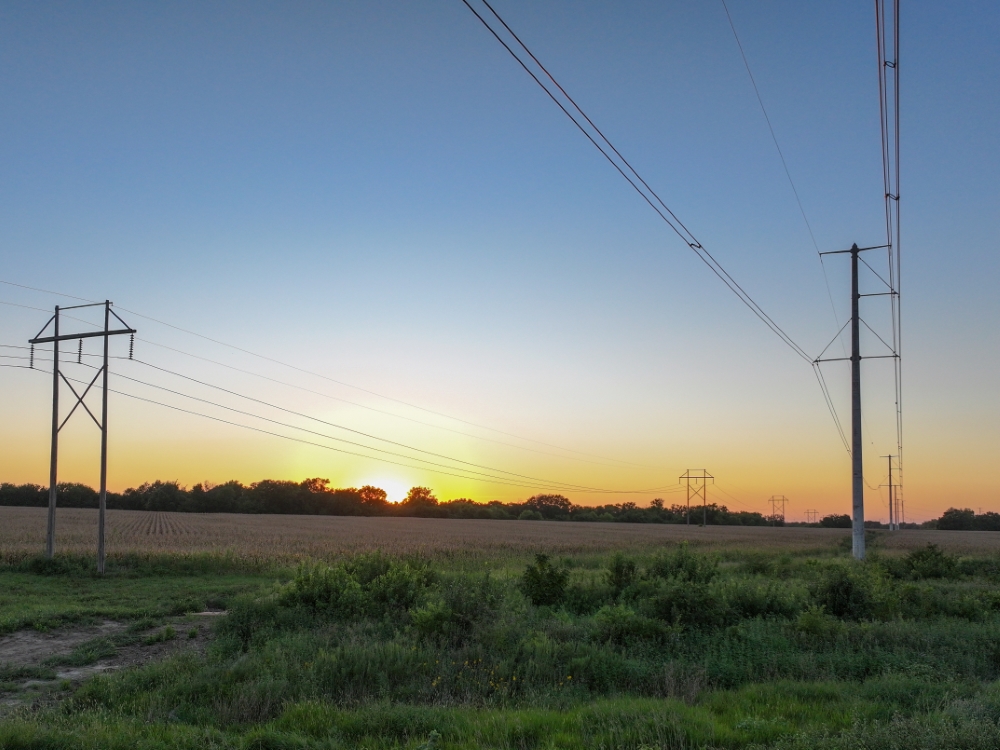
NextEra Energy Transmission Southwest in October announced the successful energization of the 92-mile Wolf Creek-Blackberry 345-kilovolt transmission line from Coffey County, Kansas, to Jasper County, Missouri, “paving the way for long-term regional growth by making the grid more attractive to industries considering expansion in Kansas and Missouri.”
Photo courtesy of NextEraEnergy
|
|
JLL in late February released “Where Energy Meets Property,” a report documenting the “expanding role of real estate to manage, generate and store power in an energy-constrained world.” Addressing an issue Site Selection continues to cover, the report notes that “in many markets, the primary limiting factor is no longer capital, land or labor, but available grid capacity. The surge in electricity demand is colliding with the physical realities of existing grid infrastructure.”
|
|
|
|
|
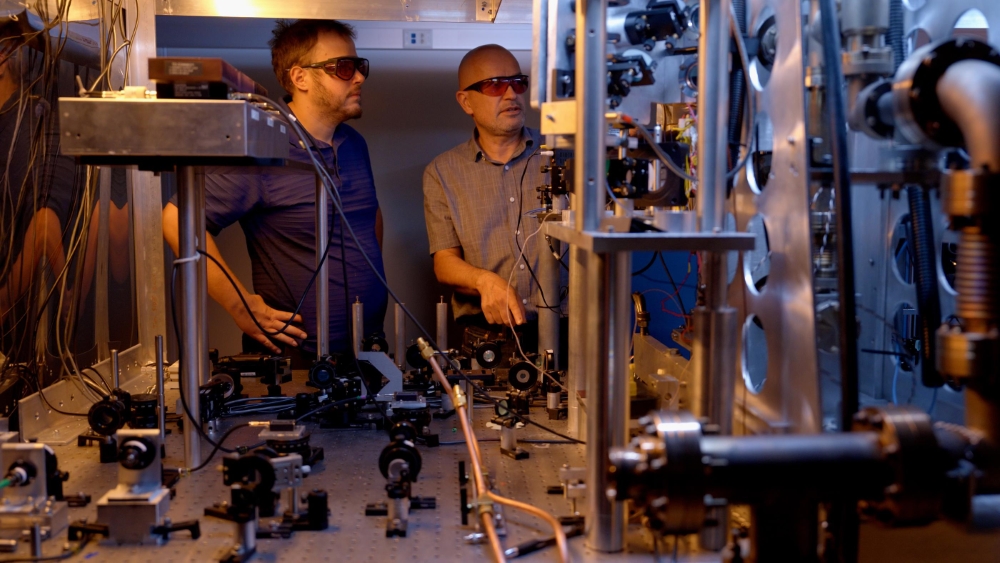
NIST scientists Greg Hoth (left) and Vladislav Gerginov worked on NIST-F4, NIST’s new cesium fountain clock, last spring.
Photo by R. Eskalis courtesy of NIST
|
|
Time change got you out of sync? Don’t blame the folks whose job it is to keep time synced. Last April, researchers at the National Institute of Standards and Technology (NIST) campus in Boulder, Colorado, published findings establishing the new NIST-F4 atomic clock as one of the world’s most accurate timekeepers. The atomic “fountain” clock measures an unchanging frequency in the heart of cesium atoms, the internationally agreed-upon basis for defining the second since 1967.
“NIST-F4 ticks at such a steady rate that if it had started running 100 million years ago, when dinosaurs roamed, it would be off by less than a second today,” the agency stated. “By joining a small group of similarly elite time pieces run by just 10 countries around the world, NIST-F4 makes the foundation of global time more stable and secure. At the same time, it is helping to steer the clocks NIST uses to keep official U.S. time. Distributed via radio and the internet, official U.S. time is critical for telecommunications and transportation systems, financial trading platforms, data center operations and more.”
|
|
|
|
|