|
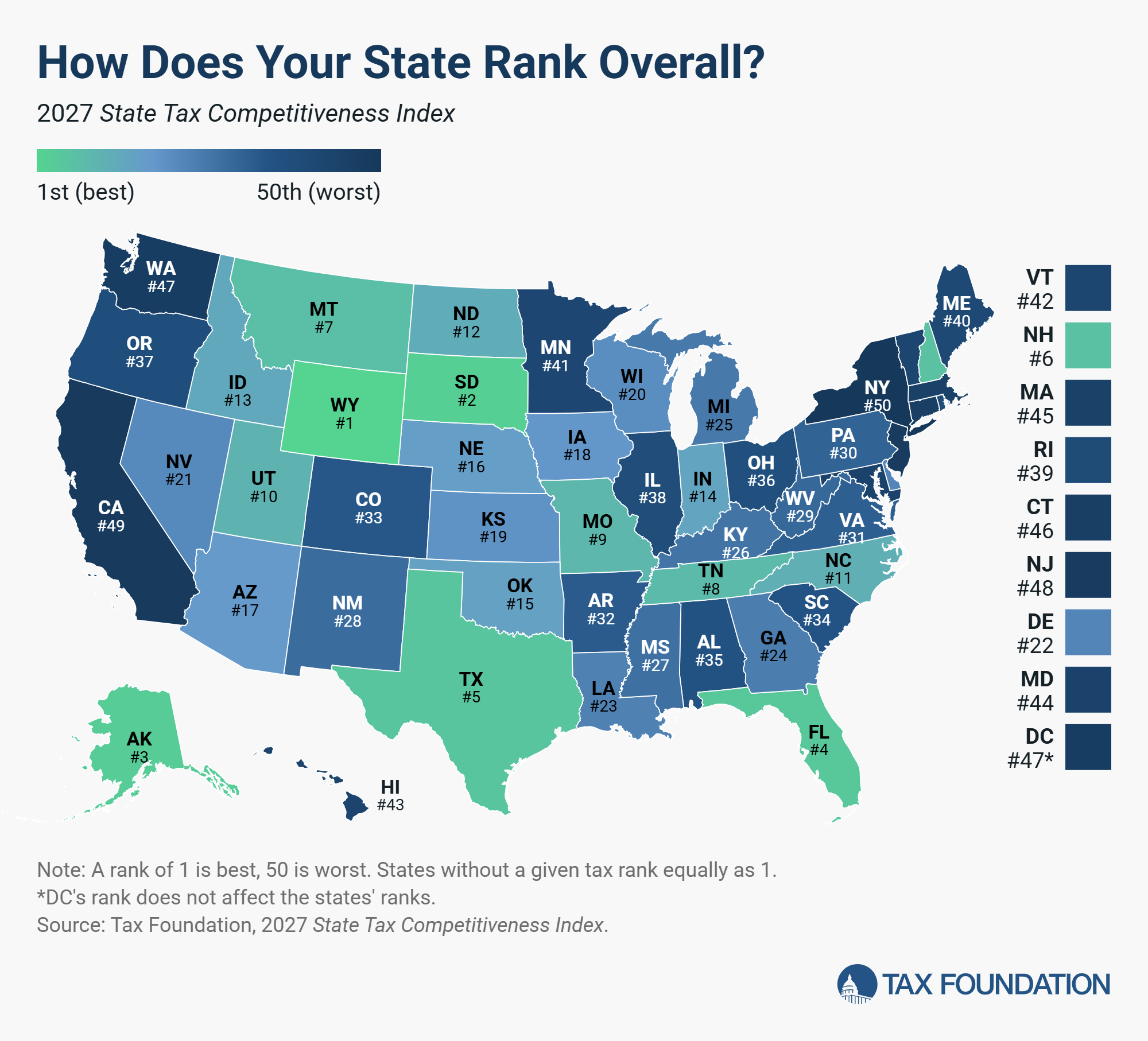
The Tax Foundation has released the 2027 edition of its State Tax Competitiveness Index, which compares the states on more than 150 variables in the five major areas of taxation (corporate taxes, individual income taxes, sales and excise taxes, unemployment insurance taxes, and property and wealth taxes). As one might expect, states laden with natural resources are less dependent on taxes and therefore rank high in the index, with Wyoming, South Dakota and Alaska taking the top three spots. But the Tax Foundation notes that its index “measures tax structure, not all the other things businesses care about, like an educated workforce, quality of life, proximity to relevant markets, or even the weather — and some of these things involve trade-offs. Taxes, however, are an important part of the mix, and modernizing a state’s tax structure helps position it for growth.
“Tax competition is a little like WAR — not conflict, but “Wins Above Replacement,” says the Tax Foundation. “The term comes from baseball, where it is intended as a sabermetric statistic to measure how many more wins a team can claim due to a specific player above the amount that would be generated by a replacement-level player. It’s much the same way in public finance: a well-structured tax code won’t make the Wyoming Basin a metropolis, nor will poor tax structure make Manhattan a ghost town. But tax structure does play a role in a state’s economic successes or failures, and often a substantial one. Every state can benefit from a simple, neutral, transparent, pro-growth tax structure.”
Like WAR, another acronym explanation may be in order: “Sabermetrics” is a word that originated with the Society for American Baseball Research (SABR), founded in 1971 by the legendary statistics guru Bill James.
Tax Competitiveness Index rankings are among the “Rankings That Matter” published every year in the State of the States report featured in the January issue of Site Selection.
|